

Start claiming small crypto payouts today with proven, low-risk ways that let users begin qualifying right away. Many platforms — like Coinbase Learn, Binance, and Brave — offer learn-and-earn modules or airdrops that let people earn free crypto by watching short lessons, completing quizzes, or trying new testnets.
Set expectations: “instant” often means you can start the process immediately, but withdrawals may require KYC, network confirmations, or platform holds. Make sure you use reputable providers such as Cointiply, FreeBitcoin, or Crypto.com and treat cards or staking promos as optional boosters.
Protect your wallet by avoiding fake airdrop sites, malicious extensions, and bogus contracts that harvest keys. Use a VPN like VeePN on public Wi‑Fi, keep separate wallets for experiments, and prefer hardware storage for larger balances.
These ways pay small amounts at first, so build a plan: pick one place to start, schedule claims, and compound what you earn while you learn higher-yield skills.
What “instant” free crypto really means today
“Instant” in crypto often means you can begin an action right away, not that funds hit your account immediately.
Time-to-reward is the delay from finishing a task to seeing a balance update. Exchanges like Coinbase and Binance let you start lessons instantly, but posting and withdrawal windows may follow KYC and eligibility checks.
Time-to-withdrawal is separate. Platforms often enforce minimums, waiting periods, or network confirmations before you can move coins to your main wallet.
Expect micro-earnings from faucets and task sites; payouts can be tiny. That makes compounding useful: stacking small claims, redeploying into flexible savings, and tracking timers can improve long-term returns.
- Security tip: use a separate email and a play wallet for experiments.
- Practical tip: set a small first withdrawal goal to confirm fees and timing.
- Regional note: many U.S. programs require KYC—check eligibility before you invest time.
List of legit ways to get free crypto rewards right now
Below are practical paths where users can actually earn small tokens without heavy upfront cost.
Airdrops and whitelist spots: follow official project channels, complete light social tasks, and watch snapshot dates. Never share seed phrases; distributions often come later.
A closer look at common options
- Learn-and-earn: platforms like Coinbase and Binance pay tiny amounts for videos and quizzes. KYC is often required.
- Sign-up & referral bonuses: many exchanges offer dual-sided bonuses—read withdrawal rules before stacking offers.
- Faucets and task sites: use services such as FreeBitcoin, FaucetPay, Cointiply, and TimeBucks with a dedicated email and a spare wallet.
- Play-and-earn & NFTs: free-to-start titles (Gods Unchained, Alien Worlds, The Sandbox) can drop tokens or nfts; avoid pay-to-win traps.
- Browse-to-earn & tipping: turn on Brave Rewards for BAT and try content tipping on Nostr/Damus with Lightning zaps.
- Contests & micro-tasks: trading contests exist but carry risk—practice with demos first.
| Method | Typical payout | Risk | Best practice |
|---|---|---|---|
| Airdrops | Small token grants | Low (watch for scams) | Follow official channels; never give keys |
| Learn-and-earn | Micro amounts | Low (KYC required) | Complete quizzes accurately; track lessons |
| Faucets & tasks | Very small | Low to medium (privacy concerns) | Use separate wallet/email |
| Play-to-earn / NFTs | Varies | Medium (economy risk) | Choose sustainable titles; avoid pay-to-enter |
Pro tip: track token drops, referral payouts, and lesson completions in a simple sheet to focus your time on the highest-yielding methods. For a quick guide on tactics and platforms, see how to earn free crypto.
Airdrops, testnets, and giveaways: how to qualify without risking your wallet
You can boost your chance to win project drops by following verified channels and using a sandbox wallet. Start by confirming official sites and social handles before you click or connect.

Verify channels and avoid phishing
Bookmark official domains and check verified social badges. Never enter seed phrases or private keys; no legitimate giveaway asks for them.
Testnets and bug bounties
Join testnets with a low-balance wallet, try core actions, and file bug reports. Projects often snapshot participants, giving a real chance to get airdrop allocations later.
- Use a clean wallet for experiments and keep cold storage separate.
- Inspect transaction prompts for infinite approvals and decline suspicious permissions.
- Limit extensions and document on-chain steps to prove eligibility if needed.
| Method | Typical outcome | Safety tip |
|---|---|---|
| Airdrop signals | Snapshot-based token drops | Verify official channels; never share keys |
| Testnets | Interaction records, possible snapshots | Use sandbox wallet; log actions and dates |
| Giveaways / NFT drops | Whitelist or lottery entry | Confirm campaign on project site; avoid unsolicited DMs |
Learn-and-earn programs that pay you to study crypto
Exchange education hubs pay users small tokens and fee credits when they watch short videos and pass quick quizzes.

How courses, videos, and quizzes translate to cashback vouchers
Platforms such as Coinbase and Binance run stacked lesson sets. Verified users watch short clips, answer questions, and receive token payouts or voucher codes that refund trading fees.
Cashback vouchers work like a rebate: you claim the voucher after a lesson and it reduces fees on later trades. CoinMarketCap runs similar campaigns with varied token types and limited inventories.
Requirements: KYC, availability, and regional access
- Complete identity verification early so you can join new campaigns immediately.
- Expect lesson waves; check platforms weekly or enable alerts to catch new offers.
- Review each campaign’s rules: token type, payout timing, region limits, and any trade hold before redemption.
- Keep a short log of completed lessons, claimed vouchers, and expiration dates to avoid missed value.
| Platform | Incentive | Key requirement | Best practice |
|---|---|---|---|
| Coinbase | Token grants; occasional vouchers | KYC required for payouts | Complete lessons promptly; track expirations |
| Binance | Tokens and cashback vouchers | Region limits; KYC for many users | Enable alerts and split learning across accounts |
| CoinMarketCap | Token campaigns and airdrop entries | Limited slots; rules vary | Follow official announcements; document completions |
For a roundup of user-friendly programs and top platforms, see best crypto rewards programs.
Simple passive routes: staking, savings, and lending promos
For steady, low-friction returns, consider soft staking, yield accounts, and time-limited lending bonuses. These strategies let you earn on holdings while keeping control of liquidity and risk.

Soft staking and flexible options for beginners
Soft staking on major exchanges or custodial wallets gives yield without long lockups. Choose platforms with clear terms and a strong track record.
Note: some exchange staking services faced regulatory scrutiny in the U.S., so check availability and T&Cs before you deposit.
Crypto savings accounts and promo APRs
Savings accounts often pay tiered APRs, with stablecoins usually higher than BTC or ETH. Compare rates, withdrawal limits, and the platform’s counterparty risk.
Lending bonuses and risks to watch
DeFi lending and liquidity pools can pay swap fees and incentive tokens. Favor stable pairs to reduce impermanent loss and review audits before committing funds.
- Start flexible: use soft staking or no-lock savings to stay nimble.
- Watch promos: bonus APYs expire—note end dates and migration paths.
- Manage risk: spread assets across vetted venues and keep records for taxes and cash-flow planning.
| Route | Typical yield | Main risk | Best practice |
|---|---|---|---|
| Soft staking | 1–8% (coin-dependent) | Regulatory changes; platform terms | Use reputable exchanges; prefer flexible options |
| Savings accounts | 2–12% (stablecoins higher) | Counterparty risk; withdrawal limits | Compare APRs and lockups; limit exposure |
| DeFi lending / pools | Variable; may include incentive tokens | Smart contract bugs; impermanent loss | Favor stable pairs; check audits and bug bounties |
Spending-based rewards: crypto debit and credit card cashback
Using a credit card that pays in tokens can add value to everyday spending. But the real return depends on tiers, staking rules, and token volatility.
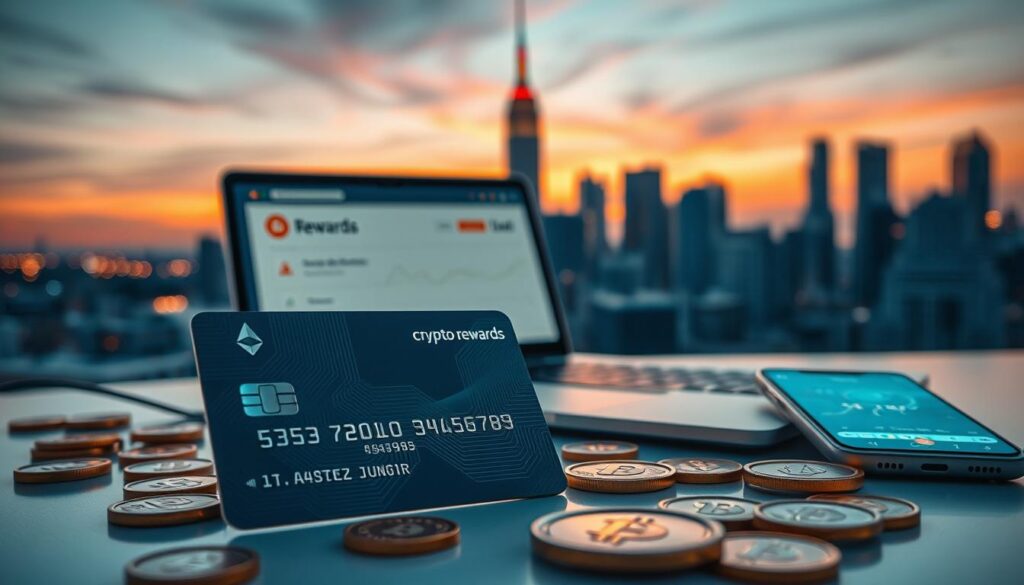
Comparing cards, rates, and staking requirements
Compare tiered rates, required stake sizes, and any lockup periods before you apply. Some providers give 1% back with no stake and much higher rates if you lock tokens long term.
Prefer cards with clear terms, low fees, and predictable redemption mechanics for U.S. users.
Volatility caveat: reward token value and timing redemptions
Token payouts can swing in value quickly. A 2% token payout may shrink if the token drops before you convert it to money.
Plan redemptions, consider auto-convert features, and avoid overspending to chase perks. Track spend, credited amounts, and conversion results so your effective rate reflects real dollars, not just token balance.
| Factor | What to check | Why it matters |
|---|---|---|
| Tier & stake | Required lockup; token liquidity | Affects net yield and access to funds |
| Fees & perks | Annual fees; subscription rebates | Determines net benefit for your spending |
| Redemption rules | Auto-convert; minimums | Protects value against price swings |
Arn free cryptocurrency rewards online with low-risk platforms
Not every platform is equal—prioritize services with clear terms, good support, and a history of payouts.
For U.S. users, start with trusted exchanges like Coinbase and Binance for learn-and-earn lessons that teach basics while letting you earn token grants. Brave offers a passive browsing option that accumulates BAT without heavy effort.
Top user-friendly options
- Learn-and-earn: Coinbase, Binance — verify identity early to claim payouts.
- Browse: Brave Rewards for modest BAT accrual during normal use.
- Tasks & faucets: Cointiply, TimeBucks, FreeBitcoin, FaucetPay — use a spare email and strong passwords.
- Broker bonuses: eToro, Robinhood, Webull — convert cash promos into crypto if desired.
- Debit card options: Crypto.com Visa-style cards can offer token cashback; check fees and staking rules first.
| Option | What it offers | Best U.S. practice |
|---|---|---|
| Learn-and-earn | Small token grants for lessons | Complete KYC; track expirations |
| Browse-to-earn | BAT from browsing | Enable rewards; protect privacy |
| Faucets & tasks | Micro payouts via tasks | Use separate wallet/email; strong passwords |
Tip: combine a few low-risk ways in one place, keep a weekly log of payouts and hold times, and reassess platforms monthly to focus your time where it pays most.
Security first: common scams and present-day threats to avoid
A few simple habits can stop most wallet-drain attempts before they start. Act like every unexpected link or DM is hostile until you verify it on the project’s official site.
Watch for real-world tricks: fraudulent Uniswap airdrop pages and fake Shiba Inu giveaways have recorded cases where users connected wallets or pasted seed phrases and lost funds. Malicious code in some Ledger Connect Kit releases also allowed harmful prompts that hijacked transactions.
- Make sure you bookmark authentic domains and confirm announce posts on verified channels before clicking links.
- Audit browser extensions; remove unknown items and update only from official stores to avoid injected malware.
- Read transaction prompts carefully — decline unlimited approvals that enable wallet-drain signatures.
- Never paste seed phrases into forms; legitimate support never asks for private keys.
- Avoid public Wi‑Fi for crypto activity; attackers can swap addresses or harvest login data with man-in-the-middle attacks.
- Learn social engineering patterns: long-term grooming scams (pig-butchering) aim to build trust before asking for transfers.
| Threat | What to check | Quick defense |
|---|---|---|
| Phishing airdrop | Lookalike URL, unsolicited DM | Verify on official site; never connect wallet blindly |
| Malicious extension | Unexpected permissions | Remove and reinstall from trusted store |
| Public Wi‑Fi MITM | Certificate warnings, odd redirects | Use a VPN and avoid transactions |
Tip: store significant balances in hardware devices, keep hot wallets low-funded, enable strong 2FA, and share these tips with others so fewer people fall for fake support or quick‑gain schemes.
Protect your earnings: practical safety stack and VPN advantages
Protecting what you earn starts with a compact safety stack that separates experiments from savings. Small habits stop most attacks and keep platform access secure.
Segregated wallets and hardware protection
Split your stack: keep a low-balance “play” wallet for faucets and airdrops, and a hardware-backed wallet for larger holdings. Hardware keys reduce account takeover risk on exchanges that support them.
Bookmarking and extension hygiene
Bookmark official exchange and wallet URLs and use those links for support. Remove risky extensions, review permissions, and scan for malware before joining any claim or drop.
Why a trusted VPN matters
Use a VPN on public or shared networks to stop address swaps and interception. Encryption helps protect logins and claim flows when you try to earn free tokens.
How VeePN helps: AES‑256 encryption, NetGuard filtering, a kill switch to stop leaks, breach alerts for exposed credentials, IP rotation across 2,500+ servers in 60 countries, and coverage for up to 10 devices with a 30‑day guarantee.
- Rotate passwords and test backups quarterly.
- Add hardware security keys to exchange logins.
- Use the same protection across phone and desktop for consistent safety.
| Defense | What it protects | Practical step |
|---|---|---|
| Segregated wallets | Limits loss from airdrop scams | Use separate addresses for experiments |
| Hardware key | Prevents account takeover | Link physical key to exchange logins |
| Extension hygiene | Stops injected malware | Keep only vetted add-ons; review perms |
| VPN (VeePN) | Blocks interception and region tracking | Enable AES‑256, NetGuard, and kill switch |
For a deeper guide to wallet security and long-term practices, see this practical resource on secure wallets: web3 wallet security guide.
Your next steps to start earning free crypto today
Focus on a few trusted steps first: verify one exchange account and complete KYC so you can join learn‑and‑earn lessons as they appear.
Set up a separate low‑balance wallet for claims and enable a hardware key on your main accounts. Test a small withdrawal early to confirm payout and fee timing.
Use Brave for passive accrual, add a vetted faucet and a task site, and keep a simple tracking sheet for platform, action, token, and withdrawal threshold.
Be cautious with airdrops and giveaways: follow official crypto projects, check links, and never reveal seed phrases or sign unsafe approvals.
Protect sessions with a VPN like VeePN and keep a weekly routine that shifts time toward higher-yield ways while you keep learning about wallets, tokens, and security.
FAQ
What does "instant" free crypto mean today?
“Instant” typically refers to fast qualification for a small token reward, like completing a sign-up, survey, or learn-and-earn lesson that credits your account within minutes or hours. It does not always mean immediate withdrawable balance — many platforms require verification, minimum withdrawal thresholds, or vesting periods before you can move funds to your own wallet.
How is time-to-reward different from time-to-withdrawal?
Time-to-reward is how quickly a platform credits promotional tokens after you complete an action. Time-to-withdrawal is how long until you can transfer those tokens off-platform. Exchanges and airdrops often credit rewards quickly but impose KYC, trading volume, or minimums that delay withdrawal.
Which methods actually give reliable tokens right now?
Reliable options include verified exchange learn-and-earn programs, vetted airdrops from audited projects, sign-up and referral bonuses on major exchanges, and staking promotions from reputable platforms. Avoid unknown faucets and unsolicited wallet interactions that ask for private keys.
How do airdrops and whitelist spots work without risking my wallet?
Use a new, read-only account or a separate hot wallet for claiming; never expose your seed phrase. Follow official channels (project website, verified Twitter/X, official Discord). Verify contract addresses and avoid signing transactions that request token approvals for unknown contracts.
Are learn-and-earn programs worth my time?
Yes, if they come from reputable exchanges like Coinbase, Binance, or Kraken. They convert short lessons and quizzes into small token payouts or voucher credit. Check KYC and regional availability first since some rewards require identity verification.
What are low-risk passive routes to earn tokens?
Soft staking on custodial platforms, flexible savings accounts with promotional APRs, and short-term lending promos from regulated services offer lower entry friction. Evaluate counterparty risk, APY sustainability, and withdrawal terms before depositing funds.
How do crypto debit and credit card rewards compare?
Cards can offer valuable cashback in tokens, but compare reward rates, annual fees, and any staking or lock-up requirements. Remember token volatility: a high APY on a volatile token can lose value if the token drops after redemption.
Which platforms are user-friendly for U.S. residents seeking low-risk offers?
Established exchanges like Coinbase, Kraken, Gemini, and reputable custodial services often provide accessible promos, staking, and educational rewards. Always confirm state-by-state availability and compliance before creating accounts.
What common scams should I watch for now?
Beware phishing airdrops, fake project websites, malicious browser extensions, social-media impersonators, and transactions that ask you to approve unlimited token transfers. Scammers also use “crypto romance” or investment schemes to drain wallets — never send seed phrases or sign unknown contract approvals.
How can I protect small promo earnings effectively?
Use segregated wallets for claims, store long-term holdings in hardware wallets, enable two-factor authentication on exchanges, and keep a clean browser environment. Regularly audit connected dApps and revoke permissions you no longer use.
Is a VPN necessary when claiming rewards or using faucets?
A VPN adds privacy and can protect you on public Wi‑Fi, reducing man-in-the-middle risks. Choose a reputable provider with AES-256 encryption, a kill switch, and no-logs policy. However, VPNs don’t replace basic wallet hygiene or KYC requirements.
What specifics should I bookmark and verify before participating in an airdrop?
Bookmark the official project website, verified social accounts, and the audited contract address. Double-check URLs, confirm announcements on multiple official channels, and look for third-party audits or coverage from trusted outlets like CoinDesk or The Block.
Are testnets and bug bounties worth joining?
Yes — participating in testnets and reporting bugs can earn you future airdrop eligibility or direct rewards. Use isolated wallets, follow official testnet guides, and avoid signing transactions that require token approvals for unknown contracts.
How do I reduce the chance of losing tokens when using dApps?
Limit approvals to specific amounts, use hardware wallets for sensitive actions, and inspect smart contract code or audits when possible. Revoke unused approvals via tools like Etherscan or Revoke.cash, and avoid copy-paste wallet interactions from untrusted sources.
Where can I find legitimate giveaway or promo information?
Follow official exchange blogs, regulated platform newsletters, and verified project social channels. Reputable crypto news sites and industry Twitter/X accounts often report legitimate giveaways; cross-check any claim on the project’s website before engaging.

No comments yet