

Rug pull meaning crypto describes a project-internal scam where team members abruptly drain liquidity or sell large holdings and take off with investor funds. In Q1 2024, Web3 saw 15 high-profile rug pulls that totaled about $64 million, showing how real the threat is.
These scams often target DeFi, NFTs, and metaverse launches. They look legitimate at first: active marketing, flashy token listings, and rising price action. Then insiders exit, leaving investors with tokens that have little or no value.
Examples on record include historic darknet exit scams such as Evolution ($12M) and Wall Street Market ($14.2M). The key danger is blockchain irreversibility — once money moves to attacker wallets, chargebacks are impossible.
This introduction previews what follows: a clear definition, differences from exit scams, common red flags, real examples, risk reduction tips, and legal notes in the United States. Read on to learn how to spot and avoid these project-level frauds.
Rug pull meaning crypto: the clear definition
When core creators abandon a token, what follows is a fast, visible collapse in market depth. In simple terms, this is a malicious maneuver where developers or creators exit a project and take investor funds. They do this by removing liquidity, dumping large allocations, or using contract back doors.
The insider-driven nature matters: unlike external hacks, these actions come from those with privileged control. That control can be in wallets, admin keys, or contract code.
Key traits and common mechanics
- Developers remove liquidity from pools or sell into a thin market.
- Smart contract restrictions can block sells for holders while team wallets cash out.
- Large early allocations with no vesting let creators exit quickly.
Investors are often left holding tokens with no market bid. On-chain activity is traceable, but identity obfuscation and cross-chain moves make recovery hard.
| Feature | Hard form | Soft form |
|---|---|---|
| Mechanics | Contract traps, renounced audits abused | Gradual team sell-offs, unmet promises |
| Speed | Minutes to hours | Weeks to months |
| Investor outcome | Immediate worthless asset | Value erosion, long-term loss |
The state of rug pulls today
In the current market, rapid token launches and thin liquidity let bad actors seize funds quickly. Q1 2024 recorded 15 high-profile cases that drained about $64 million. Those losses show this tactic still harms investors across chains.
The pattern has evolved since the ICO boom. A 2017 Satis Group estimate said roughly 80% of that year’s offerings were scams. Oversight and education are better now, but new forms appear in DeFi, NFT drops, yield farms, and fresh token launches.
Scammers exploit anonymous teams, cheap contract deployment, and recycled code to move fast. Social media hype spikes price and draws retail money. Then insiders remove liquidity or trade out, leaving the wider market with little value.
Active communities can surface red flags early, but many investors lack real-time tools to check holders, locks, or admin keys. On-chain transparency helps with post-mortems, yet mixers and bridges often prevent recovery.
- Present scale: 15 major cases in Q1 2024, tens of millions lost.
- Why it endures: speed, global access, and thin liquidity.
- What helps: anonymous teams and low-cost contracts.

How rug pulls relate to exit scams
Exit scams are classic confidence tricks: operators collect funds and vanish, leaving contributors with no recourse. In cryptocurrency, those moves are faster and harsher because blockchain transfers are final and global.
Origins trace back to darknet markets. Platforms consolidated payments in Bitcoin or Monero, then closed shop. Notable cases—Evolution (~$12M) and Wall Street Market (~$14.2M)—show how a platform can amass and then abscond with user funds.
The same dynamics moved into DeFi and token launches. A crypto-native form of exit scam occurs when a project’s internal team engineers a sudden exit and captures liquidity embedded in a token or platform.
- Why losses grow: irreversible ledgers and fast cross-border transfers.
- How it plays out: centralized control of a platform treasury followed by rapid sell-offs or liquidity removal.
- Enforcement limits: pseudonymous operators and jurisdictional gaps hamper prosecution.
Price effects are immediate. Thin order books and speculative demand let a coordinated exit collapse market value in minutes, leaving investors with little time to respond.
| Aspect | Darknet exits | DeFi/token exits |
|---|---|---|
| Payment rails | Bitcoin, Monero | On-chain tokens, liquidity pools |
| Driver | Platform closure | Insider liquidity control |
| Recovery chances | Low | Low; mixers and bridges complicate tracing |
Not every failed project is fraud, but when insiders coordinate to seize user funds, that pattern fits the exit scam archetype. Track on-chain flows and preserve platform communications to aid investigations.
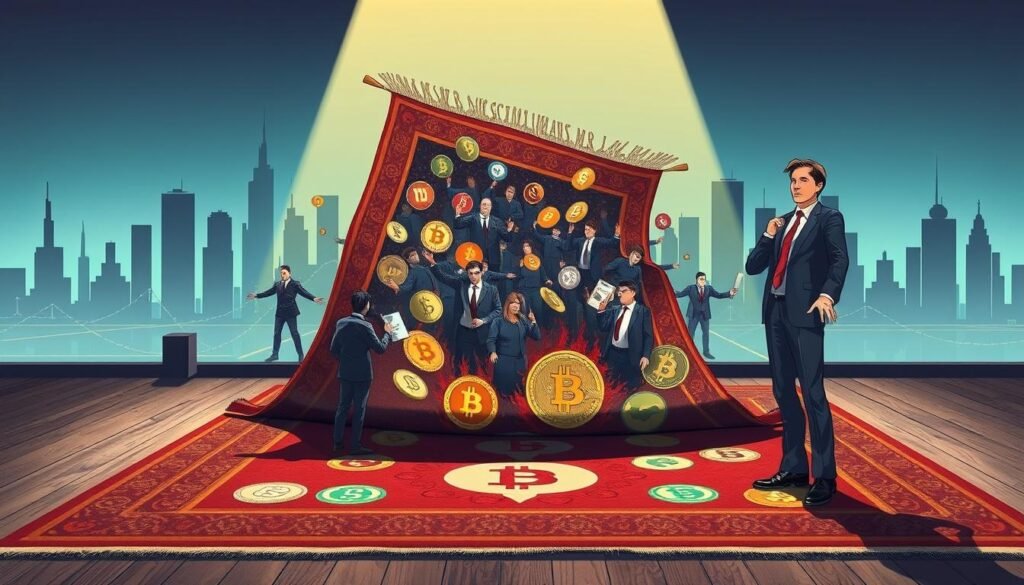
Types of rug pulls in crypto and DeFi
A common attack surface blends technical exploits with social engineering. Below are the main types you will see in token markets and DeFi projects.
Hard vs. soft forms
Hard forms use malicious code or hidden approvals in a smart contract so creators can seize assets or drain pools instantly.
Soft forms are slower: teams overpromise, quietly dump tokens, and let price fade while messaging continues.
Liquidity theft and pool drains
When developers control a liquidity pool, they can withdraw paired funds and collapse token price. That leaves holders with assets that have no active market.
Sell-limit back doors
Some contracts restrict selling for regular wallets while allowing privileged addresses to sell. These rules are often framed as anti-bot protections.
Pump-and-dump and hype cycles
Aggressive marketing inflates token price before insiders sell into the surge. Rapid volume spikes and celebrity endorsements are common markers.
Fake launches, yield traps, and Ponzi designs
Projects promising unsustainable yields or utility may rely on new inflows rather than real revenue. Those schemes can behave like Ponzi models when inflows stop.
- Signals: unlocked liquidity, central control, no audits.
- Watch: token price volatility, holder concentration, and sudden liquidity moves.
For a deeper primer on these scams and mitigation tactics, see detailed guidance on rug pull scams.
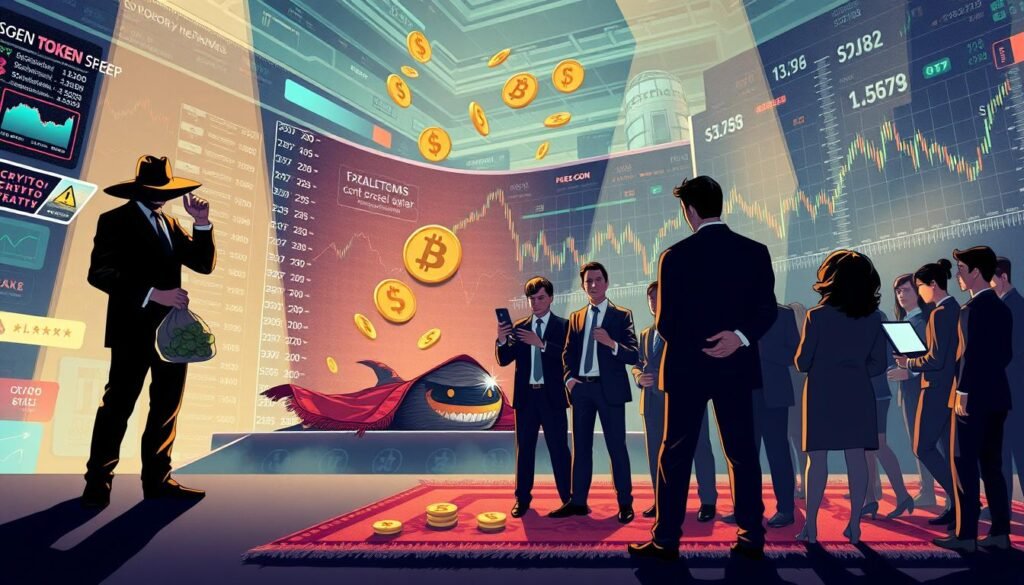
Red flags: how to spot a rug pull before you invest
A few simple checks on team, tokenomics, and contract code reveal most project risks. Run these checks before you allocate capital. They are practical, fast, and often decisive.
Anonymous teams and unrealistic returns
Verify team transparency. Anonymous or unverifiable developers raise the chance of scams. Be extra cautious if marketing promises 10x–1000x returns or sudden token price jumps.
Tokenomics warnings
Look for large insider allocations, no vesting, or claims of renounced ownership without proof. These signs often hide lingering control that lets insiders drain liquidity.
Smart contract signals
Check whether the smart contract source is verified and audited. Unverified code, missing independent reviews, or sell limitations in the contract are strong technical warnings.
Community and media patterns
Monitor social media and channels for heavy shilling, pressure tactics, and vague roadmaps. A thin delivery history paired with aggressive promotions often precedes a soft or hard exit.
Quick actions for investors:
- Test sellability with a small amount before large exposure.
- Review holders and transfers on block explorers to spot concentration.
- Confirm liquidity locks and third-party verifications before trusting market depth.
| Warning | Why it matters | What to check |
|---|---|---|
| Anonymous team | Hard to hold accountable | Linked profiles, past projects, identity verification |
| No vesting | Immediate insider exits possible | Token allocation schedule, lock contracts |
| Unverified contract | Hidden traps or sell limits | Source code verification, audit reports |
| Shilling & pressure | Creates artificial demand | Engagement quality, influencer credibility |
Rug pull examples and lessons learned
Studying past incidents shows common threads: opaque code, influencer hype, and centralized control that let teams move money fast.
StableMagnet — June 2021: ~$27M drained
StableMagnet used an unverifiable library that differed from cited sources. Approvals misuse let attackers transfer tokens from users who interacted with the contract.
More than 1,000 users were affected, and liquidity pairs were emptied in a hard exit.
AniMoon NFT — June 2022: ~$6.3M raised
AniMoon relied on flashy branding and influencer media endorsements for a promised play-to-earn game that never shipped.
On-chain tracing by ZachXBT linked funds to exchange accounts tied to the deployer and co-founder, showing how blockchain analysis aids investigations.
Teddy Doge — BNB Chain: ~$4.5M loss
Wallets tied to the team sold large allocations within a week. Developer-friendly tokenomics and liquidity control enabled rapid price manipulation and an exit narrative about bridge issues.
- Technical lesson: revoke excessive approvals and demand verified source code.
- Community lesson: shilling without demos or audits is a red flag.
- Practical takeaway: check liquidity locks and holder distribution before funding a project.
| Case | Loss | Mechanism |
|---|---|---|
| StableMagnet | $27M | Unverified code, approvals abuse |
| AniMoon | $6.3M | Shilling, no delivery |
| Teddy Doge | $4.5M | Liquidity control, manager allocations |
How to avoid rug pulls: practical steps for investors and communities
Simple verification habits can stop many common scams before you commit assets. Follow a short checklist and use on-chain tools to confirm claims. Slow, repeatable steps cut risk for both users and communities.
Due diligence checklist
- Verify team identity and past projects; prefer named founders with verifiable histories.
- Review tokenomics for concentrated holdings, vesting schedules, and lockups.
- Demand recent independent audits from reputable firms or portals such as CER.live style listings.
On-chain checks
Inspect holders and permissions. Use block explorers to check top wallets, token supply splits, and admin keys.
Test sellability with a small amount before scaling exposure. Confirm documented liquidity locks via third-party verification.
Operational hygiene
- Avoid urgent offers and guaranteed returns; take time to verify claims.
- Diversify positions and limit size in single projects.
- Monitor community updates for substance—code commits, audits, and shipped features—not just hype.
Why audits and reputable platforms matter
Independent security reviews and trusted launch platforms reduce exposure to bad actors. They do not eliminate risk, but they raise the bar for scammers and lower the chance of rapid value loss.
Are rug pulls illegal? Understanding U.S. legal considerations
U.S. authorities assess whether a sudden exit from a token project crosses the line into fraud based on intent and investor harm. Legal exposure depends on facts: statements made to backers, how funds were used, and whether the asset qualifies as a security.
When conduct looks like deception, regulators may act. Potential violations include securities laws (if a token meets investment-contract tests), anti-fraud provisions, and consumer protection rules aimed at false advertising.
When actions may violate securities, AML/KYC, and consumer protection laws
- Securities statutes: unregistered offerings or material misrepresentations can trigger SEC enforcement.
- Fraud and wire offenses: misleading solicitations or coordinated transfers can lead to criminal charges.
- AML/KYC: platforms that move funds without controls risk regulatory scrutiny if they facilitate illicit flows.
- Consumer protection: deceptive claims about product features or guarantees may invite state or federal actions.
Hard vs. soft forms: ethics, enforcement, and jurisdictional nuance
Code-level traps and deliberate back doors (hard forms) present clearer evidence of intent and are easier to frame as fraud. Gradual sell-offs or failed promises (soft forms) often require proof that operators knowingly misled investors.
Enforcement is complex. Pseudonymous teams, cross-border wallets, and mixed transfers slow investigations. Even when illegality is established, recovery of assets is often limited without international cooperation.
| Issue | Typical evidence | Possible result |
|---|---|---|
| Securities violation | Promises of profit, pooled funds, common enterprise | Civil fines, disgorgement, injunctions |
| Fraud/Criminal | Intentional deception, diverted proceeds, coordinated transfers | Indictments, restitution, asset seizures |
| AML/KYC failure | Platform records, lack of controls, suspicious flow patterns | Regulatory penalties, compliance orders |
Preserve records of chats, code commits, and transaction history. That evidence helps authorities and civil counsel. And remember: prevention matters most—careful due diligence reduces the odds of becoming a harmed investor.
Beyond “unruggable”: controls and AI tools that reduce risk
A mix of on-chain locks, shared control, and real-time monitoring makes a project far harder to abuse. These controls do not fully eliminate risk, but they raise the cost and speed needed for insider actions that drain value.
Locked liquidity, renounced ownership, and community governance
Locked liquidity uses time-locked contracts so funds in a liquidity pool cannot be withdrawn instantly. That prevents a sudden removal that would crash token price.
Renounced ownership means developers give up admin keys or transfer them to immutable contracts. This limits unilateral changes that could enable an exit.
Community governance and multisignature treasuries spread control across many stakeholders. That aligns incentives and slows any one actor from moving large assets.
AI-driven anomaly and sentiment detection
AI can monitor blockchain activity and social channels in near real time. Anomaly detection flags unusual token flows, wallet clustering, and sudden liquidity shifts.
NLP and sentiment models scan forums, threads, and feeds to surface coordinated shilling or sudden narrative changes. Correlating these signals gives earlier warnings than any single feed.
- Use dashboards that alert on admin changes, liquidity lock expiries, and large transfers.
- Require repeat audits after upgrades and validate claimed renouncements on-chain.
- Blend on-chain alerts with social sentiment to spot risk windows before price collapse.
Conclusion
In short, a strong, technical advantage—like admin keys or unlocked liquidity—lets insiders convert investor holdings into near-worthless assets fast.
Rug pull is an insider-driven exit that drains liquidity, dumps allocations, or uses contract rules to strip value. These scams still drain funds in the cryptocurrency market, even as awareness and due diligence cut some losses since 2021.
Watch for anonymous teams, wild return promises, unverifiable contracts, and concentrated holdings. Verify teams and audits, inspect tokenomics, test sellability, and confirm liquidity locks before you commit money.
Structural defenses like locked liquidity, renounced ownership, transparent governance, and AI monitoring reduce single points of failure. Active communities that favor evidence over hype help protect investors and the broader blockchain ecosystem. Apply these standards consistently to lower the chance of future pulls.
FAQ
What does the term refer to in cryptocurrency?
The phrase describes a scheme where project creators drain investor funds or remove liquidity so tokens lose value rapidly. This usually happens when developers or insiders sell off or lock up assets in a way that leaves buyers unable to recover their investments. Common targets include newly launched tokens, DeFi pools, and NFT collections.
Why does this term matter to investors?
It highlights an extreme form of fraud that can wipe out savings quickly. Understanding the risks helps buyers spot warning signs, protect capital, and choose projects with stronger governance, audits, and locked liquidity.
What are the key traits of these schemes?
Look for insider-driven exits, sudden liquidity removal from pools, and tokens that become nearly worthless after developers sell or block transfers. Additional red flags include anonymous teams, unverifiable smart contracts, and aggressive social media hype.
How do these incidents relate to traditional exit scams?
They follow the same basic playbook: build trust, collect funds, then vanish or cash out. On public blockchains the damage is amplified because transactions are irreversible and stolen liquidity or drained pools are very hard to recover.
How have these schemes evolved from darknet exits to DeFi?
Early exit scams relied on off-chain platforms and anonymity. Today, attackers exploit smart contracts, automated market makers, and yield-farming incentives. The public ledger makes the attack visible but not easily reversible, and social engineering now plays a bigger role.
What are hard versus soft variants?
A hard variant is abrupt: creators remove liquidity or transfer large token holdings and disappear. A soft variant is gradual: teams delay delivery, mismanage funds, or slowly sell assets while maintaining a public presence to avoid immediate detection.
How does liquidity theft from a pool work?
Malicious actors use admin keys or manipulated approvals to pull paired assets from a liquidity pool. That leaves token holders unable to trade against the pool, collapsing the market price and trapping value in worthless tokens.
Can smart contracts be written to limit selling?
Yes. Developers can build back doors that block transfers for most wallets, allow only certain addresses to sell, or impose hidden taxes. These restrictions can be disguised, so reviewing verified contract code and audit reports is essential.
How do pump-and-dump campaigns fit into this picture?
Coordinated hype pushes price up quickly so insiders can sell at a peak. Once they sell, prices crash and later buyers lose money. These schemes often use aggressive influencer marketing, fake volume, and wash trading.
What role do fake launches, yield traps, and Ponzi dynamics play?
Scammers promise high yields or exclusive drops to attract capital. They then use new investor funds to pay early participants or inflate metrics, creating a Ponzi-like cycle until growth stops and the scheme collapses.
What warning signs should I watch for before investing?
Watch for anonymous teams, sky-high promised returns, sudden price spikes, unverified contracts, audit gaps, unusually large token allocations to founders, and pressure tactics in community channels. Thin or vague roadmaps also indicate risk.
Which tokenomics features are particularly risky?
Risky indicators include massive founder or whale allocations, no vesting or lock-ups, renounced-control claims that aren’t verifiable, and unrestricted minting capabilities. These features let insiders dump tokens or inflate supply.
How can smart contract checks help spot problems?
Verify the code on block explorers, confirm audit reports from reputable firms, and look for functions that grant extraordinary privileges. Run simple tests like transferability checks and review liquidity-lock transactions on-chain.
What community behaviors raise alarms?
Heavy shilling, coordinated promotions, threats for dissent, and moderators removing critical discussion are all red flags. Healthy projects foster open debate, transparent updates, and independent validators.
Are there notable examples and lessons from past incidents?
High-profile cases show common patterns: misuse of approvals, false delivery promises, and deliberate liquidity control. Lessons include the need for verified contracts, transparent teams, locked liquidity, and independent audits.
How do investors avoid these scams in practice?
Follow a due diligence checklist: confirm team identities and past projects, check tokenomics and vesting, verify audits and contract code, ensure liquidity locks, and diversify holdings. Avoid pressure and test small positions first.
What on-chain checks give fast signals?
Inspect holder distribution, large transfers, liquidity lock transactions, and contract verification on explorers like Etherscan. Tools for on-chain analytics can surface unusual concentration or recent admin changes.
Why do independent audits and reputable platforms matter?
Reputable audits reduce coding risk by identifying vulnerabilities and back doors. Listing on established exchanges or launchpads adds compliance and review, which lowers—but does not eliminate—fraud risk.
Are these schemes illegal under U.S. law?
They can violate securities rules, anti‑money laundering statutes, and consumer protection laws when fraud or deceptive practices occur. Enforcement depends on facts, how tokens are marketed, and whether regulators classify assets as securities.
How do hard and soft cases differ for enforcement?
Hard cases with clear theft or rapid disappearance are easier to prove. Soft cases where teams claim failure or mismanagement pose tougher enforcement challenges and may require civil litigation or regulatory scrutiny.
What protections reduce risk beyond basic checks?
Locked liquidity, community governance, multi‑sig admin controls, and transparent treasury management help. Platforms that enforce KYC/AML and projects that publish audited, open-source code also raise the safety bar.
How can AI tools and analytics help detect threats?
AI can scan on‑chain flows, detect unusual token movements, and analyze social sentiment to flag coordinated hype. Combined with traditional audits, these tools improve early warning capabilities.

No comments yet