
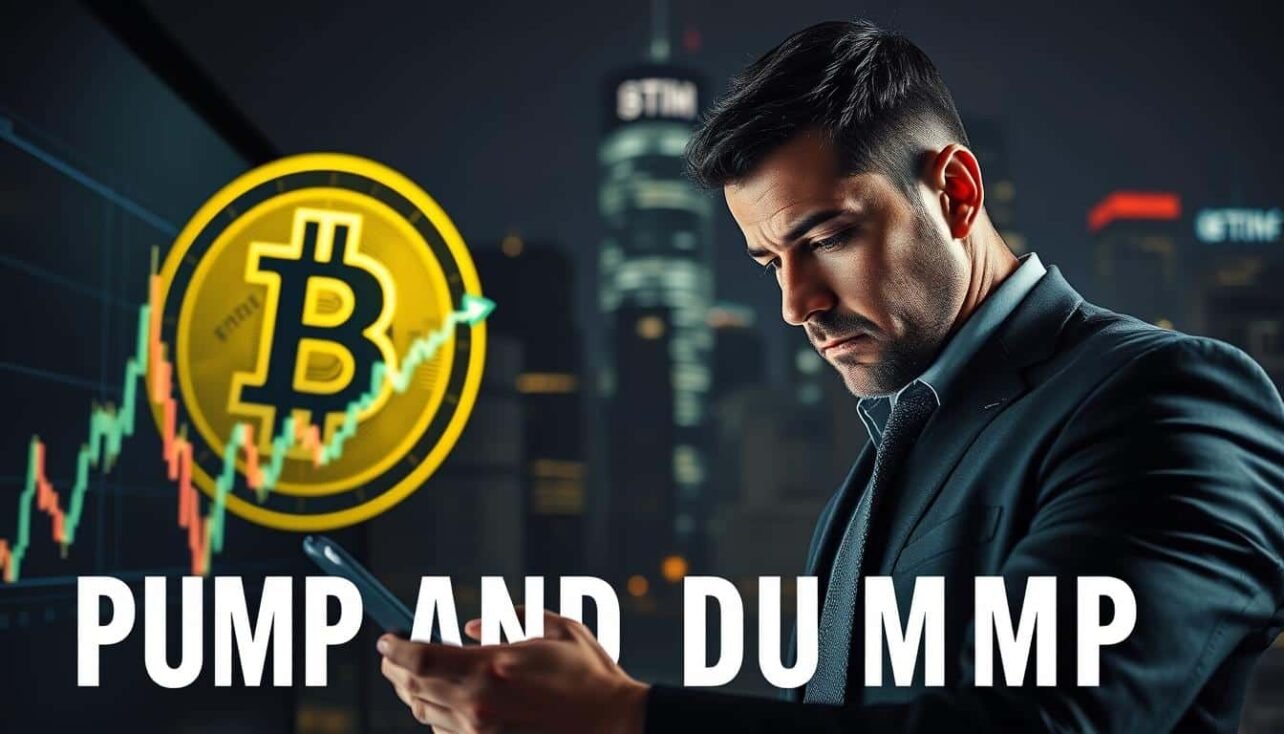
This introduction explains what a “Cryptocurrency Pump and Dump Schemes Warning” means for U.S. investors. These coordinated fraud attacks use false hype to raise a token’s price fast, then insiders sell and the value collapses.
The goal here is practical: learn how these scams work, where they appear, and which red flags to watch. Expect a clear how-to guide that covers social media groups, chat channels, and other hotbeds of coordination.
Scams rely on hype and manipulation, not real project value. Prices can reverse in minutes once organizers sell. That is why investor protection matters: smarter research, safer platforms, and simple risk controls can limit losses.
We focus on the present U.S. crypto market and note regulatory attention from the SEC and CFTC. Read on to spot warning signs and keep your money safer when trading fast-moving assets.
What Pump and Dump Schemes Are in the Cryptocurrency Market
Organized groups use hype and timing to force quick price moves that benefit insiders. These fraud plays mirror classic penny-stock manipulation but move faster because markets trade 24/7.

How the buildup, or “pump,” works
Scammers start by buying a large position in a low-volume coin. They then spread misleading claims — fake milestones, bogus partnerships, or exaggerated tech — to lure buyers.
How the sell-off, or “dump,” happens
Once demand surges, insiders sell into the buying pressure. Liquidity vanishes, order books thin, and the price can collapse in minutes as momentum turns negative.
Why ordinary investors are left holding losses
Late entrants become bag holders. They face steep losses because the token often lacks buyers at prior prices. Thin markets and algorithmic trading can trigger panic exits.
Key differences and terms:
- Pump group — organized buyers coordinating a short-term push.
- Dump schemes — the coordinated selling phase that triggers collapse.
- Rug pull — related term used online; often involves developers removing liquidity rather than coordinated buyers selling.
To learn more about regulators’ advice and spotting red flags, see the CFTC advisory and a practical guide on how to spot pump and dump.
How Crypto Pump Dump Scams Work on Social Media Platforms
Many online fraud rings target thinly traded tokens because small orders can swing prices fast. Low-volume, low-market-cap coins are prime targets: thin order books let modest buys push prices sharply, and reversals are swift when sellers hit the market.

Where coordination happens
Telegram and Discord host “pump groups” that schedule buy times and sell signals. Organizers sell access with promises of exclusive tips.
Reddit threads and Twitter (X) posts then amplify the message. Hashtags, shared screenshots, and repeat posts create viral momentum that looks organic but is often scripted.
Common tactics and the playbook
- Fake partnerships, edited screenshots, and paid influencer posts fuel hype.
- Typical playbook: accumulation → announcement time → coordinated buys → retail FOMO → insiders sell into the spike.
- After the dump, perpetrators often delete accounts, rename the project, or move operations across borders to avoid detection.
Scale note: research documents thousands of pump dump events across hundreds of tokens in short windows, showing this is a widespread problem in the cryptocurrency market.
Cryptocurrency Pump and Dump Schemes Warning: Red Flags to Spot Early
A few simple signs often reveal when a token’s move is driven by hype rather than fundamentals.

- Price spikes with no real news — a 200% jump without filings, audits, or adoption metrics is a major red flag.
- Grand claims and guaranteed returns — countdowns, “buy now” pressure, or promises of easy gains aim to force poor choices.
- Low-volume surges on obscure exchanges — thin order books or new listings can hide wash trading and manipulation.
- Promoters with “exclusive signals” — insider claims often funnel liquidity to early holders, leaving unsuspecting investors behind.
- Lack of transparency — anonymous teams, missing tokenomics, or no third-party audits are warning signs of fraud.
U.S. note: If a token is marketed like an investment, securities rules and anti-fraud laws may apply. Do the necessary research and consider reading a practical guide on avoiding scams at how to avoid crypto scams.
How to Avoid Pump Dump Schemes Before You Buy
Start every trade with a simple due-diligence routine to avoid buying into hype-driven moves. Good research stops impulse buys and gives you an evidence-based view before any investment.
Do your own research
Read the whitepaper, check the team’s credentials, and review the roadmap. Verify prior projects and public records. Look for community signals that feel genuine, not repeated scripts.
Verify beyond social media
Confirm announcements on official sites and reputable news outlets. Cross-check partner statements directly with the named organization. Avoid decisions based solely on chat channels or viral posts.

Use trusted platforms and watch liquidity
Prefer well-known exchanges and platforms with clear listings. Check volume and order-book depth: thin markets let small groups move price quickly.
Diversify and set risk controls
Limit position size, diversify across assets, and set pre-defined exit rules. These simple steps protect investors from large losses when a market reverses fast.
Stay informed
Follow credible crypto news and U.S. regulatory updates. Enforcement actions and guidance can change how investments are treated.
Resisting hype is a skill: when a chart looks too perfect, wait for evidence rather than chasing a sudden rise.
Are Crypto Pump and Dump Schemes Illegal in the United States?
Legal liability in the United States depends on the facts: what was promised, how the token was marketed, and whether deceptive conduct occurred.
When a token is treated as a security
The SEC focuses on whether a token functions like an investment contract. If buyers expect profits from others’ efforts, the asset may be a security. That triggers disclosure duties, registration rules, and stronger anti-manipulation standards.
Where the CFTC fits
The CFTC regulates digital assets treated as commodities. Even when not a security, suspicious trading or market manipulation can draw CFTC enforcement. Both agencies often pursue similar conduct when markets and channels show coordinated activity.
Key federal anti-fraud laws
Enforcers commonly cite Section 10(b), Rule 10b-5, and Section 17(a). In plain terms, these provisions ban lies, deceptive acts, and manipulative trading that harm investors.
Why prosecution is hard
Pursuit is difficult because wallets are often pseudonymous, trades occur on decentralized venues, and funds move quickly across borders. That makes tracing people and proving intent a major challenge.
If you suspect wrongdoing: preserve evidence—take screenshots, save chat logs, and record transaction hashes. Those records help regulators and companies investigate fraud.
How AI and Real-Time Monitoring Help Detect Market Manipulation
Real-time analytics now spot odd market moves within seconds, giving defenders a head start against coordinated attacks. Exchanges, firms, and investigators combine trade feeds, on-chain records, and social signals to build a fuller picture of suspicious activity.
Anomaly detection
Anomaly detection scans for abnormal volume, sudden price spikes, and sharp reversals that don’t match historical patterns. Unusual signs include clustered buy orders, sudden liquidity changes, or synchronized timing across accounts.
Network analysis
Network tools link wallets, deposit flows, and repeated transfer paths to reveal coordinated activity. By mapping connections, investigators can spot funding sources, repeated campaign wallets, and cross-exchange patterns that suggest a dump scheme.
Adaptive learning
Adaptive models evolve as bad actors change tactics. Machine learning updates rules when new patterns appear, such as shifts to different channels, tokens, or timing. That keeps detection current without manual rule changes.
- Combined signals: trading data, on-chain links, and social spikes give stronger alerts.
- Faster response: real-time flags help exchanges halt suspicious listings or warn users.
- Investor role: these tools support surveillance, but personal due diligence and risk limits remain essential.
Conclusion
A calm checklist beats chasing fast gains when markets reverse without warning. Pump-and-dump schemes create a short-lived price illusion, then collapse as insiders sell. Investors who slow down avoid many common traps.
Validate claims beyond chat groups, favor trusted platforms, and focus on project fundamentals and transparency. Treat thinly traded tokens and sudden spikes as risk signals, not opportunities.
U.S. regulators such as the SEC and CFTC monitor manipulative activity, but enforcement can lag behind fast-moving fraud. Preserve records if you suspect illegal conduct.
Next step: build a repeatable research checklist, limit position size, and refuse any pitch that promises guaranteed returns. A disciplined process and clear risk controls are the best defense for long-term crypto investing.
FAQ
What are pump and dump schemes in the crypto market?
These are coordinated campaigns where promoters inflate a token’s price using misleading claims, hype, or coordinated buys, then sell their holdings at the peak. The price collapses and regular investors suffer losses.
How do scammers “pump” a coin’s price with misleading information?
Scammers spread false news, announce fake partnerships, use paid influencers, and amplify posts across Telegram, Discord, Reddit, and X to create FOMO. Rapid buying from a small group drives the visible price up.
How does the “dump” happen and why do prices crash so fast?
After the hype, insiders sell large positions into the inflated market. Low liquidity means big sells push prices down sharply. Once selling starts, panic follows and price declines accelerate.
Why are unsuspecting investors often left holding devalued assets?
Retail buyers enter late during the surge and buy at high prices. When promoters exit, there’s minimal demand to absorb sell orders. Without liquidity or real fundamentals, the token’s value plunges.
Why are low-volume, low-market-cap coins easier to manipulate?
Smaller markets require less capital to move prices. A few large buys or sells can create outsized swings, making these tokens attractive targets for coordinated manipulation.
Where does coordination for these schemes typically happen?
Organizers use encrypted and public channels such as Telegram groups, Discord servers, Reddit threads, and X. Private chats and invite-only channels often host the planning and timing details.
What hype tactics do promoters use to attract buyers?
Common tactics include bogus partnership announcements, fake celebrity endorsements, manufactured viral posts, manipulated on-chain activity, and promises of guaranteed returns to pressure quick buys.
What is the “pump event” playbook?
The playbook: select a target token, coordinate buys to spike the price, amplify the event with social posts and alerts, create FOMO, then sell large positions during the peak while leaving others to suffer the drop.
What exit tactics do scammers use after a dump?
Scammers often delete social channels, rebrand projects, move funds across exchanges and chains, or use mixers to obscure traces, complicating recovery or enforcement efforts.
What red flags should I watch for early?
Look for sudden price jumps without verifiable news, grandiose promises or “guaranteed” returns, surges in low-volume tokens on obscure exchanges, anonymous teams, and missing documentation.
How can I verify claims beyond social media and chat channels?
Check the token’s whitepaper, audit reports, team credentials on LinkedIn, on-chain data, reputable exchange listings, and independent news sources. Cross-check announcements with official partner channels.
What trading practices reduce my risk of getting caught in a scam?
Use well-known exchanges, monitor liquidity and volume indicators, set clear entry and exit rules, avoid buying into sudden spikes, and diversify holdings to limit exposure to any single asset.
Are these schemes illegal in the United States?
Yes, many pump-and-dump activities violate federal anti-fraud laws. If a token qualifies as a security, the SEC can act. The CFTC may intervene if an asset is treated as a commodity. Enforcement often uses Section 10(b), Rule 10b-5, and Section 17(a).
Why is prosecution difficult in crypto cases?
Challenges include anonymous or pseudonymous actors, cross-border operations, decentralized structures, rapid fund movement, and limited international cooperation, all of which complicate investigations.
How does AI help detect market manipulation?
AI tools use anomaly detection to flag abnormal volume, rapid spikes, and reversals. Network analysis links wallets and transaction histories. Adaptive learning helps systems update as scammers change tactics.
What on-chain signs indicate coordinated activity?
Signs include multiple wallets buying the same token in a short window, repeated token transfers between linked addresses, sudden concentration of supply, and rapid listing activity across small exchanges.
How should I respond if I suspect a token is being manipulated?
Stop further purchases, document suspicious posts and transactions, move funds to safer assets if needed, report the activity to exchange support and regulators like the SEC or CFTC, and warn your community.
Where can I find credible news and regulatory updates?
Rely on established outlets like CoinDesk, The Block, Bloomberg Crypto, and official regulator sites. Follow verified accounts of the SEC, CFTC, and major exchange announcements for accurate information.

No comments yet