

Large holders can change market tone fast. In the U.S. market, spotting big on-chain moves helps investors add context to price action. This guide frames the practice as a research tool, not a promise of profit.
Expect clear steps for identifying concentration versus market cap risks, finding Ethereum wallets, and reading balance histories. We cover core data sources, explorer tools, analytics APIs, and alert dashboards.
Use whale data as one input among many. Combine it with liquidity metrics, exchange flows, and holder concentration to avoid blind copy-trading. Follow risk controls and always DYOR.
Key takeaways: This section sets expectations, previews the roadmap, and explains why on-chain moves matter now due to faster liquidity shifts and token launches.
What a Crypto Whale Is and Why It Matters in Today’s Market
Big account moves often explain sudden price swings traders see daily. A crypto whale is a holder with enough tokens to change liquidity and investor psychology for a given asset. This definition covers large single wallets, funds, or entities that hold a material share of circulating supply.
How large holdings create ripple effects:
- A single big buy or sell can shift order books and move price quickly.
- Large transfers to exchanges often trigger stop-loss cascades and copycat trades.
- Unexpected on-chain swaps can amplify volatility through sentiment changes.
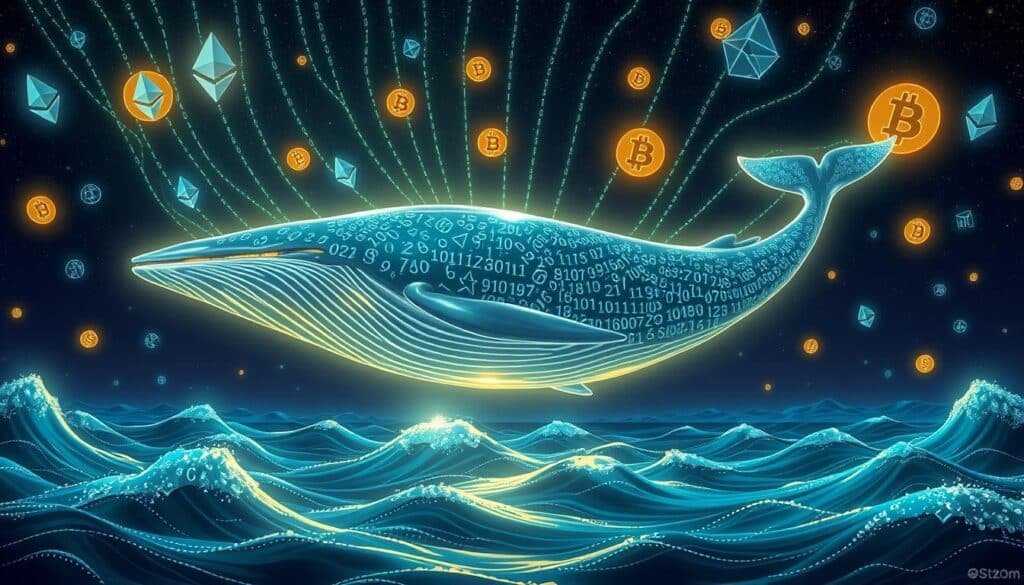
Whales influence short-term market moves, but they do not control protocol rules or long-term trends. Context matters: circulating supply, exchange liquidity, and holder concentration change how much impact any move has.
Read this way: treat whale signals as one input. Look for accumulation vs distribution, exchange inflows/outflows, and repeated patterns across multiple whales before acting. Misreading activity leads to chasing candles, so pair signals with risk controls and clear position sizing.
How to Identify Crypto Whales by Market Cap and Wallet Concentration
Labels like “major holder” depend on scale, not a single dollar threshold. A clear definition ties token size, circulating supply, and liquidity to influence. Use both concentration and absolute-value tests before calling an account a big actor.

Common benchmarks
Concentration-based: for small caps, look for addresses holding ≈10% of supply. That level can dominate price moves.
Absolute-value: for larger markets, use a floor near $10M in token value as a practical cutoff.
Scale example
A $1M position in a $100M market cap token can change sentiment and liquidity. The same $1M in a $20B cap market rarely moves price much. Use this example to calibrate your analysis.
Bitcoin & Ethereum vs low-cap tokens
bitcoin ethereum markets have deep order books, so single wallets exert less sway. Low-cap tokens can be fragile: a few holders may set price direction.
- Checklist: % of supply held
- Historical volume and exchange depth
- Top holders: exchange/contract vs private wallet
- Recent balance changes and concentration trends
Next: use ranked holder lists and balance thresholds on Ethereum to turn these rules into monitorable filters.
Ethereum Whales Explained: Visibility, Anonymity, and On-Chain Transparency
When an address holds a sizable ETH stake, its moves can ripple through liquidity and governance on the ethereum network.
What makes an ethereum whale influential: large ETH or ERC‑20 positions can alter DeFi pool depth, sway governance votes, and change market sentiment for ethereum-based assets. These holders may shift liquidity quickly, affecting price discovery.
Addresses remain pseudonymous, so anonymity persists even for major accounts. Yet the blockchain stores every transfer, balance, and timestamp, creating a permanent audit trail that anyone can read.
How on-chain visibility enables practical analysis
Every address has a complete transaction history. Moves between private wallets, DEX routers, and exchange deposit addresses form patterns analysts can follow.
Common wallet types change interpretation: exchange hot wallets often signal market flows, contract addresses reflect protocol activity, multi-sigs show treasury moves, and EOAs suggest private decision-making.
- Auditability: decentralization plus immutability means recorded transfers stay accessible for later review.
- What on-chain shows: what happened, not why — so conclusions must be probabilistic and supported with multiple data points.
- Next steps: explorers surface raw address data; analytics platforms scale filters, aggregation, and alerting for live monitoring.
Cryptocurrency Whale Watching and Tracking: What You Can Learn From Whale Activity
On-chain moves reveal timing clues that traders can use to sharpen entry and exit plans.
Market insights: timing entries and exits using wallet activity
Repeated accumulation often shows up before protocol updates or token launches. Seeing wallets rotate between stablecoins and volatile assets can hint at short-term positioning.
Use these signals to refine entry and exit windows, but confirm with volume and broader market context.
Vigilance in trading: spotting manipulation-like patterns
Rapid liquidity pulls, coordinated transfers, or wash-like swaps may precede sharp moves that trigger panic or FOMO.
Not every large transfer equals foul play; always test hypotheses across multiple addresses and timeframes.

Network health: measuring decentralization risk via holder concentration
High concentration raises governance and custody risks. A few large holders make price more sensitive to their moves.
Trading signals: interpreting big buys, sells, and sudden transfers
- Large buys that absorb liquidity can support higher price levels.
- Massive sells or abrupt exchange inflows often precede breakpoints.
- Exchange outflows may indicate long-term custody rather than immediate selling.
Portfolio management: using whale data as one input
Treat whale tracking as a monitoring layer for portfolio decisions, not a shortcut to profits. Combine on-chain signals with fundamentals, tokenomics, and risk budgets.
For practical steps on following holders over time, see this step-by-step guide to set up thresholds and alerts.
Core Data Sources for Whale Tracking: Blockchain Explorers and Analytics Platforms
To follow major on-chain moves effectively, use a two-tier approach: explorers for proof and platforms for scale.
Blockchain explorers: verify addresses, balances, and transactions
Start with explorers to confirm an address, current balance, and raw transactions. Explorers let you validate token transfers and see whether a destination is an exchange wallet or a smart contract.
They are ideal for spot checks, quick proofs of movement, and timestamp verification before you act.
Analytics platforms: filtering, aggregation, and monitoring at scale
Use analytics platforms to scan many wallets, extract DEX trades, and build repeatable dashboards. These tools automate queries, surface historical balance changes, and run alerts across multiple blockchains.
Bitquery is an API-first example that indexes 40+ chains and 100+ DEXes, making programmatic queries of token holders and wallet activity possible.
- Two-tier toolkit: explorers for raw verification; platforms for aggregation and automation.
- Scale problem: manual checks fail once you track many wallets, tokens, or blockchains.
- Top-of-funnel: add Whale Alert for fast awareness of major transfers and breaking transaction events.
For US readers: cross-check sources before concluding a label like “exchange” since provider tagging and timing can differ. For a practical overview, see this whale monitoring primer.
Setting Your Whale-Watching Criteria Before You Track Anything
Good monitoring starts by narrowing scope: pick the chain, the token, and clear thresholds.
Choosing the chain and token to monitor
Start with a primary chain that fits your focus. For many US traders that is Ethereum due to liquidity and tool support.
Pick a token tied to buying power. USDT is useful because large USDT balances often signal deployable capital that can rotate into other assets quickly.
Defining thresholds that match your strategy
Operationalize a definition for a whale before you scan. A practical rule: target wallets holding $10M+ in USDT, with at least 100 transactions and a latest tx after 2024-03-20.
Use three filters: balance, frequency, and recency. These limits help focus on active wallets rather than dormant custodians.
- Balance: $10M+ (example for USDT).
- Frequency: ≥100 transfers/trades to show on-chain activity.
- Recency: last transaction within your study window to avoid stale signals.
Document your thresholds before you begin. Revisiting them as market volatility or strategies change will improve your analysis and decisions.
Next step: use token holder lists on Ethereum to shortlist candidate wallets that meet these rules for deeper monitoring and tracking.
Finding Whale Wallets on Ethereum With Token Holder Data
Rather than hunting randomly, extract ranked holder data for a major stable token to pinpoint high-value accounts.
Filter by balance
Use a concrete balance cutoff to flag candidate wallets. For example, query USDT holders with Balance.Amount ≥ “10000000” to find $10M+ accounts as of 2024-03-20.
Rank and shortlist
Run a TokenHolders query on Bitquery, order by Balance_Amount desc, and limit results (top 20). The USDT ERC‑20 contract on Ethereum is 0xdAC17F958D2ee523a2206206994597C13D831ec7.
- Verify identities: remove known exchange or contract addresses.
- Prioritize: focus on wallets that show repeated transfers and custody patterns.
- Snapshot checks: repeat the filter on multiple dates to spot persistent holders vs one-off balances.
Finding a wallet is step one. Your edge comes from monitoring balance shifts and transaction cadence over time. Next, you will track historical balances to infer accumulation or distribution strategy.
Tracking Wallet Balances Over Time to Understand Whale Strategy
Following how a top address changes token allocations over time exposes real strategy more than single transfers. Use balance histories to map whether a major account is accumulating, distributing, or rotating between assets.
Reading balance updates to identify accumulation vs distribution
Look for sustained increases in token amounts to infer accumulation. Repeated large outflows or steady declines usually signal distribution or a risk-off stance.
Use the Bitquery Address Balance History API (BalanceUpdates) to sum meaningful updates above a threshold (for example gt “100000”) for an address such as 0x66e092fd00c4e4eb5bd20f5392c1902d738ae7bc.
Using update frequency to decide how deep to analyze
Count the number of updates (no_of_updates) to triage effort. Rarely updated wallets are lower priority. High-frequency wallets merit ongoing monitoring and deeper analysis.
Portfolio clues: what whales hold and how allocations change
Track token mixes to spot strategy shifts. Rising stablecoin exposure before a market dip suggests hedging. Moving into high-beta tokens often indicates risk-on positioning.
- Tip: aggregate updates to avoid micro-noise and focus on material moves.
- Tip: cross-check token narratives; new or meme assets raise execution risk.
- Next: complement balance history with trade and transfer-level analysis to separate DEX activity from custody moves.
Monitoring Trades and Transfers: Measuring Whale Activity Level
Quantify on-chain actors by how often they swap on DEXes and how much value moves through their wallets.
Measuring activity level
Activity level is measurable: count how many transactions an address executes, sum total in/out value, and check net buy-side vs sell-side over a chosen window.
DEX trade frequency: buy-side vs sell-side behavior
Frequent DEX swaps often indicate an active trading strategy. Infrequent swaps suggest long-term holding or treasury moves.
Track whether the address is the buyer or seller on each swap to detect directional bias. This avoids mislabeling neutral liquidity rotations as accumulation or distribution.
Total in/out amounts: mapping flows
Map InAmount and OutAmount to build a flow model. Sum deposits, withdrawals, and stablecoin conversions to infer turnover and capital deployment pace.
Example: a monitored account (0x66e092fd00c4…) shows 20,000+ transactions and over $6B moved, signaling very high activity versus typical funds.
Interpreting high transaction counts and large amounts
High counts can signal arbitrage, liquidity provision, market making, or automated strategies. Each case needs different caution when used for trading decisions.
Practical warning: large transacted sums do not always equal smart money. They may reflect exchange custody, hot-wallet routing, or programmatic flows.
- Use activity metrics to choose cadence: real-time alerts for active wallets, weekly snapshots for slow-moving addresses.
- Combine trade frequency, flow maps, and token mix for robust on-chain analysis.
- Always cross-check exchange tags and custody labels before inferring intent.
Real-Time Whale Watching: Tracking Transactions as They Happen
Catching big token movements in real time can reveal intent before prices reflect the change. Live transaction feeds give traders near-instant information that often precedes short-term volatility. This situational awareness helps frame decisions without forcing action.
Using realtime transaction feeds to monitor recent transfers
Subscribe to a live Transactions feed filtered by an important address (for example 0x66e092fd00c4e4eb5bd20f5392c1902d738ae7bc with a limit of 100). Review newest items with block time, tx hash, and gas cost to spot material movements.
Practical pattern: scan each entry, note size and recipient type, then flag transfers that exceed your liquidity threshold.
Exchange inflows vs exchange outflows and what each can imply
Transfers to exchange wallets often imply potential selling or short-term repositioning. Transfers from exchanges into private or DEX addresses can imply custody withdrawal, long-term holding, or on‑chain deployment.
Always confirm that a tagged destination is truly an exchange, and watch for follow-on actions: DEX swaps, stablecoin conversions, or market sell orders.
- Movement clustering: multiple large transfers within minutes often indicate staged execution rather than a single isolated move.
- Trader workflow: realtime feed → classify destination (exchange/DEX/contract) → check size vs liquidity → decide to tighten risk or wait for confirmation.
- Safety note: use live feeds for monitoring and context. Validate signals with volume, order‑book, and broader market indicators before trading. Always DYOR.
Tools and Alerts for US Traders: Whale Alert Dashboards and Custom Notifications
Fast alerting systems turn raw on‑chain moves into actionable signals for US traders.
Whale Alert dashboards for live analytics and major transaction monitoring
Whale Alert provides live analytics, major transaction monitoring, and breaking news.
The dashboard surfaces big transfers so you can decide what needs deeper review.
It offers a free 7‑day trial to test coverage before committing to a plan.
Setting up customizable alerts via Email, Push, Webhook, Telegram, Discord, and Slack
Use targeted alerts to match your workflow. Choose Push for instant attention and Email for records.
Webhooks feed automated systems. Telegram, Discord, and Slack work well for team ops.
Monitoring specific tokens, wallets, and chains with delayed vs immediate alerts
Platforms that monitor ETH and BSC may deliver alerts with a short delay unless you enable immediate notification.
Align alert latency with your time horizon to avoid missed windows.
- Fast visibility: dashboards act as the first layer to spot major transactions.
- Scope control: limit alerts to selected wallets and token pairs to avoid fatigue.
- Verification workflow: an alert is a starting gun—verify on an explorer, classify the destination, then compare to historical data for insights.
Conclusion
, Conclusion
Adopt a disciplined workflow: define who qualifies as a crypto whale by market cap or concentration, then apply filters that match your strategy. Use holder ranks, balance history, DEX trades, and realtime feeds to build context before you act.
Treat dashboards and alerts as signals, not answers. Verify transfers on the blockchain, check address history, and confirm tags for exchanges or contracts.
Watch exchange inflows/outflows, repeated large transactions, and sustained accumulation or distribution over time for the clearest insights.
For US investors, keep tight position sizing, avoid chasing spikes, and document rules inside a diversified portfolio plan. Blockchain shows money movements; motives remain uncertain—so keep analysis probabilistic and careful.
FAQ
What is a crypto whale and why do large holders matter in the market?
A crypto whale is an address or entity holding a large share of a token or coin. Large holders matter because their moves—big buys, sells, or transfers—can shift market sentiment and price, especially in low-liquidity assets. Tracking these wallets helps investors estimate supply pressure and potential volatility.
How do holdings create ripple effects in price and sentiment?
When a major wallet moves funds to an exchange, markets often interpret that as an intent to sell, which can trigger panic selling. Conversely, accumulation on cold wallets or DeFi contracts can signal confidence and draw buying interest. Public records on blockchains make such signals observable in near real time.
Do whales control crypto markets?
No single holder usually controls decentralized networks like Bitcoin or Ethereum, but concentrated holdings can still move prices. Whales influence short-term liquidity and can amplify market moves, yet broader participation and exchange order books limit absolute control.
How do you define a whale by market cap or wallet concentration?
Definitions vary: for small-cap tokens, a holder with 10% of supply qualifies as dominant. For larger tokens, a threshold like million in holdings often marks a significant player. The meaningful level scales with total market cap and token distribution.
CanFAQ
What is a crypto whale and why do large holders matter in the market?
A crypto whale is an address or entity holding a large share of a token or coin. Large holders matter because their moves—big buys, sells, or transfers—can shift market sentiment and price, especially in low-liquidity assets. Tracking these wallets helps investors estimate supply pressure and potential volatility.
How do holdings create ripple effects in price and sentiment?
When a major wallet moves funds to an exchange, markets often interpret that as an intent to sell, which can trigger panic selling. Conversely, accumulation on cold wallets or DeFi contracts can signal confidence and draw buying interest. Public records on blockchains make such signals observable in near real time.
Do whales control crypto markets?
No single holder usually controls decentralized networks like Bitcoin or Ethereum, but concentrated holdings can still move prices. Whales influence short-term liquidity and can amplify market moves, yet broader participation and exchange order books limit absolute control.
How do you define a whale by market cap or wallet concentration?
Definitions vary: for small-cap tokens, a holder with 10% of supply qualifies as dominant. For larger tokens, a threshold like $10 million in holdings often marks a significant player. The meaningful level scales with total market cap and token distribution.
Can $1M make someone a whale?
Yes—if the token’s market cap is low (for example $100M), a $1M stake can represent a meaningful share and influence. In a $20B market, $1M is negligible and won’t move price materially.
How do Bitcoin and Ethereum whales differ from low-cap token whales?
BTC and ETH wallets are easier to move in public markets but require larger sums to impact price. Low-cap token whales can affect prices with much smaller amounts because liquidity is limited and order books are thin.
What makes an Ethereum whale especially visible?
Ethereum’s active smart-contract ecosystem and transparent ERC‑20 token standards expose balances and transfers. Tools like Etherscan show holder lists and transactions, making large movements easier to spot than in some other systems.
How does on-chain transparency affect anonymity for large holders?
On‑chain data shows addresses and balances but not real-world identities. Labels from analytics providers and clustering heuristics can link addresses to exchanges, funds, or services, reducing anonymity in many cases.
What market insights can I derive from monitoring large wallet activity?
You can time entries and exits by spotting accumulation or distribution, detect unusual transfer patterns that resemble manipulation, and measure decentralization risk through holder concentration. Use this as one input among others for trading decisions.
How can whale activity serve as trading signals?
Large buys and deposits to DeFi vaults often precede bullish runs; sudden transfers to exchanges can foreshadow sell pressure. Look for repeated patterns, size relative to daily volume, and supporting on‑chain indicators before acting.
What core data sources do pros use for tracking big wallets?
Analysts rely on blockchain explorers like Etherscan and blockchain.info plus analytics platforms such as Nansen, Glassnode, Coin Metrics, and Dune for filtering, aggregation, and monitoring at scale.
How should I set whale-watching criteria before I track wallets?
Choose which chain and token to monitor, set thresholds (e.g., balance size, number of transfers, recency), and align those criteria with your risk profile and time horizon to avoid noise and false signals.
How do I find large wallets on Ethereum using token holder lists?
Use token holder pages on Etherscan or analytics dashboards to filter by balance value—e.g., $10M+ USDT holders—and rank addresses by holdings to shortlist targets for closer monitoring.
What does tracking wallet balances over time reveal?
Balance history exposes accumulation versus distribution, shows changes in allocation across tokens, and helps infer strategy—long-term holding, active trading, or routing through mixers and exchanges.
How can update frequency inform analysis depth?
Frequent small updates suggest active trading or programmatic strategies. Infrequent large changes often indicate strategic allocation moves. Adjust monitoring intensity based on observed cadence.
How do you measure whale activity level via trades and transfers?
Track DEX trade frequency, total in/out amounts, and transaction counts. High-volume transfers with low on-chain interaction hint at exchange flows, while many small trades suggest market making or algorithmic activity.
How useful are real-time transaction feeds for watching big moves?
Real-time feeds let you see large transfers as they occur, enabling faster responses. They’re valuable for spotting exchange inflows that might precede selling or outflows that signal accumulation or OTC settlements.
What’s the difference between exchange inflows and outflows?
Inflows to exchange addresses commonly indicate potential selling intent, increasing short-term supply. Outflows from exchanges often reflect withdrawals by investors or transfers to cold storage, which can be bullish if sustained.
Which tools and alerts are best for US traders tracking major transfers?
Use dashboards and alerts from services like Whale Alert, Nansen, Coin Metrics, and Glassnode. Customize notifications via Email, push, webhooks, Telegram, Discord, or Slack to monitor specific tokens, wallets, and chains with desired latency.
How should I use whale data in portfolio management?
Treat whale signals as one input alongside fundamentals, technical analysis, and news. Use observed wallet activity to adjust risk, size positions, or time entries—but avoid relying solely on on‑chain movements.
What is a crypto whale and why do large holders matter in the market?
A crypto whale is an address or entity holding a large share of a token or coin. Large holders matter because their moves—big buys, sells, or transfers—can shift market sentiment and price, especially in low-liquidity assets. Tracking these wallets helps investors estimate supply pressure and potential volatility.
How do holdings create ripple effects in price and sentiment?
When a major wallet moves funds to an exchange, markets often interpret that as an intent to sell, which can trigger panic selling. Conversely, accumulation on cold wallets or DeFi contracts can signal confidence and draw buying interest. Public records on blockchains make such signals observable in near real time.
Do whales control crypto markets?
No single holder usually controls decentralized networks like Bitcoin or Ethereum, but concentrated holdings can still move prices. Whales influence short-term liquidity and can amplify market moves, yet broader participation and exchange order books limit absolute control.
How do you define a whale by market cap or wallet concentration?
Definitions vary: for small-cap tokens, a holder with 10% of supply qualifies as dominant. For larger tokens, a threshold like $10 million in holdings often marks a significant player. The meaningful level scales with total market cap and token distribution.
Can $1M make someone a whale?
Yes—if the token’s market cap is low (for example $100M), a $1M stake can represent a meaningful share and influence. In a $20B market, $1M is negligible and won’t move price materially.
How do Bitcoin and Ethereum whales differ from low-cap token whales?
BTC and ETH wallets are easier to move in public markets but require larger sums to impact price. Low-cap token whales can affect prices with much smaller amounts because liquidity is limited and order books are thin.
What makes an Ethereum whale especially visible?
Ethereum’s active smart-contract ecosystem and transparent ERC‑20 token standards expose balances and transfers. Tools like Etherscan show holder lists and transactions, making large movements easier to spot than in some other systems.
How does on-chain transparency affect anonymity for large holders?
On‑chain data shows addresses and balances but not real-world identities. Labels from analytics providers and clustering heuristics can link addresses to exchanges, funds, or services, reducing anonymity in many cases.
What market insights can I derive from monitoring large wallet activity?
You can time entries and exits by spotting accumulation or distribution, detect unusual transfer patterns that resemble manipulation, and measure decentralization risk through holder concentration. Use this as one input among others for trading decisions.
How can whale activity serve as trading signals?
Large buys and deposits to DeFi vaults often precede bullish runs; sudden transfers to exchanges can foreshadow sell pressure. Look for repeated patterns, size relative to daily volume, and supporting on‑chain indicators before acting.
What core data sources do pros use for tracking big wallets?
Analysts rely on blockchain explorers like Etherscan and blockchain.info plus analytics platforms such as Nansen, Glassnode, Coin Metrics, and Dune for filtering, aggregation, and monitoring at scale.
How should I set whale-watching criteria before I track wallets?
Choose which chain and token to monitor, set thresholds (e.g., balance size, number of transfers, recency), and align those criteria with your risk profile and time horizon to avoid noise and false signals.
How do I find large wallets on Ethereum using token holder lists?
Use token holder pages on Etherscan or analytics dashboards to filter by balance value—e.g., $10M+ USDT holders—and rank addresses by holdings to shortlist targets for closer monitoring.
What does tracking wallet balances over time reveal?
Balance history exposes accumulation versus distribution, shows changes in allocation across tokens, and helps infer strategy—long-term holding, active trading, or routing through mixers and exchanges.
How can update frequency inform analysis depth?
Frequent small updates suggest active trading or programmatic strategies. Infrequent large changes often indicate strategic allocation moves. Adjust monitoring intensity based on observed cadence.
How do you measure whale activity level via trades and transfers?
Track DEX trade frequency, total in/out amounts, and transaction counts. High-volume transfers with low on-chain interaction hint at exchange flows, while many small trades suggest market making or algorithmic activity.
How useful are real-time transaction feeds for watching big moves?
Real-time feeds let you see large transfers as they occur, enabling faster responses. They’re valuable for spotting exchange inflows that might precede selling or outflows that signal accumulation or OTC settlements.
What’s the difference between exchange inflows and outflows?
Inflows to exchange addresses commonly indicate potential selling intent, increasing short-term supply. Outflows from exchanges often reflect withdrawals by investors or transfers to cold storage, which can be bullish if sustained.
Which tools and alerts are best for US traders tracking major transfers?
Use dashboards and alerts from services like Whale Alert, Nansen, Coin Metrics, and Glassnode. Customize notifications via Email, push, webhooks, Telegram, Discord, or Slack to monitor specific tokens, wallets, and chains with desired latency.
How should I use whale data in portfolio management?
Treat whale signals as one input alongside fundamentals, technical analysis, and news. Use observed wallet activity to adjust risk, size positions, or time entries—but avoid relying solely on on‑chain movements.
M make someone a whale?
Yes—if the token’s market cap is low (for example 0M), a
FAQ
What is a crypto whale and why do large holders matter in the market?
A crypto whale is an address or entity holding a large share of a token or coin. Large holders matter because their moves—big buys, sells, or transfers—can shift market sentiment and price, especially in low-liquidity assets. Tracking these wallets helps investors estimate supply pressure and potential volatility.
How do holdings create ripple effects in price and sentiment?
When a major wallet moves funds to an exchange, markets often interpret that as an intent to sell, which can trigger panic selling. Conversely, accumulation on cold wallets or DeFi contracts can signal confidence and draw buying interest. Public records on blockchains make such signals observable in near real time.
Do whales control crypto markets?
No single holder usually controls decentralized networks like Bitcoin or Ethereum, but concentrated holdings can still move prices. Whales influence short-term liquidity and can amplify market moves, yet broader participation and exchange order books limit absolute control.
How do you define a whale by market cap or wallet concentration?
Definitions vary: for small-cap tokens, a holder with 10% of supply qualifies as dominant. For larger tokens, a threshold like $10 million in holdings often marks a significant player. The meaningful level scales with total market cap and token distribution.
Can $1M make someone a whale?
Yes—if the token’s market cap is low (for example $100M), a $1M stake can represent a meaningful share and influence. In a $20B market, $1M is negligible and won’t move price materially.
How do Bitcoin and Ethereum whales differ from low-cap token whales?
BTC and ETH wallets are easier to move in public markets but require larger sums to impact price. Low-cap token whales can affect prices with much smaller amounts because liquidity is limited and order books are thin.
What makes an Ethereum whale especially visible?
Ethereum’s active smart-contract ecosystem and transparent ERC‑20 token standards expose balances and transfers. Tools like Etherscan show holder lists and transactions, making large movements easier to spot than in some other systems.
How does on-chain transparency affect anonymity for large holders?
On‑chain data shows addresses and balances but not real-world identities. Labels from analytics providers and clustering heuristics can link addresses to exchanges, funds, or services, reducing anonymity in many cases.
What market insights can I derive from monitoring large wallet activity?
You can time entries and exits by spotting accumulation or distribution, detect unusual transfer patterns that resemble manipulation, and measure decentralization risk through holder concentration. Use this as one input among others for trading decisions.
How can whale activity serve as trading signals?
Large buys and deposits to DeFi vaults often precede bullish runs; sudden transfers to exchanges can foreshadow sell pressure. Look for repeated patterns, size relative to daily volume, and supporting on‑chain indicators before acting.
What core data sources do pros use for tracking big wallets?
Analysts rely on blockchain explorers like Etherscan and blockchain.info plus analytics platforms such as Nansen, Glassnode, Coin Metrics, and Dune for filtering, aggregation, and monitoring at scale.
How should I set whale-watching criteria before I track wallets?
Choose which chain and token to monitor, set thresholds (e.g., balance size, number of transfers, recency), and align those criteria with your risk profile and time horizon to avoid noise and false signals.
How do I find large wallets on Ethereum using token holder lists?
Use token holder pages on Etherscan or analytics dashboards to filter by balance value—e.g., $10M+ USDT holders—and rank addresses by holdings to shortlist targets for closer monitoring.
What does tracking wallet balances over time reveal?
Balance history exposes accumulation versus distribution, shows changes in allocation across tokens, and helps infer strategy—long-term holding, active trading, or routing through mixers and exchanges.
How can update frequency inform analysis depth?
Frequent small updates suggest active trading or programmatic strategies. Infrequent large changes often indicate strategic allocation moves. Adjust monitoring intensity based on observed cadence.
How do you measure whale activity level via trades and transfers?
Track DEX trade frequency, total in/out amounts, and transaction counts. High-volume transfers with low on-chain interaction hint at exchange flows, while many small trades suggest market making or algorithmic activity.
How useful are real-time transaction feeds for watching big moves?
Real-time feeds let you see large transfers as they occur, enabling faster responses. They’re valuable for spotting exchange inflows that might precede selling or outflows that signal accumulation or OTC settlements.
What’s the difference between exchange inflows and outflows?
Inflows to exchange addresses commonly indicate potential selling intent, increasing short-term supply. Outflows from exchanges often reflect withdrawals by investors or transfers to cold storage, which can be bullish if sustained.
Which tools and alerts are best for US traders tracking major transfers?
Use dashboards and alerts from services like Whale Alert, Nansen, Coin Metrics, and Glassnode. Customize notifications via Email, push, webhooks, Telegram, Discord, or Slack to monitor specific tokens, wallets, and chains with desired latency.
How should I use whale data in portfolio management?
Treat whale signals as one input alongside fundamentals, technical analysis, and news. Use observed wallet activity to adjust risk, size positions, or time entries—but avoid relying solely on on‑chain movements.
M stake can represent a meaningful share and influence. In a B market,
FAQ
What is a crypto whale and why do large holders matter in the market?
A crypto whale is an address or entity holding a large share of a token or coin. Large holders matter because their moves—big buys, sells, or transfers—can shift market sentiment and price, especially in low-liquidity assets. Tracking these wallets helps investors estimate supply pressure and potential volatility.
How do holdings create ripple effects in price and sentiment?
When a major wallet moves funds to an exchange, markets often interpret that as an intent to sell, which can trigger panic selling. Conversely, accumulation on cold wallets or DeFi contracts can signal confidence and draw buying interest. Public records on blockchains make such signals observable in near real time.
Do whales control crypto markets?
No single holder usually controls decentralized networks like Bitcoin or Ethereum, but concentrated holdings can still move prices. Whales influence short-term liquidity and can amplify market moves, yet broader participation and exchange order books limit absolute control.
How do you define a whale by market cap or wallet concentration?
Definitions vary: for small-cap tokens, a holder with 10% of supply qualifies as dominant. For larger tokens, a threshold like $10 million in holdings often marks a significant player. The meaningful level scales with total market cap and token distribution.
Can $1M make someone a whale?
Yes—if the token’s market cap is low (for example $100M), a $1M stake can represent a meaningful share and influence. In a $20B market, $1M is negligible and won’t move price materially.
How do Bitcoin and Ethereum whales differ from low-cap token whales?
BTC and ETH wallets are easier to move in public markets but require larger sums to impact price. Low-cap token whales can affect prices with much smaller amounts because liquidity is limited and order books are thin.
What makes an Ethereum whale especially visible?
Ethereum’s active smart-contract ecosystem and transparent ERC‑20 token standards expose balances and transfers. Tools like Etherscan show holder lists and transactions, making large movements easier to spot than in some other systems.
How does on-chain transparency affect anonymity for large holders?
On‑chain data shows addresses and balances but not real-world identities. Labels from analytics providers and clustering heuristics can link addresses to exchanges, funds, or services, reducing anonymity in many cases.
What market insights can I derive from monitoring large wallet activity?
You can time entries and exits by spotting accumulation or distribution, detect unusual transfer patterns that resemble manipulation, and measure decentralization risk through holder concentration. Use this as one input among others for trading decisions.
How can whale activity serve as trading signals?
Large buys and deposits to DeFi vaults often precede bullish runs; sudden transfers to exchanges can foreshadow sell pressure. Look for repeated patterns, size relative to daily volume, and supporting on‑chain indicators before acting.
What core data sources do pros use for tracking big wallets?
Analysts rely on blockchain explorers like Etherscan and blockchain.info plus analytics platforms such as Nansen, Glassnode, Coin Metrics, and Dune for filtering, aggregation, and monitoring at scale.
How should I set whale-watching criteria before I track wallets?
Choose which chain and token to monitor, set thresholds (e.g., balance size, number of transfers, recency), and align those criteria with your risk profile and time horizon to avoid noise and false signals.
How do I find large wallets on Ethereum using token holder lists?
Use token holder pages on Etherscan or analytics dashboards to filter by balance value—e.g., $10M+ USDT holders—and rank addresses by holdings to shortlist targets for closer monitoring.
What does tracking wallet balances over time reveal?
Balance history exposes accumulation versus distribution, shows changes in allocation across tokens, and helps infer strategy—long-term holding, active trading, or routing through mixers and exchanges.
How can update frequency inform analysis depth?
Frequent small updates suggest active trading or programmatic strategies. Infrequent large changes often indicate strategic allocation moves. Adjust monitoring intensity based on observed cadence.
How do you measure whale activity level via trades and transfers?
Track DEX trade frequency, total in/out amounts, and transaction counts. High-volume transfers with low on-chain interaction hint at exchange flows, while many small trades suggest market making or algorithmic activity.
How useful are real-time transaction feeds for watching big moves?
Real-time feeds let you see large transfers as they occur, enabling faster responses. They’re valuable for spotting exchange inflows that might precede selling or outflows that signal accumulation or OTC settlements.
What’s the difference between exchange inflows and outflows?
Inflows to exchange addresses commonly indicate potential selling intent, increasing short-term supply. Outflows from exchanges often reflect withdrawals by investors or transfers to cold storage, which can be bullish if sustained.
Which tools and alerts are best for US traders tracking major transfers?
Use dashboards and alerts from services like Whale Alert, Nansen, Coin Metrics, and Glassnode. Customize notifications via Email, push, webhooks, Telegram, Discord, or Slack to monitor specific tokens, wallets, and chains with desired latency.
How should I use whale data in portfolio management?
Treat whale signals as one input alongside fundamentals, technical analysis, and news. Use observed wallet activity to adjust risk, size positions, or time entries—but avoid relying solely on on‑chain movements.
M is negligible and won’t move price materially.
How do Bitcoin and Ethereum whales differ from low-cap token whales?
BTC and ETH wallets are easier to move in public markets but require larger sums to impact price. Low-cap token whales can affect prices with much smaller amounts because liquidity is limited and order books are thin.
What makes an Ethereum whale especially visible?
Ethereum’s active smart-contract ecosystem and transparent ERC‑20 token standards expose balances and transfers. Tools like Etherscan show holder lists and transactions, making large movements easier to spot than in some other systems.
How does on-chain transparency affect anonymity for large holders?
On‑chain data shows addresses and balances but not real-world identities. Labels from analytics providers and clustering heuristics can link addresses to exchanges, funds, or services, reducing anonymity in many cases.
What market insights can I derive from monitoring large wallet activity?
You can time entries and exits by spotting accumulation or distribution, detect unusual transfer patterns that resemble manipulation, and measure decentralization risk through holder concentration. Use this as one input among others for trading decisions.
How can whale activity serve as trading signals?
Large buys and deposits to DeFi vaults often precede bullish runs; sudden transfers to exchanges can foreshadow sell pressure. Look for repeated patterns, size relative to daily volume, and supporting on‑chain indicators before acting.
What core data sources do pros use for tracking big wallets?
Analysts rely on blockchain explorers like Etherscan and blockchain.info plus analytics platforms such as Nansen, Glassnode, Coin Metrics, and Dune for filtering, aggregation, and monitoring at scale.
How should I set whale-watching criteria before I track wallets?
Choose which chain and token to monitor, set thresholds (e.g., balance size, number of transfers, recency), and align those criteria with your risk profile and time horizon to avoid noise and false signals.
How do I find large wallets on Ethereum using token holder lists?
Use token holder pages on Etherscan or analytics dashboards to filter by balance value—e.g., M+ USDT holders—and rank addresses by holdings to shortlist targets for closer monitoring.
What does tracking wallet balances over time reveal?
Balance history exposes accumulation versus distribution, shows changes in allocation across tokens, and helps infer strategy—long-term holding, active trading, or routing through mixers and exchanges.
How can update frequency inform analysis depth?
Frequent small updates suggest active trading or programmatic strategies. Infrequent large changes often indicate strategic allocation moves. Adjust monitoring intensity based on observed cadence.
How do you measure whale activity level via trades and transfers?
Track DEX trade frequency, total in/out amounts, and transaction counts. High-volume transfers with low on-chain interaction hint at exchange flows, while many small trades suggest market making or algorithmic activity.
How useful are real-time transaction feeds for watching big moves?
Real-time feeds let you see large transfers as they occur, enabling faster responses. They’re valuable for spotting exchange inflows that might precede selling or outflows that signal accumulation or OTC settlements.
What’s the difference between exchange inflows and outflows?
Inflows to exchange addresses commonly indicate potential selling intent, increasing short-term supply. Outflows from exchanges often reflect withdrawals by investors or transfers to cold storage, which can be bullish if sustained.
Which tools and alerts are best for US traders tracking major transfers?
Use dashboards and alerts from services like Whale Alert, Nansen, Coin Metrics, and Glassnode. Customize notifications via Email, push, webhooks, Telegram, Discord, or Slack to monitor specific tokens, wallets, and chains with desired latency.
How should I use whale data in portfolio management?
Treat whale signals as one input alongside fundamentals, technical analysis, and news. Use observed wallet activity to adjust risk, size positions, or time entries—but avoid relying solely on on‑chain movements.

No comments yet