

Quick guide: This roundup shows which platforms get you from sign-up to first buy fast, which charge the least, and which let you move funds safely when needed.
How we judge “best”: speed to first purchase, total cost (fees, spreads, surcharges), and secure fund movement for US users. We call out hidden costs and real-world friction, not marketing claims.
Expect clear comparisons across on-ramps, exchanges, wallets, swap tools, and analytics. Benchmarks include fastest verification (Paybis same day; Cash App instant if pre-verified), lowest trading fees (Binance 0.1%, Kraken Pro 0.4%), widest payment mix (Paybis 20+), largest token lists (Binance and Crypto.com ~350+), and costly buys (MoonPay 4.5–5.5%, Coinbase Standard 3.99%+).
We preview evaluation criteria you’ll see throughout: verification time, fee transparency, payment options, custody model, security controls, and US regulatory posture. Quick-scan recommendations follow by user type, with deeper “why” sections for each pick.
How to choose a crypto mobile app in 2026 based on your goals
Your goals should guide the app choice: quick buys, deep order books, or staking programs.

Buying and holding versus active trading
Most US users are buy-and-hold. If you just want ownership, pick an on-ramp or simple exchange with easy withdrawals and a clean interface.
Active trading needs advanced order types, tight spreads, and liquidity. Choose a trading-focused exchange to access maker/taker pricing and chart tools.
Custodial exchanges versus non-custodial wallets
Custodial platforms manage keys and recovery. That adds convenience but also platform risk.
Non-custodial wallet apps give full control. They require stronger personal security habits and backup discipline.
Passive income: staking, earn, and yield
Rates matter, but lockups, redemption times, and supported assets matter more for real returns.
- Match the product to your liquidity needs.
- Check US availability and state limits before signing up.
- Confirm clear terms on unstaking and fees.
Quick 2026 checklist: on-ramp for one-off buys; exchange for frequent trading; wallet (+ hardware) for long-term custody; charting tools to analyze; non-custodial swaps for quick conversions.
What matters most: verification speed, real fees, and payment options
Speed, transparent costs, and payment rails are the practical filters that separate usable platforms from frustrating ones.
Verification time is a conversion killer. A 3–5 day wait often stops users before their first transaction. Paybis commonly clears verification same-day, and Cash App can give instant access if an account is already verified.
Fast time depends on quality of ID photos, matching personal data, and whether the account already exists. If you value quick access to money and crypto, prioritize platforms with flexible verification flows and multi-rail payment options.

Break down real fees
Quoted fee is only part of the story. Compare these components to see the real cost:
- Quoted trading fee (e.g., Binance 0.1%, Kraken Pro 0.4%)
- Payment method fee or card surcharge (MoonPay ~4.5–5.5%; Coinbase Standard ~3.99%+)
- Spread between in-app quote and public market price
- Network withdrawal fee and any checkout convenience markup
To spot hidden spreads, check the in-app quote against a live market price and note the buy/sell difference. That reveals markup not shown as a simple fee.
Payment method fit for US users
Bank transfer usually offers the lowest fee but takes more time. Debit cards and Apple Pay speed up buying and selling but add cost. PayPal support varies by platform. Paybis lists 20+ payment methods, which reduces failed transactions when a bank or card denies a crypto-coded payment.
Decision rule for 2026: if you want ownership today, prioritize verification speed and payment flexibility; if you trade often, focus on execution, spreads, and maker/taker pricing.
For more on platform pros and onboarding details, see this on-ramp comparison.
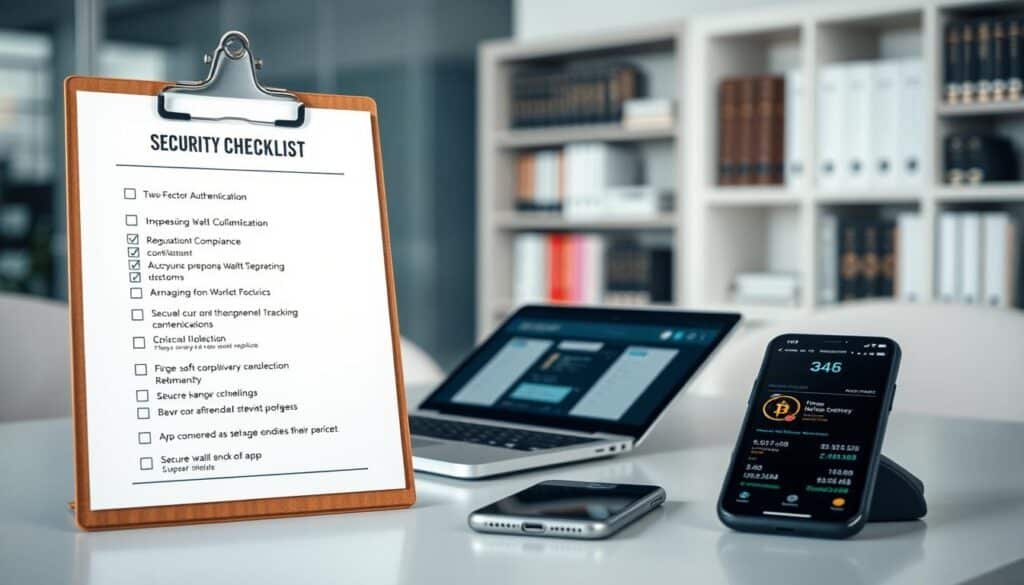
Security and regulation checklist for US users
Before you deposit, check the platform’s controls and recovery options to limit risk.
Account basics to enable now
Turn on two-factor authentication and prefer an authenticator app over SMS. Use biometric login where available to reduce password re-use risk.
Set device-level protections (OS updates, screen lock) and enable withdrawal allowlists or address whitelists. These operational controls matter as much as encryption.
Regulatory signals and transparency
Look for clear licensing statements and routine audits or attestations. Public-company filings add transparency on reserves and governance.
Licenses (for example, FCA-style disclosures abroad or US state money-transmitter notices) reduce platform-level risk for funds and users.
Self-custody and MPC options
Self-custody lowers platform custody risk but raises the risk of losing keys. Multi-party computation (MPC) offers a middle path.
Wallets like Zengo and COCA use MPC and seed-phrase-free recovery workflows. Biometric recovery and distributed key shares reduce single-point-of-failure mistakes compared to traditional seed phrases.
- Quick checklist before depositing: enable 2FA, use biometrics, enforce device security, turn on withdrawal allowlists.
- Prioritize platforms with timely customer support for account lockouts and fraud response.
- Understand the difference between exchange custody risk (hacks, freezes, insolvency) and self-custody risks (phishing, device compromise).
Best Cryptocurrency Mobile Apps 2026 for different types of users
Pick the path that fits your goals. Match the platform to how you will use crypto: quick buy, active trading, self-custody, or earning. Below is a compact guide to help you jump to the right profile.

Beginners who want fast onboarding and a simple interface
Priorities: fast verification, clear total price, and smooth withdrawals.
Choose on‑ramps that minimize steps and show all fees up front. Paybis is a top example for quick verification and wide payment options with same‑day clearance.
Active traders who need advanced orders and low fees
Priorities: deep liquidity, advanced order types, stable uptime, and low maker/taker pricing.
Look to exchanges that list many assets and keep fees low under volume. Binance’s 0.1% base and Kraken Pro’s pro tooling (0.4% benchmark) target traders who need tight spreads and reliable execution.
Wallets and self-custody focused users
Priorities: full key control, modern recovery, transparent network fees, and safe spending options.
Non‑custodial wallet platforms such as Zengo and COCA use MPC for seed‑phrase‑free recovery and real‑world card spending. These services suit users focused on custody over custody convenience.
Earning: staking, yield, and rewards ecosystems
Priorities: staking breadth, clear lockup terms, and realistic reward tradeoffs.
Consider ecosystems that list many staking options and disclose lockups and fees. Crypto.com and Uphold offer broad rewards, but compare net yields after any platform fees and token‑specific requirements.
- Quick rule: most US users pair two platforms — one for buying and one for storage or trading.
- Match your choice to intent, not hype. That reduces friction and cost in the market.
Top picks to buy Bitcoin and major cryptocurrencies quickly
A quick definition: an on‑ramp is a service that converts fiat money into crypto so you can own coins without learning a full trading terminal. For fast buys, these platforms focus on verification speed, payment rails, and clear checkout totals.
Paybis — flexible global on‑ramp
Why it matters: Paybis benchmarks same‑day verification and supports 20+ payment options. That flexibility helps if one rail (like a bank transfer) fails.
Use Paybis when you need quick access across regions and want multiple ways to send money. It reduces the chance of a stalled purchase and keeps the process simple.
Cash App — fastest US Bitcoin access if pre‑verified
Why choose it: US users who already have a verified account get near‑instant access to Bitcoin with a streamlined flow.
Limitation: Cash App is Bitcoin‑only. If you want Ethereum or a broad coin menu, pick a different on‑ramp.
MoonPay — card-first convenience with higher fees
MoonPay is ideal when a card is the only realistic option. Expect higher total cost — typically around 4.5–5.5% fee on card purchases — so watch the checkout number closely.
- Compare final checkout totals across providers for the same purchase amount.
- Consider bank transfers where feasible to lower fees and avoid card surcharges.
- Prioritize speed, payment compatibility, and transparent pricing over a large token menu when you need to buy fast.
For card purchase guidance and safety tips, see this how to buy Bitcoin with a credit card.
Best exchange apps for low fees and frequent trading
When trades pile up, maker/taker pricing and slippage become the main cost drivers.
Why fee structure and execution matter
Frequent trading magnifies tiny costs. A small fee or spread on each trade erodes returns over time.
Look past onboarding ease. Prioritize low fees, tight spreads, and reliable execution quality on your exchange.
Where cost-focused traders land
Binance sets the low-fee benchmark with about 0.1% trading fees and 350+ coins. US users must check regional availability and compliance before funding an account.
Security-first pro tooling
Kraken / Kraken Pro appeal to security-minded traders. Kraken Pro’s fee benchmark is ~0.4%, and the platform offers pro-grade tools and broad asset coverage.
Derivatives and copy trading
OKX provides advanced order types, demo mode, and staking options, suiting traders who need complex risk controls on the go.
Bitget targets automation and social strategies with copy trading, an AI assistant (GetAgent), and 650+ assets plus many fiat rails.
Practical futures guidance
Futures involve leverage, liquidation risk, and different margin rules than spot. New traders should treat futures as distinct and study mechanics before using them.
- Best fit: Binance for lowest-fee focus (where accessible).
- Security + pro workflow: Kraken Pro.
- Derivatives/copy features: OKX or Bitget.
Beginner-friendly investing apps that also offer crypto exposure
If you already use a brokerage for stocks, some investing platforms add crypto so you can manage everything in one place.
Coinbase simple mode versus Coinbase Advanced
Coinbase offers a simple onboarding flow that helps beginners buy quickly with a clean interface.
That ease comes at a cost: standard checkout and card purchases can carry a visible fee and hidden spreads. Coinbase Advanced provides pro tools, lower trading fees, and improved order routing for investors who trade often.
Choose simple mode to get fast access and learning comfort. Choose Advanced when lower trading costs matter to your long-term investment totals.
Robinhood for a unified stocks-and-crypto experience
Robinhood gives US users one dashboard for stocks, ETFs, and crypto. The single interface reduces account clutter and eases portfolio tracking for casual investors.
Tradeoffs: fewer tokens and limited withdrawal flows compared with dedicated exchanges, so this is a fit if you want basic crypto exposure alongside traditional assets.
- Decision rule: if you mainly invest in stocks/ETFs and want some crypto exposure, these platforms simplify investment tracking.
- If you plan frequent crypto trades or need many tokens, pick a dedicated exchange for broader asset access and advanced tools.
Best crypto apps for earning, staking, and rewards
Choosing where to earn yield means answering two questions: who holds the keys, and how flexible are withdrawals? Staking is protocol-linked and usually depends on on-chain mechanics. Platform “earn” products are terms-based and can include lockups, redemption windows, or conditional bonuses.
Crypto.com — an ecosystem play with broad features and tradeoffs
What it offers: large asset coverage (~350+ coins), staking and earn products, plus a card rewards system. Onboarding is commonly one to two business days for many US users.
Rewards often require holding or staking a platform token and tiers can change. That makes the ecosystem powerful but complex. Check lockup periods and whether a reward tier is realistic for your situation.
Uphold — multi-asset access with staking and higher entry costs
What to know: Uphold supports staking and many asset types, but purchase fees can be meaningfully higher (up to ~2.95% in some flows). That raises entry cost for users who buy and stake on the same platform.
Cost-control tactic: buy using a low-fee trading platform, then transfer coins to an earn-oriented service when transfers and lockups suit you.
- Risk note: yield is not guaranteed; rates change and custody affects outcomes during freezes or outages.
- Read redemption terms, lockup lengths, and platform custody rules before committing money.
- Choose earning services when you already own crypto and want productivity; choose buying platforms when minimizing entry cost is primary.
For a deeper comparison of earn features and reward conditions, see our earn and rewards guide.
Best non-custodial wallet apps for secure storage and spending
A good wallet balances easy spending with strong protection for long-term holdings. Choose solutions that give you direct control over keys and reduce reliance on third-party custody.
Zengo: MPC security and seed-phrase-free recovery
Zengo uses multi‑party computation (MPC) so users keep control without a fragile seed phrase.
That design improves usability and lowers loss risk. Zengo supports 326 tokens across 14 blockchains and reports no hacks since 2018. It also offers 24/7 live chat support for account issues.
COCA: banking-style wallet and spending via card
COCA blends non‑custodial MPC with biometric recovery and a COCA Card for everyday spending. The banking‑first interface makes transfers feel familiar to new users.
COCA covers 350+ crypto but supports 16 blockchains; that can limit which assets you move or spend.
When a wallet beats an exchange — and practical tips
Pick a wallet over an exchange when you plan long holds, keep larger funds, or dislike withdrawal limits. Wallets reduce platform custody risk and give faster access to your coins.
- Verify recovery steps and enable biometrics.
- Test a small send/receive before moving large funds.
- Keep device security strong and watch for phishing attempts.
Best swap and conversion apps for quick exchanges across many assets
For one-off conversions, swap tools trade breadth of tokens for speed and simplicity.
ChangeNOW: fast, non-custodial swaps and wide token coverage
ChangeNOW is a non-custodial swap app that lets users convert between a large set of crypto quickly.
The service supports 1,500+ assets and requires no registration for basic swaps. That lowers friction and preserves privacy compared with exchange onboarding.
ChangeNOW also offers a fixed-rate option that locks a quote for about 20 minutes. This reduces surprise slippage during volatile moves and helps plan transactions with more certainty.
Fiat flexibility is strong — the platform handles roughly 70 fiat currencies — which helps travelers and cross-border users. US readers should confirm specific payment routes and availability before starting.
- The swap process is fast and ideal when you already own tokens and need a direct conversion.
- Fees and spreads are embedded in the quoted rate, so compare final received amounts rather than a posted fee alone.
- ChangeNOW integrates with leading platforms to source rates and offers 24/7 support for users worldwide.
When to use a swap: choose swaps for quick, single exchanges into less common cryptocurrencies or for privacy. High-frequency traders will still prefer exchange order books for fee tiers and order control.
Best crypto market tracking and charting apps for analysis on the go
Good charting clears noise so traders can make faster, repeatable choices on the go. A separate analysis tool gives clearer visuals and less clutter than most exchange interfaces, especially on a small screen.
TradingView: alerts, indicators, and multi-chart layouts
TradingView is the go-to charting app for many traders. It covers 57,000+ crypto trading pairs, offers 110+ drawing tools, 400+ built-in indicators, and 100,000+ public indicators. Alerts on price, indicators, and drawings are the daily-value feature for US users who can’t watch screens continuously.
How to pair a charting app with your exchange or wallet
Analyze setups in TradingView, then execute in your exchange or move funds in your wallet. Separating execution from analysis reduces rushed mistakes caused by crowded exchange charts.
- Use alerts for key price levels and indicator-based momentum shifts.
- Save layouts and standardize timeframes for repeatable decisions.
- Connect supported exchanges for direct execution where available.
Risk-control note: technical analysis does not remove risk. It only helps structure decisions, so always size positions and plan stops before you trade.
Conclusion
Your ideal crypto setup starts with one clear question: what will you do most—buy, trade, earn, or hold?
For fast access, favor on‑ramps that verify quickly. Paybis often clears same‑day and supports 20+ payment methods. US Bitcoin buyers with a pre‑verified account can see near‑instant access via Cash App.
For active trading, compare fee benchmarks: Binance ~0.1% and Kraken Pro ~0.4%, remembering US eligibility varies. Watch checkout totals for card providers — MoonPay (4.5–5.5%) and Coinbase Standard (~3.99%+) show how apparent fees can hide real cost.
Security matters: keep trading sums on an exchange and move long‑term holdings to MPC wallets like Zengo or COCA for stronger key control.
Use two apps: one for buying/trading and one for storage, add TradingView for analysis, run a small test, then scale up after the full process works end‑to‑end.
FAQ
How do I choose a crypto app based on my goals?
Start by defining whether you want to hold long term, trade actively, or earn yield. Choose custodial exchange apps for easy buying and selling, non-custodial wallets for self-custody, and platforms with staking or earn products if passive income matters. Match features—order types, liquidity, supported assets, and UX—to your strategy.
Should I use a custodial exchange or a non-custodial wallet?
Use a custodial exchange if you want fast fiat on-ramps, simple recovery, and integrated trading tools. Pick a non-custodial wallet if you prioritize control over keys, lower counterparty risk, and privacy. Consider hybrid options like MPC wallets for seed-phrase-free self-custody with strong security.
Which payment methods work best for US users?
Common US options include ACH bank transfers for low fees and debit cards or Apple Pay for speed. PayPal and instant card rails offer convenience but often higher costs. Check each app’s supported rails and fees before depositing.
How important is verification speed when signing up?
Verification speed matters if you need immediate access. Some on-ramps offer same-day or instant access once verified. Faster onboarding helps during volatile markets, but balance speed with the app’s security and compliance checks.
What fees should I watch out for beyond headline rates?
Watch for spreads, deposit and withdrawal charges, network fees, and maker/taker differences. Some platforms advertise low trading fees but widen spreads on instant-buy products. Always review the full pricing page and simulate a trade to see real costs.
What account security features should I require?
Look for two-factor authentication (2FA), biometric login, device whitelisting, and withdrawal confirmations. For exchanges, add withdrawal allowlists and cold-storage policies. For wallets, prefer MPC or hardware wallet compatibility and clear recovery options.
How can I check if an app is regulated or audited?
Verify licensing information on the company website, look for SOC/ISO audit reports, and check public-company disclosures for added transparency. Regulatory registrations and independent audits are strong trust signals for US users.
When is a wallet app better than an exchange app?
Choose a wallet app for long-term holding, on-chain activity, and when you need full control of private keys. Use exchange apps for frequent trading, fiat access, and products like futures or margin that require custodial services.
Which platforms are best for low-fee frequent trading?
For high-frequency strategies, pick exchange apps with tight spreads, low maker/taker fees, deep liquidity, and advanced order types. Also consider regional compliance and KYC timelines, since those affect access and limits.
Are staking and earn products safe ways to generate passive income?
They can provide yield but carry protocol, counterparty, and liquidity risks. Prefer reputable platforms with transparent terms, redemption windows, and clear fee structures. Diversify and understand lock-up periods before committing funds.
How do I move assets between apps securely?
Double-check destination addresses, use copy-paste verification, and consider small test transactions first. For large transfers, use withdrawal allowlists, multi-sig approvals, or hardware signatures to reduce human error and phishing risk.
Can I use charting apps with my exchange or wallet?
Yes. Charting apps support alerts, indicators, and exchange integrations. Pair a charting tool with your trading app to execute faster decisions, but avoid sharing private keys—use API keys with trading-only permissions when linking exchanges.
How do fees and spreads differ for card purchases versus bank transfers?
Card purchases are faster but typically charge higher fees and wider spreads. Bank transfers cost less and suit larger buys but take longer to settle. Choose based on urgency and cost sensitivity.
What should beginners look for in an onboarding app?
Beginners need simple interfaces, clear fee displays, easy identity verification, responsive customer support, and educational resources. Look for apps that separate simple buy flows from advanced trading modes to avoid confusion.
How do I evaluate an app’s customer support and dispute process?
Check support channels (chat, email, phone), response time guarantees, and user reviews. Review the platform’s dispute escalation, fund recovery procedures, and public incident disclosures to judge responsiveness and transparency.
Are on-chain swap apps safe for quick conversions?
Non-custodial swap apps can be fast and private, but watch slippage, routing, and approval risks. Use reputable services, set slippage limits, and confirm token contract addresses to minimize loss from bad routes or malicious tokens.
What regulatory flags should US users avoid?
Avoid platforms with opaque legal status, inconsistent licensing claims, or absent audit information. Prefer services that publish compliance pages, have clear terms of service, and operate under known regulatory frameworks.
How can I reduce passive exposure to crypto volatility while earning yield?
Use diversified staking pools, stablecoin yields with reputable providers, or short-duration earn products. Avoid locking large portions of capital into long-term illiquid products unless you understand the protocol risk.

No comments yet