

Trend lines and channels are basic technical analysis tools that help traders see market direction on a candlestick chart. They simplify volatile price action and frame likely reaction zones without pretending to predict the future.
A trend line is a straight line drawn across swing points to show direction. Price channels add a parallel boundary to map both sides of movement, creating dynamic support and resistance.
This short guide sets clear expectations: you will learn how to identify trends, draw valid lines, turn them into support and resistance ideas, build channels, and plan trades with risk management. The emphasis is on confirmation, not guarantees.
These tools matter for crypto because 24/7 markets and fast volatility need structure. When used with other indicators and price action, trend lines often act like dynamic barriers while channels help frame probable reaction areas on both upper and lower edges.
Why trend lines and channels matter in crypto technical analysis today
When markets move fast, simple chart tools can turn noise into a usable map for decisions.
How a line clarifies direction and price movements: A well-drawn line turns complex action into a readable map. Traders use it to see where buyers or sellers have stepped in before. This creates practical levels for entries, stops, and targets without relying on emotion.
When these tools work best: They shine during clear trending phases with repeated pushes and retracements and defined swing points. In those cases, channels show both likely support and resistance levels and give traders defined lanes to manage risk.

Account for crypto volatility: Fast moves still form clean structure on higher timeframes. Breakouts can signal strong follow-through, but waiting for closes and confirmation reduces false signals. Before drawing any line, correctly label the market state: uptrend, downtrend, or range.
- Map direction so actions align with the prevailing move.
- Use lines to mark supply and demand areas and resistance levels.
- Rely on higher timeframes for clearer signals when volatility spikes.
How to identify the trend before you draw a trend line
Before you draw, you must first read the market structure on the chart.
Start with a simple checklist:
- Confirm whether the market prints higher highs and higher lows for an uptrend.
- Look for lower highs and lower lows to mark a downtrend.
- If neither appears, treat the action as a sideways range.
Uptrend structure: higher highs and higher lows
In an uptrend, price makes successive highs above prior highs and pulls back to higher lows. Mark clear swing lows on closed candles so the line connects real turning points.
Downtrend structure: lower highs and lower lows
For a downtrend, identify each lower high and lower low. Anchor your marks to visible swing points, not single intrabar spikes that add noise.
Sideways range: when there’s no clear direction
A range shows overlapping candles, repeated rejections at similar zones, and no clear progression of highs or lows. Treat this as consolidation until a decisive push appears.
Push vs retracement: the rhythm behind trends and reversals
Trends form from pushes (moves with the slope) and retracements (moves against it). Retracements often stall at support or resistance before the next push. Healthy setups give multiple touches to the marked line as price respects the structure.
Practical cues for weakness: shrinking pushes, deeper retracements, and failed attempts to make new highs or lows signal a potential break. Timeframe matters: match the chart to your holding period to avoid mixed signals.

For a step-by-step drawing guide, see this trend line drawing guide that expands these rules into practical steps.
How to draw trend lines correctly on a crypto chart
Drawing a correct trend line starts with spotting clear swing points that show real market reactions. Pick visible pivots where price paused or reversed on closed candles. Avoid tiny intraday wicks that add noise.
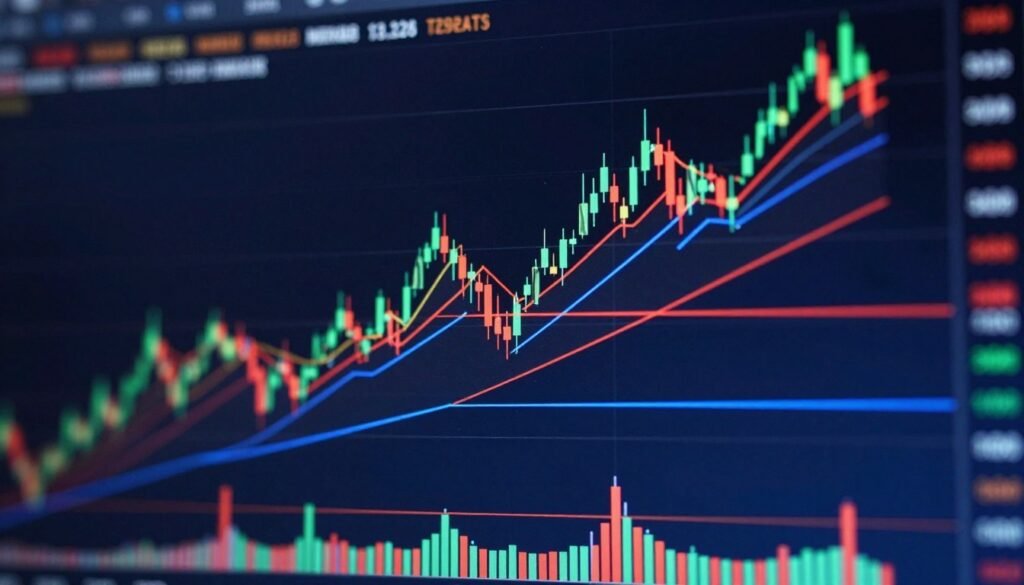
Choose swing points that reflect real support and resistance levels
Select swing highs and swing lows where price clearly reacted more than once. Those points form reliable levels for entries and stops.
Use at least two touches and strengthen with confirmations
Connect two valid points, then extend the line forward to create a working framework. Additional touches increase validity, but avoid redrawing to fit outcomes.
Execution details and common mistakes
Always draw from closed candles and do not cut through candle bodies. Treat wicks based on timeframe and volatility. Do not force a line, anchor to unconfirmed swings, or clutter the chart.
Bullish vs bearish practical guide
A bullish trend line links higher lows while a bearish version links lower highs. Respecting the line looks like multiple rejections or clean bounces, which helps traders plan a trade with a clear invalidation point.
Support and resistance levels: turning trend lines into actionable trade ideas
Support and resistance mark where buyers or sellers repeatedly steer price behavior on a chart. Support is a zone where demand pushes price up. Resistance is where supply forces price down. These are behavioral areas, not exact points.

Supply, demand, and trader behavior
Why reactions cluster: Traders place orders, stop losses, and take profits at similar areas. Repeated activity grows market memory, which draws future tests and reactions.
Zones, not razor-thin lines
Treat support and resistance as zones that can be 1%–10% wide, depending on timeframe and volatility. Wider zones apply to higher-volatility assets and lower timeframes. Draw them to cover where candles actually reversed.
S&R flip and practical checks
An S&R flip happens when a broken support becomes resistance, or a broken resistance becomes support. Wait for a close and a retest before assuming control has changed.
- How to act: Plan an entry near support in an up market and near resistance on down moves.
- Invalidation: If price breaks and holds beyond the zone, treat the setup as failed.
- Use closes: Focus on candle closes, not momentary wicks, when judging price breaks and breakouts.
Trend-based lines often overlap with dynamic support and resistance, while horizontal levels capture price memory. For detailed drawing rules, see this support and resistance lines.
Trend Lines and Channels in Crypto Trading: how to build and read price channels
When price respects parallel boundaries, traders gain a clear map for entries, stops, and targets.
What a channel is and why parallelism matters
A price channel uses two parallel lines that frame highs and lows to show structure. Parallelism keeps swing measurements consistent so you can compare moves and set realistic levels.
Ascending channel: bullish structure
In an uptrend, draw the lower line under support near swing lows, then copy it above through opposing highs. The top line marks common resistance levels where rallies stall.
Descending channel: bearish structure
For a downtrend, anchor a resistance line above price, then duplicate it below to capture support. The upper boundary often caps rallies; the lower boundary gives short-term bounces.
Horizontal channel: range and indecision
A sideways channel has two horizontal parallel lines and signals indecision with lower volume and muted volatility. Wait for a clear close beyond the band before favoring directional trades.
How to draw and read a channel
- Step 1: Draw the primary trend line from clear pivots.
- Step 2: Copy it in parallel through the opposing highs or lows to finish the channel.
- Health check: Look for clean bounces and proportional swings; frequent erratic pierces mean the channel is weakening.
Channels can be traded inside the band or by waiting for breakout and retest setups; the next sections explain trade entries and exits.
How to trade trend lines: entries, exits, and trend-following setups
Treat the drawn line as a planning tool that helps you align entries and exits with the dominant market slope. Use clear rules so decisions stay mechanical, not emotional.
Trend-following mindset: trade with the prevailing move. If the market is in an uptrend, favor buys near support. In a downtrend, prefer sells into resistance. Define your invalidation point before you enter.
Buying pullbacks to support in an uptrend
Wait for price to retrace into the trend line support on a closed candle. Look for rejection or a close back above the line before you take an entry.
Place a stop just below the trend line or beneath the nearest swing low. Target prior highs or measured levels to manage the trade.
Selling rallies into resistance during bearish moves
In a bearish trend, wait for rallies to reach the trend line resistance. Confirm rejection with a close back below the line before shorting or scaling in.
Define risk first: stops sit above the invalidation swing high and targets near recent lows.
Use multiple touches to improve entry exit points
A line gains validity after two touches; the third or fourth touch often offers better entry timing. But repeated tests can weaken structure, so watch for diminishing reactions.
Stops, targets, and handling breakouts
Set stops slightly beyond swing highs or lows so normal noise does not stop you out. Use prior structure as targets and move stops to breakeven when the trade proves itself.
When price breaks a trend line, treat it as a potential reversal or continuation signal. Wait for a confirmation close and a retest before trading the breakout to reduce false signals.
How to trade channels: range trades, breakouts, and retests
Channels give traders a clear frame: defined edges create repeatable spots for entries and exits. Treat the band as a rule: defined boundaries first, decisions second. That gives each idea a clear invalidation point and expected move.
Trading inside an ascending channel
Buy near the lower boundary, where the slope acts as dynamic support. Scale or take profits near the upper line to protect gains.
Avoid buying directly into the upper boundary; that area is resistance and often triggers reversals.
Trading inside a descending channel
Sell rallies at the upper band and cover near the lower edge. This mirrors the bullish approach in reverse.
Do not short into visible support; wait for a clear rejection or a close back below the upper band.
Horizontal range trading
In a flat range, buy at support and sell at resistance. Middle-of-range entries often have poor risk/reward, so prioritize edges.
Breakouts, confirmation, and retests
Define a breakout as when price breaks and closes outside the lines. Wick-only pierces are unreliable and often false.
Many traders wait for extra closes and a retest of the broken boundary before entering. That retest improves trade location and cuts false signals.
Breakouts can produce sharp movements and attractive opportunities, but only when risk is controlled and confirmation rules are followed. For a deeper chart analysis guide for U.S. traders, see how to analyze crypto charts for U.S.
Risk management and confirmation tools for more reliable setups
A clear risk plan turns chart signals into repeatable setups that survive volatile markets.
Good risk management is what separates a good idea from a survivable strategy. Crypto moves fast and can invalidate setups in moments. Protecting capital keeps traders in the game long enough to let edge work.
Stop-loss placement
Place stops slightly beyond a trend line or the nearest structure level so normal volatility does not stop the trade prematurely.
Use a clear invalidation point: just below support on longs or just above resistance on shorts. That gives room for noise while defining risk.
Position sizing and the 1% rule
The 1% rule limits loss per trade to roughly 1% of account value. Calculate size from the distance between entry and stop.
This keeps a single failed idea from damaging the portfolio and enforces discipline across trades.
Confirming setups with technical indicators
Think of indicators as filters that stack evidence, not as replacements for structure.
- RSI — momentum and overbought/oversold context.
- MACD — trend shifts and momentum changes.
- Stochastic RSI — faster momentum entry signals.
- Moving averages — bias and dynamic levels.
- Bollinger Bands — volatility context and squeeze/expansion signals.
Combine a confirmed trend line touch with at least one supporting indicator before taking a trade. If signals conflict, skip the setup.
Process discipline matters: define when not to trade—unclear market, conflicting indicators, or oversized risk. Consistency wins over heroic entries.
Conclusion
Use a simple, repeatable process: identify market structure, draw clean pivots, and set clear invalidation points before you place a trade.
Do’s: anchor marks to closed candles, require at least two touches, and treat support as zones not points. Add a trend line only after confirming swings.
Don’ts: do not force a guide to fit price, ignore timeframe context, or trade without a stop and position-size plan.
Practical tip for traders: practice on major pairs like BTC and ETH. Keep screenshots and a journal to refine how you draw and apply these rules.
Practical takeaway: used with confirmation and disciplined risk, these tools create repeatable opportunities—never a shortcut to certainty.
FAQ
What are trend lines and how do they help visualize market direction?
Trend lines are straight lines drawn on price charts that connect swing highs or swing lows to show the prevailing market direction. They help traders see whether price is making higher highs and higher lows (bullish) or lower highs and lower lows (bearish). By highlighting the rhythm of pushes and retracements, trend lines act as a simple tool to judge momentum and potential turning points.
When do trend lines and price channels work best in volatile cryptocurrency markets?
Trend lines and channels perform best when the market exhibits a clear directional structure—sustained uptrends, downtrends, or well-defined ranges. They lose reliability during erratic, news-driven spikes or when price chops through levels without meaningful closes. Using confirmations like candle closes and multiple touches improves their usefulness in crypto’s high volatility.
How do I identify an uptrend before drawing a line?
Identify an uptrend when price consistently forms higher highs and higher lows on the chosen timeframe. Look for clear swing lows you can connect with a rising line; the more valid touches the line has, the stronger the view. Use higher timeframe context to avoid drawing lines on temporary noise.
What defines a downtrend and how should I draw its line?
A downtrend shows successive lower highs and lower lows. Draw a descending line by connecting two or more swing highs and extend it forward. Prefer lines that align with closed candles and that gain strength from additional touches or prior support-turned-resistance areas.
How do I recognize a sideways range and what does it mean for drawing lines?
A sideways range appears when price moves between a horizontal support and resistance without making clear higher highs or lower lows. Draw horizontal lines at those swing highs and lows to mark the channel. In ranges, trades typically favor buying near support and selling near resistance rather than trend-following entries.
What’s the difference between a push and a retracement?
A push is the impulsive movement in the trend direction—strong, directional candles that extend the structure. A retracement is the corrective pull against that move, often offering better risk-to-reward entry points along the trend line or channel boundary. Recognizing this rhythm helps time entries and stops.
How many touches are needed to validate a trend line?
At least two touches create the initial line, but a third touch or multiple rejections strengthens its validity. Each additional touch that respects the line increases the chance it will act as meaningful support or resistance for future price action.
Should I draw lines from candle wicks or closes?
Prefer drawing from closed candles, as closings better reflect where traders accepted price. Using wicks can be noisy and lead to false signals. If you do use wicks, treat the line as a softer zone rather than a strict barrier.
What common mistakes weaken trend line analysis?
Common errors include forcing lines through unrelated points, drawing from insufficient touches, using improper timeframes, and ignoring candle closes. Overfitting lines to past price action and failing to treat levels as zones also reduces usefulness.
How do support and resistance relate to trend lines?
Trend lines often act as dynamic support in uptrends and dynamic resistance in downtrends. They mark areas where supply and demand balance shifts. Treat these levels as zones rather than exact prices; context, volume, and prior price behavior determine how strongly they hold.
What is an S&R flip and how can I trade it?
An S&R flip occurs when a broken support becomes resistance, or a broken resistance becomes support. Traders watch for price to retest the broken level and show rejection on the retest to confirm the flip before entering a trade in the new direction.
What defines a price channel and why use parallel lines?
A price channel uses two parallel lines that enclose price action—one along highs, one along lows. Parallel lines help visualize the trend’s slope and provide clear entry and exit boundaries for range trades, as well as places to watch for breakouts.
How do ascending, descending, and horizontal channels differ?
An ascending channel slopes upward with rising support and resistance—favors buying pullbacks. A descending channel slopes downward—favors selling rallies. A horizontal channel has flat boundaries and signals a range-bound market where buying support and selling resistance are common strategies.
How should I trade inside an ascending channel?
Inside an ascending channel, consider buying near the lower boundary with stops below the channel and partial profit-taking near the upper line. Manage risk by sizing positions to withstand occasional channel tests or temporary breakdowns.
What’s the best approach for channel breakouts and retests?
Wait for a decisive close outside the channel, then look for a retest of the broken boundary. A successful retest with rejection increases the probability of a sustained breakout. Use additional confirmation—volume, momentum indicators, or higher timeframe alignment—to reduce false breakouts.
Where should I place stop-loss orders around trend lines?
Place stops slightly beyond the trend line or relevant swing low/high to allow normal noise while protecting capital. Adjust distance based on volatility, timeframe, and crypto pair; tighter stops suit lower timeframes, wider stops fit volatile markets.
How does position sizing help manage risk with these setups?
Position sizing limits downside and preserves your trading edge. Many traders use a 1% or similar per-trade risk rule—calculate position size so that a stop-loss hit equals the preset risk percentage of your account.
Which technical indicators confirm trend lines and channels?
Momentum and mean-reversion indicators work well as confirmations. Use RSI or Stochastic RSI for overbought/oversold clues, MACD for momentum shifts, moving averages for trend alignment, and Bollinger Bands for volatility context. Combine signals rather than relying on a single indicator.
Can I use trend lines on any timeframe?
Yes, but higher timeframe lines (daily, weekly) typically carry more weight for major support and resistance. Lower timeframes give more entry opportunities but include more noise. Align your trade plan with the timeframe you draw and the timeframe you execute trades on.
How do I avoid false breakouts when trading channels?
Use confirmation: a clean close outside the channel on increased volume, follow-through on the next candle, or a successful retest. Combine with momentum indicators and higher timeframe structure to filter weak signals before committing capital.

No comments yet