

Imagine money that lives entirely online. This is the world of digital currency. Unlike dollars or euros in a bank, these assets use special codes for security.
This system is called blockchain. It is a public digital ledger that records every transaction. No single company or government controls it. This is what decentralized means.
The first major success was Bitcoin, launched in 2009. New units are created through a process called mining. Powerful computers solve complex math problems.
Many young people find this technology exciting. It feels like the natural next step in finance. It aligns with how digital natives already use apps for payments.
This information is your starting point. We will break down the major types of crypto, like Bitcoin and Ethereum. You’ll learn how people buy, sell, and store it safely.
We’ll also talk about smart investment strategies. Understanding the risks is just as important as seeing the potential. For anyone under 18, getting a parent involved is a key step.
Our goal is to make this complex topic clear and accessible. Let’s explore this digital frontier together.
Introduction to the Digital Currency World
The financial landscape underwent a seismic shift in 2009 with the launch of Bitcoin. It began trading at just a few cents. By 2025, its value had soared past $110,000 per coin.
This explosive growth marks a move from a niche experiment to a major part of global finance. The rise of crypto answers a demand for speed and transparency.

Understanding the Rise of Crypto
Traditional banks often act as slow, central gatekeepers. Digital currencies offer a peer-to-peer alternative. They operate 24/7, aligning perfectly with a connected generation’s lifestyle.
This isn’t just about investment. It represents a philosophical shift toward user-controlled currency. The appeal lies in cutting out intermediaries and their fees.
The Role of Blockchain Technology
This entire system is powered by blockchain technology. Think of it as a public, unchangeable digital ledger. The concept dates back to 1991 but wasn’t used practically until Bitcoin.
Every transaction is recorded across thousands of computers worldwide. This makes tampering nearly impossible. It provides a unique balance of total transparency and strong security.
Understanding this technology is key. It’s the foundation of the entire crypto world. It allows anyone to verify transactions without a central authority like a bank.
Understanding Cryptocurrency for Kids and Teens Guide
Navigating the world of digital assets starts with mastering its unique language. This foundational knowledge turns confusion into clarity.
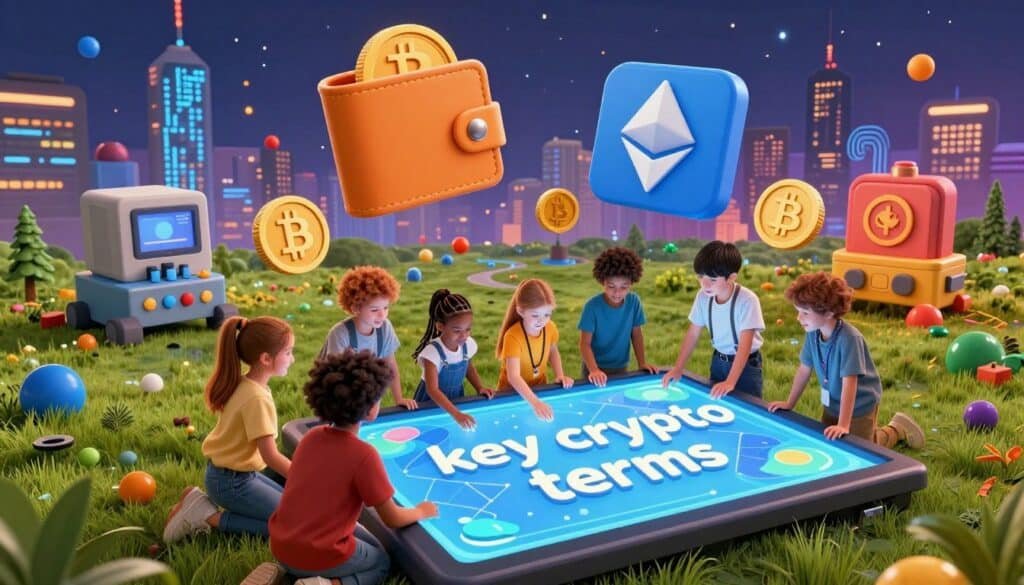
Defining Key Crypto Terms
A blockchain is a shared digital record book. It tracks every transaction across a global network of computers.
Tokens or coins are the units of value on this network. Bitcoin and Ethereum are two well-known examples.
Mining is how new coins are created. Powerful computers solve puzzles to secure the network and earn rewards.
A digital wallet stores the keys to your assets. It’s like a password-protected vault for your online money.
The system is decentralized. This means no single bank or government is in charge.
Why a Beginner’s Guide is Essential
The space is filled with complex jargon and hype. Structured information helps young people make smart choices.
Without a clear guide, it’s easy to feel overwhelmed. Thousands of different cryptocurrencies exist, but only a few are widely used.
Learning the basics now builds a solid foundation. It prepares you for advanced topics like smart investment strategies later.
Why Crypto Appeals to Young Investors
A generation raised on smartphones and social media finds a natural fit in the world of digital assets. This isn’t just about money; it’s about a new system that mirrors their online lives.
The Digital Natives’ Perspective
Many teenagers see traditional investments, like the stock market, as old school. They grew up with Venmo and Apple Pay, so digital value feels normal. Crypto seems like the next logical step.
The 24/7 market access matches an on-demand lifestyle. This way of engaging feels more exciting than older models. It offers a sense of participation in something truly groundbreaking.
Social media amplifies this appeal. Influencers and online communities make crypto knowledge feel essential. Teens value the decentralized, peer-to-peer nature. It aligns with a desire for independence.
Stories of massive gains capture young imaginations. This creates aspirational goals for a new kind of investment. Teens are drawn to the technology’s potential to reshape finance.
Cryptocurrency Fundamentals and Secure Transactions
Security in the digital currency space hinges on two pillars: transaction verification and wallet safety. Understanding how these work is the key to protecting your assets.
How Transactions are Verified
Every transfer relies on blockchain technology. This is a public ledger spread across countless computers.
When you send crypto, the network checks the details. Special computers, called nodes, confirm you have the funds.
Approved transactions group into a data “block.” This block locks cryptographically onto the chain. The record becomes permanent and viewable by anyone.
This decentralized system makes fraud extremely hard. A hacker would need to alter most network computers at once.
Wallets and Security Explained
A wallet doesn’t hold coins. It stores private keys that access your funds on the blockchain.
Hot wallets are apps connected online. They are convenient for daily transactions but more exposed to risk.
Cold wallets are physical devices kept offline. They offer strong security for long-term holdings.
User caution is vital. In 2024 alone, about $2.2 billion in cryptocurrencies was stolen through hacks. For a deeper dive into safe practices, explore this comprehensive guide for parents and teens.
Exploring Major Cryptocurrencies
Investors new to this space often wonder which digital assets deserve their attention. The market features thousands of different projects.
Understanding the major players is a smart first step. They offer more stability and have proven their value over time.
A Closer Look at Bitcoin and Ethereum
Bitcoin started it all in 2009. Its creator, Satoshi Nakamoto, remains unknown. This pioneering currency has a maximum supply of 21 million coins.
This scarcity is part of its appeal. Its market value has seen incredible growth.
Ethereum is the second-largest crypto. Its native tokens are called Ether (ETH). They power smart contracts, which are self-executing agreements.
This technology enables decentralized apps. It processes transactions faster than Bitcoin.
Other Popular Altcoins
Many other cryptocurrencies serve specific purposes. Solana is known for its speed. XRP facilitates international money transfers.
Tether is a “stablecoin” pegged to the US dollar. Binance Coin has shown massive growth since its launch.
Dogecoin began as a joke but now holds a multi-billion dollar market cap. For beginners, focusing on established coins like Bitcoin and Ethereum is wise.
They have longer track records and greater liquidity. Learning about different tokens helps you make informed choices in the crypto world.
The Investment Landscape: Opportunities and Risks
Entering the digital asset space requires a clear-eyed view of both its potential rewards and inherent dangers. This type of investment is not for the faint of heart.
Market Volatility and Speculation
Price swings define this market. Bitcoin’s value fell from $68,000 to $20,000 in less than a year. It then rebounded past $110,000.
Many cryptocurrencies have seen similar volatility. Other cryptocurrencies follow this pattern. Crypto operates as a speculative investment. Its value often relies on sentiment, not fundamentals.
Transactions happen 24/7. Prices can shift dramatically any time. This creates unique risks and opportunities for alert traders.
Regulatory and Security Concerns
Governments are still shaping rules for digital tokens. Future regulations could impact market access and asset value.
This regulatory uncertainty adds to the overall risks. Security remains a critical issue. Major platforms like FTX collapsed. Customers lost their money with no recovery.
Unlike bank deposits, these investments lack FDIC insurance. Crypto holdings have no government-backed protection. Young people should only use funds they can afford to lose completely.
Getting Started with Trading Under Parental Guidance
For young people eager to explore digital assets, the journey begins with a crucial partner: a parent or guardian. Most regulated crypto exchanges require users to be at least 18 years of age. This rule exists for security and legal compliance.
This makes direct trading on major platforms impossible for minors. Working with a parent unlocks safe, legitimate pathways into the market.
Setting Up Custodial Accounts
A custodial account is the official solution. The assets legally belong to the young investor. An adult manages the account until adulthood.
Companies like EarlyBird specialize in these services. They allow parents and teens to make investment decisions together. It’s a structured way to learn.
Using Approved Apps and Exchanges
Specific tools are designed for supervised access. Apps like Step let teens buy sell Bitcoin with an adult sponsor. These create hands-on learning moments.
For broader trading, established exchanges like Coinbase or Gemini are preferred. A parent must open and control the main account.
They help set up strong security during this process. Unregulated exchanges are risky and should be avoided.
Start with a small, educational amount of money. This first step is about gaining experience, not making a profit.
The Role of Crypto Mining and Wallets
Beyond buying and selling, the ecosystem relies on two fundamental processes: mining and secure storage.
Mining Explained for Beginners
Mining is how new coins are created and transactions are verified on the blockchain. Powerful computers work to solve complex math puzzles.
In 2009, you could mine on a regular PC. Today, it requires huge facilities with supercomputers. The energy used for Bitcoin mining in 2021 matched Finland’s annual use.
While large-scale Bitcoin mining isn’t for hobbyists, smaller projects like Vertcoin offer opportunities. This work gives digital assets their scarcity and value.
Hot and Cold Wallets: Which is Right?
A wallet stores the keys to your crypto. Hot wallets are software, like Exodus. They are online, convenient, and usually free.
Cold wallets are physical devices, like a Ledger Nano. They keep keys offline for stronger security. These cost between $65 and $260.
Beginners with small amounts might use a hot wallet. For larger holdings, a cold one is safer. The blockchain technology is very secure, but exchanges and wallets can be hacked.
Trends and the Future of Digital Currency
Looking ahead, blockchain’s potential stretches far beyond the coins we trade today. The future of this world involves reshaping industries like art, gaming, and global finance.
Emerging Technologies in Crypto
One exciting trend is the rise of NFTs. These are unique digital items, like art or music, verified on a blockchain. They create new markets for creators.
Smart contracts automate agreements without middlemen. This technology powers decentralized apps for lending and gaming. Some games now let players earn real value.
Adoption is growing fast. Companies like Microsoft accept digital currencies. The Shopify platform lets stores take crypto payments.
Services like CoinGate turn crypto into gift cards for Starbucks or Uber Eats. Entire nations, including El Salvador, now recognize Bitcoin as official money.
Long-Term Financial Literacy Benefits
Learning about this space builds crucial financial literacy. It teaches how markets work, the nature of risk, and digital security.
This knowledge prepares young people for a world where blockchain technology is common. Understanding these tools will be a key skill.
Even without investing, the concepts are valuable. They provide a foundation for navigating the next era of finance. The evolution of cryptocurrencies shows no signs of slowing.
Conclusion
The journey into crypto is as much about education as it is about potential gain. This guide has built a foundation, from blockchain tech to major digital assets. It highlighted the truly exciting appeal for young, digital-native investors.
Since most platforms require users to be 18, working with a parent is the safest way. A custodial account provides a structured, educational way to begin. Treat this crypto exploration as a learning experience.
The key lesson? Digital currency should only ever be a small portion of your overall savings. The real value lies in growing your financial literacy. This knowledge prepares you for a future where these technologies are common.
FAQ
What exactly is blockchain technology?
Think of blockchain as a super-secure, public digital ledger. It records transactions across many computers so that the record cannot be altered. This technology is the foundation for digital currencies like Bitcoin, ensuring every transaction is transparent and permanent.
Why is financial literacy important when dealing with digital money?
Understanding how money works is a key life skill. Learning about crypto exchanges, market volatility, and secure wallets teaches valuable lessons in saving, investing, and risk management. This knowledge helps young people make smarter financial decisions now and in the future.
How can a teenager start investing with parental guidance?
Many platforms offer custodial accounts, which a parent or guardian must open and manage. Services from companies like Coinbase allow for supervised buying and selling. It’s a safe way for teens to learn about trading with real-world oversight.
What are the biggest risks in the crypto market?
The main risks include extreme price swings, potential security breaches on exchanges, and scams. Unlike traditional savings accounts, the value of digital coins can change dramatically in a short time. It’s crucial to only use reputable platforms and never invest more than you can afford to lose.
What’s the difference between a hot wallet and a cold wallet?
A hot wallet is connected to the internet, like an app on your phone, making it convenient for frequent transactions. A cold wallet is an offline device, similar to a USB drive, that stores your assets away from online threats. For long-term savings, a cold wallet is generally considered more secure.
Are NFTs a good investment for young people?
NFTs, or non-fungible tokens, represent ownership of digital items. Their value is highly speculative and can be very volatile. While they are an interesting part of the blockchain world, they should be approached with caution and are not typically recommended as a first investment.
How does crypto mining work?
Mining is the process where powerful computers solve complex math problems to validate transactions on a network. Successful miners are rewarded with new coins. However, it requires significant technical knowledge and expensive equipment, making it less accessible for most beginners.
Which platforms are considered safe for beginners?
Well-established, regulated exchanges like Kraken and Gemini are often recommended for their strong security measures and user-friendly interfaces. They provide educational resources, which are essential for anyone new to the world of digital currencies.

No comments yet