
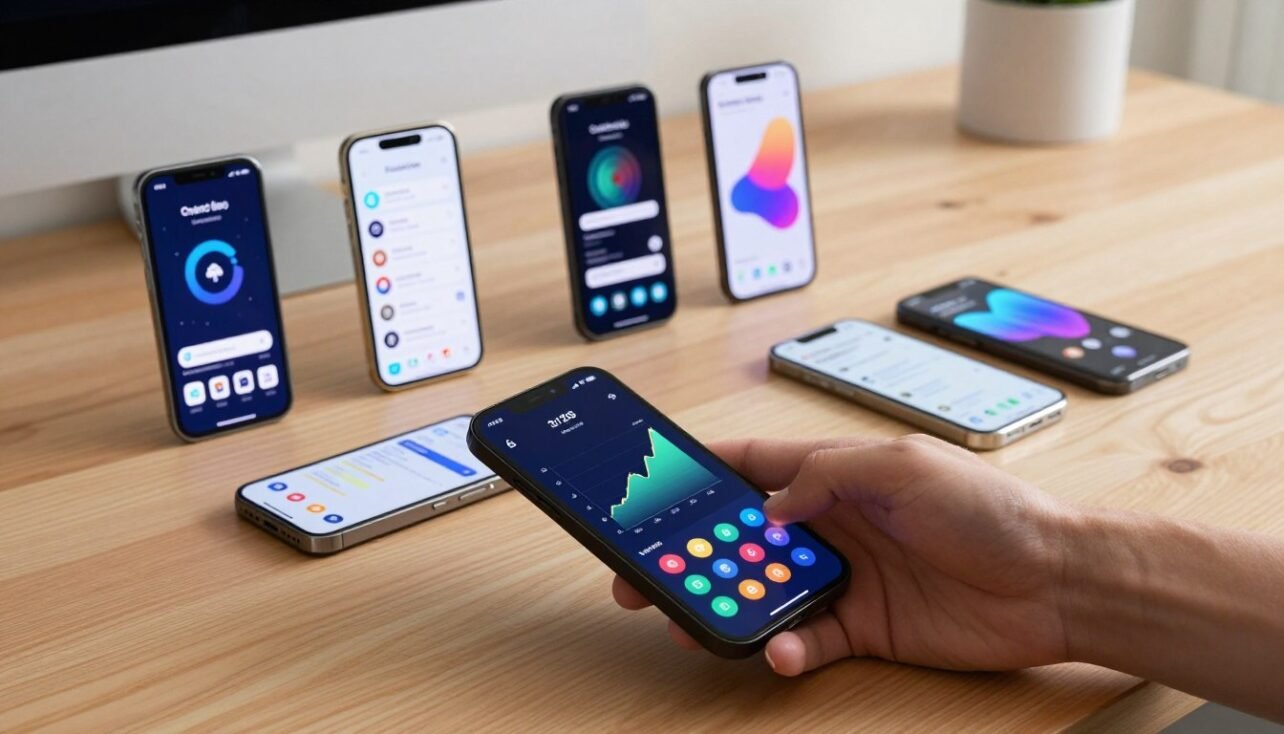
The digital currency world has grown from a niche idea into a massive, trillion-dollar industry. Trading activity has exploded in recent years. A huge number of mobile applications have appeared to help people buy, sell, and manage their digital holdings.
This guide is here to help you find the right tools for your smartphone. We focus on the mobile landscape for the coming year. Our goal is to cut through the noise and highlight the most reliable and feature-rich options.
The market now includes everything from exchanges and best crypto wallets to lending services and analytics tools. We evaluate each platform on critical factors like security, fees, and user experience. Whether you’re looking for a simple way to start with cryptocurrency or advanced trading features, the right app makes all the difference.
This roundup provides detailed comparisons and practical insights. It’s designed for both newcomers and seasoned users. We’ll also look at innovative offerings like top crypto rewards apps to ensure you get maximum value from your digital assets.
Overview of the Cryptocurrency Market in 2026
In the present landscape, cryptocurrency has evolved from experimental technology to a cornerstone of modern finance. The industry now represents a multi-trillion-dollar sector. This maturity comes with continued volatility and cyclical downturns.

Market Trends and Key Statistics
Bitcoin reached a fresh all-time high in late 2025. It later entered bear territory and has struggled to break the $100K resistance level. Ethereum, the second-largest digital asset, also surged to a new peak in August 2025.
This surge was driven by favorable legislation around stablecoins. The total valuation for this asset class remains above $2 trillion. Historical data shows dramatic cycles are normal.
- Bitcoin experienced a 90% drop in 2012.
- It fell roughly 80% in both 2015 and 2019.
- The market has always recovered to set new highs.
Participation has expanded from niche enthusiasts to mainstream investors. Both retail and institutional players are now active.
Impact of Regulatory Changes
New laws have significantly shaped the market. Clear rules for stablecoins provided a boost for the Ethereum network. The approval of spot Bitcoin ETFs opened doors for traditional investment.
These developments influence which digital assets and services platforms can offer. They create a more structured competitive landscape. For informed investors, this regulatory clarity can present opportunities.
Despite potential for a “crypto winter,” underlying technology and adoption keep expanding. The foundation for growth remains solid.
Understanding Crypto Trading and Security Challenges
When you trade digital currencies, the rules of protection differ sharply from traditional financial markets. Stock brokerages have SIPC coverage, but digital asset platforms do not. If a custodial exchange fails, investors often become unsecured creditors.

Security Protocols and FDIC/Custodial Insurance
Leading platforms protect user funds by holding most crypto assets in offline cold storage. This shields them from attacks on online “hot” wallets. A few services provide extra insurance for cash and digital holdings.
The Role of Two-Factor Authentication and Hardware Keys
A strong security foundation starts with two-factor authentication. It should be enabled by default on every account. For the best protection, physical hardware keys add a vital layer.
Users have more responsibility to secure their wallet and data. Selecting an exchange with a robust security setup is essential for safe trading.
Key Features to Look for in a Crypto App
Evaluating a platform’s offerings starts with understanding which features directly impact your success and security. The right smartphone software should balance powerful tools with an accessible experience.
User Interface and Experience
An intuitive interface makes navigation straightforward for all users. The design should present market data clearly and execute trades seamlessly on a mobile device.
Look for an application that organizes information logically. A cluttered layout can overwhelm newcomers.
Trading Tools and Advanced Order Types
Advanced platforms provide real-time charting and technical indicators. These tools help you make informed trading decisions.
Beyond basic market orders, seek options like limit and stop-loss orders. Some services, like Gemini ActiveTrader, offer futures and perpetual contracts.
Pure-play exchanges typically list the widest variety of cryptocurrencies.
In-App Educational Resources
For beginners, built-in tutorials are invaluable. They demystify complex concepts and trading strategies.
Guides and explanatory content help new users build confidence. Some platforms even integrate rewards apps for beginners to enhance learning.
Customization features let you tailor alerts and the interface to your needs. This creates a more personal experience.
Best Crypto Apps for Android 2026
Several mobile platforms stand out for their robust features and user-centric designs in the current year. Each service caters to a different segment, from newcomers to professional traders.
Platform Overviews and Unique Offerings
Gemini earns high marks for security and U.S. availability. Its ActiveTrader platform provides advanced charting for experienced individuals.
Coinbase is the largest U.S.-based exchange. It supports over 200 digital assets with an interface praised for simplicity.
Uphold distinguishes itself with strong staking offerings and educational support. It is a solid pick for earning passive income.
Crypto.com provides a massive selection of coins and unique perks for its token holders. The application includes a non-custodial wallet and NFT marketplace.
Comparison of Key Metrics and Ratings
- Gemini: 4.3/5 rating. Fees from 0.03% to 3.49%. Available in all 50 states.
- Coinbase: 4.5/5 rating. Trades 200+ cryptocurrencies. Fees range from 0% to 5%.
- Uphold: 4.8/5 rating. Focus on staking and learning. Fees between 2% and 5.5%.
- Crypto.com: 4.7/5 rating. Vast asset selection. Fees from 0% to 2.99%.
- Kraken: Known for transparent fees. Integrated with Bloomberg Terminal.
Deep Dive: User Experience and App Interface
Navigating the world of digital assets becomes significantly easier with an intuitive smartphone interface. A positive user experience is crucial for both newcomers and seasoned traders. It determines how effectively you can manage your portfolio on the go.
Ease of Navigation for Beginners
For beginners, a clear and guided interface is essential. Platforms like Coinbase and Gemini are recognized for their straightforward designs.
Simple menu structures and prominent buy/sell buttons reduce confusion. Guided onboarding processes help new users feel confident from the start. This thoughtful design simplifies the entire crypto trading experience.
Customization and Real-Time Data Integration
Modern applications offer deep personalization. You can often tailor dashboards, create custom watchlists, and set specific alerts.
Staying informed requires seamless data integration. Many platforms provide live price updates, market depth charts, and order book information directly within the app. Advanced charting tools allow analysis across various timeframes.
Services like Coin Metrics add valuable on-chain data alongside pricing. A responsive design ensures this experience remains smooth on any Android device screen size.
Comparing Fees, Rewards, and Staking Options
Understanding the total cost of managing digital assets requires a close look at fees and earning opportunities. These economic factors differ greatly between platforms and can significantly affect your returns.
Fee Structure and Transaction Costs
Transaction fees vary widely. Gemini charges between 0.03% and 3.49%, while Coinbase’s range is 0% to 5%. Uphold and Crypto.com have similar spreads from 2% to 5.5% and 0% to 2.99%, respectively.
These costs are notably higher than traditional stock trading, where commissions are often zero. A single Bitcoin transaction can easily cost 5% or more.
Costs depend on your payment method, order type, and volume. For example, Gemini adds a 2.50% charge for PayPal transfers and a $25 fee for wire withdrawals.
Many services now offer staking and rewards programs to help offset these expenses. Locking up certain coins like Ethereum can generate passive income.
Platforms like Crypto.com provide additional perks for users who hold their native token. It is crucial to review the complete fee schedule for your account before committing to an exchange.
Security, Compliance, and Customer Support Insights
The bedrock of any reliable digital asset service is its commitment to safeguarding user funds and providing dependable assistance. These elements are critical for long-term confidence and satisfaction.
Compliance Standards and Third-Party Audits
Adherence to strict compliance standards separates professional platforms from the rest. Services like Paxos operate as fully regulated exchanges, maintaining rigorous financial oversight.
Independent, third-party audits are essential. They verify that a platform implements proper security controls and holds adequate reserves. Gemini, for example, undergoes routine audits and holds SOC 1, SOC 2 Type 2, and ISO 27001 certifications.
These validations offer tangible proof of a robust security infrastructure.
Quality of Customer Service and Technical Support
Customer support quality in the crypto space often lags behind traditional brokerages. Many pure exchange services only offer form-based ticketing systems.
This can create significant challenges when resolving urgent account or fraud issues. However, notable exceptions exist.
Kraken provides service similar to a traditional brokerage, which is rare. H2cryptO claims to offer 24/7 customer support year-round. This level of responsive assistance is invaluable for users.
Strong support and compliance together build a more reliable and trustworthy security environment for everyone.
Expert Insights and User Reviews
What do venture capitalists and seasoned traders really think about the current state of mobile trading applications? Their perspectives, combined with community feedback, offer a grounded view beyond marketing claims.
Highlights from Industry Specialists
Yash Patel of Telstra Ventures calls the sector a “white-hot industry.” He notes there is simply too much money at stake for investors and consumers to ignore.
George Kushner, CEO of H2cryptO, identifies a key barrier. He describes the space as “chunky,” “clunky,” and “cumbersome” for many potential users. His firm’s mission is to drive mass adoption through better education and simplified account setup.
Reputable publications provide trusted guidance. Investopedia named Coinbase the best crypto exchange for newcomers, praising its user-friendly design.
NerdWallet employs a rigorous review process. Specialists evaluate platforms across more than twenty factors using hands-on testing and detailed questionnaires.
Common themes emerge from user comments. People appreciate strong educational support but often express frustration with high fees. Experienced traders prioritize advanced tools, while beginners seek simplicity.
The ultimate choice depends on matching a service to your personal skill level and goals.
Future Trends in Crypto Apps and Technologies
The next wave of mobile financial tools is being shaped by rapid technological evolution. Smartphone applications are integrating features that go far beyond simple buying and selling.
Innovations in Mobile Trading
Services like Cash App now support the Bitcoin Lightning Network. This allows for cheap, near-instant transfers. Such innovations make digital assets more practical for everyday use.
The Rise of Decentralized Finance in App Ecosystems
Decentralized finance protocols are being built directly into mobile interfaces. Users can lend, borrow, and earn yields without intermediaries. This trend expands what these platforms can do.
Advancements in Blockchain Integration
Leading platforms are creating comprehensive ecosystems. For example, some include proprietary blockchain networks, DeFi wallets, and NFT marketplaces.
The tokenization of traditional finance is also gaining momentum. Digital assets now represent loans, stocks, and more on blockchain networks.
The industry continues to expand with analytics tools and tax services. Cross-chain compatibility allows seamless movement between networks. Expect more convergence with mainstream finance.
Conclusion
Your journey into the world of digital currencies hinges on the tools you choose. The right platform depends entirely on your personal goals and experience level.
Options range from simple interfaces for newcomers to advanced trading environments for seasoned traders. Always evaluate security, fees, and features before committing.
Remember, this investment space carries unique risks. Start with services that offer strong education and protection. Enable two-factor authentication for your wallet.
Diversify your access across multiple exchanges to use different capabilities. Research thoroughly and begin with small amounts to learn the mechanics.
The industry continues to evolve, bringing new innovations to mobile devices. With careful choice, you can find a robust solution for your strategy.
FAQ
How do I choose the right digital asset platform for my needs?
Focus on your primary goals. Newcomers should prioritize a simple interface, strong educational tools, and reliable customer support. Active traders need advanced order types, in-depth charting, and low transaction costs. Always verify the platform’s security measures and regulatory compliance first.
What are the most important security features for a mobile trading application?
Essential protections include two-factor authentication (2FA), biometric login options, and the use of hardware security keys. Look for platforms that use cold storage for most user funds and provide transparent details about their insurance policies, including any FDIC coverage on cash balances.
What is staking, and which applications offer it?
Staking lets you earn rewards by participating in a blockchain network’s operation. You commit your digital currency to support the network’s security and transactions. Many leading exchanges now provide this service directly within their software, offering varying annual percentage yields on different coins.
How have recent regulations affected the industry for individual investors?
Increased oversight has led to greater platform transparency and stronger safeguards for client assets. While some services may change in certain regions, these rules generally promote a more stable and trustworthy environment, reducing fraud risk and demanding clearer operational practices from service providers.
Are there significant differences in fee structures between top services?
Yes, costs can vary widely. Some platforms use a simple, flat-rate model, while others employ a maker-taker schedule that lowers fees for those providing market liquidity. Always check for deposit, withdrawal, and trading charges to understand the total impact on your investment.
What future innovations are expected in mobile finance tools?
Expect deeper integration of Decentralized Finance (DeFi) protocols, allowing direct access to lending and borrowing from a phone. Innovations in blockchain technology will also enable faster, cheaper transactions and more sophisticated portfolio management tools directly within application ecosystems.

No comments yet