

In the fast-moving blockchain world, a digital asset’s economic design is everything. This foundation determines long-term success or failure. It’s the critical framework every savvy participant must grasp.
Tokenomics is the study of everything affecting a token’s value and function. It blends token design with core economics principles. This creates a complete system for how digital assets operate.
Key elements include supply mechanisms, utility functions, and governance structures. Together, they shape an ecosystem’s sustainability. A well-crafted model builds a strong foundation for growth.
Poor design, however, can lead to the opposite effect. It introduces significant risk and can undermine trust. Understanding these mechanics is no longer optional.
As interest in the cryptocurrency market grows, the ability to assess a project’s long-term health is vital. Investors need tools to evaluate potential and spot red flags. This knowledge protects resources and guides better decisions.
This guide will explore the key concepts and real-world examples. You’ll gain the analytical tools for confident evaluation. For a deeper dive, explore our resource on understanding tokenomics.
Understanding the Fundamentals of Cryptotokens
Navigating the crypto space requires grasping the fundamental difference between coins and tokens. This distinction shapes how each digital asset functions within its ecosystem.
Defining Tokens and Coins
A coin operates on its own native blockchain. Bitcoin and Ethereum are prime examples. They serve as the core currency for their respective networks.
A token is a digital asset built on top of an existing blockchain. Projects create them using smart contracts on platforms like Ethereum. Assets such as UNI are tokens, not coins.
This technical separation has a practical impact. To conduct any transaction on a blockchain, you must pay network fees with its native coin. For a broader market perspective, consider a fundamental analysis framework.
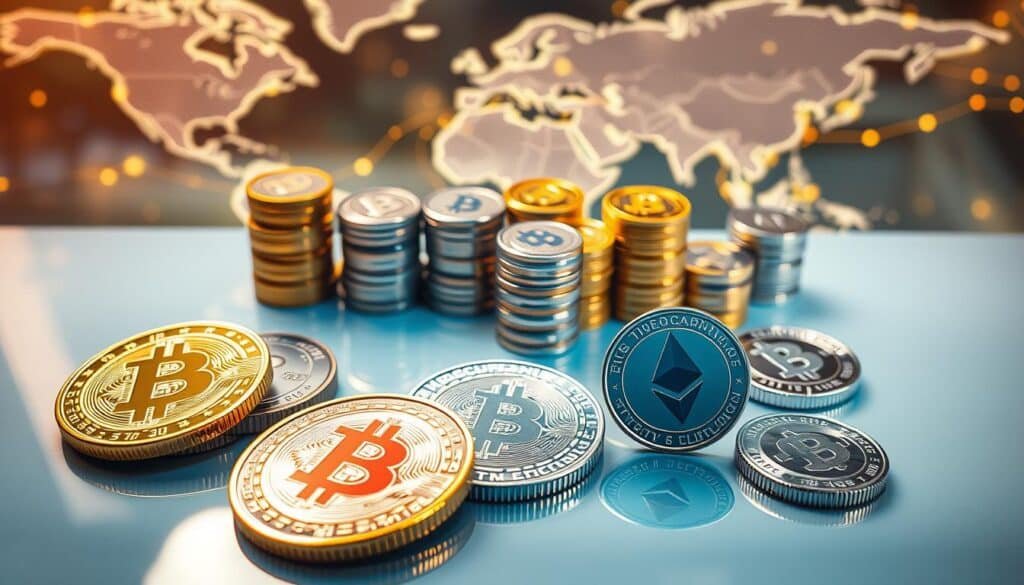
Evolution of Crypto Tokens
The role of tokens has expanded dramatically. Initially, they were simple instruments for exchange within applications.
Today, they represent complex programmable assets. Modern tokens can grant voting rights, enable staking rewards, or provide access to services. This evolution moved the space beyond basic currency concepts.
Understanding this progression is crucial. It explains why tokens need sophisticated economic design principles, differing from traditional money.
What is Tokenomics and Why It Matters?
Token economics represents the coded law of supply and demand for digital assets. It is the complete economic framework governing a digital asset’s creation, distribution, and management.

This model is programmatically enforced through smart contracts. Unlike traditional systems, its rules are immutable and transparent.
Core Concepts Behind Token Economics
Several interconnected elements form this framework. Key pillars include supply mechanisms and distribution models.
Utility design and governance structures are equally vital. Together, they determine the inherent value of a token within its network.
Impact on Project Sustainability
Why does this matter? A flawed economic design can cause inflation or collapse. Even brilliant technology fails without sound tokenomics.
Well-crafted models create a virtuous cycle. User participation boosts utility, which drives demand.
This supports price stability and encourages further ecosystem growth. For investors, this analysis reveals a project’s long-term viability beyond mere hype.
Components of an Effective Tokenomics Framework
A robust tokenomics framework stands on three interdependent pillars: supply, demand, and utility. These elements work together to create a sustainable digital economy.
Supply, Demand, and Utility
The supply component dictates a token’s availability. It defines the total quantity that can exist and its release schedule. Models can be inflationary, deflationary, or fixed, directly influencing perceived scarcity.
Genuine demand creates buying pressure. This stems from speculative interest, required platform usage, or staking opportunities. Network effects from a growing user base further fuel this demand.
Utility provides tangible benefits to holders. This includes access to services, discounted fees, governance rights, or yield generation. A token must offer real value within its ecosystem.
Effective design requires careful balance between these three components. Excessive supply without corresponding demand or utility leads to depreciation. Tokens without genuine use cases become purely speculative, undermining long-term sustainability.
Key Token Supply Metrics: Maximum, Circulating, and Initial Supply
Three fundamental numbers define a digital asset’s scarcity and availability in the market. These supply metrics are hard-coded rules that directly influence value.
Maximum supply is the absolute cap on how many units can ever exist. A token without this cap faces potential inflation, which can lower its price over time.
Circulating supply is the current number of tokens actively in circulation. This is the figure used to calculate market capitalization. It differs from the total supply, which includes locked assets.
Initial supply refers to the amount released at launch. This bootstraps liquidity and enables early price discovery for the ecosystem.
Interpreting Mint and Burn Rates
The mint rate dictates how quickly new tokens enter the market. A high rate increases the circulating supply, creating inflationary pressure.
Conversely, the burn rate measures how many tokens are permanently destroyed. This reduces the overall supply, aiming to increase scarcity. A sustainable model carefully balances these two forces.
The Role of Token Distribution in Project Success
Who gets the tokens at launch can make or break a blockchain network. This initial blueprint determines if ownership becomes decentralized or stays concentrated.
A fair distribution plan builds community trust and ensures long-term viability. An unfair one risks insider control and rapid price collapse.
Stakeholder Allocation and Vesting
The token distribution plan allocates the supply to key groups. Founders and the core team often receive 10% to 30%.
Early investors and advisors get a designated share. The largest portion, typically 30% to 60%, is reserved for the community and public sales.
This structure aligns incentives across the entire project. It ensures all participants work toward the ecosystem’s growth.
Vesting schedules lock allocated tokens for a set time. A common model is a four-year release with a one-year cliff.
During the cliff, no tokens are released. Afterward, they unlock monthly over the remaining three years.
This mechanism prevents sudden sell-offs by the team or early investors. It stabilizes the price and demonstrates long-term commitment.
Analyzing the distribution and schedule reveals a project’s true intentions. A focus on fair community allocation signals sustainable design.
Analyzing Utility and Incentive Models in Crypto Tokens
A token’s purpose extends far beyond trading; it is the key that unlocks specific functions within a digital ecosystem. Real value comes from concrete benefits and smart reward systems.
Token Use Cases and Benefits
Utility tokens operate within a single protocol, like BAT in the Brave Browser. They pay for services inside that network.
Transactional tokens work across multiple platforms. Both types offer holders real advantages.
Benefits include access rights, discounted fees, and governance power. Holding certain tokens can grant membership, like Developer DAO’s CODE requirement.
Incentivization Through Staking and Rewards
Blockchains use incentives to reward crucial participants. Bitcoin pays miners transaction fees. Ethereum offers staking rewards to validators.
DeFi protocols like Uniswap give yields to liquidity providers. Avalanche validators earn up to 11% APY for staking AVAX.
These rewards align participant interests with network health. Sustainable models create real value, not empty promises.
Evaluating these structures is key to understanding tokenomics for any digital asset project.
Exploring Different Types of Tokens
Beyond simple currency, tokens have evolved into specialized instruments. They fulfill distinct functions in decentralized ecosystems.
This taxonomy clarifies rights, risks, and regulatory standing for each digital asset.
Security, Utility, and Governance Tokens
Security tokens represent an ownership stake. They function like traditional stocks within a protocol. Holders often gain voting power and rights to protocol yields, similar to dividends.
There are two primary forms. Equity tokens denote partial ownership of the network itself. Asset-backed tokens are collateralized by real-world assets like real estate or gold.
Utility tokens are integrated into a specific protocol’s ecosystem. They are designed for operational use, like paying for services. Transactional tokens act as a currency across multiple platforms.
Governance tokens grant voting rights over a decentralized network’s decisions. On-chain voting makes this process trustless and instant. This programmable nature transforms traditional governance.
Commodity tokens are another category. They are digital representations of physical goods like precious metals.
Many modern tokens blend these classifications. A single asset can offer utility, governance, and speculative value. Understanding these types is essential for accurate evaluation.
Examining Token Governance and On-Chain Voting Mechanisms
Governance tokens represent a fundamental shift in organizational control, codifying voting rights directly onto the blockchain. These digital assets allow owners to participate in a protocol’s key decisions through on-chain voting.
This process is trustless and transparent. All votes are recorded permanently on a public ledger. Smart contracts automatically execute the winning outcome, making the system instant and organized.
Token holders typically vote on critical ecosystem matters. Common proposals include:
- Approving major protocol upgrades or changes.
- Allocating treasury funds for development or partnerships.
- Adjusting network fee structures or reward rates.
- Modifying fundamental economic parameters like supply.
A key concern is governance centralization, where large holders dominate outcomes. Many projects now implement systems like quadratic voting or delegation to better represent the broader community.
This contrasts sharply with centralized models. In decentralized ecosystems, the community governs core variables like mint and burn rates. This governance right adds tangible utility to tokens, transforming them from speculative assets into tools for direct influence.
how to analyze crypto project tokenomics
Applying a disciplined framework to scrutinize supply, utility, and distribution uncovers long-term viability. This process moves beyond hype to examine hard-coded economic rules.
Successful evaluation separates sustainable ventures from fleeting trends. It protects capital and identifies genuine growth potential.
Step-by-Step Analysis Techniques
Begin with fundamental questions. Does the protocol genuinely require its token to function?
Is it solving a real-world problem? Assess the model’s sustainability over many years.
Embrace the DYOR (Do Your Own Research) principle. Scrutinize the official whitepaper and tokenomics documentation.
Examine supply schedules, distribution plans, and vesting locks. Cross-reference all claims with on-chain data from explorers like Etherscan.
Systematically evaluate supply metrics. Identify the maximum cap and current circulating supply.
Review vesting schedules for team allocations. Calculate the impact of future minting on price and dilution.
Analyze the distribution plan for fairness. Does it favor insiders or reserve a healthy portion for community growth?
Proper vesting prevents sudden sell-offs. This stabilizes the market and shows team commitment.
Real-World Application Examples
Consider a token like Chainlink (LINK). Its value is tied to providing real-world data to smart contracts.
Analyzing its tokenomics reveals a fixed supply cap and clear utility. This creates organic demand beyond speculation.
Avalanche (AVAX) uses a deflationary burn mechanism. This reduces net supply over time, supporting value sustainability.
For investors, compiling these findings creates a complete assessment. It weighs supply dynamics, utility strength, and distribution fairness.
This final analysis informs decisions on potential and risk levels for any digital asset project.
Understanding Inflationary vs. Deflationary Models
At the core of every digital asset’s long-term viability lies a critical choice: to inflate or deflate its supply. These opposing economic philosophies govern a token’s fundamental trajectory.
An inflationary model increases the number of tokens in circulation over time. A deflationary model permanently reduces the total supply.
Mint Rate and Expansion
The mint rate dictates how quickly new tokens enter the market. This expansion can happen through mining rewards, staking yields, or scheduled emissions.
Inflation is not inherently negative. Ethereum has no maximum supply but remains highly successful. Staking rewards often offset dilution for holders.
Demand growth must outpace supply expansion to support the price. Dogecoin, with unlimited minting, is a pure example of this model.
Burn Mechanisms and Value Sustainability
Burning is the lifeblood of deflationary tokenomics. This mechanism permanently removes tokens from existence.
One method burns a percentage on each transaction. Another involves periodic team-led burns, like BNB’s quarterly events.
The economic theory is simple: scarcity increases value. As total supply contracts, each remaining token becomes proportionally more valuable.
Bitcoin’s fixed cap creates absolute scarcity. Many modern protocols use hybrid models, minting for rewards but burning fees. Evaluating this balance is crucial, a task aided by AI-driven tokenomics analysis.
Token Launch Strategies: SAFTs, LBPs, Auctions, and Airdrops
The method a protocol chooses to introduce its digital asset sets the stage for its entire economic journey. This critical decision shapes initial distribution, trading liquidity, and early price discovery.
Different protocols have distinct motivations. Some prioritize raising capital for development. Others focus on rewarding early supporters or achieving decentralized ownership.
Overview of Launch Methods
SAFTs are pre-launch agreements with accredited investors. Capital is provided upfront for future tokens, often with vesting schedules.
Liquidity Bootstrapping Pools (LBPs) allow gradual price discovery. Token-to-collateral ratios shift over time, minimizing upfront capital needs.
Auctions sell tokens to the highest bidders before launch. This can raise funds but risks whale dominance in the market.
Airdrops distribute tokens freely to early users. This builds community loyalty and creates instant liquidity.
Pros and Cons of Each Strategy
SAFTs secure guaranteed funding but limit public participation. They are exclusive to accredited investors.
LBPs enable fair launches and protect against manipulation. However, they require technical understanding from the community.
Auctions foster competition and efficient market pricing. The downside is potential concentration of token supply.
Airdrops generate buzz and reward early adopters. A key drawback is that they provide no direct funding for the project itself.
Each strategy serves a different project goal. The choice fundamentally impacts long-term success.
Learning from Token Deep Dives: DOGE, BNB, and UNI
Dogecoin, Binance Coin, and Uniswap offer a masterclass in contrasting economic philosophies. Their journeys provide stark evidence of how design dictates destiny.
Case Study: The Journey of Dogecoin
Born from an internet joke, Dogecoin eliminated Bitcoin’s supply cap. Its model is purely inflationary.
Over 10,000 new DOGE enter circulation every minute as block rewards. The current circulating supply exceeds 132 billion tokens.
This creates constant downward pressure on price. To maintain its multi-billion dollar market valuation, demand must expand perpetually.
Key traits of its model include:
- No maximum supply
- A fixed mint rate
- Zero burn mechanism
- Minimal inherent utility
Its success hinges almost entirely on community sentiment and cultural momentum.
Insights from Binance Coin and Uniswap
Binance Coin (BNB) presents a strong contrast. It provides clear utility, granting discounts on trading and gas fees across the Binance blockchain ecosystem.
Its quarterly burn events, tied to trading volume, actively reduce the total supply. This creates deflationary pressure to support value.
Uniswap’s UNI token arrived via a historic airdrop. This distribution rewarded early protocol users, generating immense publicity and instant network liquidity.
It also established a decentralized governance framework. This gives holders a direct stake in the protocol’s future, aligning long-term interests.
These models showcase sustainable design through genuine utility and fair distribution.
Risk Factors and Red Flags in Tokenomics Design
Spotting the warning signs in a token’s design can save investors from significant losses and failed ventures. Not every economic model is built for longevity. Some contain critical flaws that act as bright red flags.
Identifying Potential Pitfalls
Inequitable token distribution is a major concern. When founders and early backers control a huge percentage, pump-and-dump schemes become likely. Proper vesting schedules for the team are essential to prevent this.
An unlimited supply model without a clear reason is another danger. It allows a project to mint new units arbitrarily. This can crash the token’s value once it gains market traction.
The absence of genuine utility is perhaps the most critical flaw. If a digital asset serves no real purpose, its price relies solely on hype. Once speculation fades, a crash is inevitable.
Always verify the smart contract code matches the whitepaper promises. An unaudited contract is a severe red flag. Reputable audits confirm the design is safe for investors.
Other warnings include anonymous teams, promises of unrealistic yields, and a lack of locked liquidity. A practical checklist helps in evaluation:
- Review vesting schedules on a blockchain explorer.
- Confirm audit completion by a known firm.
- Assess if the token solves a real problem.
- Check for balanced supply demand mechanics.
Conclusion
Mastering the principles of token economics is the cornerstone of informed participation in decentralized networks. For any investor or builder, this research is fundamental, not optional. It separates strategic commitments from speculative gambles in the cryptocurrency space.
A robust model extends far beyond simple supply caps. True strength lies in a sustainable ecosystem with aligned incentives, genuine utility, and transparent governance. Fair distribution and sound protocol rules create lasting value for all stakeholders.
Apply the frameworks discussed to scrutinize any digital token. Prioritize this project due diligence alongside technical reviews. Understanding the economic laws of a blockchain network fundamentally shapes your experience and results.
FAQ
What is the main difference between a coin and a token?
A coin, like Bitcoin or Ethereum, operates on its own native blockchain. A token is built on top of an existing network, like an ERC-20 asset on Ethereum. Tokens often represent specific utility or access within a project’s ecosystem.
Why is a tokenomics framework so critical for a project’s long-term health?
A well-designed economic model aligns incentives between investors, the team, and users. It balances supply and demand to support the token’s value over time. Poor tokenomics can lead to sell pressure and project failure.
What are the most important supply metrics to check?
Always examine the maximum supply, circulating supply, and token distribution schedule. The circulating supply versus total supply shows how many tokens are actually tradable, impacting price discovery and market dynamics.
How does a vesting schedule protect token holders?
Vesting locks up tokens allocated to the team and early backers for a set period. This prevents large, sudden dumps that crash the price. It ensures holders that insiders are committed to the project’s long-term success.
What role do staking rewards play in an ecosystem?
Staking rewards provide incentives for users to lock up their tokens, which enhances network security and reduces circulation. This can help stabilize the asset’s value while distributing rewards to active participants.
What is a governance token and how is it used?
A governance token, like Uniswap’s UNI, grants holders voting rights on protocol upgrades and treasury management. This empowers the community to guide the project’s future through on-chain voting mechanisms.
What is a major red flag in a token’s distribution plan?
A huge percentage allocated to the team and investors with a very short or no vesting period is a critical warning sign. It often indicates a “pump and dump” scheme rather than a sustainable economics model focused on utility.
How does a burn mechanism affect a token’s economics?
A burn mechanism permanently removes tokens from circulation, reducing the total supply. This creates deflationary pressure, which can counter inflation from staking rewards or new minting and support value sustainability.
Can you give an example of strong token utility?
Binance Coin (BNB) is a prime example. Its utility includes paying transaction fees on the Binance exchange and blockchain, participating in token sales, and earning rewards. This creates constant demand from users across platforms.

No comments yet