
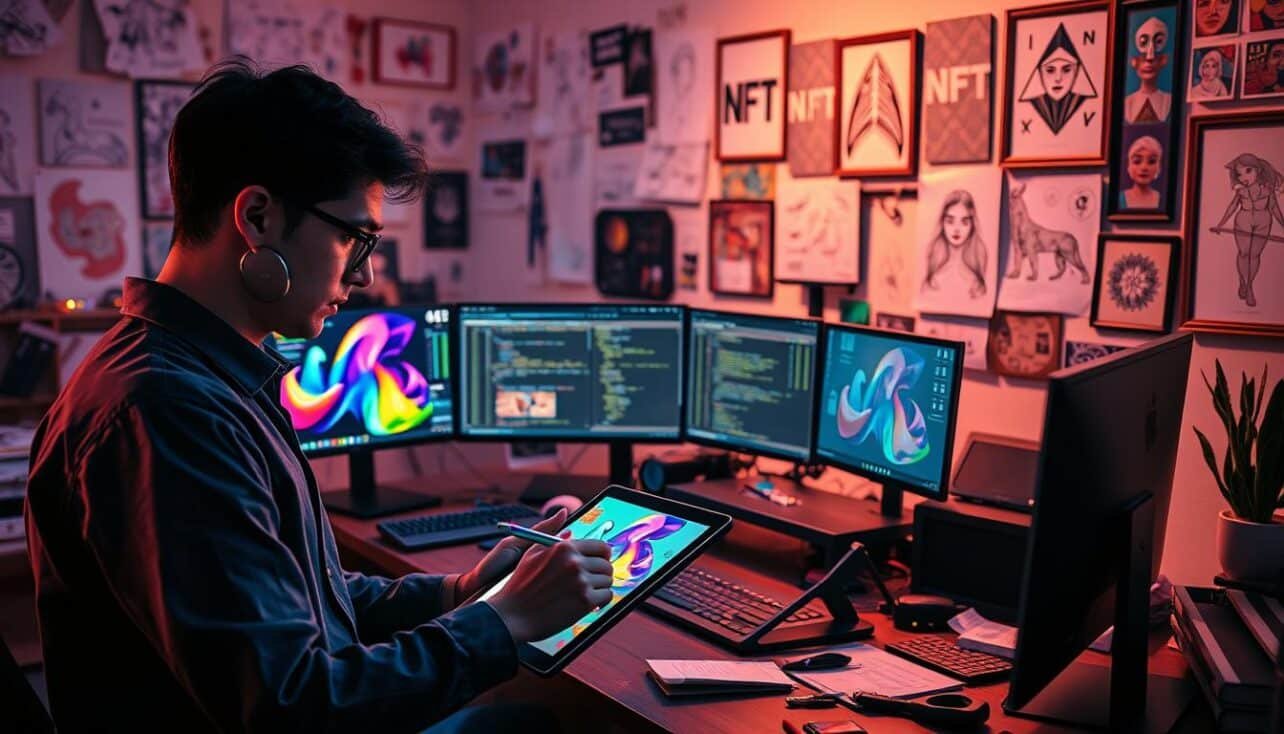
The digital landscape is transforming. A powerful fusion of generative technology and blockchain is reshaping creative expression. This guide explores that exciting intersection.
It provides a path for turning digital visions into valuable, ownable assets. Understanding the core principles of tokenization is essential for any modern creator.
The blend of algorithmic generation and non-fungible tokens offers unprecedented opportunities. Both seasoned and new artists can now participate in a global digital art market.
This resource covers the entire journey. You will learn about selecting the right software and platforms. We discuss crucial steps like minting and listing your generative pieces.
Key topics include proper file formats, choosing a blockchain, and effective marketplace strategies. The goal is to build a comprehensive roadmap for success.
We examine current trends and analyze successful projects. Our focus is on practical steps to establish your presence in this dynamic space.
By following this guide, you can navigate the technical and creative aspects. The information helps you understand the requirements for producing unique nft art.
Introduction to the Convergence of AI and NFT Art
The fusion of generative algorithms and blockchain tokens is creating a new artistic paradigm. This convergence represents a fundamental shift in how we produce and own digital creations.
It combines the inventive power of machine learning with the secure provenance of distributed ledgers. Together, they are reshaping the entire creative economy.
Overview of AI in Digital Art
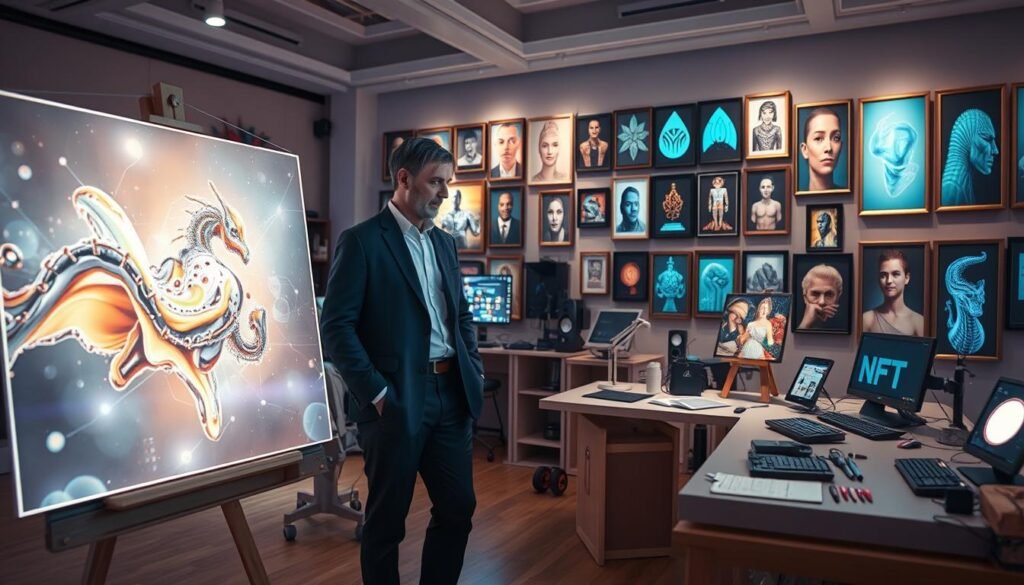
Artificial intelligence has fundamentally altered digital art creation. Advanced algorithms, like General Adversarial Networks (GANs), can now generate unique visual content autonomously.
Platforms such as Dalle-3, Midjourney, and Stable Diffusion analyze vast image datasets. They enable millions to produce high-quality, original artwork without traditional training.
This democratization of creativity is a core part of the technological revolution. It allows anyone to bring their visual ideas to life quickly.
The Rise of NFTs in the Art World
The non-fungible token market gained momentum through pioneers like Pak and Beeple. They proved digital art could hold significant monetary value on the blockchain.
Popular marketplaces, including OpenSea and Rarible, became primary venues for minting and selling these digital assets. This new system provides artists with verifiable ownership and direct monetization paths.
Initial skepticism about authenticity has given way to recognition of innovative use. You can explore this evolution further in our detailed article on NFT arts with artificial.
Understanding the NFT Ecosystem and Blockchain Basics
Blockchain technology has introduced a new paradigm for digital ownership and authenticity. This ecosystem is built on decentralized networks that record transactions permanently.
It provides a framework for verifying and trading unique digital assets. Grasping these basics is the first step for any creator entering this space.
What Makes NFTs Unique?
Non-fungible tokens are distinct from cryptocurrencies like Bitcoin. Each NFT contains specific data that makes it one-of-a-kind and impossible to replace.
This uniqueness is recorded on the blockchain, providing a permanent certificate of authenticity. It solves the classic digital problem of endless, perfect copies.
The Role of Blockchain in Art Authentication
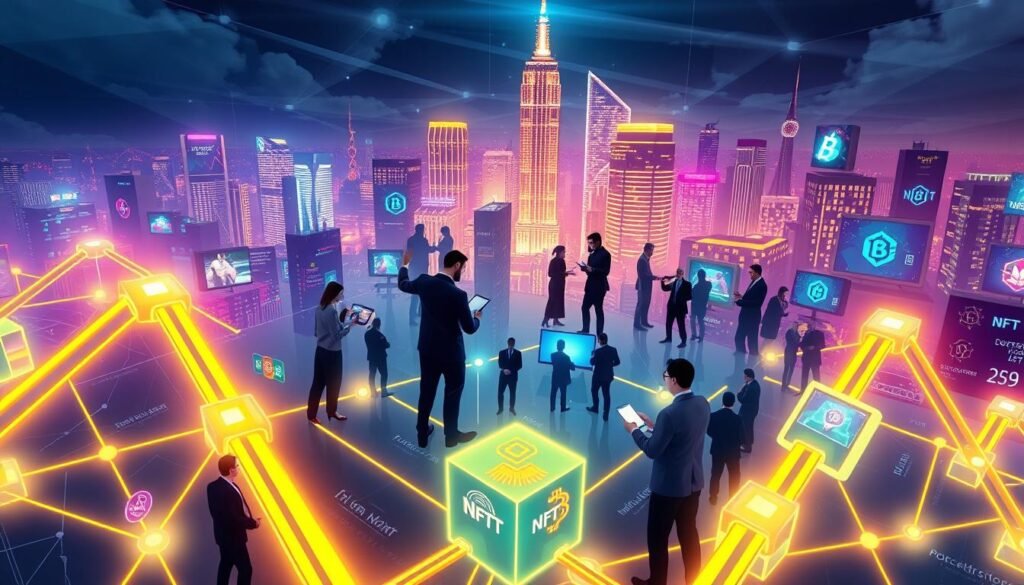
The blockchain acts as an unchangeable ledger for every transaction. This immutability is crucial for establishing provable ownership and history.
Smart contracts automate key processes. They can ensure artists receive royalties automatically when their work is resold.
The value of an NFT is influenced by the artist’s reputation and the piece’s rarity. Community demand within the crypto world also plays a major role. For a deeper exploration of this technology, read our comprehensive article on the subject.
Different blockchains offer various benefits for minting these assets. Understanding these options is essential for a successful strategy.
How to Create AI Art for NFTs
The journey to producing valuable tokenized artwork starts long before any image is generated. This foundational phase separates casual outputs from meaningful digital collectibles.
You must build a strong conceptual core. This core will guide every technical step that follows.
Defining Your Artistic Vision and Value Proposition
Your artistic vision is your compass in a crowded marketplace. Billions of digital pieces compete for attention.
A distinctive style and compelling story make your work stand out. Collectors seek content with depth and intentionality.
The market now values complex formats. Think animated sequences or thematic collections.
These formats demonstrate greater effort and creativity. They move beyond simple, static pictures.
Utilizing AI Tools to Generate Unique Art Pieces
Generative software is a powerful assistant. It should enhance your human insight, not replace it.
Effective use involves crafting detailed prompts and iterating on results. This process aligns the output with your original vision.
For a technical walkthrough on this process, review our detailed article on generating nft images. It covers prompt engineering and refinement.
The final value of your nft art connects directly to your conceptual effort. Thoughtful artists who invest time build lasting recognition.
Approach each piece with the seriousness of physical art. This mindset is key to success.
Essential Tools and Platforms for AI Art Generation
Choosing the right technological partners is a critical decision for any digital artist. Your selected software and networks directly impact the quality and reach of your final piece.
Popular AI Art Generators and Their Features
Several leading art generator tools dominate the space. Each offers unique capabilities for different creative needs.
- Midjourney operates via Discord, producing highly detailed images from text prompts.
- Stable Diffusion is a powerful open-source model accessible through platforms like GetIMG.
- WOMBO Dream remains a popular free generator, great for cartoon-style transformations.
- NightCafe specializes in bulk creation, ideal for building entire collections.
Other notable tools include Deep Dream Generator and ChainGPT’s integrated art generator. These platforms empower users with advanced features.
Blockchain Platforms and NFT Marketplaces
After generation, you need a blockchain to mint your work. Ethereum is the most common network due to its large market.
Alternatives like Polygon offer lower transaction fees. This is a key consideration in the crypto economy.
Finally, list your digital asset on a major marketplace. OpenSea and Rarible are primary hubs for trading.
Each platform has different fee structures and community demographics. Research is essential for market success.
For a deeper dive into this technology, consult our detailed article on the subject. Understanding both creation and distribution tools is vital.
Selecting Optimal File Formats and Quality Standards
File format and image quality are not mere technical details. They are fundamental to how your digital artwork is perceived and preserved.
Your choices here directly shape the collector’s experience. They also impact the long-term utility and value of your tokenized creations.
Choosing Between PNG, JPEG, and TIFF
PNG is the most recommended format for this digital content. It uses lossless compression, keeping all original image data intact.
This preserves fine details and supports transparency. PNG files display consistently across all browsers and devices.
JPEG files are smaller but use lossy compression. Some image quality is sacrificed for reduced file size.
For printable, gallery-quality pieces, TIFF is the superior choice. It supports both compression types and maintains exceptional color accuracy.
TIFF files make your NFTs more valuable for serious collectors. They allow for high-resolution physical prints.
Ensuring High Resolution for Digital Collectibles
High resolution is critical for digital collectibles. Successful artists typically use a minimum of 2000×2000 pixels.
This ensures clarity on large displays and modern screens. Higher resolutions future-proof your artwork.
The minting process involves a strategic balance. Always maintain a master file in the highest quality, like TIFF.
Create an optimized version for the blockchain. This balances visual fidelity with reasonable file size and cost.
Step-by-Step Process for Generating and Minting NFT Images
The path to launching a unique digital collectible consists of two main phases: generation and minting. Modern platforms guide artists through each stage with intuitive tools.
Preparing the Artwork with AI Generators
Begin by accessing your chosen generator’s dashboard. Select whether to produce a single piece or an entire collection.
Enter a detailed text prompt describing your vision. Specific and creative descriptions yield superior results. The algorithm then renders your initial images.
This generation process typically takes thirty to sixty seconds. Complexity and style influence the rendering time.
Carefully review the output for quality and composition. Look for any visible errors or unwanted elements.
If the result is unsatisfactory, regenerate with modified prompts. Most platforms allow multiple attempts until you achieve the desired artwork.
Minting Your Digital Asset on the Blockchain
Once your artwork is finalized, proceed to the minting phase. This action permanently records your digital asset on a distributed ledger.
First, select your preferred blockchain network. Options include Ethereum, Polygon, or BNB Chain.
Upload your high-quality image file to the platform. Then, provide essential metadata like the token’s name and description.
Specify the quantity of tokens to mint. Configure royalty percentages for future secondary sales.
Submit all information to complete the transaction. Your piece is now tokenized and ready for market listing.
The final step involves setting an initial price. Choose between a fixed price or an auction format based on your strategy.
Best Practices for Listing and Trading NFT Art
Effective listing and trading strategies separate successful NFT artists from the rest of the crowd. Mastering the market requires a blend of technical setup and strategic promotion.
Your goal is to maximize exposure and attract serious investors. This involves careful platform selection and community building.
Setting Up and Securing Your Crypto Wallet
A secure crypto wallet is your gateway to all trading activity. MetaMask is the most trusted option for managing your cryptocurrency and digital assets.
Always enable two-factor authentication and store your recovery phrase offline. Never share private keys.
Create accounts on multiple marketplaces to reach different audiences. Key platforms include OpenSea, Rarible, and SuperRare.
Optimizing Pricing and Auction Strategies
Pricing your work requires research. Consider your reputation, the piece’s uniqueness, and current market trends.
You can use a fixed price for quick sales. Auction formats often drive competitive bidding among investors, potentially increasing final value.
Monitor gas fees on sites like Etherscan. Timing your minting when network fees are low saves significant costs.
Promotion is crucial. Engage your community on Twitter and Discord. These platforms help showcase your latest nft and build direct connections.
Once listed, seek digital exhibitions on curated platforms like Foundation. This expands your reach to dedicated collectors in the crypto art market.
Enhancing Creativity and Market Appeal of Your NFT Art
Collector attention increasingly favors artwork with strong conceptual foundations and community appeal. The digital collectibles space has evolved significantly from simple profile picture projects.
Buyers now seek sophisticated pieces that offer more than just visual appeal. They want art with cultural depth and thematic resonance.
Leveraging Trends in AI and NFT Communities
Successful artists study what resonates within active community circles. The Singaporean creator NiceAunties built a collection of over 1,000 surreal animations.
Her work explores Asian culture and food traditions. This specific focus attracted a dedicated audience.
Another artist, Puff Yachty, sells video pieces for thousands of dollars. He cultivated ~50,000 followers by focusing on fluid color gradients.
Incorporating Unique Design Elements for Competitive Edge
Your nft art needs distinctive features to stand out. Consider signature color palettes or recurring thematic symbols.
Animation and video formats often command premium market prices. These elements show greater creativity and effort.
Align your aesthetic with trends that people value. However, maintain your authentic artistic vision.
The value of your pieces increases when they connect with an existing community. Spend time researching what collectors support.
This balance between trend awareness and originality defines successful projects. It builds lasting recognition in the competitive market.
Integrating Advanced AI Techniques into Your Workflow
Sophisticated text prompts unlock the full potential of modern art generators. Moving beyond basic use requires a deeper understanding of the underlying model and its data.
This approach transforms the tool from a simple novelty into a powerful partner for professional artists.
Using Text Prompts and Image Generators Effectively
Effective generation starts with detailed text. Specific prompts about style, color, and mood guide the art generator precisely.
Advanced users employ iterative refinement. They start broad and add constraints over time.
This method allows the AI to produce work that closely matches the artist’s original vision. Understanding how different models interpret the same text is key.
Case Studies: Success Stories in AI NFT Art Creation
Real-world success proves the value of advanced techniques. In 2024, artist Legio X used the Neural Frames platform.
He created a 32-piece series of AI music videos. This nft art collection earned over $50,000 on OpenSea.
Another artist, Le Moon from France, also found success minting her digital pieces. These video works require more time and technical skill to produce.
That increased effort makes them more valuable within trading communities. Their stories show that dedicated artists can achieve significant results.
Conclusion
A new chapter in visual culture is being written by tools that blend artificial intelligence with blockchain verification. This convergence transforms how artists produce and monetize digital assets.
Platforms simplify the entire process from generation to minting. This allows both newcomers and experienced creators to participate in the cryptocurrency art market.
Success requires more than technical skill. Artists must develop distinctive styles and engage with community circles. They should understand market trends and pricing strategies.
The future of creative work is linked to these innovations. They promise exciting possibilities for collectors and the broader community of people engaged with this technology.

No comments yet