
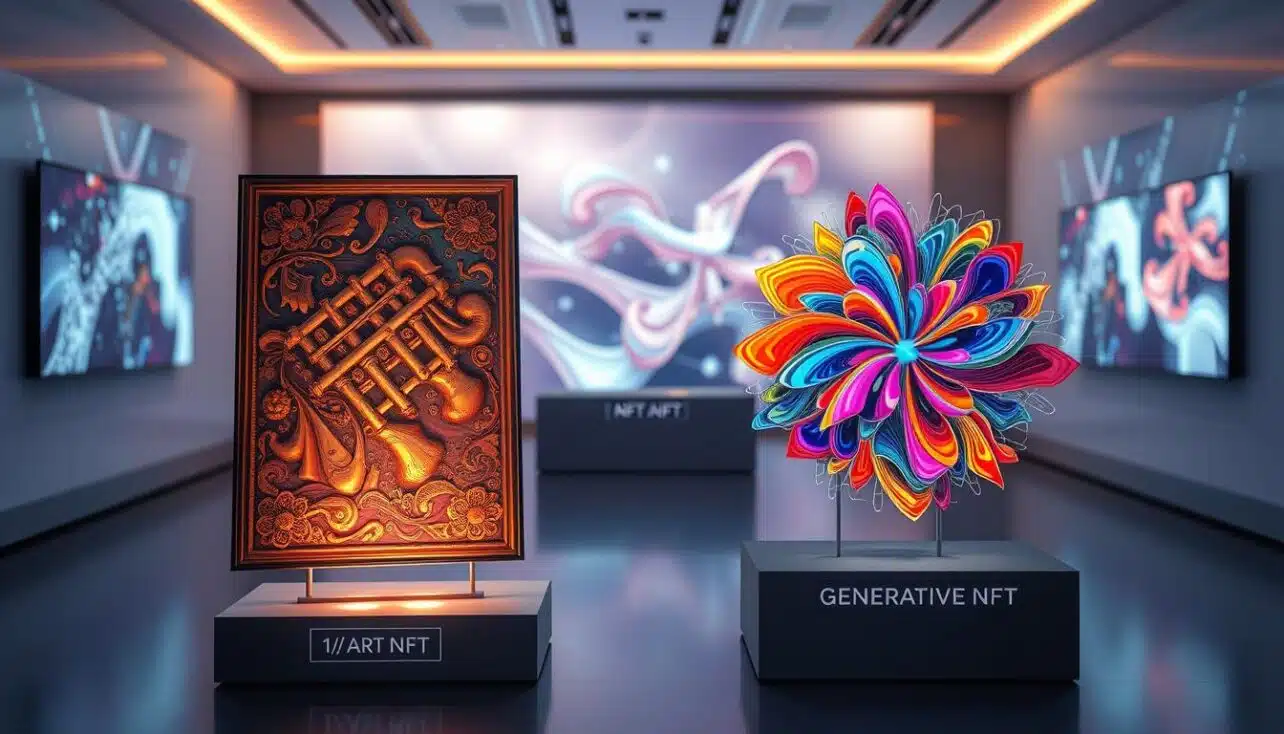
The world of creative expression has been fundamentally reshaped by blockchain technology. This innovation allows creators to tokenize their work, establishing verifiable ownership and scarcity in the digital realm.
Two prominent formats have emerged within this space. The first centers on singular, unique pieces often referred to as one-of-a-kind digital artworks. The second involves collections built through algorithmic code.
This guide is designed to clarify the core distinctions between these two approaches. Our goal is to provide collectors, artists, and enthusiasts with the knowledge to make informed decisions.
We will explore how production methods, artist intent, and market dynamics vary significantly. Understanding these factors is key to appreciating the unique value proposition of each category.
You will gain practical insights into rarity, technological foundations, and current trends. This exploration serves as an essential resource for navigating the exciting landscape of blockchain-based collectibles.
Introduction to NFT Art: Setting the Stage
Artists and technologists converge to redefine value in the age of digital creativity. This movement is powered by non-fungible tokens, which transform how we own and trade digital items.
Overview of NFTs and Digital Art
Non-fungible tokens represent a revolutionary approach to ownership. They use blockchain technology to verify authenticity and rarity.
Digital creations have evolved from easily copied files to verifiable assets. Creators can now monetize their work directly without traditional intermediaries.
Defining 1/1 Art NFTs and Generative NFTs
Two primary formats exist within this space. Singular, one-of-a-kind pieces are created individually by artists.
Algorithmic collections generate thousands of unique variations through code. This distinction reflects different artistic philosophies and production methods.
Understanding these formats is the foundation for appreciating their unique value propositions in the broader ecosystem.
Understanding 1/1 Art NFTs
Digital ownership reaches its most exclusive form with a one-of-one tokenized artwork. This format guarantees only a single edition exists, making it the sole authentic version. For a deeper look at what constitutes a 1/1 NFT, the core principle is absolute scarcity.
Unique Attributes and Exclusivity
Each piece is individually crafted by an artist, not mass-produced by code. This hands-on process ensures complete creative control from start to finish.
The resulting rarity creates a powerful value proposition. Collectors prize these pieces for the exclusive ownership they represent, akin to possessing an original masterpiece.
Creation and Minting Process
The journey from concept to collectible follows a clear path. It begins with the artist producing a singular digital artwork.
- The creator finalizes their unique visual or audio file.
- This file is uploaded and tokenized on a blockchain platform as an NFT.
- The minting process permanently records the work’s authenticity and provenance on the ledger.
Blockchain verification locks the work, preventing endless digital copies. This establishes a clear, permanent record for the one true owner.
Exploring Generative NFTs
At the intersection of art and code lies a fascinating category of digital collectibles. These collections are built through algorithmic processes that produce many distinct items from a single framework.
This method represents a shift from manual creation to programmed design. It allows for the efficient generation of large series while ensuring each output is one-of-a-kind.
How Algorithms Create Unique Pieces
Artists begin by designing a library of individual trait layers. These assets serve as building blocks for the final compositions.
Common trait categories include:
- Background type
- Eye style and expression
- Outfit and accessory sets
A script then randomizes the selection from each category. It layers the chosen variants to form a complete, unique image.
The artist pre-defines the rarity for each trait. This controls how often specific features appear across the collection.
The Role of Smart Contracts in Generative Art
The entire generative process is governed by smart contracts on the blockchain. These contracts execute the code that assembles each final piece.
This ensures transparent and verifiable creation for every token in the series. Collectors can trust the provenance and scarcity of their specific unique nfts.
This automated approach democratizes access. It lets more enthusiasts own a part of an artist’s vision through these blockchain-based collectibles. For a broader look at this technology, explore our guide on non-fungible tokens.
1/1 art NFT vs generative NFT difference
The digital art landscape presents two distinct paths for creators and collectors, each with its own philosophy and mechanics. Understanding the core contrasts helps in appreciating their unique positions within the ecosystem.
Core Distinctions in Rarity and Production
The fundamental divergence lies in production methodology. Singular works are individually created by an artist, resulting in one absolute piece. Algorithmic collections, often called generative nfts, use code to produce many variations from a set of traits.
Scarcity operates on different principles. A one-of-one token guarantees sole existence, creating absolute rarity. Programmatic series establish hierarchies through trait distribution within a larger group.
Artist Intent and Market Value Implications
Creators pursuing singular works focus on refined, complete visions similar to traditional fine art. Those building generative systems design frameworks for aesthetic variety, emphasizing the system over any single output.
Market dynamics reflect this split. Value concentrates in individual high-value masterpieces, often tied to creator reputation. Collections distribute value across many tokens, with floor prices and rare traits driving premiums.
Buyers of unique pieces seek exclusive ownership. Collectors of algorithmic series often appreciate community aspects and trait-based rarity systems. This shapes their collecting strategies and investment approaches.
Media and Art Forms in NFT Creations
From audio waves to moving pictures, tokenization embraces diverse creative outputs. The technology supporting digital collectibles is not confined to a single format.
Visual Art, Music, and Beyond
While digital art like paintings and animations leads the space, the scope is vast. Creators tokenize many types of original work.
Supported media includes:
- Music tracks and full albums
- Photography and mixed media
- Video clips and animated loops
- Written essays and poetry
- Audio podcasts and spoken word
Music has become a major category. An artist can release a song as a sole edition for high exclusivity. Alternatively, they might mint multiple editions of an album.
This allows broader fan ownership while preserving scarcity. Video art and photography also thrive. A photographer may tokenize a singular masterpiece as a one-of-one item.
The flexibility lets creators match distribution to their goals. This demonstrates the platform’s potential for all creative disciplines.
Minting Process and Marketplaces for 1/1 NFTs
For creators of exclusive digital items, the path to ownership begins with a deliberate minting process. This technical journey transforms a finished piece into a verifiable asset ready for the market.
Step-by-Step Creation and Listing
The procedure to tokenize a singular work follows a logical sequence. Key decisions at each stage impact cost, audience, and success.
- Creation and Selection: After finalizing the digital artwork, creators choose a blockchain network. This choice affects transaction fees, speed, and the collector base.
- Platform and Wallet Setup: Selecting a marketplace that highlights unique pieces is crucial. Artists then connect a crypto wallet to the platform to establish their account.
- Execution and Listing: Using the platform’s tools, the creator uploads the file, adds descriptive metadata, and pays the required gas fee to mint the item on the blockchain. Once confirmed in their wallet, they can list it to sell nft using fixed prices or auctions.
The total time needed can vary from minutes to hours. It depends on network congestion and the creator’s familiarity with the tools they use.
Blockchain Comparison: Ethereum vs Solana
The infrastructure supporting digital ownership is not monolithic. Ethereum and Solana represent two prominent architectures for tokenized assets.
Each network offers distinct trade-offs in speed, cost, and ecosystem size. Your choice here fundamentally shapes the minting experience and collector reach.
Transaction Speeds and Gas Fees
Performance metrics vary dramatically between these platforms. Ethereum handles roughly 13-15 transactions per second.
Solana’s architecture enables about 4,000 transactions per second. This speed difference directly influences gas fees.
Fees on Ethereum can swing from a few dollars to hundreds during busy periods. Solana consistently maintains costs under one cent per transaction.
Pros and Cons for NFT Minting
Ethereum’s main advantage is its mature ecosystem. It hosts the largest audience of collectors and marketplaces.
This network effect provides significant value and liquidity for creators. Solana excels in affordability and throughput.
Its proof-of-stake model and parallel processing keep costs low. Artists must weigh these factors against their target audience and budget.
NFT Marketplaces and Platforms for Unique Creations
Specialized platforms have emerged to serve the distinct needs of one-of-a-kind digital art. These venues differ greatly from large-scale collection hubs.
Marketplaces like Magic Eden primarily list generative series with thousands of pieces. Dedicated spaces focus on singular works, offering tailored tools for creators and serious collectors.
Exchange.Art and Exclusive Platforms
Exchange.Art is a premier Solana-based platform for unique pieces. It gives artists significant control over their commercial strategy.
Creators can choose to sell nft works via fixed-price listings or timed auctions. This flexibility helps build direct relationships with potential buyers.
The environment is designed for quality over quantity. It attracts a dedicated audience seeking exclusive digital assets.
Alternative Options like Holaplex and Formfunction
Holaplex offers an open-source approach. It enables artists to build their own branded storefronts instead of just listing on a crowded marketplace.
This is ideal for independent creators launching a personal project. Formfunction operates as a curated, invite-only marketplace.
Created by developer @pencilflip, it maintains high standards through a selective application process. Its streamlined interface provides a premium experience for browsing and buying.
Other platforms like SolSea add unique features such as embedded licenses and drop calendars. This diversity benefits buyers and collectors with different preferences.
The landscape for these nfts continues to evolve, balancing artist accessibility with collector demand for quality.
Showcasing Top Solana 1/1 NFT Artists
The Solana blockchain has become a vibrant stage for creators specializing in exclusive digital collectibles. A thriving community of artists has achieved significant recognition through distinctive visions.
Popular Artists and Their Signature Works
Boogle creates ghost-themed pieces inspired by mythology. This artist auctions unique nfts in batches, commanding high prices from serious collectors.
Voxel Monkes features 100 unique 3D pixel monkeys. The work mixes static and animated pieces, often referencing current pop culture.
The Observer presents a dark creature studying human behavior. Each piece carries a unique story, adding conceptual depth that resonates with audiences.
Market Trends and Collectibility
Successful creators build value through consistent themes and limited supply. Strategic release mechanisms create anticipation and maintain scarcity.
Collectors appreciate technical quality and ongoing creative output. They seek art with strong narrative stories and coherent concepts.
This approach builds loyal communities and supports higher prices. These leading artists demonstrate the power of a unified series within the exclusive digital space.
The Evolution of Generative Art and Its Technology
Generative art represents a fundamental shift from direct human execution to systemic, autonomous creation. In this form, an algorithm or system makes key aesthetic decisions. This approach has a surprisingly brief history, closely tied to the development of computers over the last seventy years.
From Traditional Methods to Cutting-Edge Algorithms
Early pioneers worked with limited tools like basic plotting machines. Their code was primitive by today’s standards. Technological constraints directly shaped the visual output of this early work.
Modern creators leverage immense processing power. This allows exploration of aesthetic territories impossible through manual methods. The artistic possibilities have expanded dramatically over a short time.
Today, this field sits at the convergence of computer science, mathematics, and aesthetics. Blockchain technology provides a new foundation for ownership and distribution. This fusion enables genuinely new forms of art, including evolving digital assets. Our deep dive shows how computational progress continuously redefines creative potential.
Technical Insights: How Algorithms Influence NFT Value
Algorithmic complexity and elegance serve as a primary driver for valuation in generative digital collectibles. The code itself becomes a foundational asset, shaping both scarcity and aesthetic output.
This technical foundation resonates deeply within the community. Many collectors possess computational literacy, appreciating the craftsmanship behind the software.
Understanding Generative Code and Its Impact
A single source script can yield thousands of distinct outputs. Smart contracts enforce a hard cap on total supply, creating artificial scarcity within a framework designed for abundance.
Creating an exceptional system requires extraordinary skill. Artists act as cyber architects, designing software that must be both aesthetically compelling and technically robust.
Evaluating a generative project involves multiple layers. Critics assess visual appeal, code quality, and the creator’s authentic vision.
The value proposition extends beyond the final image. It includes admiration for the elegant solution and the innovative problem-solving encoded within.
A key technical differentiator is on-chain storage. High-quality collections store the generative algorithm directly in the smart contract.
This allows the artwork to be reproduced without external servers. It ensures true decentralization and long-term permanence for the collector’s asset.
User Perspective: Collectors, Buyers, and Community Impact
Market demand is not monolithic. It fractures along lines of artistic philosophy and social engagement.
Community Trends and Market Demand
Collectors approach these assets with different goals. Some seek the prestige of a singular masterpiece. Others enjoy the shared identity of a large collection.
The space has drawn a lot of attention from diverse people. This includes traditional buyers and tech enthusiasts. The intense focus has sparked talk of a speculative bubble.
Critics point to rapid price swings. However, sustained community activity suggests deeper roots. Active forums and events create real value.
Strong groups help nfts maintain relevance long after launch. This social layer is now a core part of their appeal. It moves the conversation beyond short-term attention.
Understanding these dynamics is crucial. The lot of discussion around a bubble often misses this community strength. For many people, the social connection is the primary value.
Future Outlook: Trends and Predictions in NFT Art
Emerging tools and creative strategies are setting the stage for the next evolution in tokenized artwork. The line between singular and algorithmically-generated assets will continue to blur.
Creators are developing hybrid approaches. These methods combine handcrafted elements with code to produce limited editions of unique nfts.
Emerging Technologies and Artist Adaptations
New technologies are enabling dynamic nfts that change over time. These living artwork pieces respond to data or owner input.
Enhanced token standards allow for fractional ownership and upgradeable digital art. This adds new layers of utility and value.
Artists are adapting their work for cross-chain compatibility. This lets a single project reach wider audiences.
Sophisticated edition strategies are becoming common. Limited runs and timed open editions create controlled scarcity.
Narrative story elements give conceptual depth to collections. This helps a project stand out from others.
As the space matures, quality will separate successful nfts. The future belongs to innovators who leverage these tools in novel ways.
Conclusion
The journey through tokenized creativity highlights a spectrum of artistic and technical approaches. This article has detailed the core distinctions between singular masterpieces and large algorithmic collections.
Understanding these paths empowers every creator. An artist can now choose the method that best fits their vision and goals. For collectors, this knowledge supports smarter, more aligned acquisition strategies.
The space for digital art continues to evolve rapidly. Both unique works and programmatic series offer legitimate value and engagement. The future of nfts is not about one format winning, but appreciating how each serves different needs in a vibrant ecosystem.

No comments yet