

A new frontier of ownership is emerging online. Virtual real estate is transforming traditional concepts of assets and value.
The global metaverse market was worth $63.83 billion in 2021. It is expected to grow at nearly 50% annually through 2029.
This signals a major shift. Ownership is now possible in entirely digital realms. These parcels, often represented as NFTs, are secured by blockchain technology.
This creates a novel asset class with unique opportunities. It allows for participation beyond physical constraints.
Our resource addresses the fundamental questions. It covers how this digital land works and why people are investing.
Timing remains strategic for entering this market. Platforms are still developing, and early positioning can be beneficial.
Readers will gain practical knowledge about purchasing and managing these assets. They will also understand the associated risks and speculative nature of this new real estate frontier.
Introduction to Virtual Land and NFTs in the Metaverse
A revolution in asset possession is unfolding within interactive digital realms. This new form of property exists only as code on a blockchain.
Virtual real estate refers to parcels, buildings, and islands that have no physical address. These assets are bought and sold entirely online.
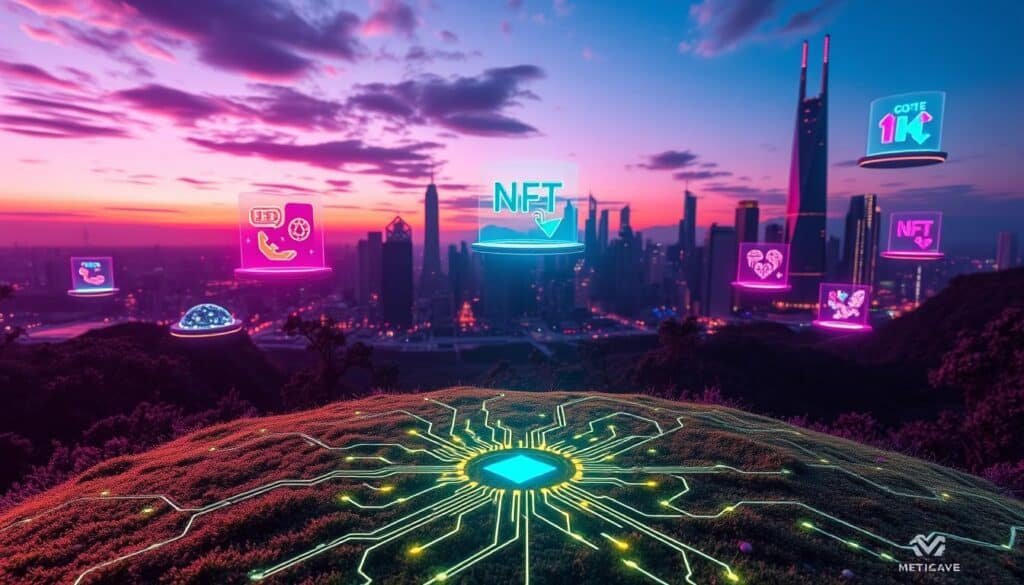
Ownership is secured by unique digital certificates, commonly called NFTs. These tokens act as a permanent deed stored on a public ledger.
This system removes traditional geographical and legal barriers. Anyone with internet access can participate in this market.
The digital real estate landscape includes plots for homes, shops, and galleries. Each piece serves a purpose within its specific metaverse platform.
This model offers avenues for investment, creative projects, and social spaces. It represents a fundamental shift in how we view ownership and value.
Understanding the Digital World: What is the Metaverse?
Imagine stepping into a vast, interconnected network of digital spaces where social and economic life thrives. This collective environment is often called the metaverse. It consists of many 3D online realms hosted on the internet.

These spaces aim to connect individuals beyond physical limits, including through digital land ownership. They allow for mixed-reality experiences.
Concepts and Origins
The phrase “metaverse” first appeared in Neal Stephenson’s 1992 novel Snow Crash. It described a virtual reality-based successor to the internet. Today, the term refers to various platforms using advanced technology.
Modern implementations blend virtual reality, augmented reality, and blockchain. They create immersive digital worlds for interaction and creation. This evolving world represents a shift in digital experience.
The Role of Virtual Communities
Active users form the backbone of any successful platform. People gather in these digital environments for many reasons. Socializing, attending events, and conducting business are common activities.
The value of a virtual world grows with its community. Vibrant communities create demand for digital assets and parcels of land. This dynamic mirrors real-world social and economic principles. The entire virtual worlds ecosystem depends on participation and collective building.
To explore the metaverse concept in greater depth, additional resources are available.
Exploring Virtual Real Estate: Definition and Significance
Scarcity and location drive value in a new form of property that exists only online. This digital asset, often called virtual real estate, is stored as a unique token on a blockchain. It proves ownership of a specific parcel or building within a digital world.
These assets behave like physical real estate. Demand and limited supply set their market price. However, they require near-zero upkeep and have no physical boundaries.
What Makes Virtual Real Estate Unique
Its uniqueness stems from several factors. The property is entirely digital and verified by blockchain. This allows global access and instant transfers.
You can develop your piece of land into almost anything. Build a home, gallery, or store without construction limits. Location remains crucial. Land parcels near popular areas command higher prices.
Each platform hosts a finite supply of land. This artificial scarcity boosts value. For example, one collector paid $450,000 for a space next to a celebrity’s digital estate. This shows how desirability influences value, mirroring traditional real estate markets.
NFT for virtual land metaverse guide: Unique Features and Benefits
Digital deeds on the blockchain are redefining what it means to own property. These unique cryptographic assets, known as non-fungible tokens, serve as the foundation for this new system.
Each token represents a specific parcel in an online world. It acts as an immutable digital deed.
Key Elements of NFT Ownership
Several components work together to secure your rights. The unique token identifier distinguishes your asset from all others.
Smart contract code defines ownership rights and transfer rules. A transparent blockchain records every transaction.
Metadata describes the property’s characteristics, like size and location. Your digital wallet address proves you are the current holder.
This system provides instant, verifiable proof without centralized authorities.
Comparisons to Traditional Real Estate
This new model offers distinct advantages over physical property. Superior liquidity allows for instant global transfers.
Ownership history is completely transparent on the public ledger. The process eliminates intermediaries like lawyers and title companies.
You can experience things impossible in the physical world. Teleport to your asset instantly or modify its appearance with simple code.
Building structures requires no permits or construction costs. This creates a flexible and dynamic form of asset management.
Blockchain Technology and NFT Security in the Metaverse
The security of digital property hinges on a groundbreaking technology known as blockchain. This system creates an unchangeable record of every transaction for digital land. It does not rely on a single central authority.
How NFTs Secure Digital Ownership
Each digital parcel is a unique token on this ledger. This NFT acts as your permanent deed. Ownership is cryptographically tied to your digital wallet’s address.
The public nature of the blockchain allows anyone to verify an asset‘s history. This transparency prevents fraud and confirms true ownership rights.
Ensuring Wallet and Asset Protection
Your digital wallet holds the keys to your property. Protecting it is your most important task. Scammers use phishing sites and fake offers to steal access.
Use a hardware device for major holdings. Always enable two-factor authentication. Be extremely careful with any links or transaction requests.
This technology gives you control but also responsibility. Vigilance is the price of security in this new digital space.
How Does Virtual Real Estate Work in the Metaverse?
Acquiring digital property follows a clear, step-by-step path that anyone can navigate. The system is built for accessibility, connecting your account to a funded wallet.
You then browse listings and complete a fast transaction. This entire flow replaces complex paperwork with instant blockchain verification.
The Purchasing Process Simplified
First, select your preferred online world. Create an account on that specific platform.
Next, connect your digital wallet to this account. You must fund it with the correct digital currency.
For example, one popular platform uses MANA tokens. Another major world requires SAND. Once ready, browse the marketplace for parcels.
Choose a plot that fits your goals. Confirm the purchase with a single click.
The system checks your balance and executes the trade in seconds. Your wallet receives the unique deed, proving your new ownership.
Setting Up Your Digital Wallet
This is your essential first step. Your wallet holds both currency and digital assets.
Choose a reputable provider like:
- MetaMask
- Coinbase Wallet
- Trust Wallet
Write down your secret recovery phrase and store it safely. Never share these words.
Then, add the specific crypto required by your chosen platform. With a funded and connected wallet, you are ready to explore and buy.
Benefits of Investing in Virtual Property
The advantages of digital asset ownership extend far beyond simple speculation. This form of investment provides tangible operational and strategic benefits that attract both individuals and companies.
Business Opportunities in Digital Spaces
Owning a prime parcel allows you to leverage its visibility. You can rent out the space, host branded events, or establish a storefront.
These activities generate revenue from digital foot traffic. Major brands are already creating immersive marketing experiences to engage global audiences.
For detailed strategies on turning your digital holdings into revenue streams, explore our resource on development and monetization strategies.
Ease of Management Compared to Physical Real Estate
Managing this type of property is remarkably straightforward. There is no physical maintenance, repairs, or travel required.
Your entire portfolio is accessible from your computer. All oversight, including rental agreements, can be handled from your living room.
This simplicity reduces time and hassle significantly. It contrasts sharply with the demands of physical real estate.
Risks and Challenges in Virtual Land Investment
Investing in digital property involves navigating a landscape filled with unpredictable risks. Potential rewards come with substantial dangers that every buyer must weigh carefully.
Market Volatility and Speculation
Prices for these digital holdings can swing wildly. This asset class is highly speculative, much like cryptocurrencies.
Bitcoin’s history shows drastic valuation changes. The value of a parcel often reflects hype, not current utility.
This makes the market prone to bubbles and sharp corrections. Sentiment can shift rapidly, eroding value quickly.
Security and Platform Risks
Your property’s worth is tied directly to its host platform. If that platform loses popularity or shuts down, your land could become worthless.
Virtual real estate depends entirely on active user engagement. A digital world can become a ghost town if interest fades.
Even limited supply cannot support value without sustained demand. Technical failures or newer competitors also pose serious threats to your real estate investment.
How to Purchase Virtual Real Estate Properties
The journey to owning online real estate starts with a few critical decisions and preparations. You need to select a digital world and understand the buying process.
This path is designed for accessibility. It connects your account to a funded wallet for a fast transaction.
Step-by-Step Guide to Buying Digital Land
Follow these key actions to secure your property. First, pick a metaverse platform that fits your goals.
Popular options include Decentraland and The Sandbox. Next, create an account and link a compatible digital wallet.
Fund it with the required crypto currency. Then, browse listings on the platform’s marketplace or a third-party site like OpenSea.
You can explore neighborhoods and inspect nearby parcels from your desktop. Once you find a plot you like, make an offer and complete the transaction.
The NFT deed transfers to your wallet, confirming your ownership.
Evaluating Different Metaverse Platforms
Choosing the right space requires research. Look at the active user base and community engagement.
Check the platform’s development tools and vision for growth. The available supply of plots of land also affects value.
Price ranges for digital properties vary widely. On average, plots of land on these platforms cost between $6,000 and $100,000.
For example, land in platforms like Decentraland has seen sales from affordable to premium. Prime parcels near popular areas command much higher prices.
Always verify the marketplace’s authenticity before you purchase. Review the property’s transaction history to avoid scams.
Maximizing Profit: Renting, Selling, and Developing Your Virtual Land
Active management transforms your online holdings from speculative assets into dynamic income generators. Passive waiting for appreciation carries significant risk. Successful owners create direct revenue streams.
This approach involves leasing space, building attractions, and hosting activities. It turns digital parcels into active businesses.
Exploring Rental and Leasing Opportunities
Leasing your digital space provides recurring income. Many users and businesses want a presence without buying.
You can rent to creators, companies, and brands for marketing campaigns. Prime locations near popular areas command higher rates.
This model mirrors physical property leasing but with global reach. Agreements are managed via smart contracts for automatic payments.
Strategies for Development and Monetization
Developing your virtual real estate enhances its value and appeal. You can construct various structures to attract visitors.
Common development projects include:
- Interactive art galleries and museums
- Retail stores for digital goods
- Concert venues and social spaces
- Corporate offices and showrooms
Hosting events like product launches or exhibitions creates ticket and sponsorship revenue. Brands pay for custom experiences to engage customers.
Selling your developed property follows a straightforward process. List your asset on a marketplace, set a price, and complete the transfer.
For a broader look at income potential, learn how to make money in the metaverse with. The key is active engagement with your digital estate.
Future Trends and Predictions in Virtual Land Investment
Looking ahead, the value and utility of online parcels will be shaped by several key developments. This asset class stands at the intersection of advancing technology, social interaction, and investment.
Market Growth and Emerging Technologies
As VR/AR hardware improves and Web3 adoption deepens, demand for digital property may grow significantly. Younger, digitally-native generations will drive this expansion.
Emerging technology like haptic feedback and 5G connectivity will enable more immersive experiences. This could increase user engagement and land values across virtual worlds.
Innovative Use Cases in Virtual Worlds
Platforms are experimenting beyond speculation. Brands and companies are building digital storefronts and immersive marketing campaigns.
Specialized districts for shopping, art, and events could emerge. These areas may become prime digital real estate, similar to city centers.
Scarcity of parcels will continue influencing value. As worlds mature, plots near high-traffic zones will gain popularity.
Users will demand more sophisticated interactions. This pushes developers to create valuable environments that justify ownership.
Conclusion
Deciding to allocate funds into digital property requires a clear-eyed assessment of personal risk and conviction. This real estate class is one of many options for your capital.
Your choice hinges on your tolerance for volatility and belief in the future of online worlds. Like all speculation, never risk funds you cannot afford to lose.
There is no guarantee your property will gain value. However, the high-risk, high-reward principle applies here.
Early purchasers have seen significant gains. Supply of these parcels is limited and being claimed regularly.
Prices are rising as awareness grows. Entering this market soon may be strategic.
In 2026, buying digital real estate is a speculative digital bet. Its success depends on platform adoption, user engagement, and broader crypto sentiment.

No comments yet