

The landscape for digital assets has changed dramatically. Where anonymity was once a hallmark, a demand for transparency now rules. This guide provides a comprehensive look at the systems that make modern compliance possible.
Know Your Customer processes have undergone a revolution. They moved from slow, paper-based checks to advanced, automated platforms. These new systems form the bedrock of regulatory adherence for businesses in the space.
The entire industry has transformed. The early culture of secrecy has given way to a regulated environment. Here, confirming a user’s identity is not optional—it’s essential for market access and survival.
This resource covers crucial frameworks, the technologies driving them, and fraud prevention. It also offers practical strategies for exchanges and wallet providers. Understanding these tools is vital for every professional navigating this sector.
Key challenges are now addressed with smart technology. These include scaling operations, detecting fraud with precision, and ensuring verification accuracy. It’s an ongoing battle against sophisticated new threats.
For deeper insights into building a secure and compliant operation, explore the resources at Cryptomaximal. Staying informed is your first line of defense.
Introduction to Crypto KYC and AI Enhancement
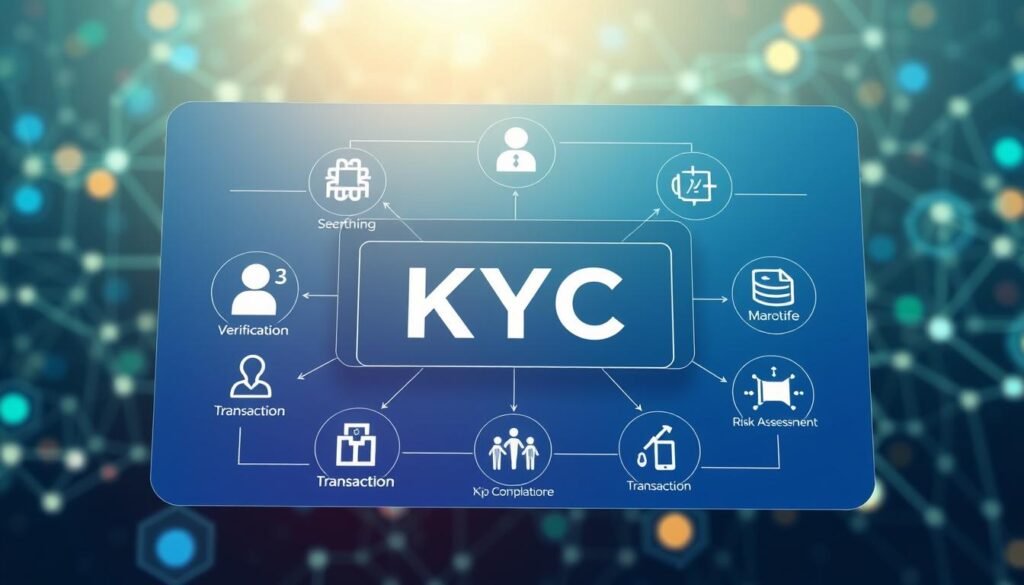
At the heart of modern financial security lies a critical framework known as Know Your Customer. This compliance process is used by banks and other regulated businesses to confirm who their clients are.
Its main goal is to prevent crimes like money laundering. A proper kyc program has three core parts.
Overview of KYC in Digital Finance
First, the Customer Identification Program collects basic identity data. It checks this information against trusted sources.
Next, Customer Due Diligence assesses the risk a customer might pose. Factors like location and transaction history are reviewed.
Finally, Enhanced Due Diligence applies extra scrutiny to high-risk individuals. This layered approach forms a strong defense.
The role of AI in evolving compliance processes
Traditional processes work for banks but face hurdles in digital asset markets. The need for speed and scale is immense.
Smart technology transforms these manual checks. It automates the analysis of vast amounts of data with great accuracy.
This evolution helps companies meet rules while improving user sign-up. For deeper insights into these technological advances, review this research on AI-driven solutions. Effective kyc builds essential trust with partners and users.
AI in crypto KYC verification explained
A recent industry survey reveals overwhelming optimism about the role of automation in regulatory processes. Research shows 84% of compliance professionals see significant benefits to using smart technology. Furthermore, 62% expect widespread adoption within three years.

Key Benefits of AI Integration
Intelligent automation transforms verification. It cross-references information from diverse sources instantly. This slashes onboarding time for new users.
Enhanced fraud detection is another major gain. Pattern recognition spots suspicious activity humans might miss. It also cuts down on false alarms that waste team resources.
Accuracy improves dramatically compared to manual review. Automated systems consistently validate identity documents and screen statements. This builds a stronger foundation for overall security.
Challenges and Considerations in Implementation
Adoption is not without hurdles. Significant upfront costs for technology can be a barrier. Integrating new systems with legacy platforms also poses technical difficulties.
Regulatory concerns about transparency are critical. Platforms must ensure their tools are auditable. A lack of internal expertise to manage these processes is a common issue.
Human oversight remains essential. Teams must review automated decisions to catch errors and biases. A balanced approach is key, as detailed in this comprehensive KYC solution. This ensures robust fraud prevention while maintaining trust.
Regulatory Environment and Global KYC Standards in Crypto
Operating in the cryptocurrency sector now demands strict adherence to international regulatory mandates. A failure to meet these rules can lead to severe penalties and operational shutdowns. The cost of non-compliance far exceeds the investment in proper systems.
Understanding US FinCEN and global mandates
In the United States, the Financial Crimes Enforcement Network (FinCEN) enforces aml and kyc obligations. Crypto exchanges must register as Money Services Businesses. Enforcement cases against platforms like BitMEX and Binance show the serious consequences for lapses.
These regulations aim to prevent money laundering and other financial crimes. Robust identity checks and transaction monitoring are legal requirements, not options.
Impact of FATF guidelines and regional laws
Globally, the Financial Action Task Force sets the standards. Its guidance requires Virtual Asset Service Providers to follow the “Travel Rule.” This rule mandates sharing sender and receiver data for certain transactions.
Regional frameworks reinforce these standards. The European Union’s AMLD5 and upcoming MiCA regulation harmonize compliance across member states. The UK’s FCA, Singapore’s MAS, and Japan’s FSA all enforce strict kyc programs.
For businesses and companies, this global convergence means robust compliance is the first line of defense. It is essential for market access and building trust.
From Traditional to AI-Driven KYC Processes
Legacy compliance methods once relied entirely on human effort, creating significant operational bottlenecks. This shift from manual reviews to automated platforms defines modern financial security.
Limitations of manual KYC methods
Paper-based checks were slow and error-prone. Human reviewers faced fatigue, leading to inconsistent verification of identity documents.
This made customer onboarding a lengthy process. It harmed the user experience and limited a company’s ability to grow.
Keeping customer data current was also a major challenge. Manual systems struggled to update profiles as circumstances changed.
The digital transformation journey in compliance
Regulatory technology, or RegTech, introduced automated risk assessments. These processes work during sign-up and throughout the client lifecycle.
Modern platforms connect to global data sources for real-time screening. They automate workflows and provide full case management for human oversight.
This evolution represents more than just new tools. It is a fundamental change toward proactive, risk-based compliance systems.
Enhanced Due Diligence and Multi-Layered Verification
For high-risk profiles, a deeper investigative layer called Enhanced Due Diligence becomes essential. It applies extra checks for politically exposed persons or clients from sanctioned regions.
Automated identity and document verification
Modern solutions automate identity verification by cross-referencing data from multiple sources. They analyze document templates and security elements for authenticity.
This process speeds up customer onboarding while improving accuracy. It provides a strong first level of defense.
Integration of biometric and liveness detection
A critical security measure ensures a real person is present. Advanced systems analyze micro-movements and blinking patterns.
Challenge-response interactions prove physical presence. This technology effectively counters synthetic fraud attempts.
Together, these multi-layered approaches create comprehensive identity assurance. They maintain a good user experience while establishing substantial friction for bad actors.
Effective due diligence requires ongoing monitoring, not just initial verification. This adaptive strategy is key to long-term security.
Combating AI-Generated Fake IDs in Identity Verification
For just fifteen dollars, criminals can now obtain a fake ID capable of bypassing basic checks. The Sumsub 2025 Identity Fraud Report found 2% of all detected fake documents were created with generative tools. Services like OnlyFake mass-produce realistic driver’s licenses and passports.
How AI Fake IDs Challenge Legacy Systems
These fabricated ids possess accurate fonts, hologram patterns, and facial proportions. They defeat systems designed for convenience, not adversarial environments.
Upload-only flows are especially vulnerable. They lack real-time capture or proof of user presence. The US Treasury’s FinCEN has confirmed criminals use this technology to open accounts.
Documented cases in Italy show these accounts then launder proceeds from various fraud schemes. This enables synthetic identity fraud and money laundering at scale.
Modern Solutions to Detect and Deter Synthetic Fraud
Effective defense requires modern solutions. Mobile SDK-based verification mandates real-time document and selfie capture.
Advanced liveness detection analyzes micro-movements to prove a real person is present. Document forensics examines pixel-level anomalies invisible to the eye.
The most robust systems are now trained on known AI-generated fakes. They identify subtle patterns that reveal synthetic fabrication, protecting against these new identities.
Leveraging Machine Learning for Fraud Prevention in KYC
Machine learning introduces a dynamic shield against financial crime by continuously adapting to new threats. This technology transforms static compliance into a proactive defense system.
Adaptive risk scoring and transaction monitoring
These solutions analyze vast datasets to assign a precise risk score to each customer. Systems like Moody’s AI Review use over 12.1 million data rows to generate an Alert Score from 0 to 1.
Organizations set a threshold, such as 0.25, to filter out false positives. This tunable approach balances fraud detection with operational efficiency.
Continuous monitoring tracks transaction patterns and behavioral changes. It flags unusual activity that may indicate money laundering or other financial crimes.
Network analysis can identify rings of mule accounts. It also protects against synthetic identities. This enhances AML programs by reducing false alerts.
Proper governance requires human oversight of these models. Regular reviews ensure fairness and regulatory adherence for the entire process.
Integrating Proprietary Data and AI for Smarter Risk Screening
Moving beyond public information, the next frontier in risk assessment integrates verified, private datasets. Public tools lack access to specialized compliance databases and official registries. This creates a critical gap in intelligence.
Smarter screening requires combining multiple trusted sources. Proprietary databases like Moody’s Grid offer millions of entity records. Official registry data from providers like Kompany ensures corporate details are current and accurate.
Enhancing due diligence with trusted data sources
Comprehensive due diligence now demands more than basic checks. It needs sanctions lists, PEP databases, and adverse media feeds. Blockchain analytics add another level for tracing transactions.
Automated workflows pull from these diverse sources to build unified customer profiles. This creates a single, holistic risk assessment. The process ensures data quality is maintained, avoiding outdated public sources.
Streamlining onboarding with AI-driven workflows
Agentic solutions use coordinated tools to automate specific kyc tasks. One agent handles document verification, while another screens for sanctions. Their results are synthesized for a final human review.
This intelligence dramatically speeds up customer onboarding. Timeframes shrink from days to minutes. Future platforms will allow natural-language queries for instant reports.
The most effective companies blend automation with expert oversight. Algorithms flag potential issues, but people make the final risk decisions. This balance is key for robust compliance on modern platforms.
Future Trends: AI, ML, and the Evolution of Crypto KYC
The next three years will witness a fundamental transformation in how financial platforms confirm user identities. A majority of compliance professionals expect widespread adoption of smart technology within this timeframe.
Their roles are evolving toward strategic advisory. They will collaborate more with technology teams to develop effective tools.
Emerging technologies shaping digital identity verification
Privacy-preserving solutions like zero-knowledge proofs are gaining traction. They allow identity verification without exposing unnecessary personal data.
Decentralized identifiers and blockchain-native systems give users more control. The focus shifts from static checks to dynamic intelligence.
Behavioral analytics and biometrics assess risk continuously. This creates a living profile, not just a point-in-time snapshot.
Anticipating regulatory and market shifts
Global regulations are harmonizing. Frameworks like FATF’s Travel Rule and the EU’s MiCA standardize requirements across borders.
This makes compliance easier for companies operating in multiple markets. Institutional adoption is rising, demanding higher-assurance solutions.
New regulations will also govern the technology itself. Rules address explainability and fairness in automated decisions.
Professionals will focus more on overseeing these systems. Their work ensures robust aml and sanctions screening for the long term.
Conclusion
Transparency and trust are now the currencies of success for financial platforms. What began as a regulatory duty has become a hallmark of legitimate operation in digital assets.
Robust compliance programs enable sustainable growth. They allow businesses to access banking partners and institutional capital. This opens doors to global markets without friction.
A well-designed kyc framework builds more than just security. It establishes credibility for scalable companies. This foundation turns regulatory adherence into a competitive edge.
Mastering these processes is key for leading the future of finance. AML standards and identity verification are central to this effort. They ensure businesses operate with integrity across the crypto sector.
Investing in modern solutions is not a cost but a strategic move. It prepares companies for the evolving landscape. The result is a trusted, valuable enterprise ready for new frontiers.
FAQ
What is the main advantage of using advanced technology for customer checks?
The primary benefit is a major boost in security and efficiency. Automated systems drastically cut down onboarding time from days to minutes. They also improve accuracy in spotting forged documents and assessing risk, helping businesses stay compliant with strict anti-money laundering rules.
How do these modern systems help prevent financial crimes?
They use machine learning to analyze vast amounts of data in real-time. This allows for continuous monitoring of user activity to spot suspicious patterns. The technology can flag potential money laundering or sanctions evasion much faster than periodic manual reviews ever could.
What does ‘Enhanced Due Diligence’ mean for a user?
Enhanced Due Diligence is a deeper level of scrutiny applied to higher-risk customers. For an individual, it might involve providing additional proof of funds or source of wealth documentation. The process is designed to give financial institutions greater confidence and deter illicit activity.
Can these platforms detect fake or AI-generated identity documents?
Yes, leading solutions are specifically built to combat synthetic fraud. They use liveness detection and biometric analysis to ensure the person presenting the ID is real and physically present. Advanced algorithms check for digital tampering and inconsistencies that are invisible to the human eye.
How do global regulations like the FATF Travel Rule affect these processes?
Mandates like the Travel Rule require virtual asset service providers to share sender and beneficiary information. Modern compliance platforms integrate these requirements directly into their workflows. This ensures seamless data collection and transmission to meet international standards and avoid heavy penalties.
What role does proprietary data play in improving risk assessment?
Integrating trusted, proprietary data sources supercharges screening. It allows systems to cross-reference applicant information against a wider, more reliable set of intelligence. This leads to smarter, more precise risk scoring and fewer false positives during customer onboarding.

No comments yet