
Navigating cryptocurrency markets requires strategic thinking. Traders often rely on two distinct methods to guide their moves. One approach studies price charts and patterns, while the other digs into project fundamentals like technology and real-world utility.
Chart-focused strategies analyze historical data to spot trends. These methods help identify potential entry and exit points based on market psychology and statistical indicators. They’re particularly popular for short-term trading due to their responsiveness to rapid price shifts.
On the flip side, value-driven evaluation assesses a project’s long-term potential. This includes examining team expertise, adoption rates, and competitive advantages. Such methods align well with cryptocurrency investment strategies focused on sustained growth.
Digital assets present unique challenges. Their volatility demands tools that address both immediate fluctuations and lasting value. Combining these approaches creates a balanced perspective, helping investors adapt to sudden market swings while maintaining sight of core project strengths.
Key Takeaways
- Market evaluation splits into chart pattern analysis and project quality assessment
- Short-term traders often prioritize historical price data and indicators
- Long-term investors typically focus on technology and adoption metrics
- Digital assets require adaptable strategies due to rapid price changes
- Successful portfolios often blend both analytical methods
Understanding the Basics of Technical Analysis in Crypto
Decoding price movements is essential for crypto market participants. Traders use mathematical models and visual tools to identify opportunities in fast-moving markets. This approach focuses on three core elements: historical data, chart formations, and momentum indicators.
Core Concepts and Chart Patterns
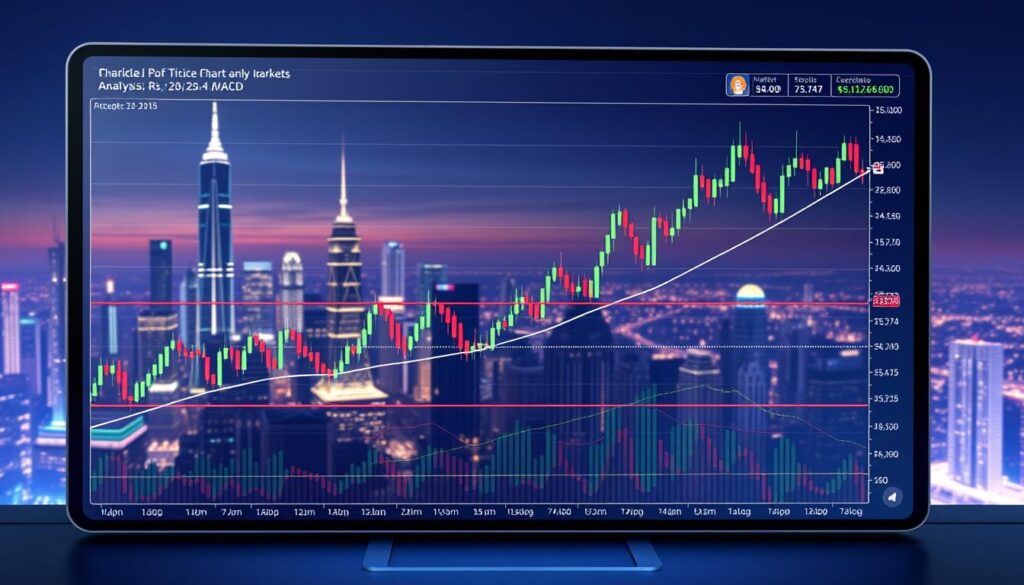
Market psychology becomes visible through recurring shapes in price graphs. Triangles often signal consolidation before breakout moves. Head-and-shoulders formations typically warn of trend reversals, while double tops suggest weakening bullish momentum.
Key Tools: RSI, Moving Averages, and Candlestick Charts
Candlesticks reveal critical details through color-coded bodies. Green bars show rising prices during a session, while red bars highlight declines. Each candle’s wick length indicates volatility levels during the measured period.
| Indicator | Purpose | Key Features |
|---|---|---|
| RSI | Measures momentum extremes | 0-30 (oversold), 70-100 (overbought) |
| Moving Averages | Identifies trend direction | 50-day vs. 200-day crossovers |
| Support/Resistance | Marks price barriers | Breakouts often trigger rapid moves |
The Relative Strength Index acts as a speedometer for price changes. Values above 70 suggest assets might be overpriced, while readings below 30 could indicate buying opportunities. Simple moving averages smooth out daily fluctuations, helping spot long-term trends.
Exploring the Fundamentals Behind Crypto Investments
Successful crypto investing starts with understanding what gives a project lasting value. Unlike quick price swings, this approach examines the building blocks that determine long-term growth potential.

What Makes a Project Stand Out?
Evaluating digital assets requires looking at real-world utility. Strong teams with proven track records often develop better solutions. Partnerships with established companies can signal credibility and adoption potential.
Token distribution models matter. Projects with fair allocation methods and clear use cases tend to outperform those with excessive founder holdings. Active developer communities also indicate ongoing improvements.
Breaking Down Key Documents and Trends
A project’s whitepaper acts as its blueprint. Clear roadmaps with measurable milestones show disciplined planning. Technical specifications should address specific market needs better than competitors.
Market trends reveal broader opportunities. Regulatory developments and institutional interest often create new growth phases. Monitoring social sentiment helps gauge community enthusiasm and network effects.
- Supply caps and inflation rates directly impact scarcity
- Security audits reduce risks of smart contract failures
- Adoption metrics track real-world usage beyond speculation
Fundamental analysis vs technical analysis for crypto investment decisions
Choosing the right evaluation method depends on your goals and risk tolerance. Market participants often debate which approach delivers better results, but each serves distinct purposes in portfolio management.

Side-by-Side Comparisons: Methodologies and Metrics
Price-focused methods use mathematical patterns to predict movements. Traders examine historical charts and indicators like moving averages to spot trends. These tools work best when markets follow predictable cycles.
| Methodology | Time Horizon | Key Tools | Best For |
|---|---|---|---|
| Price patterns | Minutes to weeks | RSI, candlesticks | Quick trades |
| Project evaluation | Months to years | Whitepapers, metrics | Value growth |
Strengths, Limitations, and Real-World Applications
Chart-based strategies excel at timing entries during volatility. However, they might overlook sudden regulatory changes affecting prices. A detailed comparison shows how these methods complement each other.
Asset valuation approaches identify projects with strong teams and use cases. While effective for long-term gains, they require constant updates on market trends. Swing traders often combine both techniques to balance speed and substance.
Institutional players frequently blend these frameworks. They use quantitative models for timing while assessing network effects for sustainability. This hybrid model adapts well to crypto’s unique challenges.
Integrating Analytic Approaches for Informed Decision Making
Smart market participants blend multiple evaluation methods to enhance outcomes. This fusion creates adaptable frameworks that respond to both immediate opportunities and enduring value propositions.

Combining Short-Term Trading and Long-Term Investment Insights
Seasoned traders layer chart patterns over project fundamentals. Price action indicators help time entries, while network growth metrics validate holding periods. This dual focus balances rapid reactions with conviction in asset quality.
Portfolios gain resilience when strategies address different time horizons. Quick trades capitalize on volatility, while core positions benefit from sustained adoption. Risk parameters tighten when both data streams align.
| Integration Strategy | Timeframe | Key Tools | Purpose |
|---|---|---|---|
| Project screening | Weeks | Whitepaper analysis | Quality filter |
| Entry optimization | Days | RSI + Volume spikes | Timing precision |
| Position sizing | Ongoing | Moving averages | Risk control |
Case Studies and Practical Examples from the Crypto Market
Ethereum’s 2021 surge demonstrated hybrid strategy effectiveness. Fundamental metrics highlighted its smart contract dominance, while technical signals pinpointed accumulation phases before major rallies.
A recent DeFi token launch showed how combined methods prevent losses. Strong initial fundamentals attracted interest, but bearish chart patterns prompted cautious position sizing. This saved investors from subsequent protocol vulnerabilities.
Successful approaches often follow this pattern:
- Identify projects with active developer communities
- Wait for bullish chart confirmations
- Scale positions during pullbacks to support levels
These real-world applications prove hybrid methods outperform single-lens strategies. They enable smarter capital allocation across market cycles.
Data-Driven Market Insights and Predictive Indicators
Market behavior in digital assets leaves breadcrumbs for prepared investors. Blockchain networks generate unique metrics that reveal hidden patterns. These signals help predict shifts before they appear on price charts.
Reading the Market’s Pulse Through Numbers
Trading volume acts like a truth serum for price jumps. When values rise with heavy activity, it shows real buyer commitment. Thin volume during rallies often precedes corrections.
On-chain metrics expose what charts can’t see. A climbing hash rate signals miner confidence in a network’s future. Active addresses growing steadily suggest actual usage, not just speculative trading.
- Transaction value trends separate real adoption from hype cycles
- Exchange inflows spike when large holders prepare to sell
- Social sentiment indexes often lead price swings by 24-48 hours
Price movements gain context when paired with data streams. A breakout above resistance means more if accompanied by rising active users. Predictive models mix these inputs to forecast probable outcomes.
Leading platforms now offer dashboards tracking network health. Metrics like daily transactions and wallet growth help spot emerging opportunities. Savvy traders cross-reference this data with historical patterns for confirmation.
Risk Management and Strategic Investment Planning
Protecting digital assets demands more than intuition. Volatility and unpredictable events require a solid defense plan. Savvy investors balance proactive safeguards with adaptable strategies to weather sudden storms.
Monitoring Market Sentiment and News Impacts
Social media chatter and breaking updates move prices faster than quarterly reports. A single tweet can erase gains or spark buying frenzies. Tracking these shifts helps separate noise from game-changing developments.
Tools like sentiment analyzers scan Reddit threads and news headlines. They gauge community excitement or fear in real time. Pairing this data with market trend tracking reveals hidden opportunities during hype cycles.
Risk management strategies act as safety nets. Stop-loss orders limit downside during flash crashes. Diversification across sectors reduces exposure to single-project failures. Even stablecoins play roles in volatile markets by preserving capital.
Strategic planning involves three keys:
- Position sizing based on asset stability
- Regular portfolio rebalancing
- Dollar-cost averaging during dips
News events test these frameworks. Regulatory announcements often trigger knee-jerk reactions. Investors who distinguish temporary panic from lasting impacts make calmer decisions. This balance turns chaos into calculated moves.

No comments yet