
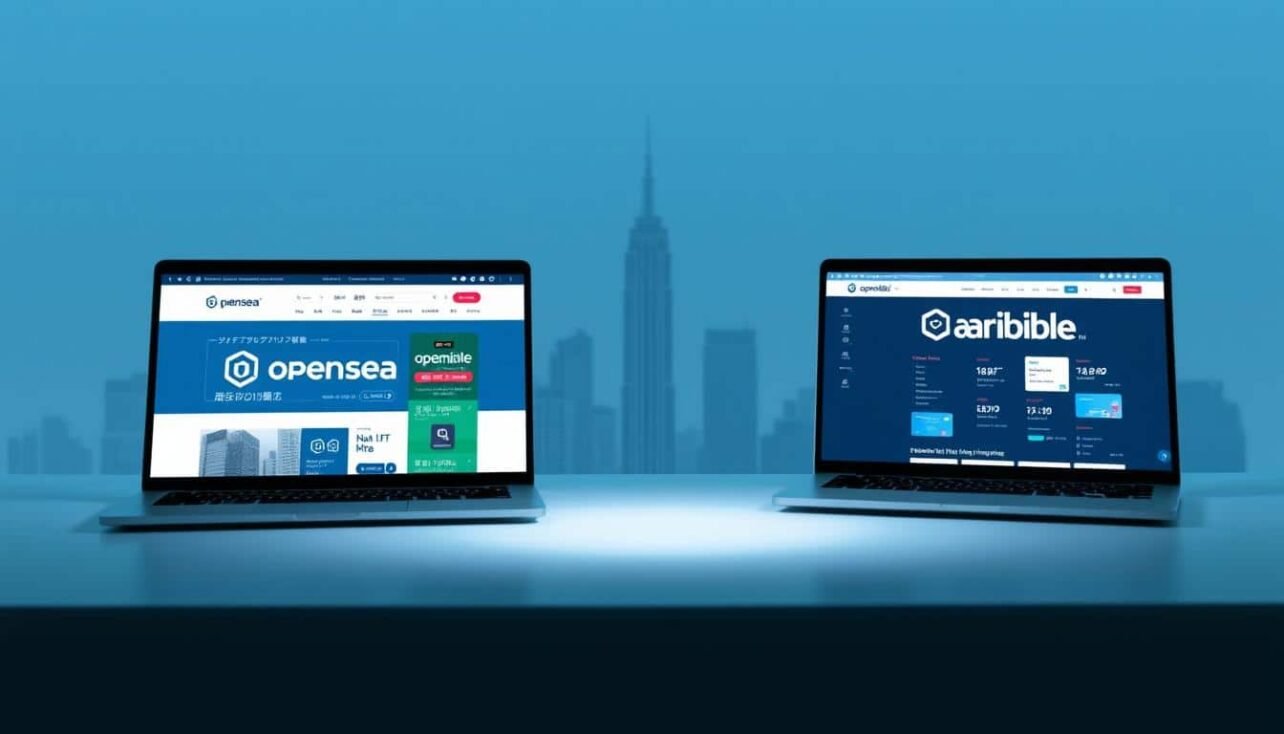
The rise of digital assets has transformed how creators and collectors interact with unique items online. Two major platforms dominate this space, offering distinct approaches to trading blockchain-based collectibles. By 2025, experts predict this sector could grow to $61 billion, highlighting its importance for artists, investors, and enthusiasts alike.
The first platform launched in 2017 and quickly became the industry leader. Its user-friendly design supports over 1.5 million active traders, handling billions in transactions annually. This space pioneer provides access to diverse creative works, from digital art to virtual real estate.
A newer entrant emerged in 2020 with a focus on community-driven decisions. Through its native token system, participants gain voting rights on platform updates and policy changes. This decentralized model contrasts with traditional corporate structures, appealing to users who value shared control.
Choosing where to buy or sell these items depends on multiple factors. Fees, customization options, and governance styles significantly impact user experiences. Our analysis will break down these elements to help you navigate the evolving world of blockchain-based collectibles.
Key Takeaways
- The digital collectibles sector could surpass $61 billion in value within three years
- Established platforms offer different approaches to user control and decision-making
- Transaction volume and community features vary significantly between services
- Governance tokens enable participatory management in newer market spaces
- Fee structures and creator tools influence platform selection for different users
Overview of the NFT Marketplace Landscape
The explosion of tokenized assets has created new economic opportunities across creative industries. Over 60% of collectors now prioritize verifiable ownership through decentralized ledgers, fueling demand for specialized trading spaces.
Latest Trends in Digital Assets and Blockchain
Multi-chain compatibility dominates current developments, with 78% of new platforms supporting at least two networks. Layer-2 solutions reduced gas fees by 40% in 2023, making digital assets more accessible. Categories now extend beyond art:
- Gaming collectibles (32% market share)
- Virtual event tickets (19% growth since 2022)
- Membership tokens with real-world utility
Market Growth and User Adoption in the United States
U.S. creators account for 41% of global NFTs minted. Major platforms report 300% year-over-year growth in American users. This table shows key adoption metrics:
| Metric | 2021 | 2023 |
|---|---|---|
| Monthly Trading Volume | $4.2B | $8.9B |
| Active U.S. Collectors | 890K | 2.4M |
| Cross-Chain Listings | 38% | 67% |
Regulatory clarity continues shaping the market, with 29 states now recognizing blockchain-based ownership rights. Institutional investors entered the space in 2023, purchasing 17% of high-value assets.
Exploring OpenSea: Features, User Experience, and Ecosystem
Innovative platforms continue shaping how creators engage with digital ownership through flexible tools. One leading service stands out for its adaptable infrastructure, catering to diverse creative needs while reducing entry barriers.

Multi-Blockchain Integration and Lazy Minting
The platform connects four major networks: Ethereum, Polygon, Solana, and Klaytn. This multi-chain approach lets creators pick cost-effective options while reaching broader audiences. A groundbreaking feature called lazy minting enables artists to display works without immediate blockchain deployment.
Gas fees apply only when items sell, removing financial risks for new creators. Discover how creators leverage these tools for digital art strategies. This system supports over 80% of new collections launched in 2024.
Payment Options, Wallet Support, and User Interface
Traders enjoy access to 150+ currencies, including ETH, SOL, and stablecoins. The table below highlights key transactional features:
| Feature | Details | User Benefit |
|---|---|---|
| Wallet Options | MetaMask, Coinbase, TrustWallet | One-click access |
| Gas Fee Savings | Polygon network support | Up to 90% reduction |
| Checkout Methods | Credit cards & crypto | Flexible purchasing |
An intuitive dashboard simplifies browsing and bidding. Advanced filters help collectors find rare items quickly. Real-time analytics track portfolio performance, making the platform ideal for both casual and professional users.
Diving into Rarible: Decentralization and Community Empowerment
A paradigm shift in digital ownership emerges through platforms prioritizing collective governance. Unlike traditional models, these spaces empower users through direct participation in operational decisions. This approach reshapes how communities interact with blockchain-based assets.

Governance Through RARI Token and Decentralized Decision-Making
The RARI token sits at the heart of this ecosystem, granting holders voting rights on protocol changes and feature implementations. Every transaction contributes to a liquidity mining pool, rewarding active participants with additional tokens. This system ensures 64% of platform decisions originate from community proposals rather than corporate mandates.
Creator Royalties, Customizable Smart Contracts, and Minting
Creators enjoy unprecedented control, setting secondary sale royalties between 5% and 50% through adjustable smart contracts. The platform supports three major blockchain networks, each offering distinct advantages:
- Ethereum: High security for premium collections
- Flow: Scalability for gaming assets
- Tezos: Energy-efficient minting solutions
Customizable contract templates enable artists to embed unique terms, from timed releases to collaborative ownership structures. This flexibility attracts 38% more independent creators compared to conventional platforms.
OpenSea vs Rarible NFT marketplace comparison guide
Transaction expenses and profit margins significantly influence platform selection for digital creators and collectors. This analysis examines financial considerations across leading services, helping users optimize their earnings while maintaining security standards.
Fee Structures, Gas Costs, and Royalty Differences
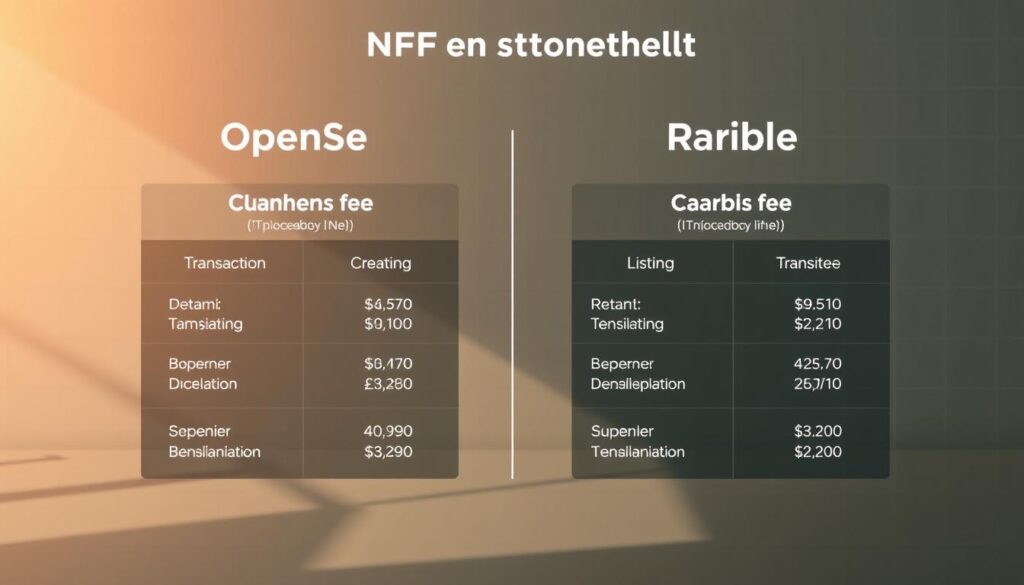
Service charges vary dramatically between platforms. One charges a fixed 2.5% commission on sales, while another employs dynamic pricing from 0.5% to 7.5%. Blockchain network choices further impact costs:
- Ethereum transactions average $4-$12 in network fees
- Polygon trades cost under $0.01 per action
- Flow and Tezos offer mid-range gas prices
Royalty systems show striking contrasts. Standard 10% earnings for artists compete with customizable rates reaching 50% on secondary sales. This table highlights key financial differences:
| Feature | Platform A | Platform B |
|---|---|---|
| Service Fee | 2.5% flat | 0.5%-7.5% |
| Max Royalty | 10% fixed | 50% adjustable |
| Gas Networks | 4 options | 3 chains |
Supported Currencies, Wallet Integrations, and Transactional Security
Payment flexibility differs substantially between services. One supports 150+ digital currencies including SOL and stablecoins, while others focus on ETH and niche tokens. Both integrate top wallet providers:
- MetaMask for browser-based access
- Coinbase Wallet for exchange users
- WalletConnect for mobile compatibility
Security protocols include regular smart contract audits and encrypted transaction verification. Multi-signature approvals and real-time fraud monitoring protect user assets during transfers.
Security & Technology: Evaluating Smart Contracts and Fraud Prevention
Digital ownership platforms face critical challenges in maintaining user trust through robust security measures. Recent incidents highlight vulnerabilities in blockchain-based systems, with a Check Point report revealing 63% of tested platforms had exploitable code flaws. These risks demand careful evaluation of protective measures and technical architectures.
Blockchain Protocols and Security Vulnerabilities
Both services employ ERC-721 and ERC-1155 smart contract standards, but their implementations differ. ERC-1155’s batch processing capability introduces unique attack vectors, while ERC-721’s single-asset focus presents different risks. Key security features include:
- Automated code audits every 90 days
- Bug bounty programs with $500k+ rewards
- Multi-signature wallet approvals for high-value transactions
Historical data shows one platform experienced three major contracts breaches in 2023, resulting in $2.8M losses. The other maintains a cleaner record, with only one significant exploit patched within 4 hours.
Fraud Detection Methods and Platform Trustworthiness
Advanced algorithms now scan for suspicious patterns using:
- Metadata analysis to detect counterfeit assets
- Wallet activity monitoring for wash trading
- Image recognition against known copyrighted works
User protection measures vary significantly between services. One platform flags 78% of fraudulent listings pre-sale, while another relies more on post-transaction dispute resolution. Both require users to maintain strict private key security in their non-custodial systems.
Essential security practices for collectors include:
- Using hardware wallets for high-value holdings
- Verifying contract addresses through official channels
- Enabling two-factor authentication on linked accounts
Impact on Users and Creators: Community and Monetization Strategies
Digital creators and collectors gravitate toward platforms that align with their goals. Established services build ecosystems where engagement and earnings intersect differently, shaping distinct paths for participation.
User Experiences: Community Engagement and Trading Volume
Active communities drive platform vitality. One service hosts 32,000 Discord members, offering real-time support for technical queries. Another maintains smaller but focused groups where artists collaborate on projects. Trading activity reveals contrasting approaches:
| Metric | Platform X | Platform Y |
|---|---|---|
| Listed Items | 80M+ | Curated Selection |
| Monthly Traders | 1.5M | 934K |
| Social Followers | 200K | 90K |
High-volume spaces attract competitive bidding, while niche communities foster deeper collector relationships. Both models succeed but cater to different engagement styles.
Creator Opportunities and Revenue Models
Artists choose platforms based on earning potential and creative control. Customizable royalty rates up to 50% empower creators on one service, while another offers broader exposure through massive user bases. Key differences include:
- Exclusive mentorship programs for emerging artists
- Automated royalty distribution systems
- Community-funded art grants
Established collectors often dominate high-traffic markets, whereas independent artists thrive in collaborative ecosystems. For those weighing options, our marketplace comparison breaks down critical decision factors.
Final Thoughts: Choosing Your NFT Marketplace Journey
Navigating digital collectible platforms requires aligning priorities with platform strengths. Established spaces cater to different needs – one prioritizes scale and payment flexibility, while the other champions community-driven evolution. Your decision hinges on what matters most: immediate liquidity or long-term governance participation.
For creators seeking maximum royalty control, decentralized models offer adjustable secondary sale percentages up to 50%. Traders valuing diverse crypto options and lower fees might prefer services with multi-chain support. Both ecosystems enable lazy minting, reducing upfront costs for new artists.
Key differentiators emerge in governance structures. Token-based voting systems empower users to shape platform policies, contrasting with corporate-led development approaches. These distinctions create varied experiences for collectors – from mass-market trading floors to curated communities.
Explore our detailed platform comparison to weigh technical features against personal goals. Whether prioritizing artistic control, transaction volume, or community impact, understanding these ecosystems helps forge your unique path in blockchain-based collecting.

No comments yet