

Navigating the cryptocurrency market requires strategic insight and careful research. With over 13 million alternative cryptocurrencies emerging since Bitcoin’s creation in 2009, investors must develop robust crypto market analysis skills to make informed decisions. The complexity of digital assets demands a comprehensive cryptocurrency investment guide that breaks down critical evaluation techniques.
Cryptocurrency markets represent a dynamic financial landscape where volatility is the norm. Successful investors understand that thorough crypto market analysis goes beyond simple price tracking. It involves deep understanding of blockchain technology, market trends, and project fundamentals that can significantly impact investment outcomes.
Investors need reliable strategies to decode the intricate world of digital currencies. By mastering advanced cryptocurrency investment guide principles, you can transform potential risks into strategic opportunities.
Key Takeaways
- Understand the complexity of cryptocurrency markets
- Develop comprehensive research skills
- Learn advanced market analysis techniques
- Recognize the importance of blockchain technology
- Prepare for market volatility
Understanding the Fundamentals of Cryptocurrency Markets
The cryptocurrency landscape represents a revolutionary approach to digital finance, powered by advanced blockchain technology. Investors and enthusiasts must grasp the core principles driving this dynamic market to make informed decisions.
Cryptocurrencies have transformed financial interactions, creating decentralized systems that challenge traditional monetary frameworks. Understanding these digital assets requires deep insight into their technological foundations and market dynamics.
Blockchain Technology Basics
Blockchain technology serves as the fundamental infrastructure for cryptocurrencies. This distributed ledger system ensures transparent, secure transactions without centralized control. Key characteristics include:
- Decentralized network architecture
- Cryptographic security protocols
- Immutable transaction records
- Peer-to-peer validation mechanisms
Different Types of Cryptocurrencies
The cryptocurrency ecosystem encompasses various digital assets with unique characteristics:
- Bitcoin: The original cryptocurrency, functioning as a digital store of value
- Ethereum: A platform enabling smart contract development
- Altcoins: Alternative cryptocurrencies with specialized functionalities
Market Capitalization and Volume
Analyzing cryptocurrency performance requires understanding two critical metrics: market cap and trading volume.
| Metric | Definition | Significance |
|---|---|---|
| Market Cap | Total value of circulating coins | Indicates cryptocurrency’s overall market valuation |
| Trading Volume | Total number of coins traded | Measures liquidity and market interest |
Investors leverage these metrics to assess cryptocurrency potential, identifying promising digital assets within a complex and evolving market landscape.
Essential Tools for Crypto Market Analysis
Navigating the complex world of cryptocurrency requires powerful crypto analysis tools that provide deep market insights. Investors and traders need reliable market data platforms to make informed decisions in the volatile digital asset landscape.
Selecting the right trading indicators and analysis platforms can significantly improve your cryptocurrency investment strategy. Modern crypto enthusiasts have access to advanced tools that transform raw market data into actionable intelligence.
- CoinMarketCap: Comprehensive cryptocurrency price tracking
- TradingView: Advanced charting and technical analysis
- Glassnode: On-chain cryptocurrency metrics
- CoinGecko: Detailed cryptocurrency research platform
Key features to consider when choosing market data platforms include:
| Tool | Key Features | Best For |
|---|---|---|
| TradingView | Advanced charting, community insights | Technical analysis |
| CoinMarketCap | Real-time pricing, market cap data | Market overview |
| Glassnode | Blockchain network analytics | Deep research |
Successful crypto investors leverage multiple trading indicators to validate their research. Combining different analysis tools provides a more comprehensive market perspective. Start with free versions to understand each platform’s unique strengths before committing to paid subscriptions.
How to Analyze Crypto Market Before Investing
Navigating the complex world of cryptocurrency requires a strategic approach to market analysis. Investors must develop robust methods for evaluating potential investments, combining technical analysis, fundamental analysis, and comprehensive crypto risk assessment.
Successful cryptocurrency investing demands a multifaceted approach that goes beyond simple price tracking. Investors need to understand the intricate dynamics of digital asset markets.
Technical Analysis Fundamentals
Technical analysis provides critical insights into cryptocurrency price movements. Key strategies include:
- Studying price charts and historical data
- Identifying market trends and patterns
- Using advanced charting tools
- Analyzing trading volume and price momentum
Fundamental Analysis Methods
Fundamental analysis delves deeper into a cryptocurrency’s intrinsic value. Investors should examine:
- Blockchain technology behind the project
- Development team credentials
- Market potential and use cases
- Technological innovation
Risk Assessment Strategies
Crypto risk assessment is crucial for protecting investment capital. Effective strategies include:
- Diversifying cryptocurrency portfolio
- Setting clear investment boundaries
- Monitoring market volatility
- Understanding regulatory landscapes
Professional investors recognize that comprehensive market analysis is the cornerstone of successful cryptocurrency investing.
Reading and Interpreting Crypto Charts
Mastering crypto chart patterns is crucial for successful cryptocurrency trading. Price action analysis provides traders with valuable insights into market movements and potential future trends. Understanding the visual language of charts helps investors make more informed decisions.
Crypto chart patterns fall into several key categories that traders should recognize:
- Trend continuation patterns (flags, pennants, triangles)
- Reversal patterns (head and shoulders, double tops/bottoms)
- Consolidation patterns (rectangles, wedges)
Support and resistance levels are fundamental concepts in technical analysis. These price zones represent critical points where cryptocurrencies tend to pause or change direction. Traders use these levels to:
- Identify potential entry and exit points
- Understand market psychology
- Predict potential price breakouts
Different chart types offer unique perspectives on price action. Candlestick charts remain the most popular among cryptocurrency traders, providing detailed information about price movements within specific time frames. Learning to read these charts requires practice and understanding of key visual signals.
When analyzing crypto charts, focus on identifying clear patterns and trends. Look for repeated formations that suggest potential future price movements. Remember that no chart pattern guarantees absolute prediction, but they offer valuable insights into market sentiment and potential trading opportunities.
Key Market Indicators for Cryptocurrency Trading
Crypto trading indicators are essential tools for investors looking to make informed decisions in the volatile cryptocurrency market. These analytical instruments help traders understand market trends, predict potential price movements, and manage investment risks effectively.
Successful cryptocurrency trading relies on understanding and interpreting various market signals. Traders use multiple crypto trading indicators to gain insights into market dynamics and potential investment opportunities.
Moving Averages and Trend Lines
Moving averages are crucial crypto trading indicators that help smooth out price fluctuations. They provide traders with a clear view of market trends by calculating average prices over specific time periods.
- Simple Moving Average (SMA): Calculates the average price over a set number of periods
- Exponential Moving Average (EMA): Gives more weight to recent price data
- Trend lines help identify potential support and resistance levels
Volume Analysis in Cryptocurrency Trading
Volume analysis is a critical component of understanding market movements. Traders use volume indicators to confirm price trends and identify potential market reversals. High trading volumes can signal strong market interest and potential price changes.
Momentum Indicators for Market Prediction
Momentum indicators help traders assess the strength and potential direction of price movements. These powerful crypto trading indicators provide insights into market sentiment and potential trend reversals.
- Relative Strength Index (RSI): Measures price momentum and potential overbought or oversold conditions
- Moving Average Convergence Divergence (MACD): Identifies trend changes and momentum
- Stochastic Oscillator: Compares closing prices to a range of prices over time
By combining these different crypto trading indicators, investors can develop a more comprehensive approach to analyzing cryptocurrency markets and making informed trading decisions.
Understanding Market Sentiment and Social Signals

Navigating the volatile crypto market requires more than just technical analysis. Crypto market sentiment plays a crucial role in understanding price movements and investor behavior. Social media analysis has become an invaluable tool for investors seeking to gauge the psychological landscape of cryptocurrency trading.
Investor psychology drives significant market fluctuations. Traders must learn to distinguish between genuine market signals and mere noise. Key indicators of market sentiment include:
- Social media discussion volumes
- Trending hashtags related to specific cryptocurrencies
- Sentiment of influential crypto personalities
- Online community engagement levels
The emotional dynamics of crypto investing often manifest through two primary phenomena:
- FOMO (Fear of Missing Out): Drives rapid price increases during bullish trends
- FUD (Fear, Uncertainty, Doubt): Triggers market sell-offs and negative sentiment
Advanced sentiment tracking tools can help investors make more informed decisions by analyzing:
| Sentiment Indicator | Analysis Method | Market Impact |
|---|---|---|
| Social Media Mentions | Volume and Tone Tracking | Predictive Price Movement |
| Community Engagement | Forums and Discussion Platforms | Project Credibility Assessment |
| News Sentiment | Media Coverage Analysis | Investor Confidence Measurement |
By understanding these social signals and market sentiment indicators, cryptocurrency investors can develop a more nuanced approach to market analysis and decision-making.
Evaluating Cryptocurrency Project Teams and Development
Successful crypto project evaluation goes beyond price charts and market trends. The strength of a cryptocurrency’s development team and its ongoing progress are critical factors that can determine long-term success. Investors must dig deeper to understand the people behind the project and their commitment to innovation.
Team Background Assessment
When conducting development team analysis, investors should focus on key qualifications and experience. Look for team members with:
- Strong technical backgrounds in blockchain technology
- Previous successful project contributions
- Relevant industry experience
- Academic credentials in computer science or related fields
GitHub Activity Analysis
GitHub activity provides transparent insights into a project’s development momentum. Key indicators of robust community engagement include:
- Frequency of code commits
- Number of active contributors
- Responsiveness to issues and pull requests
- Consistency of project updates
Community Engagement Metrics
Measuring community involvement can reveal a project’s potential for growth and sustainability. Critical metrics include:
- Social media following
- Active community forum participants
- Developer interaction on platforms like Discord and Telegram
- Quality and frequency of community discussions
By systematically analyzing these components, investors can gain deeper insights into a cryptocurrency project’s potential and make more informed investment decisions.
Analyzing Token Economics and Supply Metrics
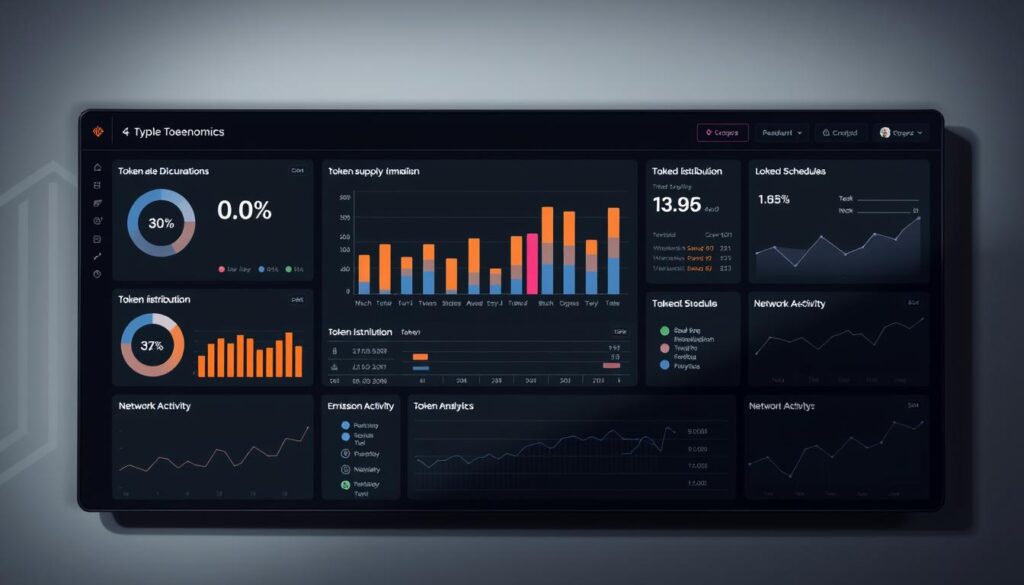
Understanding tokenomics is crucial for making informed cryptocurrency investments. Crypto supply analysis provides investors with critical insights into a token’s potential value and long-term sustainability. Token distribution and inflation rate are key factors that can significantly impact a cryptocurrency’s market performance.
Investors should focus on several critical metrics when evaluating tokenomics:
- Circulating supply: Current number of tokens in the market
- Total supply: Maximum number of tokens that will ever exist
- Token utility: Practical use cases within the ecosystem
- Vesting schedules: Restrictions on token release
The inflation rate plays a pivotal role in understanding a cryptocurrency’s economic model. Some cryptocurrencies implement burn mechanisms to control supply and potentially increase token value. This approach can help manage token economics by reducing total available tokens over time.
| Metric | Impact on Value | Investor Consideration |
|---|---|---|
| Circulating Supply | Direct price influence | Lower supply can indicate potential price appreciation |
| Token Distribution | Decentralization indicator | Wide distribution suggests better governance |
| Inflation Rate | Long-term value preservation | Lower rates typically mean better token value stability |
Investors must conduct comprehensive tokenomics research to make strategic investment decisions. Analyzing these supply metrics provides a deeper understanding of a cryptocurrency’s potential growth and market dynamics.
Impact of Global Events on Crypto Markets
The cryptocurrency landscape is deeply interconnected with global events, creating a complex ecosystem where regulatory changes, economic factors, and technological advancements constantly reshape market dynamics. Understanding these influences is crucial for investors navigating the volatile crypto market.
Navigating Regulatory Landscapes
Regulatory impact plays a significant role in cryptocurrency market movements. Governments worldwide continue to develop frameworks that can dramatically shift crypto market events. Key regulatory considerations include:
- Government cryptocurrency stance
- Legal compliance requirements
- Potential taxation policies
- Cross-border transaction regulations
Economic Factors Driving Crypto Markets
Economic factors in crypto represent critical drivers of market sentiment and valuation. Investors must closely monitor global economic indicators that potentially influence cryptocurrency performance.
| Economic Factor | Potential Crypto Market Impact |
|---|---|
| Inflation Rates | Increased Bitcoin and stablecoin demand |
| Global Interest Rates | Shift in investment strategies |
| Economic Uncertainty | Potential hedge investment in cryptocurrencies |
Technological Advancements Reshaping Markets
Technological advancements continually transform the cryptocurrency ecosystem. Blockchain innovations, artificial intelligence integration, and enhanced security protocols represent critical drivers of market evolution.
- Emerging blockchain technologies
- Enhanced cryptographic techniques
- Decentralized finance (DeFi) platforms
- Smart contract developments
Successful crypto investors recognize that global events are interconnected systems influencing market behavior. Staying informed and adaptable remains the most effective strategy in this dynamic financial landscape.
Risk Management Strategies for Crypto Investing

Navigating the volatile cryptocurrency market requires robust crypto risk management techniques. Successful investors understand that protecting capital is just as crucial as generating returns. The unpredictable nature of digital assets demands a strategic approach to minimize potential losses.
Portfolio diversification stands as a cornerstone of effective crypto investing. Instead of concentrating all funds in a single cryptocurrency, smart investors spread their investments across multiple digital assets. This strategy helps mitigate risk by reducing exposure to any single coin’s performance.
- Allocate investments across different cryptocurrency types
- Balance between established and emerging cryptocurrencies
- Consider market capitalization and project fundamentals
Position sizing plays a critical role in managing investment risk. Experts recommend never investing more than 1-5% of your total portfolio in any single cryptocurrency. This approach prevents catastrophic losses and provides flexibility for future investment opportunities.
| Risk Management Strategy | Key Recommendation |
|---|---|
| Stop-Loss Orders | Set automatic sell triggers at 10-15% below purchase price |
| Portfolio Allocation | Maximum 5% per individual cryptocurrency |
| Risk-Reward Ratio | Target 2:1 or 3:1 potential gains to potential losses |
Stop-loss orders are a crucial tool for crypto risk management. These automated sell orders activate when a cryptocurrency drops to a predetermined price, helping investors limit potential losses. By implementing stop-loss orders, traders can protect their investments from significant market downturns.
Understanding and implementing these risk management strategies can transform your cryptocurrency investment approach from speculative to calculated. Discipline and strategic planning are the keys to long-term success in the dynamic crypto market.
Common Mistakes to Avoid in Crypto Analysis
Navigating the volatile world of cryptocurrency investing requires more than just technical knowledge. Successful crypto trading demands emotional intelligence and strategic thinking to avoid common pitfalls that can derail your investment journey.
Crypto trading mistakes often stem from psychological barriers that cloud rational decision-making. Investors frequently fall into traps that can significantly impact their financial outcomes.
Emotional Investing Dangers
Emotional investing represents one of the most destructive approaches to crypto markets. Traders driven by fear or excitement often make impulsive decisions that lead to substantial losses. Key emotional investing pitfalls include:
- Panic selling during market downturns
- Chasing price pumps without research
- Making investment choices based on social media hype
Breaking Through Analysis Paralysis
Analysis paralysis can cripple crypto investors, preventing them from taking necessary actions. This condition occurs when traders become overwhelmed by excessive information, leading to indecision and missed opportunities.
- Set clear investment criteria
- Develop a structured research process
- Implement time-bound decision-making frameworks
Understanding FOMO in Crypto Markets
Fear of Missing Out (FOMO) can drive investors to make reckless decisions. Recognizing and managing FOMO is crucial for maintaining a disciplined investment strategy. Cryptocurrency markets are particularly susceptible to sentiment-driven fluctuations.
By developing emotional resilience and a systematic approach, investors can minimize crypto trading mistakes and build a more robust investment strategy.
Building a Systematic Approach to Market Analysis

Developing a systematic crypto analysis approach transforms random investment decisions into strategic, data-driven investing. Successful cryptocurrency investors understand that a structured market analysis framework is crucial for navigating the complex digital asset landscape.
Creating an effective analysis strategy requires careful planning and disciplined execution. Investors should focus on developing a comprehensive methodology that combines multiple analytical techniques:
- Establish clear research parameters
- Define specific investment criteria
- Create a consistent evaluation process
- Implement risk management protocols
The core of systematic crypto analysis involves breaking down complex market information into manageable components. Data-driven investing relies on objective metrics and systematic evaluation rather than emotional reactions or speculative rumors.
Key elements of a robust market analysis framework include:
- Technical indicator tracking
- Fundamental project research
- Sentiment analysis
- Historical performance review
Successful investors continuously refine their analysis approach. Regular review and adaptation ensure your strategy remains relevant in the rapidly evolving cryptocurrency ecosystem. By maintaining a disciplined, systematic approach, investors can make more informed decisions and minimize potential risks.
Creating Your Crypto Investment Strategy
Developing a robust crypto investment strategy requires careful planning and self-assessment. Your approach should balance risk tolerance with financial objectives, focusing on long-term vs short-term investing techniques that align with your personal goals. Understanding your risk appetite is crucial in navigating the volatile cryptocurrency market.
A successful crypto investment strategy starts with clear financial benchmarks. Determine your investment capital, risk tolerance assessment parameters, and expected return ranges. Diversification across different cryptocurrencies can help mitigate potential losses while providing exposure to various blockchain technologies and market segments.
When crafting your strategy, consider both technical analysis insights and fundamental research. Select cryptocurrencies with strong development teams, active communities, and innovative blockchain solutions. Establish precise entry and exit points, set realistic profit targets, and maintain discipline by avoiding emotional trading decisions.
Continuous learning remains paramount in cryptocurrency investing. Stay informed about market trends, regulatory changes, and technological advancements. Regularly review and adjust your crypto investment strategy to adapt to the dynamic digital asset landscape, ensuring your approach remains flexible and responsive to emerging opportunities.
FAQ
What is the most important first step in analyzing the crypto market?
The most crucial first step is understanding blockchain technology and the fundamental characteristics of different cryptocurrencies. This foundational knowledge helps investors make informed decisions by comprehending the underlying technology and potential value proposition of various digital assets.
How do I assess the reliability of a cryptocurrency project?
Evaluate the project’s team background, GitHub activity, community engagement, and development progress. Look for transparent team members with proven track records, active development on their GitHub repository, strong community support, and clear communication about the project’s goals and technological innovations.
What are the key market indicators I should watch?
Focus on critical market indicators including moving averages, trading volume, momentum oscillators like RSI (Relative Strength Index), and MACD (Moving Average Convergence Divergence). These tools help identify market trends, potential price reversals, and overall market sentiment.
How can global events impact cryptocurrency markets?
Global events such as regulatory changes, economic shifts, technological developments, and geopolitical situations can significantly influence cryptocurrency valuations. Investors should stay informed about government regulations, international economic trends, and major technological advancements that could affect digital asset markets.
What risk management strategies should I implement?
Implement comprehensive risk management through portfolio diversification, setting stop-loss orders, careful position sizing, and maintaining a balanced risk-reward ratio. Never invest more than you can afford to lose, and continuously educate yourself about market dynamics.
How do I avoid emotional trading mistakes?
Combat emotional trading by developing a systematic approach to market analysis, setting clear investment goals, avoiding impulsive decisions driven by FOMO (Fear of Missing Out) or FUD (Fear, Uncertainty, and Doubt), and maintaining a disciplined, data-driven investment strategy.
What tools are recommended for crypto market analysis?
Utilize professional platforms like CoinMarketCap, TradingView, Glassnode, and CoinGecko for comprehensive market data, price charts, trading volume, and in-depth cryptocurrency insights. These tools provide critical information for making informed investment decisions.
How important is understanding token economics?
Understanding token economics is crucial as it reveals a cryptocurrency’s potential value and long-term viability. Analyze factors like total supply, circulating supply, inflation rate, token distribution, utility, and burn mechanisms to assess a digital asset’s economic fundamentals.
What’s the difference between technical and fundamental analysis?
Technical analysis focuses on price charts, trading patterns, and statistical indicators, while fundamental analysis examines a project’s underlying technology, team, market potential, and real-world utility. Successful crypto investors often combine both approaches for comprehensive market evaluation.
How can I stay updated on cryptocurrency market trends?
Stay informed by following reputable cryptocurrency news sources, participating in community forums, monitoring social media sentiment, attending webinars, and continuously learning about technological developments and market trends through professional analysis platforms and expert insights.

No comments yet