

The digital asset landscape has evolved dramatically in recent years. Managing cryptocurrency holdings requires sophisticated approaches as market complexity increases.
Professional investors now face diverse assets beyond Bitcoin and Ethereum. Altcoins, stablecoins, and DeFi protocols create intricate investment scenarios.
Advanced technology transforms how we handle digital asset allocation. Automated systems provide data-driven insights that minimize human error.
These solutions operate continuously across multiple exchanges. They help maintain optimal asset distribution according to individual strategies.
The current financial environment demands efficient management approaches. Institutional adoption grows, creating need for professional-grade solutions.
This guide explores leading platforms that streamline digital asset management. We’ll examine features, implementation methods, and emerging innovations.
Key Takeaways
- Automated solutions handle complex cryptocurrency allocations efficiently
- Technology reduces manual errors in asset reallocation processes
- Modern platforms work across multiple exchanges simultaneously
- Professional investors benefit from continuous portfolio optimization
- Market complexity drives need for sophisticated management approaches
- Implementation strategies vary based on individual investment goals
- The space continues evolving with new features and capabilities
Introduction to AI-Driven Portfolio Rebalancing
Systematic adjustment of investment compositions helps maintain strategic balance over time. Market fluctuations naturally cause holdings to drift from their original targets.

Defining Portfolio Rebalancing and Its Importance
This process involves realigning your investment mix to stay consistent with predetermined targets. It balances risk exposure while pursuing optimal returns.
Market volatility creates portfolio drift where certain holdings grow disproportionately. This can create unintended risk exposure that differs from your original strategy.
| Rebalancing Method | Frequency | Trigger Point | Best For |
|---|---|---|---|
| Time-Based | Monthly or Quarterly | Fixed schedule | Consistent investors |
| Threshold-Based | As needed | 5-10% deviation | Active managers |
| Hybrid Approach | Flexible | Schedule + deviation | Balanced approach |
How Automation Enhances Investment Strategies
Automated systems eliminate manual calculation errors and reduce time commitment. They enable more frequent adjustments without increasing workload.
These solutions provide real-time monitoring and instant execution capabilities. They maintain discipline during emotional market conditions, preventing common behavioral mistakes.
Sophisticated analysis becomes possible through automated processing. This represents a significant advancement over traditional management approaches.
Understanding Portfolio Rebalancing Strategies
Effective allocation management requires selecting appropriate adjustment techniques based on individual circumstances. Different approaches help maintain target exposure levels across changing market conditions.
Benefits of Regular Portfolio Adjustments
Regular adjustments generate liquidity by selling assets at peak values. This creates cash for reinvesting in underperforming positions.
This process prevents overexposure to volatile holdings. It maintains diversified structures that withstand financial downturns.

Traditional vs. AI-Powered Rebalancing
Manual approaches involve spreadsheet tracking and time-intensive calculations. They often suffer from execution delays and emotional decision-making.
Automated systems maintain discipline and precision. They capture more optimization opportunities while reducing transaction costs.
| Approach | Frequency | Key Advantage | Ideal User |
|---|---|---|---|
| Calendar-Based | Fixed intervals | Predictable schedule | Set-and-forget investors |
| Threshold-Based | As needed | Precision timing | Active managers |
| Hybrid Method | Flexible | Balanced approach | Most investors |
Studies show systematic rebalancing improves returns without increasing risk. This offers performance enhancement through disciplined execution.
The Role of AI in Optimizing Portfolios
The integration of machine learning into investment strategies represents a fundamental shift in how assets are managed and rebalanced. This technology processes enormous amounts of financial information to identify patterns human analysts might miss.

These systems continuously refine their approaches based on new market data. They adapt to changing economic conditions while maintaining alignment with investor goals.
Automated Decision-Making in Dynamic Markets
Sophisticated algorithms execute adjustments without human intervention. They respond instantly to opportunities that emerge outside traditional trading hours.
This automation eliminates emotional biases during volatile periods. It ensures disciplined execution of the investment strategy.
| Optimization Approach | Data Processing | Response Time | Performance Impact |
|---|---|---|---|
| Pattern Recognition | Historical analysis | Proactive | Strategic positioning |
| Real-Time Monitoring | Live market feeds | Instantaneous | Opportunity capture |
| Adaptive Learning | Continuous feedback | Evolutionary | Long-term improvement |
Machine learning systems improve their performance over time through experience. For those seeking advanced portfolio management tools, these technologies offer significant advantages in dynamic market environments.
Key Features of AI Crypto Portfolio Rebalancing Tools
Modern investment technology brings powerful capabilities to digital asset management. These platforms offer sophisticated features that go beyond basic tracking.
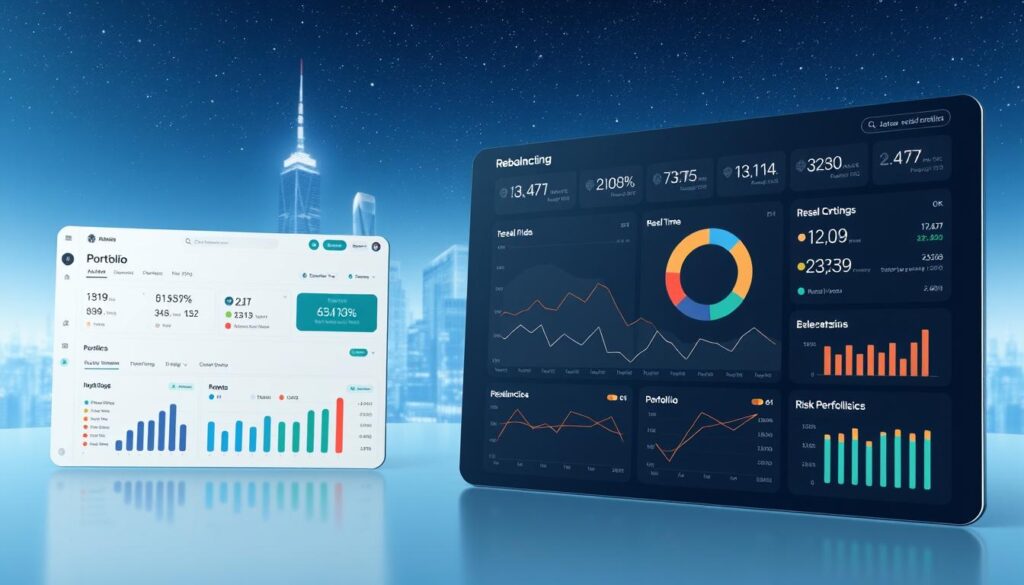
The most advanced systems provide comprehensive solutions for maintaining optimal asset allocation. They combine multiple technological advantages into seamless operations.
Real-Time Data Processing and Predictive Analytics
Continuous market monitoring represents a fundamental capability. Systems track prices, volumes, and allocations across multiple platforms simultaneously.
Predictive analytics use historical patterns and current market data. They forecast trends and volatility to inform strategic adjustments.
These analytical features process enormous amounts of financial information. They identify opportunities that might escape manual observation.
Automation Capabilities and Integration Options
Automation forms the core of efficient portfolio management. It executes adjustments based on predetermined rules and real-time conditions.
Integration options enable connections with various financial platforms. Robust API connectivity allows seamless data flow between systems.
Advanced platforms support multiple strategies and custom rules. For comprehensive automated portfolio management, these features provide significant operational advantages.
Showcasing the Best AI Crypto Portfolio Rebalancing Tools
Today’s financial technology offers sophisticated solutions for maintaining optimal digital asset allocation. Multiple platforms now provide automated systems that handle complex investment scenarios.
InvestGlass serves professional wealth managers with perpetual adjustment mechanisms across international categories. Betterment employs goal-based investing that automatically responds to market changes.
SigFig focuses on financial advisors with customizable models. 3Commas provides comprehensive trading solutions integrating with numerous exchanges.
| Platform | Primary Users | Key Features | Integration Scope |
|---|---|---|---|
| CoinStats | Active Traders | Unified dashboard, tax reporting | CEX, DeFi, NFTs |
| Zapper | DeFi Participants | Yield farm tracking, multi-chain | Blockchain networks |
| Kubera | Wealth Trackers | Net-worth monitoring | Crypto + traditional assets |
| Altrady | Discretionary Traders | Multi-exchange terminal, signals | Major trading platforms |
These systems offer comprehensive tracking across diverse asset types. Users benefit from automated adjustments that maintain strategic alignment.
For those seeking advanced trading capabilities, these platforms provide robust functionality. The interface design prioritizes user experience while delivering powerful features.
Each solution addresses specific needs within the digital asset space. Selection depends on individual requirements and investment approach.
Advanced Technologies Driving Portfolio Management
Cutting-edge developments in computing and distributed systems are transforming investment management approaches. These emerging technologies introduce unprecedented capabilities for handling complex digital asset scenarios.
Blockchain Integration for Enhanced Security
Distributed ledger systems provide robust security through decentralized verification mechanisms. This integration eliminates single points of failure while ensuring transparent audit trails.
Smart contract automation enables trustless execution of allocation adjustments. The technology strengthens transaction security while maintaining complete operational clarity.
Quantum Computing and Future Innovations
Quantum algorithms process intricate calculations at revolutionary speeds. This capability could enable real-time optimization across thousands of assets simultaneously.
Future developments include enhanced analytical capabilities through deep learning systems. The crypto space will see increased focus on ethical considerations and regulatory compliance.
These innovations promise to transform how we approach digital asset management. They represent the next generation of financial technology solutions.
AI Tools for Crypto Asset Management in Today’s Market
Investment managers now navigate a fragmented landscape of digital opportunities across multiple platforms. Contemporary holdings extend far beyond basic Bitcoin and Ethereum positions.
Modern digital collections include altcoins, stablecoins, and various decentralized finance tokens. They also encompass staking positions and non-fungible token investments.
Managing Diverse Crypto Assets with AI
Specialized platforms address the unique challenges of today’s digital investment environment. They track positions across centralized exchanges and decentralized protocols simultaneously.
These systems handle 24/7 market operations and extreme price fluctuations. They manage fragmented liquidity across different trading venues effectively.
Sophisticated platforms provide real-time performance tracking with fee accounting. They monitor gas costs, staking rewards, and cross-chain transaction details.
Integrated trading systems execute strategies like dollar-cost averaging and arbitrage. They identify price discrepancies and optimal entry/exit timing automatically.
Security features include wallet monitoring and suspicious activity alerts. Many platforms integrate with hardware wallets and institutional custody solutions.
Evaluating Rebalancing Tools: Features and Automation
Selecting the right platform requires careful assessment of its analytical capabilities and operational efficiency. Investors should examine several key areas when comparing different solutions.
Feature completeness and automation sophistication form the foundation of effective evaluation. Data accuracy and execution speed also play critical roles in platform performance.
Key Performance Metrics and Analytics
Professional platforms provide essential risk management metrics that inform decision-making. Value-at-Risk calculations and maximum drawdown analysis help quantify potential losses.
Real-time profit and loss dashboards offer immediate visibility into investment performance. These systems track Sharpe ratios and historical volatility for comprehensive assessment.
| Metric Category | Key Indicators | Professional Use |
|---|---|---|
| Risk Assessment | VaR, maximum drawdown | Exposure management |
| Performance Tracking | Real-time P&L, Sharpe ratio | Strategy evaluation |
| Market Analysis | Position correlation, volatility | Opportunity identification |
Advanced monitoring systems alert users to significant market movements. Automated stop-loss execution and position limits provide crucial protection.
Integration breadth determines how well a platform connects with various financial services. Robust API support enables seamless data synchronization across systems.
Integrating AI with Traditional Portfolio Management
Wealth management now spans both digital currencies and conventional financial instruments. Modern platforms create unified frameworks that handle diverse holdings seamlessly.
These systems track everything from bank accounts to digital wallets. They provide comprehensive visibility across your entire financial picture.
Combining Crypto and Conventional Investments
Hybrid approaches blend cryptocurrency positions with stocks, bonds, and real estate. This creates diversified structures that withstand various market conditions.
Sophisticated allocation methods consider correlations between different asset classes. They calculate optimal distributions based on overall risk tolerance and financial objectives.
Integration presents challenges like different market hours and custody arrangements. Regulatory considerations span multiple financial universes requiring careful navigation.
High-net-worth individuals benefit from these comprehensive solutions. Family offices manage diversified wealth across classes, geographies, and custody arrangements effectively.
Automated systems execute rebalancing strategies across both traditional and digital holdings. They shift capital based on relative performance and changing market conditions.
Real-World Use Cases and Success Stories
Success stories from different user groups showcase effective implementation of allocation technologies. These examples demonstrate practical applications across various investment approaches.
Examples from DIY Investors to Institutional Managers
Individual traders utilize platforms like 3Commas for automated accumulation strategies. They deploy DCA bots for long-term assets while grid bots handle short-term volatility.
This dual approach minimizes emotional trading decisions. It captures opportunities across different market cycles effectively.
Retail investors benefit from comprehensive visibility tools like Kubera. These platforms provide unified views of fragmented holdings across multiple exchanges.
Institutional managers employ sophisticated systems for multiple client accounts. Platforms like Morningstar Total Rebalance Expert automatically identify allocation adjustments needed.
| User Type | Primary Platform | Key Strategy | Automation Level |
|---|---|---|---|
| DIY Investor | 3Commas | DCA + Grid Bots | High Automation |
| Retail Trader | Kubera | Portfolio Visibility | Monitoring Focus |
| Financial Advisor | SigFig | Multi-Client Management | Rule-Based Execution |
| Fund Manager | Morningstar | Institutional Scale | Full Automation |
Lessons Learned from Market Adaptations
Successful implementations share common characteristics across different market conditions. Proper configuration and realistic expectations prove critical for long-term performance.
Continuous learning and adaptation differentiate effective strategies. Users who adjust their approaches during volatility events achieve better results.
The most successful funds maintain disciplined execution regardless of short-term fluctuations. They prioritize systematic management over emotional reactions.
User Considerations & Selection Criteria for Rebalancing Tools
Choosing the right financial management system involves evaluating multiple critical factors that align with your specific requirements. Different platforms cater to various investment approaches and user preferences.
Your selection should match both current needs and future growth potential. Consider how the system integrates with your existing financial ecosystem.
Assessing Costs, Fees, and Security
Financial platforms employ diverse pricing models that impact overall returns. Some charge percentage-based fees on assets under management, while others use subscription plans.
Security features form the foundation of trustworthy financial management. Look for robust encryption, two-factor authentication, and clear data protection policies.
Minimum investment requirements vary significantly across different services. These range from accessible entry points to premium thresholds for advanced features.
Interface Usability and Support Services
An intuitive interface reduces the learning curve and enhances daily usage. Clear navigation and responsive design improve the overall user experience.
Support quality determines how quickly issues get resolved. Available assistance ranges from self-service resources to dedicated account management.
Different user types have distinct interface requirements. Active traders need real-time data access, while long-term investors prioritize comprehensive reporting.
Conclusion
Forward-thinking investors recognize that maintaining competitive advantage now depends on embracing advanced financial technologies. Sophisticated allocation systems have transformed from optional conveniences to essential infrastructure for serious capital management.
The most effective approach often involves combining specialized platforms rather than seeking single solutions. This strategy leverages unique strengths across different systems for comprehensive coverage.
These technologies deliver enhanced performance through data-driven decisions and continuous monitoring. They provide improved risk control while reducing operational costs through automation.
Selection should align with specific user profiles and investment objectives. The landscape continues evolving with emerging computational capabilities and broader integrations.
Successful digital asset strategies require disciplined execution and technological adaptation. Embracing these systems positions investors for sustained performance in dynamic market conditions.
FAQ
What is the main advantage of using an automated system for managing my investments?
The primary benefit is consistent execution of your strategy without emotional interference. These platforms use algorithms to maintain your target asset allocation, making adjustments based on real-time market conditions. This disciplined approach helps manage risk and can improve long-term performance.
How do these platforms handle security for my digital assets?
Security is a top priority. Reputable services typically use non-custodial models, meaning your funds stay in your own exchange or wallet. They employ advanced encryption, secure API keys with trade-only permissions, and often integrate blockchain technology for transparent and secure transaction logging.
Can I use these management platforms if I also hold traditional assets like stocks?
Many modern tools are expanding their capabilities to support a unified view of your entire investment landscape. While the core automation may focus on cryptocurrency, some platforms offer analytics and tracking for conventional investments, allowing for a more holistic view of your net worth and overall asset allocation.
What kind of fees should I expect when using an automated investment tool?
Fee structures vary. Some charge a flat monthly subscription, while others take a small percentage of the assets under management. It’s crucial to understand all potential costs, including any network fees for transactions on the blockchain, to accurately assess the impact on your returns.
Are these tools suitable for beginners, or do they require a deep understanding of finance?
Many platforms are designed with user-friendly interfaces that simplify the process, making them accessible for investors at various experience levels. They often provide educational resources and pre-configured strategies, though a basic understanding of your own investment goals and risk tolerance is always recommended.
How does the integration with exchanges and DeFi protocols work?
Integration is typically achieved through secure API (Application Programming Interface) connections. You grant the platform limited, read-and-trade-only access to your exchange account. For DeFi, the technology may interact directly with smart contracts on various blockchains to execute strategies in a decentralized finance environment.

No comments yet