

The digital asset landscape moves at lightning speed. Staying informed is no longer a luxury—it’s a necessity for success.
Manual analysis methods are quickly becoming outdated. A new wave of automated systems has changed the game for traders and investors.
These intelligent platforms compress hours of work into minutes. They scan vast data streams to find hidden market signals. This reduces mental strain and helps people make clearer decisions.
Our guide will explore the top-performing analysis tools available today. We evaluate them on critical factors like data sources, speed, and integration. This helps you find the right assistant for your specific needs.
It’s crucial to understand these are decision-support agents. They enhance human judgment rather than replace it. For a broader look at market dynamics, consider navigating crypto in 2026.
This article is structured to help everyone, from beginners to institutions. The era of powerful automation is here. Those who leverage these agents effectively gain a real edge.
Introduction to AI Crypto Research Assistants
A single large transaction can now ripple through the entire market, rewriting sentiment and price action in moments. The methods that worked just a few years ago are no longer sufficient. Today’s landscape demands a new approach to stay informed and competitive.
The Rise of Automation in Crypto
The digital asset space operates non-stop, with a constant flood of information. This comes from news wires, social platforms, blockchain ledgers, and price charts. Manually tracking all these channels is impossible.
Modern platforms solve this by watching everything at once. They scan for breaking news, social chatter, on-chain movements, and technical signals. This gives a complete picture that no person could assemble alone.
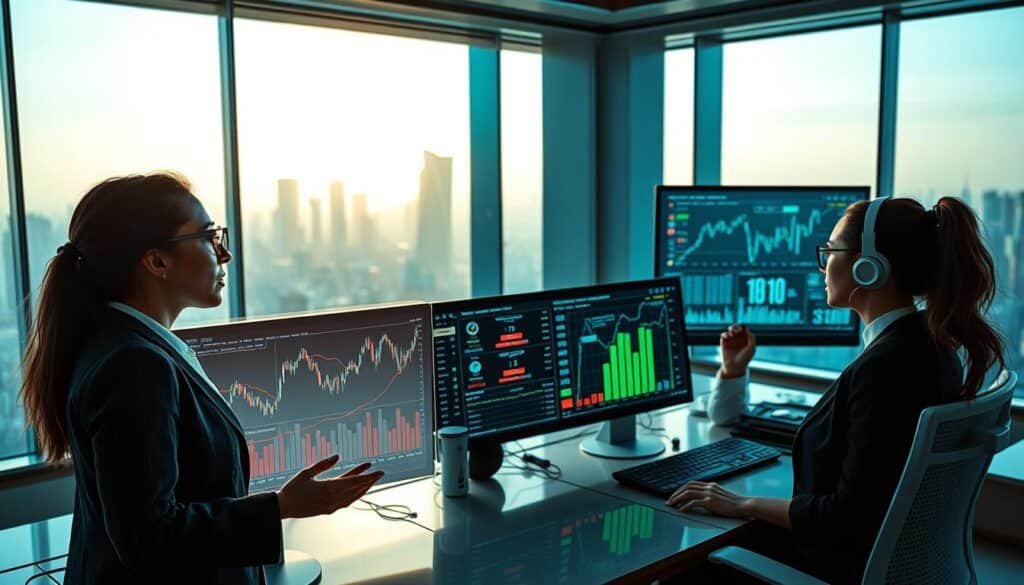
Streamlining Research and Decision-Making
These powerful tools turn scattered noise into clear, scheduled reports. They deliver structured intelligence so you can act instead of just searching. This process saves a tremendous amount of time each week.
They handle repetitive tasks automatically, such as:
- Deep analysis of new projects and tokens.
- Aggregation of critical news from all sources.
- Continuous tracking of key performance metrics and data.
Success now depends on a systematic strategy. It combines the pattern recognition of advanced tools with human experience and final judgment.
Understanding AI Agents and Their Role in Crypto
A new class of autonomous software is reshaping how market participants gather intelligence. These specialized agents are built to handle the unique demands of digital asset analysis.
Defining the Crypto AI Agent
A crypto AI agent is a virtual assistant. It analyzes blockchain data, collects and ranks news, and performs technical analysis. Its core function is to turn chaotic information into structured, understandable reports.
Unlike standard large language models like ChatGPT, these agents operate autonomously. You configure the bot once with your parameters. It then executes tasks on a set schedule without manual prompts.

Real-World Impact on Trading and Analysis
The practical effect is dramatic. These tools compress hours of manual work into minutes. For example, one trader made $15,000 in three hours using a specific platform.
The agent flagged abnormal sales and a volume spike. This signaled an imminent security breach, allowing for quick decisions.
It’s crucial to understand these are decision-support systems. They enhance human judgment by validating hypotheses and detecting early narratives. For a deeper look at automated trading tools, explore this AI crypto trading bot review.
best AI crypto research assistants 2026: Our Top Picks
Our evaluation focuses on the leading tools that deliver actionable intelligence in real time. These platforms compress complex market signals into clear insights.
ASCN.AI: The Pioneer of Web3 Data Integration
ASCN.AI stands out as a specialized agent trained only on Web3 data. It pulls information directly from blockchain nodes and services like Dune.
This gives it a unique edge in speed and accuracy. One user trained the bot to spot spreads between a crypto exchange pair.
They built an arbitrage strategy that earns $100-400 daily. The platform creates detailed project reports and finds undervalued assets.
It also assesses scam risks using behavioral analytics. This makes it a powerful assistant for serious trading.
Grok and ChatGPT: Supplementary AI Tools
Grok is among the most powerful models for sentiment research. It excels at analyzing threads on X to gauge market mood.
However, it lacks direct blockchain access, causing data delays. This makes it less ideal for fast arbitrage or trading.
ChatGPT works well out-of-the-box for many tasks. Yet it can struggle with obscure altcoins and may invent facts.
For a detailed comparison of Grok and ChatGPT, see this analysis. Both are useful agents but serve as supplements to dedicated platforms.
Key Features and Tools That Define Cutting-Edge Crypto Assistants
What truly separates advanced platforms from basic ones are two core pillars: data integrity and processing velocity.
Professional traders evaluate these tools across six key dimensions. This framework ensures a platform delivers comprehensive intelligence.
Data Sources and Blockchain Integration
Superior data sources are the foundation. The best platforms pull data directly from blockchain nodes.
This direct access provides real-time, accurate information. It beats systems that only scrape the web.
Integration with analytical services like Dune and Messari adds crucial context. This multi-source approach creates a complete market picture.
Speed, Alerts, and Real-Time Analysis
In trading, speed is everything. A delay of seconds can erase a profitable opportunity.
Top-tier tools provide instantaneous alerts. They notify you of market shifts and large capital movements as they happen.
This real-time analysis is critical for strategies like arbitrage. Fast, reliable alerts give you the edge to act first.
Analyzing Technical and Fundamental Data for Crypto Trading
To navigate volatile crypto markets, traders blend two distinct types of data analysis. Technical analysis studies price charts, volume trends, and indicators. Fundamental analysis evaluates project metrics and tokenomics.
Modern platforms merge these approaches. They provide a complete picture for smarter trading decisions.
Technical Analysis Tools and TradingView Integration
TradingView serves as the central hub for charting and execution. Its AI-enhanced features transform raw data into clear signals.
The platform excels at validating ideas generated by other systems. It provides real-time price feeds, volume data, and derivatives metrics.
Key features include:
- Pattern recognition that spots chart formations automatically.
- Indicator optimization to fine-tune trading signals.
- Market screening filters opportunities across thousands of crypto assets.
Professional traders use these tools to time entries and exits. They combine algorithmic signals with visual confirmation. This multi-layered approach validates trading strategy and manages risk.
Integrating TradingView with on-chain platforms creates a powerful workflow. Converging signals from different sources build confidence for execution.
Optimizing Trading Strategies with AI Analytics
Sophisticated traders now rely on analytical systems to refine their market approach continuously. These platforms enhance workflow by researching new projects and summarizing news.
They send alerts for specific events and can run scripts using APIs. This turns scattered data into a structured, actionable plan.
Algorithmic Trading and Risk Management
These agents can execute predefined strategies automatically. They monitor for specific market conditions and send instant alerts.
It is vital to remember these tools do not guarantee profitable trades. They cannot replace human oversight or proper risk management.
Instead, they assist with critical risk controls. They help calculate position sizes, set stop losses, and monitor portfolio exposure across multiple positions.
Leveraging Real-Time Sentiment Analysis
Understanding market mood is crucial. Specialized platforms like Kaito track social attention, developer discussions, and influencer narratives.
They go beyond raw sentiment scores. They measure “attention velocity” to see which narratives are accelerating before price reacts.
This gives traders an early signal for potential movements. It helps validate or invalidate trade hypotheses faster.
The real edge comes from integrating these analytics into a comprehensive workflow. The technology alone is not the solution.
Evaluating Pricing, Accessibility, and User Experience
The monthly cost of a platform is often the first consideration for traders. Beyond the price, ease of use and learning curve are equally important.
These factors determine which tool provides real value for different users. A platform must fit both your budget and skill level.
Subscription Models and Value Comparison
Leading platforms offer tiered plans. ASCN.AI starts at $29 monthly for basic access. Its recommended $99 plan unlocks more accurate on-chain data.
New users can use promo code ASCN50 for 50% extra requests. This boosts initial value significantly.
Perplexity Pro is noted for high return on investment. TradingView’s Pro tier suits most serious traders. Costs vary, but value is measured in saved time and avoided errors.
For beginners, intuitive interfaces are key. Some tools work immediately, while others need setup. The right choice balances cost with reduced mental effort.
One prevented loss can cover years of subscription services. This makes these tools a smart investment for managing risk.
Comparing Top AI Tools: ASCN.AI Versus Competitors
Each leading tool in the market carves out its own niche, excelling in specific areas of intelligence. A direct comparison helps you match a platform’s strengths to your needs.
Feature Comparison and Market Insights
ASCN.AI provides a comprehensive toolkit. It handles token analysis, on-chain analytics from nodes, and workflow automation. Its no-code builder lets anyone create custom agents.
Other platforms focus on specialized areas. Kaito tracks narrative shifts in sectors like DePIN and GameFi. This is ideal for swing trading.
Perplexity Pro compresses long-form research for rapid comparisons. Arkham maps wallet clusters and whale activity for entity intelligence. Nansen follows “Smart Money” movements.
These tools serve different purposes. Some offer broad features, while others deliver deep, specific market insights.
User Testimonials and Expert Reviews
User feedback highlights practical results. One trader earned $15,000 in three hours using an ASCN.AI bot that flagged a security breach.
Another user trained the agent for arbitrage, generating $100-400 daily. Expert analysis often ranks it as the best overall assistant for crypto.
Specialized platforms also receive praise. For broader market context, consider AI chatbots for updates. The right tools improve decision speed and price awareness.
Integrating AI Crypto Assistants Within a Comprehensive Trading Workflow
Building a competitive edge requires orchestrating a suite of autonomous agents that each handle a distinct task. No single platform provides all the intelligence needed.
A common professional workflow uses five specialized systems. Kaito spots emerging narratives. Perplexity Pro validates the thesis. Arkham checks on-chain positioning. TradingView confirms market structure. A GPT agent stress-tests the trade logic.
Workflow Automation and Customization Options
These systems run continuously, monitoring markets and executing scheduled tasks. This automation delivers alerts without manual work, freeing traders for higher-level decisions.
The core advantage is customization. With an agent builder and open API, you can create a personal bot for about $100. Train it on your specific trading or arbitrage strategy.
You can package this custom bot as a standalone product. Share it with a community or monetize it. This integrates data from multiple exchanges.
Professional traders use a four-layer stack. It covers narrative intelligence, on-chain analysis, market structure, and reasoning synthesis. Structuring your daily workflow around these layers lets assistants handle gathering while you focus on execution.
Harnessing On-Chain Intelligence and Whale Tracking
Understanding the flow of large capital is a cornerstone of modern digital asset strategy. Major holders, often called “whales,” control large volumes of tokens worth millions. These entities include institutional funds, exchanges, early miners, and veteran private investors.
Their transactions create significant market waves. Accumulation typically increases liquidity and often precedes price rises. Withdrawals to exchange platforms can signal impending selling pressure.
Monitoring Capital Movements in Real Time
Specialized platforms provide real-time visibility into these movements. Arkham delivers entity-based intelligence, mapping wallet clusters and tracking exchange flows. It monitors fund activity and protocol treasury movements.
Nansen’s “Smart Money” system follows high-yield wallets and institutional funds. Their movements frequently predict broader market trends. Lookonchain focuses exclusively on real-time whale tracking, highlighting large transactions to and from exchanges.
Predictive Insights from Whale Activity
On-chain analytics reveal accumulation patterns that signal institutional interest. Tracking these patterns offers early alerts for tokens gaining attention. The process involves identifying influential wallets and studying their transaction history.
Setting up automated alerts for their activity is crucial. Confirming these signals with additional data sources before acting improves decision quality. This approach helps spot opportunities before broader market awareness develops.
Conclusion
The future of trading belongs to those who build a cohesive analytical framework. Leading platforms like ASCN.AI combine on-chain analytics, signal systems, and automated alerts into one hub.
These tools act as strategic allies. They enhance your decisions by interpreting complex data streams. This turns market noise into clear, actionable insights.
Integrating such a platform with specialized services creates a powerful stack. This systematic approach is how modern, data-driven trading is built. It lets you scale proven strategies and manage risk more effectively.
The real edge comes from processing information faster and filtering out noise. We encourage testing these systems to transform your workflow. Explore ASCN.AI with its promotional offer to see the difference firsthand.
FAQ
How do these automated research tools actually work for a trader?
These platforms act like a dedicated analyst. They scan numerous data sources, including live market feeds and blockchain activity. They process this information to highlight trends, track large capital movements, and generate actionable alerts. This helps you make informed decisions faster.
What kind of information is most valuable for these platforms to analyze?
The most powerful systems integrate multiple streams. They examine on-chain metrics, such as exchange inflows and whale wallet activity. They also parse social sentiment from news and forums, and combine this with classic technical indicators. This holistic view provides a deeper market understanding.
Can these services help manage risk in a volatile market?
Absolutely. Many include features designed for risk management. They can set alerts for price drops or unusual volume spikes. Some tools offer analytics on market correlation and volatility. This data is crucial for protecting your funds and adjusting your strategy during turbulent periods.
Are these tools suitable for someone just starting with digital assets?
Yes, several platforms are built with beginners in mind. They simplify complex data into clear charts and plain-language insights. They can explain market movements and provide educational context. This helps new users learn while they track the cryptocurrency landscape.
How do the pricing models typically work for these professional services?
Most operate on a monthly or yearly subscription basis. Access levels vary, often based on features like the number of alerts, data refresh speed, or advanced analytics. Some may offer limited free tiers. It’s important to compare the value against the tools you will actively use in your workflow.
Do I need to switch exchanges to use a specific research assistant?
Generally, no. Leading platforms like ASCN.AI are designed to work alongside your existing setup. They aggregate information from multiple exchanges and networks. You can use their analysis and signals while executing trades on your preferred platform. They enhance your process without locking you into one venue.

No comments yet