

The digital asset landscape is changing fast. In 2026, having clear insight into crypto transactions is a mission-critical capability. Financial institutions and regulators need powerful intelligence to navigate this space.
Illicit crypto transfers reached a staggering $22.2 billion in 2023. This drives an urgent demand for sophisticated surveillance solutions. The global market for compliance software is growing rapidly to meet this need.
Modern systems have evolved far beyond simple transaction tracers. Today, they are advanced intelligence platforms. They use artificial intelligence and real-time analytics to detect threats and ensure compliance.
As rules mature globally, from Europe’s MiCA to U.S. tax reporting, organizations must adapt. Implementing the right platform is essential for protecting the entire cryptocurrency ecosystem. This guide provides the information you need to make an informed choice.
Building a strong program involves more than just tracking funds. It requires understanding blockchain monitoring best practices. A complete strategy addresses both surveillance and customer due diligence.
Overview of Blockchain Monitoring in 2026
In 2026, the context for tracking digital assets is defined by geopolitical tensions and sophisticated criminal tactics. The surveillance market has matured into core infrastructure for the global financial ecosystem.

Financial institutions and exchanges now require deep intelligence to manage risk. This shift is driven by new threats that challenge traditional analytics.
Evolving Landscape and Market Context
Cross-chain crime is now standard. Illicit actors exploit bridges to hide fund origins across multiple networks. This makes single-chain tracking ineffective.
Digital assets have geopolitical weight. Nation-states use cryptocurrency to bypass sanctions and fund operations. Ransomware also relies heavily on crypto payments.
Emerging Trends and Regulatory Drivers
An AI arms race exists between criminals and compliance teams. Systems must detect automated fraud and sophisticated evasion.
New rules like the IRS 1099-DA forms and Europe’s MiCA framework are enforceable. They demand proven compliance data and reporting. Privacy tech and DeFi convergence add further complexity to the market.
The Importance of Blockchain Intelligence and Analytics
The ability to interpret transaction patterns is what separates basic tracking from true threat detection. Raw on-chain data is abundant, but turning it into actionable information requires sophisticated analysis. This transformation is the core of modern blockchain intelligence.
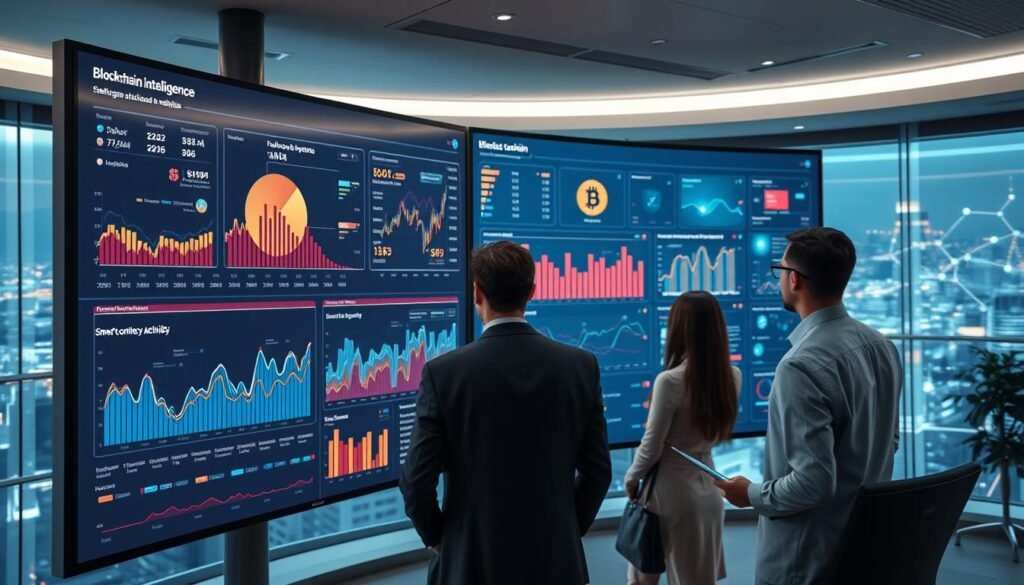
It moves beyond simple charts to provide deep insights for critical decisions.
Defining Blockchain Intelligence
Blockchain intelligence is the process of analyzing public ledger data to trace funds, identify actors, and spot suspicious activity. While often grouped with analytics, intelligence refers specifically to actionable insights.
These insights power investigations and compliance efforts, not just historical summaries. A robust blockchain intelligence tool delivers this clarity.
Role in Compliance and Security
Law enforcement uses these tools to track illicit funds from ransomware or trafficking. Regulators rely on the information to supervise markets and shape policy based on real behavior.
For crypto businesses, monitoring transaction patterns is essential for protecting users and meeting rules. The platform’s role in security extends to proactive risk management and threat detection.
Selecting the Best Blockchain Monitoring Tools 2026
The selection process for a crypto intelligence system hinges on several critical evaluation criteria. Organizations must match platform capabilities to their specific threat landscape and operational needs.
Key Tool Features and Capabilities
Comprehensive network coverage is essential. A top solution must track assets across major and emerging chains. Real-time detection of suspicious transaction patterns is another core feature.
Sophisticated attribution databases connect wallet addresses to known entities. The data quality and methodology must be transparent. This ensures intelligence holds up under legal and regulatory scrutiny.
User Experience and Integration Factors
Intuitive interfaces help compliance teams investigate alerts efficiently. Customizable dashboards present relevant risk signals without clutter. Clear visualization tools communicate complex analytics to non-technical stakeholders.
Integration with existing case management and screening systems is vital. It creates a seamless workflow for users. Scalability ensures the platform grows with your transaction volume without lag.
Access to ongoing threat information and expert support differentiates advanced tools from basic tracers. This context is key for effective monitoring and response.
Key Features of Top Blockchain Monitoring Platforms
Sophisticated surveillance platforms transform raw on-chain data into actionable intelligence through two primary functions. These capabilities empower compliance teams to see threats clearly and act swiftly.
Data Visualization and Real-Time Alerts
Clear graphical interfaces map complex transaction networks. Investigators can trace funds across multiple wallets instantly. This visual information is crucial for building cases and reporting.
Instant alerts are equally vital. Systems like Chainalysis KYT notify analysts the moment activity links to a high-risk entity. This enables immediate intervention before funds move off an exchange.
Leading platforms offer customizable rules. Teams set specific risk thresholds and transaction triggers. This reduces false positives, a key focus for products like Elliptic Lens.
Dynamic risk scoring evaluates wallet connections and behavioral signals. TRM Labs highlights how this adapts to new threats. The result is efficient routing of only the most suspicious activity for review.
Leveraging Data and Crypto Analytics for Risk Management
Proactive security in the crypto space is built upon a foundation of advanced analytics and intelligent data processing. This approach transforms compliance from a reactive task into a system of proactive threat detection. The goal is to identify potential risk before it results in financial loss or regulatory issues.
Advanced Indicator Models and Transaction Patterns
Sophisticated models use statistical techniques to analyze transaction patterns and user behavior. They look for anomalies that signal money laundering or fraud. This includes tracking funds through multiple wallets to obscure their origin.
Entity-level risk assessment provides deeper analysis. Platforms map countless data points to real-world entities. This gives a complete profile, far better than checking single addresses in isolation.
Mitigating Fraud and Illicit Activities
Continuous monitoring of user activity is key to stopping fraud. It helps detect account takeovers and payment scams. Predictive analytics use machine learning to spot suspicious behavior even before a wallet is officially flagged.
This management strategy integrates blockchain intelligence with traditional compliance tools. It creates a unified framework to tackle both crypto-specific and conventional financial crime.
Real-World Applications and Success Stories
Concrete examples show how crypto intelligence platforms deliver tangible results in high-stakes scenarios. These cases move beyond theory to demonstrate life-saving and market-protecting actions.
Case Studies in Ransomware and Regulatory Enforcement
In a major 2025 ransomware attack, intelligence platforms tracked funds across three continents. This enabled law enforcement to freeze assets and make arrests within days.
Another investigation connected wallet activity to a human trafficking network. Analytics revealed the criminal operation, leading to victim rescues and a network takedown.
Insights from TRM Labs, Chainalysis, and Elliptic
The T3 Financial Crime Unit froze over $250 million in stolen funds in one year. This public-private partnership shows the power of coordinated data sharing.
Chainalysis is used by thousands of professionals to build evidence. Its tools help visualize transaction networks for prosecution.
Elliptic analyzes vast data sets to map wallets to real entities. This helps major exchanges manage risk during customer onboarding. Effective crypto portfolio management also relies on clean, compliant data.
These successes prove blockchain intelligence is an operational capability. It defends the financial market and saves lives.
Innovations in Blockchain Intelligence: AI and Machine Learning
Sophisticated attribution now relies on predictive models that identify threats before they are officially labeled. This shift is led by platforms like TRM Labs, built from the ground up with an AI-native approach. Machine learning automates pattern recognition and adapts to new criminal tactics faster than old rule-based systems.
Advanced Attribution Techniques and Predictive Models
Modern intelligence uses advanced heuristics to connect wallets to real entities. Techniques include co-spend analysis and public key clustering. Behavioral fingerprinting and service identification logic also expand high-confidence attribution.
Predictive models are trained on historical illicit activity. They can spot suspicious patterns and behavior linked to new ransomware variants. This provides early warning signals, enabling a proactive response.
Enhancing Monitoring with Real-Time Analytics
Real-time analytics process data streams with minimal delay. Alerts can be generated within seconds of a suspicious crypto transaction. This speed is critical for intercepting funds before criminals cash out.
AI-powered tools analyze millions of signals and transaction patterns at once. They find network relationships human analysts would miss. Dynamic risk scoring continuously refines these assessments with new intelligence.
This creates a technological arms race. Criminals also use AI for evasion, making advanced defensive analytics essential for effective monitoring.
Understanding Cross-Chain Monitoring and Its Challenges
The fragmentation of transaction trails across multiple networks presents a fundamental challenge for compliance teams. Cross-chain crime is now standard, with illicit actors exploiting bridges and swaps to evade single-ledger surveillance.
Tracking Fund Movements Across Multiple Chains
Effective surveillance requires comprehensive coverage of major and emerging chains. Criminals move funds across isolated ecosystems using bridge protocols.
These bridge mechanisms fundamentally transform assets, breaking direct address links. Leading platforms like Chainalysis trace flows across thousands of digital assets to maintain attribution.
Overcoming Complex Transaction Patterns
Sophisticated tactics include chain-hopping and using privacy-focused networks. These patterns scatter activity across ledgers with different transparency levels.
Systems like Elliptic Navigator detect these movements using advanced analysis. They correlate timing and amounts across networks.
Key analytical approaches include:
- Timing analysis for suspicious correlations
- Amount matching despite chain transitions
- Network mapping of multi-chain entities
This is an ongoing technological race. Surveillance data coverage must continuously expand as new crypto protocols emerge.
Integration Strategies for Blockchain Monitoring Platforms
Effective risk management depends on more than just powerful analytics. It requires seamless connection to other systems. The right strategy determines if a tool becomes a core part of your infrastructure or creates an isolated silo.
These platforms must connect to core systems. This includes customer databases and case management software.
Seamless Compliance Workflow Implementation
API connectivity is key for automation. It lets risk signals trigger actions instantly. For example, a high-risk alert can automatically place a hold on a transaction.
This creates a smooth workflow for users. No-code options help smaller teams add verification quickly. Full API access supports custom needs for larger organizations.
Case management integration lets teams document investigations in one place. They can track resolution and generate reports. Ongoing surveillance detects behavioral changes in customer data.
The best approach balances automation with human insight. Platforms handle routine screening. Analysts focus on complex cases needing deeper management.
Conclusion
The integrity of the crypto market relies on a new generation of intelligence platforms. Using these systems effectively protects users and ensures regulatory adherence. They are now essential infrastructure for the digital asset ecosystem.
Selecting the right tools is not one-size-fits-all. Your choice must match your organization’s specific threat profile, transaction volume, and operational workflow. Seamless integration into existing systems is crucial for extracting full value from the data.
View this as an ongoing commitment, not a one-time purchase. This guide provides the foundational information you need to start building these essential blockchain intelligence capabilities. A strong program is vital for navigating the modern cryptocurrency landscape.
FAQ
What is the primary purpose of using these analytics platforms?
These platforms provide essential market intelligence and crypto analytics to identify suspicious activity. They help organizations track wallet interactions, monitor funds across exchanges, and manage risk by detecting unusual transaction patterns and behavior.
How do these systems help with regulatory compliance?
They automate the screening of transactions against global watchlists and detect money laundering patterns. By providing clear data visualization and real-time alerts on high-risk movements, they supply the audit trail needed for regulatory reporting and investigations.
What should I look for when choosing a platform?
Focus on features like comprehensive network coverage, including major chains and DeFi ecosystems. Strong user experience, seamless integration with existing infrastructure, and advanced indicators for analysis are crucial. The tool should offer actionable signals, not just raw data.
Can these solutions track assets across different blockchains?
Yes, leading platforms specialize in cross-chain monitoring. They follow fund movements as they bridge between networks, tackling the challenge of complex, fragmented transaction patterns. This is vital for a complete view of asset flows in today’s multi-chain environment.
How is artificial intelligence changing this field?
AI and machine learning enable more sophisticated attribution techniques and predictive models. These technologies analyze vast amounts of on-chain information to uncover hidden trends, behavior, and signals, moving beyond simple rule-based alerts to proactive risk management.
Are these platforms only for large institutions?
No, while vital for large exchanges and financial institutions, they are also used by cryptocurrency businesses of all sizes, DeFi protocols, and even investigative firms. Access to robust analytics is key for anyone needing to understand ecosystem activity or secure their infrastructure.

No comments yet