
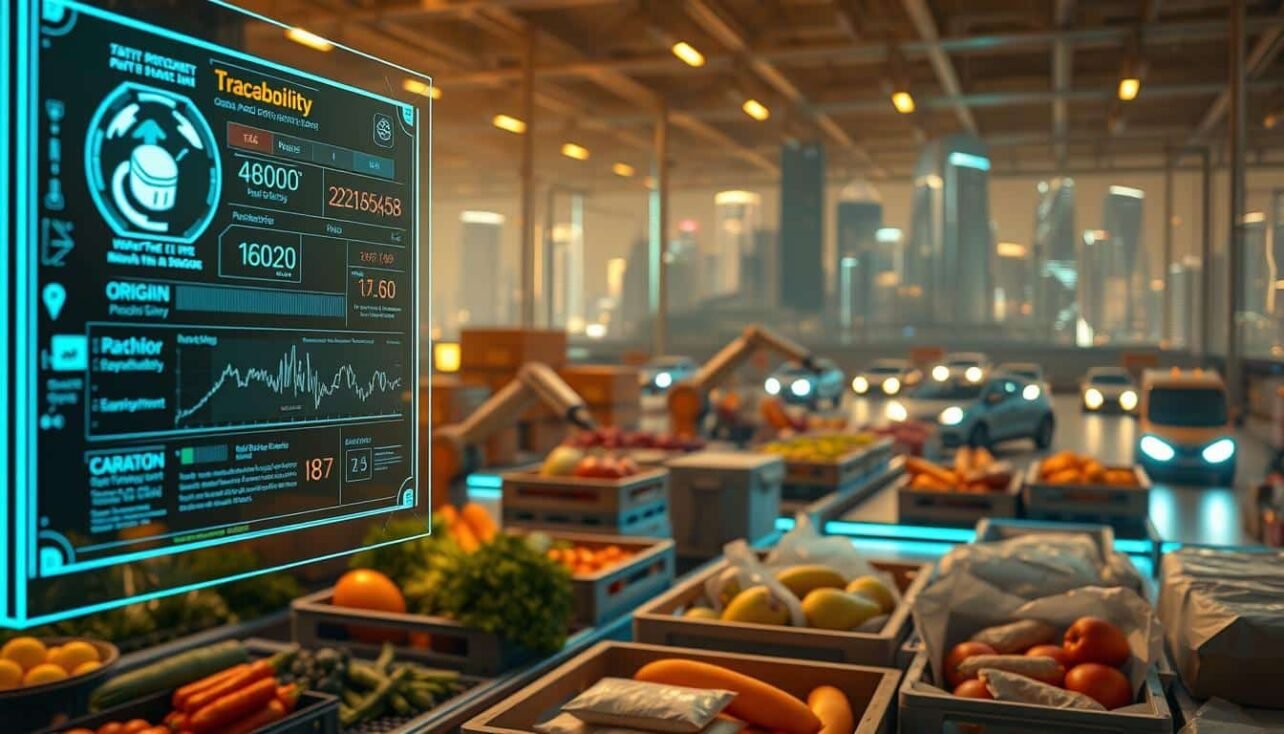
Modern supply chains are incredibly complex. Products often travel through many hands before reaching store shelves. This complexity creates significant challenges for ensuring product integrity and consumer well-being.
Major incidents have exposed vulnerabilities in traditional tracking systems. These events highlighted two critical issues: product fraud and the inability to track items accurately. The need for a more robust solution became clear.
This is where innovative digital ledger systems offer a powerful answer. Often called “The Trust Machine,” this technology creates a permanent, unchangeable record of every transaction. It provides a single source of truth that all participants can access.
The core problem is a lack of real-time visibility. When an issue arises, pinpointing its origin can take days or weeks. A decentralized ledger changes this dynamic entirely, enabling rapid response and building essential consumer confidence.
This approach addresses a critical global concern. Millions are affected by health issues related to consumables annually. Furthermore, vast amounts of production are lost to waste, underscoring the need for greater efficiency and accountability.
Key Takeaways
- Complex supply chains create significant challenges for product integrity and consumer safety.
- Historical safety crises revealed major flaws in traditional product tracking methods.
- Digital ledger technology provides an immutable, tamper-proof record of a product’s journey.
- The system creates a single source of truth, fostering transparency and trust among all stakeholders.
- This innovation enables rapid response to safety incidents, protecting public health.
- Implementing such technology can help reduce economic losses from recalls and contamination.
- This tool represents a transformative shift from its origins to a practical supply chain solution.
The Evolution of Blockchain in the Food Supply Chain
Before revolutionizing consumable tracking, this innovative technology established its credibility in entirely different domains. Early implementations demonstrated remarkable versatility across various sectors.
Blockchain’s Journey: From Diamonds to Food
The De Beers Group pioneered one of the first major non-financial applications. They tracked high-value diamonds from mine to retail, creating unprecedented traceability assurance.
This initiative solved critical issues around conflict diamonds and provenance trust. The success demonstrated the technology’s potential for complex supply chains.
Key Milestones in Adoption Across Industries
Multiple companies quickly recognized the potential. ADNOC partnered with IBM to track oil from well to customer. Maersk developed the TradeLens platform for cargo management.
FedEx joined the Blockchain in Transport Alliance to resolve disputes. John West included codes on tuna cans for consumer traceability. Ford Motor Company announced plans to trace cobalt supplies.
These diverse applications validated the core capabilities of distributed ledger systems. Each implementation addressed specific industry pain points while establishing a blueprint for broader adoption.
The technology’s evolution shows how early success in sectors like sustainable agriculture paved the way for comprehensive supply chain solutions.
Understanding Blockchain for Food Traceability and Safety
The core strength of this technology lies in its ability to create an unchangeable chain of information. Think of it as a digital ledger where each new event is recorded in a “block.”
A special code, called a cryptographic hash, seals each block. This hash is unique to the data inside. If any detail changes, the hash becomes completely different.
Each block contains several key pieces of data. These include the transaction details, a timestamp, and the hash of the previous block. This links them all together securely.
This structure makes tampering extremely difficult. Altering one block would change its hash, breaking the chain and alerting the entire network.
This system operates on a decentralized network. Unlike traditional databases controlled by one company, the ledger is shared. All participants have a copy, ensuring transparency.
Advanced tools like decentralized IDs (DIDs) verify who adds information. This builds strong accountability from farm to fork. The result is a trusted, permanent record for the entire supply chain.
How Blockchain Enhances Food Safety and Transparency
The integrity of what we eat hinges on reliable information from farm to table. Digital ledger systems create a shared source of truth for everyone involved.

Ensuring Data Integrity and Consumer Trust
All participants see the same verified details about a product’s journey. This includes farming methods, transport conditions, and storage temperatures.
Once recorded, this information cannot be changed or deleted. This permanence builds strong accountability across the entire supply chain. Shoppers gain confidence by seeing a complete, honest history.
Streamlining Recall Procedures and Compliance
During a safety incident, speed is critical. Old-fashioned recall methods are often slow and imprecise.
This technology allows for instant identification of affected batches. Retailers can remove specific items quickly. This targeted approach significantly reduces waste compared to broad category recalls.
Rapid containment protects public health by limiting exposure. It also ensures better compliance with modern safety regulations.
Blockchain Technology Applications Across Food Supply Chains
Walmart’s journey with this technology began with a simple but revealing experiment in 2016. The retail giant asked its team to trace mangoes back to their source using traditional methods.
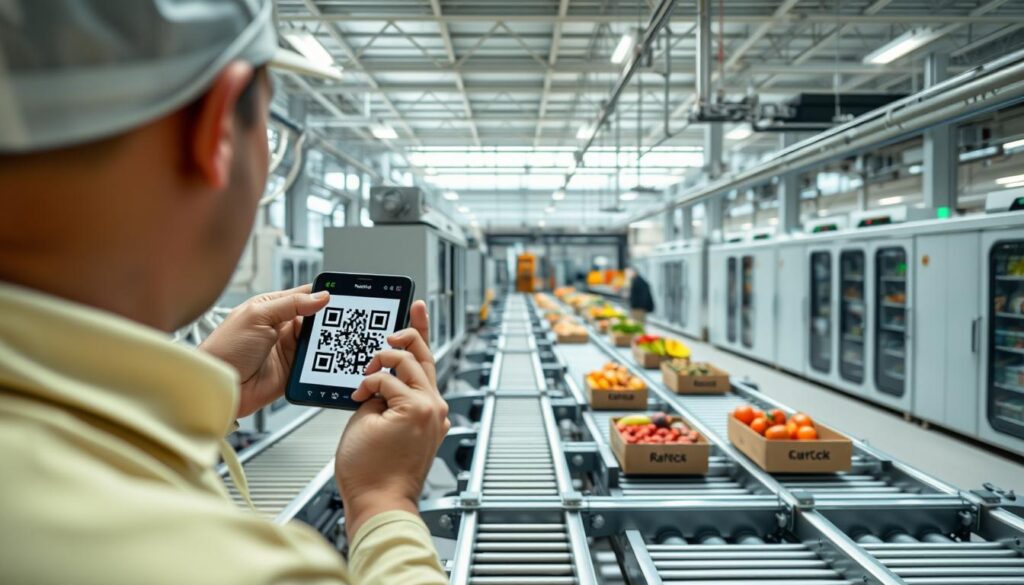
This process took nearly seven days. After implementing IBM’s Hyperledger Fabric solution, the same task required only 2.2 seconds.
Case Studies from Walmart, IBM, and Industry Pioneers
The company expanded its efforts to track pork in China through collaboration with JD.com and Tsinghua University. This initiative addressed serious contamination concerns in that supply chain.
By August 2017, Walmart announced partnerships with major suppliers including Dole, Kroger, and Nestlé. This created a collaborative ecosystem for tracking various products.
Real-World Implementations and Measurable Benefits
In 2018, Walmart launched its Food Traceability Initiative requiring leafy greens suppliers to use the IBM Food Trust network. The system employed GS1 standards for consistent data sharing.
The platform expanded to track over 25 product categories including dairy, meat, and baby food. Carrefour also adopted the IBM Food Trust system, providing QR codes that show product journeys to consumers.
| Traceability Method | Time to Trace Origin | Recall Precision | Stakeholder Access |
|---|---|---|---|
| Traditional Systems | Days or weeks | Broad category recalls | Limited to individual companies |
| IBM Food Trust Platform | 2.2 seconds | Specific batch identification | Farm-to-retailer visibility |
| Walmart China Platform | Instant verification | Targeted removals | Consumer QR code access |
These implementations delivered significant improvements in response times and waste reduction. The technology enables selective recalls instead of broad category withdrawals.
Verified product information builds essential consumer confidence. Rapid containment protects public health while ensuring better regulatory compliance.
Integrating Blockchain with IoT and AI for Smart Traceability
Smart traceability systems emerge when blockchain integrates with Internet of Things sensors and artificial intelligence. This combination creates automated monitoring that captures data throughout the entire supply chain.
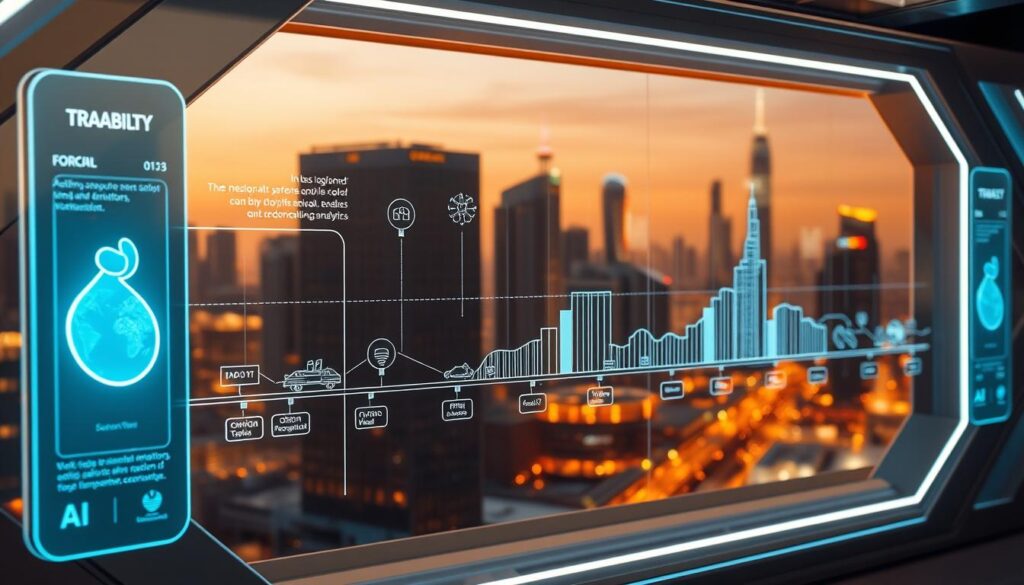
IoT devices collect real-time information about temperature, humidity, and location. Sensors automatically record this data directly into the digital ledger. This creates a permanent record of handling conditions.
Optimizing Data Capture and Verification
Smart contracts represent a powerful automation tool within these systems. These self-executing agreements trigger actions when specific conditions are met. Payments release automatically after quality verification.
Shipments authorize when temperature thresholds remain within safe ranges. This automation reduces human error and speeds up processes. The system becomes more efficient and reliable.
Artificial intelligence analyzes the massive data volumes generated by these technologies. AI algorithms detect patterns that might indicate potential problems. Early warnings help prevent contamination incidents before they occur.
This technological convergence represents what emerging technology trends are achieving across industries. The integration creates intelligent, self-monitoring supply chains where verification happens continuously.
Research shows these combined technologies can significantly improve monitoring capabilities. According to studies documented in the National Library of Medicine, such integrations enhance both safety and efficiency throughout product journeys.
Challenges and Emerging Trends in Blockchain Food Traceability
The path to comprehensive digital traceability encounters real-world challenges related to data quality, cost, and system integration. While the technology offers powerful benefits, practical obstacles must be addressed for widespread adoption.
Addressing Data Quality, Cost, and Interoperability
Blockchain ensures transparency, but the initial data quality determines system reliability. This “garbage in, garbage out” problem means incorrect information creates permanent errors. Automated capture through IoT devices minimizes human mistakes.
Implementation costs can be prohibitive for smaller producers. Digital infrastructure and training require significant investment. Cloud-based solutions with pay-as-you-go models are making the technology more accessible.
Global regulatory fragmentation creates interoperability challenges. Different regions follow distinct traceability standards. Without harmonized protocols, seamless international trade remains difficult.
Innovative Trends Driving Future Solutions
Developers are creating hybrid models that balance transparency with efficiency. These systems use off-chain storage for high-volume data while maintaining core integrity on-chain.
Industry consortiums are establishing common protocols to improve communication between platforms. Standardization efforts address the interoperability problem that research shows limits current systems.
Integration with AI and sustainability tracking represents the next evolution. These convergences create intelligent supply chains capable of predictive analytics and comprehensive environmental monitoring.
Regulatory Compliance and Standards in Food Safety Systems
Government mandates are transforming how the food industry approaches traceability and compliance. The Food Safety Modernization Act Section 204 establishes specific requirements for high-risk products.
This regulation demands detailed digital records for critical tracking events. Companies must maintain accurate lot identification and timestamp data.
Meeting FSMA 204 and Global Traceability Standards
Digital ledger technology automatically captures required information like GTIN-14 codes and batch numbers. It timestamps harvesting, processing, and shipping events with permanent accuracy.
This system eliminates manual record-keeping errors. Regulators gain immediate access to verified supply chain data during inspections.
International standards including EU regulations and Codex Alimentarius guidelines also benefit from this approach. Companies can demonstrate due diligence across global markets.
The technology creates audit-ready documentation that satisfies regulatory scrutiny. Every critical tracking event includes participant identities and transaction details.
Proactive adoption provides competitive advantages in premium markets. Brands can differentiate through verified adherence to the highest safety standards.
Conclusion
The digital transformation of our food systems represents a fundamental shift toward greater accountability and consumer empowerment. This technology creates an unchangeable record that spans from farm to table.
Businesses adopting these solutions gain competitive advantages through superior compliance capabilities. Regulatory requirements continue to tighten globally, making early investment crucial.
Consumers now access verifiable information about product origin and handling conditions. This transparency builds essential confidence in the entire supply network.
The future points toward intelligent, self-monitoring ecosystems where all stakeholders share one source of truth. These digital platforms will become the universal standard for quality assurance across markets.
FAQ
What is the main benefit of using a distributed ledger for tracking products?
The primary advantage is creating an unchangeable record of a product’s journey. This system boosts transparency from the farm to the store shelf. It gives everyone in the supply chain, including shoppers, greater confidence in the goods they handle and buy.
How does this technology help during a product recall?
It makes recalls much faster and more precise. Instead of taking days to find the source of contamination, companies can pinpoint affected items in seconds. This speed protects public health and reduces waste by avoiding broad recalls of safe products.
Can smaller farms and suppliers afford to use these systems?
Yes, solutions are becoming more accessible. Platforms like the IBM Food Trust network offer scalable options. The long-term savings from increased efficiency and avoided recalls often outweigh the initial investment for businesses of all sizes.
What role do standards like FSMA 204 play in this?
Regulations like the Food Safety Modernization Act (FSMA) Rule 204 set new traceability requirements. Blockchain-based systems are perfectly suited to meet these rules. They help companies easily prove compliance with enhanced recordkeeping demands.
How is data about a product’s origin and quality captured?
Information is entered at each step by farmers, processors, and shippers. This data can include harvest dates, temperature logs, and inspection certificates. Integrating with IoT sensors automates this capture, ensuring accuracy and real-time updates for better quality control.

No comments yet