

This how-to guide helps traders in the United States decode candlestick patterns to make smarter trading choices. It explains how candlestick charts compress open, high, low, and close into a single candle so you can read market moves fast.
The anatomy of a candle is simple: the body shows open-to-close range and the shadows mark highs and lows. Color signals direction and reveals whether buyers or sellers held control during the session.
Over time, single candles form a pattern that hints at reversals, continuations, or indecision. Remember: these are probabilistic tools. Use them with volume, momentum, and other technical analysis methods for confirmation.
Practice on demo accounts and review historical charts. Define entries, exits, and risk. This guide previews bullish and bearish families, indecision and continuation structures, timeframe choice, confirmation, and step-by-step trade setup to speed learning and reduce false signals.
Why candlestick charts matter in crypto trading today
Good charts show sentiment fast; a single candle can reveal who won a session. Traders rely on this visual shorthand to read buying and selling pressure, gauge momentum, and act quickly in a 24/7 market.
Reading market psychology in real time
A candle compresses open, high, low, and close so you see where participants fought for control. Long wicks and decisive closes often mark rejections at key levels.
Indecision forms—like a doji—when buyers and sellers reach balance. That pause often precedes a strong move when one side wins.
From support and resistance to momentum shifts
Candles near support or resistance reveal whether buying near lows or selling near highs is dominant. Repeated tests with smaller reactions often signal an upcoming breakout or breakdown.
Validate any signal with higher-timeframe context, volume, and momentum tools such as RSI or MACD. When multiple candle closes confirm the same direction, trend shifts gain reliability.
For deeper study of chart-based signals, see technical analysis chart patterns.
How candlestick charts work: bodies, wicks, colors, and closing price
Each trading bar packs four key data points that tell the short story of a session. Understanding these helps you read market information fast and act with clarity.
Open, high, low, close: decoding each candle
The open and closing price make up the body of a candle. Shadows mark the high and low and show the full trading range for that time interval. Long bodies mean decisive directional pressure. Small bodies show hesitation or balance.
Green candle vs red candle: buyers, sellers, and pressure
A green candle signals the session closed above the opening. A red candle means the session closed below the opening. Long upper wicks reveal price rejection near highs; long lower wicks show demand at lows.
- Track the same time frame to build intuition across intraday or multi-day moves.
- Consider a higher timeframe to filter noisy intraday action.
- Keep chart colors and session settings consistent for quick recognition.
| Element | What it shows | Why it matters |
|---|---|---|
| Open / Close | Start and end price of the time unit | Defines the body and who dominated the session |
| High / Low | Top and bottom of the shadow | Shows extremes and rejection levels |
| Body size | Length of the filled area | Indicates strength or indecision |
For a deeper primer on chart basics, see candlestick charting basics.
Choosing the right timeframe and range for your strategy
Your chosen time window determines how noisy or clean a signal will appear. Pick a primary timeframe to set bias and a secondary one to time entries. Consistency in selection helps you read charts and manage risk.
Intraday scalps vs swing trades
Day traders often work with minute-to-hour charts for fast entries. Scalpers rely on quick moves and tight stops, so shorter intervals give more precise entry points.
Swing traders use 4H or daily candle views to capture multi-day trends. These frames reduce noise and reveal clearer support and resistance.
Aligning signal strength across multiple time frames
Confirm lower-timeframe reversal or continuation signals with a higher-timeframe trend to filter false positives. Watch how key candles close on the anchor timeframe—closing behavior validates a move.
- Range: use ATR or average daily movement to set targets and stops.
- Choose liquidity-rich sessions to minimize slippage and get better fills.
- Build a checklist per timeframe: pattern type, level context, and confirmation rules.
- Use alerts at price levels or moving averages to avoid constant screen watching.
Discipline around timeframe rules often beats hunting for a perfect setting. Stick to your strategy and let the timeframes guide risk and position sizing.
candlestick patterns crypto
On digital asset charts, visual formations show the battle between buyers and sellers in clear, single-session moves.
Scope: The term candlestick patterns crypto covers recognition of repeatable setups across exchanges and timeframes. It applies to spot, futures, and derivatives markets.
Common groups include bullish reversals, bearish reversals, continuations, and indecision. Each group gives different clues about likely follow-through and where to place stops.

Pattern strength rises when a formation appears at major support or resistance, or after a long move that exhausts one side. Filter candidates by volume spikes and momentum shifts to increase reliability.
- Keep screenshots and trade notes to build a personal playbook.
- Wait for full candle closes before entering to avoid false signals.
- Use alerts and screeners to find quality setups among many pairs.
Test setups on liquid pairs first; spreads and low liquidity can spoil execution. Above all, use position sizing and risk controls even when a setup looks textbook.
Bullish reversal patterns: identifying buyer control after a downtrend
After a sustained decline, certain reversal signs hint that buyers may be ready to step in. These setups flag a possible shift from selling to buying and help traders plan entries with clear risk.
Hammer and inverted hammer
The hammer shows a short body and a long lower shadow at least twice the body. It signals rejection of lower price and a potential handover of control to buyers. A green candle hammer is stronger. Look for a bullish close the next session to confirm.
The inverted hammer has a long upper shadow and a small lower wick. It hints at buying intraperiod, but it is weaker. Wait for confirmation on the following candle.
Bullish engulfing and piercing line
A bullish engulfing pattern forms when a larger green candle fully absorbs the prior red candle’s body. This often marks a decisive shift to buyers and rising momentum.
The piercing line starts with a gap down and ends with a strong green candle closing above the midpoint of the prior body. A confirming close and higher volume raise the reversal probability.
Morning star and three white soldiers
The morning star is a three-candle sequence: long red, a small middle candle, then a long green close. It shows bears losing momentum and buyers taking control.
Three white soldiers are three consecutive long green candles with small shadows and higher opens and closes. This sequence signals sustained buying and a possible new uptrend.
| Signal | Key feature | Entry / Stop |
|---|---|---|
| Hammer | Long lower shadow, small body | Entry above confirmation candle; stop below hammer low |
| Bullish engulfing | Green body covers prior red body | Entry above engulfing high; stop below engulfing low |
| Piercing line | Gap down then close above prior midpoint | Entry after confirming close; stop below recent low |
| Morning star | Three-candle reversal sequence | Entry above third candle; stop below star low |
Trade tip: Confirm with volume expansion and closes above nearby resistance. Journal exact criteria—body sizes, shadow lengths, and closing behavior—to build repeatable rules.
Bearish reversal patterns: spotting selling pressure at the top
Topping formations warn that an advance is losing force and sellers are preparing to push price lower. These bearish reversal setups appear after an uptrend and highlight where bulls may lose control.

Hanging man and shooting star
The hanging man looks like a hammer but appears at the top. A long lower shadow shows an intraday sell-off that buyers barely recovered from on the close. That failure can foreshadow a shift in control.
The shooting star has a long upper wick and a small lower body. It signals a failed rally when price closes near the open, exposing fading demand.
Bearish engulfing and dark cloud cover
A bearish engulfing forms when a large red candle swallows the prior green body. This decisive move often marks sellers taking control and starting a downtrend.
Dark cloud cover needs the red candle to open above the prior green and close below its midpoint. That midpoint close converts optimism into resistance and raises reversal odds.
Evening star and three black crows
The evening star is a three-candle sequence: a long green, a small indecisive middle candle, then a long red that closes under the first candle’s midpoint. It shows momentum stalling and shifting to sellers.
Three black crows are three consecutive long red candles with small shadows. They represent sustained distribution and persistent selling pressure near the top of a move.
- Signal check: look for breaks of support, rising volume on red candle closes, and failed retests that act as resistance.
- Trade rules: enter below the confirming low, place stops above the pattern high, and consider partial exits at prior demand zones.
- Caution: avoid counter-trend shorts when higher-timeframe uptrends remain intact unless multi-timeframe context aligns.
Continuation and indecision patterns to confirm trends
When the action slows, certain candles tell you that buyers and sellers are reassessing the next move. These small formations help you decide if the prior bias will continue or stall.
Doji and dragonfly doji
A doji has nearly equal open and closing values, forming a tiny body that looks like a cross. It signals indecision as participants balance buying and selling pressure.
The dragonfly doji shows a long lower shadow and little body. Near support, it can foreshadow a bounce; near resistance, it may precede a breakdown.
Spinning top
A spinning top has a small body with similar upper and lower shadows. It marks consolidation and waning control during a move.
Look for volume contraction during this pause and wait for the next candle’s close before acting.
Rising and falling three methods
The rising three methods show two strong green candles with three small red candles inside their range. This is a controlled pause that favors the trend.
The falling three methods mirror that structure to confirm downward continuation. Validate with volume expansion on the follow-through.
- Context matters: indecision formations can lead to breakouts, breakdowns, or reversals depending on surrounding candlesticks and levels.
- Confirm first: wait for a clean close and volume confirmation before entering a trade.
- Tip: long upper or lower shadows near key levels often hint at the direction of the next impulse.
How to confirm a candlestick pattern with technical analysis
Confirming a signal means pairing the visual cue with measurable market evidence. Traders should avoid acting on a single candle without follow-up data.
Volume and location
Volume expansion after a signal shows participation and conviction. A follow-through candle with rising volume often separates noise from a real move.
Place higher value on signals that form at major support or resistance, moving averages, or prior highs and lows.
Indicator confluence
Use RSI divergences, MACD turns, and moving average slopes to confirm trend direction. For example, a bullish reversal with higher lows above a moving average and a rising MACD strengthens the case.
Rules, timeframes, and risk
- Wait for a close beyond the confirmation level before entering.
- Require higher-timeframe agreement for reliability.
- If indicators conflict or confirmation is weak, skip the trade to protect capital.
| Check | Why it matters | Action |
|---|---|---|
| Volume surge | Shows participation | Prefer entry |
| Level location | Increases edge | Weight the signal |
| Indicator match | Confirms trend | Proceed or skip |
Document every confirmed and unconfirmed signal and test the rules on a demo before live trading. Selectivity and record-keeping improve long-term results.
Step-by-step: turning a candlestick signal into a trade
Good trading converts a single candle signal into a repeatable, rules-based execution. Start with a simple plan that defines trigger, invalidation, and targets before you click buy or sell.
Define entry, stop-loss, and invalidation
Trigger: enter above the confirming candle’s high for bullish setups or below the low for bearish ones. Require the candle to finish closing beyond that level to avoid false moves.
Invalidation: place the stop beyond the wick or the key structure that would negate your thesis. This spot acts as the point that proves the signal wrong.
Scaling into positions and taking profits
Size positions using ATR or the structure-based distance so a stop loss equals a fixed percentage risk. Use staged entries to reduce slippage and staged exits to lock gains.
Anchor profit targets at nearby support/resistance, prior swings, or measured moves. Take partial profits as price nears these levels and trail stops to protect winners.
- Require a confirmed close beyond levels; avoid entering on intrabar wicks.
- Plan contingencies for gaps and high volatility to preserve discipline.
- Track execution metrics and document each trade to refine the strategy.
| Step | Action | Why it matters |
|---|---|---|
| Trigger | Entry above/below confirming high/low | Defines a clear execution point and reduces guesswork |
| Stop / Invalidation | Beyond wick or structure low/high | Limits losses and preserves capital |
| Size | ATR or structure-based risk sizing | Keeps position risk consistent across trades |
| Exit | Partial exits and trailing stops | Locks profits and manages trade risk |
Bullish engulfing vs bearish engulfing: execution nuances
When one candle swallows the previous body, it forces traders to reassess momentum.
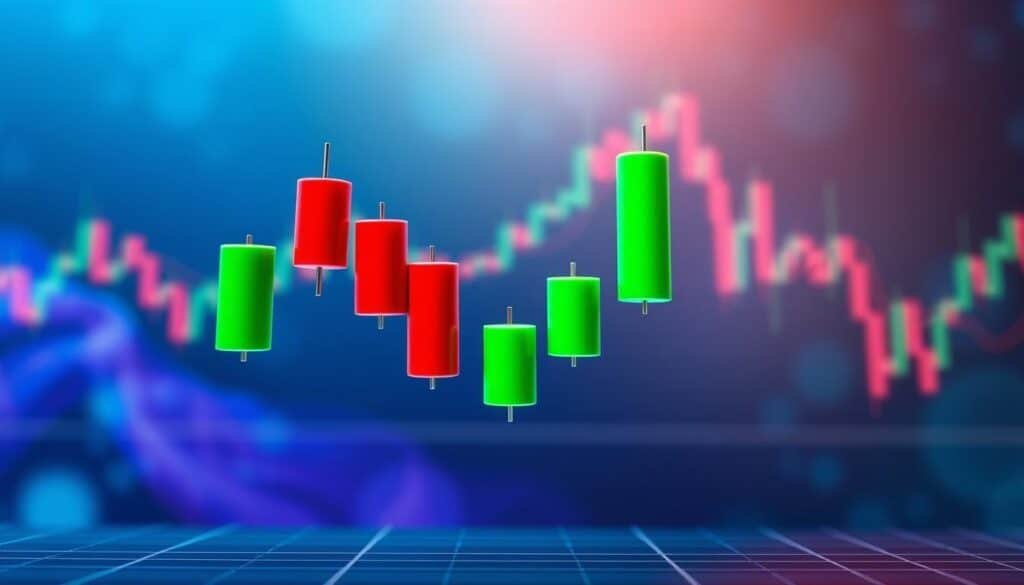
In a bullish engulfing the larger green candle fully covers the prior red body. It suggests a short-term shift toward buyers and a possible bounce or reversal.
Conversely, a bearish engulfing features a big red that engulfs the prior green candle. It often appears near a top and signals a possible bearish reversal.
Context, gaps, and prior trend strength
Context matters. An engulfing move that aligns with a prior trend reversal is stronger than one in the middle of a range.
Gaps and wide ranges amplify signals by showing forceful displacement of prior price. That extra momentum improves follow-through odds.
Evaluate trend strength first. Avoid fading a powerful uptrend with a single bearish engulfing unless higher-timeframe signals agree.
Position sizing and confirmation candles
Size conservatively when confirmation is limited. Increase position only with multi-factor confluence.
Require a confirming close: a higher closing candle after a bullish engulfing or a lower close after a bearish engulfing.
Place stops near the engulfed candle’s extremes. Immediate retests of the body midpoint can offer a tighter secondary entry with smaller risk.
| Feature | Bullish Engulfing | Bearish Engulfing |
|---|---|---|
| Where it’s strongest | After decline near support | Near a top or resistance |
| Confirmation | Higher close next candle; volume surge | Lower close next candle; rising sell volume |
| Stop placement | Below engulfed low | Above engulfed high |
| Trade tip | Use midpoint retest for smaller risk entries | Avoid in choppy range; wait for trend confirmation |
Doji playbook: when indecision precedes reversal
A doji signals a brief truce between buyers and sellers, not a finished verdict. Its tiny or absent body shows equilibrium, so treat the doji as an inflection cue that needs follow-up before you trade.
Reading long upper and lower shadows
Long upper shadows show failed rallies; long lower shadows show rejected sell-offs. Read which side lost control to judge likely direction.
Morning star and evening star combinations
The morning star runs: downtrend → doji → strong bullish candle. The evening star flips that: uptrend → doji → strong bearish candle.
Key rule: require the third candle to close decisively in the new direction and use the first candle’s midpoint as a reference for acceptance or rejection.
- No trade on a doji alone; wait for the next candle’s close.
- Place invalidation beyond the extremes of the indecision cluster.
- Combine volume expansion and momentum turns for higher conviction.
- Use stars on a higher timeframe, then refine entries on a lower timeframe.
- Log variations (dragonfly, gravestone) and outcomes to sharpen judgment.
Platform workflow: where to analyze and screen candlestick setups
Build a repeatable routine that moves ideas from scanners to execution. Start with broad scans, then confirm on detailed charts and exchange feeds.

TradingView charting and multi-timeframe layouts
Use TradingView for multi-timeframe layouts and overlays. Add moving averages, RSI, and volume to validate a candidate candle.
Save templates with your standard indicators to speed analysis and apply them to new assets.
Exchange charts on Coinbase and Binance
Check Coinbase and Binance for execution-level volume and order routing context. These charts help traders assess fills and slippage risk.
Data aggregators: CoinMarketCap and CryptoCompare
Use CoinMarketCap and CryptoCompare to vet liquidity, volatility, and overall market information before committing capital.
Pattern screening on altFINS
Scan with altFINS for candidate setups, then move shortlisted items to TradingView for confirmation.
| Step | Tool | Purpose |
|---|---|---|
| Scan | altFINS | Find pattern candidates fast |
| Confirm | TradingView | Multi-timeframe validation with indicators |
| Execution check | Coinbase / Binance | Volume, spreads, and order context |
| Market data | CoinMarketCap / CryptoCompare | Liquidity and asset metrics |
Risk management for crypto candlestick strategies
Risk rules separate repeatable winners from emotional losses in fast markets. Good rules define where you exit, how much you risk, and when to sit out. That structure preserves capital and improves decisions during volatile moves.
Stop placement: beyond the wick vs within the body
Placing a stop beyond the wick gives room for noise and protects against false spikes. It reduces the chance of being stopped on brief rejections but increases distance and position risk.
Stops inside the body or tighter to the pattern are cheaper in risk per trade. They accept a higher chance of a tap, so use them when liquidity is high and you need smaller risk.
ATR- and structure-based position sizing
ATR-based sizing scales position size to current volatility. Use ATR to set a stop distance and calculate units so dollar risk stays constant across varying price swings.
Structure-based sizing uses the distance to the pattern’s invalidation level. Measure from entry to invalidation and size so that your max loss aligns with your risk plan.
Avoiding overtrading and signal overlap
Limit concurrent trades that rely on the same thesis to reduce correlated drawdowns. Define a max daily loss and a number of attempts per setup to curb impulsive entries.
During heightened selling pressure, cut exposure and avoid trading into major news. Wait for candle closes before acting to prevent mid-bar emotional decisions.
| Topic | Rule | Practical tip |
|---|---|---|
| Stop philosophy | Beyond wick vs inside body | Choose based on volatility and time frame |
| ATR sizing | Normalize position by volatility | Risk fixed $ per trade using ATR distance |
| Structure sizing | Use invalidation distance | Size to risk percent; adjust on retest |
| Overtrading control | Set daily loss and attempts limit | Pause trading after limit reached |
Record the reason for each entry, add, reduce, and exit. Consistency in these risk rules matters more than trying to be exact on a single trade. Update stops and targets as the market gives new closes and clear information.
Common mistakes traders make when reading candlesticks
Seeing a setup where none exists is a common trap that costs traders money fast. Strict entry criteria for body size and shadow proportions help avoid false positives.
Forcing setups and ignoring trend context
Do not force a reversal off a single candle without higher-timeframe agreement. Counter-trend trades taken only on a visual cue often fail when the dominant trends remain intact.
Trading without confirmation or confluence
Indecision candles like doji need a follow-through candle to supply directional clarity. Require volume, support/resistance, or a momentum indicator to back the signal before entering.
- Warn against false sightings: insist on measurable size and shadow ratios.
- Avoid trades near illiquid tops or bottoms; whipsaws are common there.
- Chasing late entries after the impulse candle ruins risk/reward and increases stress.
- Use a checklist to fight confirmation bias and keep trade decisions objective.
- Track outcomes to learn which reversal and continuation setups you execute well.
- Practice with chart replay to refine recognition and preserve capital while learning.
| Common error | Why it hurts | Fix |
|---|---|---|
| Seeing a non-existent setup | Leads to low-quality entries | Apply strict size/shadow rules |
| No higher-timeframe check | Fades dominant trend | Require multi-timeframe alignment |
| Lack of confluence | Signals fail more often | Demand support, volume, or indicator match |
Patience beats being active for its own sake. Many missed trades cost less than forcing low-quality signals. Record and review each trade to improve over time.
Security first: protect your assets while you trade
Protecting your funds is the foundation of any trading plan. Even the best setups mean little if your asset custody is weak. Active traders must separate execution from long-term storage so losses from hacks or mistakes do not erase gains.
Why hardware wallets matter for active traders
Hardware wallets store private keys offline, isolating sensitive information from internet threats. This prevents malware, phishing, and exchange compromises from accessing your keys.
Keep long-term holdings in cold storage. Fund exchange accounts only with the amount you intend to trade. That workflow limits exposure while allowing quick market participation.
- Use strong authentication and enable withdrawal whitelists on exchanges to reduce attack surfaces.
- Document backup seed protocols and store them in secure, separate locations.
- Maintain wallet hygiene: update firmware and use verified apps to prevent avoidable breaches.
- Never share seed phrases or approve unknown signing requests—social engineering is common.
| Security Area | Action | Benefit |
|---|---|---|
| Cold storage | Hardware wallet for long-term asset custody | Keeps private keys offline and safe from online hacks |
| Trading account | Fund with limited balance and use 2FA | Reduces loss if exchange access is compromised |
| Exchange settings | Enable withdrawal whitelists and strong auth | Limits unauthorized transfers and improves control |
| Backup plan | Securely document seed phrases and recovery steps | Ensures recoverability if a device is lost or damaged |
Transparent security practices improve confidence and sharpen trading decisions during volatile periods. When custody is strong, traders can focus on price action, buyers and sellers, and execution without fear-driven mistakes.
Conclusion
Reading a clean close at a key level often separates noise from a real move. Chart signals compress price action into readable cues that help traders anticipate continuation or reversal with greater confidence.
Reliability rises when a signal aligns with support or resistance, volume, and simple technical analysis such as RSI or moving averages. Remember bullish setups like hammer and engulfing and bearish setups such as shooting star and dark cloud cover; green candle and red candle bodies show momentum and control.
Treat indecision candles like doji and spinning tops as invites to wait for follow‑through. Define invalidation beyond the body or wick, size positions to volatility, and use multi‑timeframe checks.
Start small: pick one or two patterns, practice on recent charts, log buyer and seller behavior, and tighten your playbook. Secure assets in cold storage so trading decisions stay calm and focused.
FAQ
What is the basic idea behind candlestick charts and why do traders use them?
Candlestick charts show open, high, low, and closing prices for a set time period. Traders use them because each candle visually summarizes buyer and seller control, momentum shifts, and short-term sentiment—helping to read market psychology in real time and make timely decisions.
How do I read the body and wicks to tell buyer vs seller pressure?
The body shows the net move between open and close; a larger body means stronger conviction. Wicks (shadows) reveal rejection at highs or lows—long upper wicks suggest selling pressure, long lower wicks imply buying support. Look at location within the trend for context.
What’s the difference between a green candle and a red candle in practice?
A green candle closes above its open and signals buyers finished the period stronger. A red candle closes below its open and signals sellers dominated. Neither guarantees continuation—pair with trend, volume, and indicators for confirmation.
Which timeframe should I use for signals: intraday scalps or swing trades?
Choose the timeframe that matches your strategy. Scalpers favor short charts (1–15 minutes) for fast entries and quick exits. Swing traders use 4H, daily, or weekly charts to capture larger moves and reduce noise. Always align signals across multiple timeframes for higher probability setups.
How do I confirm a reversal signal like a hammer or bullish engulfing?
Confirm with supporting evidence: rising volume on the reversal, the pattern forming near support or after a clear downtrend, and alignment with RSI or moving averages. A follow-through candle in the direction of the reversal increases reliability.
What are common bearish reversal signs at the top of an uptrend?
Look for long upper shadows (shooting star), a bearish engulfing candle that swallows prior gains, a dark cloud cover where a down close follows a gap up, and clusters of negative signals near resistance or trendlines.
When is a doji significant and how should I trade it?
A doji signals indecision when open and close are nearly equal. It becomes meaningful near support or resistance or when paired with other reversal signs. Wait for confirmation: trade only after a clear directional candle or indicator alignment to avoid false signals.
How can I use volume, RSI, and moving averages to validate a setup?
Volume expansion on a breakout or reversal supports conviction. RSI divergence can warn of weakening momentum. Moving averages define trend direction and dynamic support/resistance; a pattern that aligns with these tools offers stronger odds.
What’s a practical step-by-step to turn a signal into a trade?
Define a clear entry point, set a stop-loss based on recent structure or ATR, and determine a target or scaling plan. Plan position size using risk per trade, then execute only when confirmation criteria are met to limit emotional decisions.
How do I size positions and place stops for volatility in markets like Bitcoin and Ethereum?
Use volatility-adjusted sizing—calculate ATR to set stops beyond normal wiggle, then size the position so the dollar risk equals your predefined risk tolerance. Wider stops need smaller position sizes to keep risk consistent.
Where can I analyze and screen for reliable setups?
Use TradingView for charting and multi-timeframe layouts, and check exchange charts on Coinbase Pro or Binance for execution. Data sites like CoinMarketCap and CryptoCompare offer aggregated data, while scanners such as altFINS can help screen setups.
What are common mistakes traders make when reading candles?
Forcing patterns into the chart, ignoring the broader trend or support/resistance, trading without confirmation, and overtrading on low-probability setups. Maintain discipline and require confluence before risking capital.
How should I protect my assets while actively trading?
Prioritize security: use hardware wallets like Ledger or Trezor for long-term holdings, enable two-factor authentication on exchanges, use separate accounts for trading and cold storage, and follow best practices for keys and backups.

No comments yet