

Imagine a company with no CEO, no board of directors, and no central office. This is the basic idea behind a new type of entity built on the internet. A dao is run by rules written in computer code on a blockchain.
Members use tokens to vote on decisions directly. Finances are managed transparently through a shared digital treasury. This structure flips the traditional organization model on its head. Power moves from a few leaders to the entire community.
These entities grew from the world of cryptocurrency and Web3. They allow global groups to collaborate on projects, manage funds, and govern themselves without borders. Understanding this technology is key to seeing the future of work and organization.
This guide will walk you through how a decentralized autonomous organization works. We will cover its technical foundations, how voting happens, real-world examples, and important legal points. It’s crucial knowledge for anyone curious about the next wave of digital innovation. You can explore more about the potential of these new community-driven structures on our site.
Key Takeaways
- A DAO is an internet-native entity managed by coded rules instead of people in charge.
- Blockchain technology ensures all transactions and votes are secure and visible to everyone.
- Decision-making power belongs to the members, creating a flat, community-led structure.
- This model enables global collaboration without the need for a physical headquarters.
- Understanding DAOs is essential for grasping the future of online organizations and finance.
Introduction to Decentralized Autonomous Organizations in the Web3 Era
In the evolving landscape of Web3, a new form of collective action is taking shape, one governed by code rather than by a central authority. This represents a significant shift in how people can organize around common goals.
Understanding the DAO Concept
At its heart, this new type of entity is a member-owned community. Decision-making power is spread among all participants. This flips the script on traditional management.
What makes it unique? Key processes are automated by transparent computer programs. These rules are central to the group’s identity. This structure emerged directly from blockchain and cryptocurrency innovation.
Joining is remarkably simple. Individuals need only a governance token and an internet connection. This opens participation to members worldwide, regardless of background.
DAOs vs. Traditional Organizations
The differences between these new models and classic companies are profound. They affect everything from structure to daily operations.
| Feature | Traditional Organization | DAO Structure |
|---|---|---|
| Leadership | Hierarchical (CEO, Board) | Flat, Community-Led |
| Decision-Making | Top-Down | Bottom-Up, Token-Based Voting |
| Access & Participation | Often restricted by location or credentials | Global, based on token ownership |
| Transparency | Varies, often limited | High, with on-chain records |
This comparison shows a move toward more open and democratic organization. It empowers individuals directly.
The Evolution of DAOs and Their Impact on Modern Governance
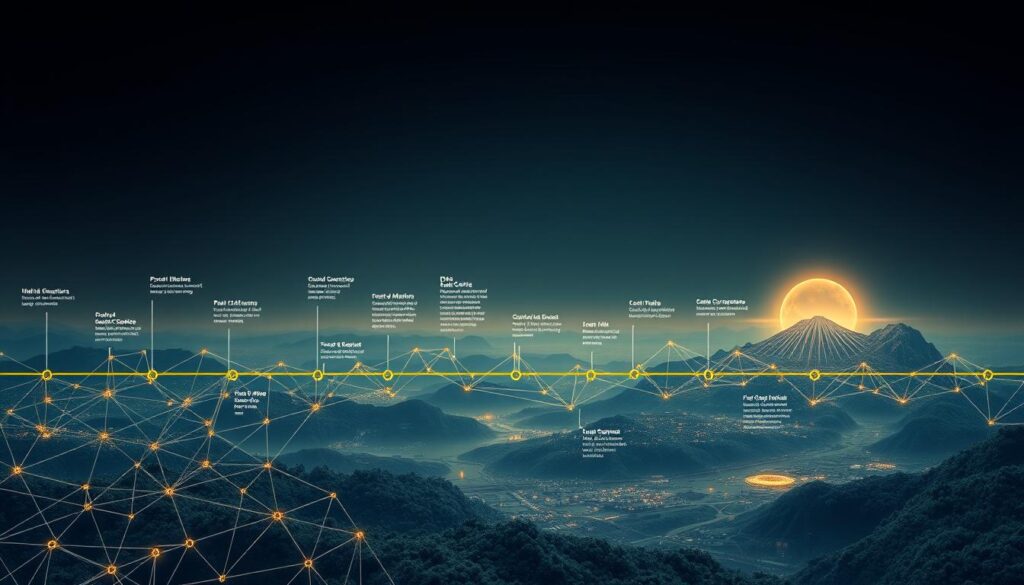
While the core ideas existed in the 1990s, the practical application of this new organizational form required specific technological breakthroughs. The concept gained real momentum around 2013 when blockchain technology provided the necessary foundation.
Historical Milestones and Key Developments
The most significant early example emerged in April 2016. “The DAO” launched as a venture capital fund on the ethereum blockchain. It raised over $150 million in funds through a token sale, becoming the largest crowdfunding campaign of its time.
This pioneering dao allowed token holders to vote on investment proposals. It represented the first major attempt at creating a fully member-governed entity. The structure challenged traditional investment organizations.
In June 2016, hackers exploited code vulnerabilities to drain $50 million worth of ether. The crisis threatened the entire Ethereum ecosystem. The community responded with a controversial hard fork that reversed the theft.
This security incident provided crucial lessons for future daos. It highlighted the importance of robust smart contract testing and effective governance mechanisms. The event shaped how subsequent community-led structures approached security.
Modern dao development continues to evolve with specialized models for various purposes. These community-driven entities demonstrate alternative approaches to collective decision-making. They continue influencing modern governance practices across different blockchain platforms.
Blockchain Technology and Smart Contracts: The Backbone of DAOs
The ability for global groups to collaborate without centralized control depends entirely on two key technological innovations. These community-driven structures rely on a powerful combination of secure record-keeping and automated execution.
This foundation enables transparent governance and trustless interactions among members worldwide. The system operates through coded agreements that execute automatically when conditions are met.
How Smart Contracts Automate Decision-Making
Smart contracts are self-executing programs that run on a blockchain platform. They contain the rules and logic that govern community decisions.
When members vote on proposals, these contracts automatically check if the required threshold is reached. If approved, the code executes the decision without human intervention.
This automation eliminates delays and ensures consistent application of community rules. The technology creates a system where governance happens through pre-written contracts.
Role of Blockchain in Securing DAO Operations
The blockchain provides a secure, transparent ledger for all activities. Every vote and transaction gets recorded permanently on the distributed network.
This blockchain technology prevents tampering and ensures complete visibility. Members can verify all operations through the public record.
The combination of smart contracts and blockchain security creates a robust foundation. It enables communities to manage resources and make decisions with confidence.
decentralized autonomous organizations DAO explained: Core Concepts and Functionality
The fundamental concepts governing these member-led digital collectives revolve around several key characteristics that distinguish them from traditional structures. These principles work together to create a unique operational framework.
Fundamental Principles Behind DAOs
Power distribution stands as a core tenet. Decision-making authority spreads across all participants rather than concentrating in a central team. This creates a truly democratic structure where every voice matters.
Automation through smart contracts enables seamless operations. Pre-programmed rules execute decisions automatically when voting thresholds are met. This reduces bureaucracy and increases operational efficiency.
Transparency is built into the foundation. All proposals, votes, and treasury actions record permanently on the blockchain. This creates unprecedented accountability for all community actions.
| Principle | Traditional Organization | DAO Model |
|---|---|---|
| Power Structure | Centralized hierarchy | Distributed among members |
| Decision Execution | Human managers implement | Automated smart contracts |
| Transparency Level | Limited visibility | Complete on-chain records |
| Member Participation | Restricted by position | Open to all token holders |

Member ownership aligns individual and collective interests. Governance tokens grant both voting rights and economic stake. This virtual organization model enables global collaboration through online platforms.
Users maintain control over their identities and data. The flat structure empowers participants directly. These principles create organizations that are more democratic and transparent than traditional corporate models.
Governance and Voting Mechanisms in DAOs
The heart of any member-led digital collective lies in its governance system. This framework determines how decisions get made and who has influence. Unlike traditional structures, power flows through digital tokens rather than hierarchical positions.

Distribution of Voting Power Through Tokens
Membership and voting rights come from owning special tokens. Your voting power typically matches the number of tokens you hold. Someone with 100 tokens has twice the influence as someone with 50.
This system creates alignment between member interests and collective success. Those with larger stakes have strong incentives to make good decisions. Their token value depends on the group’s performance.
However, power concentration remains a significant challenge. Studies show less than 1% of holders often control 90% of voting influence. This contradicts the ideal of distributed control.
Another issue is voter apathy. Many tokens granting voting rights go unused. Inactive members can stall crucial decisions and disrupt operations.
Implementing Transparency via on-Chain Proposals
All governance activity happens transparently on the blockchain. Members submit proposals for community review. Then token holders cast their votes through secure digital systems.
Every action records permanently for anyone to verify. You can see who voted, how they voted, and which proposals passed. This creates unprecedented accountability in organizational governance.
Different models exist for managing these processes:
- Direct democracy: All members vote on every proposal
- Representative system: Members delegate their voting power
- Committee structure: Smaller groups handle routine decisions
Real-world examples like Lido demonstrate sophisticated dao governance. Proposals move through discussion forums, consensus platforms, and finally on-chain execution. Specific thresholds ensure legitimate outcomes.
Real-World Examples and Case Studies of Successful DAOs
Several prominent initiatives showcase the diverse capabilities of token-based organizational models across different industries. These real-world examples demonstrate how community governance operates in practice.

Case Study: The DAO and Its Legacy
The pioneering dao launched in 2016 on the ethereum blockchain. It raised over $150 million as a venture capital fund. This early example allowed token holders to vote on investment proposals.
A security breach drained $50 million from the treasury. This incident highlighted critical vulnerabilities in smart contract design. Despite its failure, this project provided valuable lessons for future daos.
Case Study: ConstitutionDAO and Community Initiatives
ConstitutionDAO demonstrated remarkable community coordination in 2021. It raised $40 million from thousands of contributors to bid on a rare document. Though outbid, this initiative proved the power of collective action.
Other successful daos include Uniswap Foundation governing the world’s largest decentralized exchange. Lido DAO manages a major staking platform with significant market capitalization.
Creative projects like MoonDAO purchased space flight seats. PleasrDAO acquired unique cultural artifacts. These diverse applications show the versatility of token-based organizations. You can explore more about top dao use cases and examples for deeper insights.
Advantages, Challenges, and Legal Considerations of DAO Structures
Every innovation brings both opportunities and obstacles, and the rise of member-led digital collectives is no exception. These structures offer groundbreaking approaches to governance while facing significant practical and legal hurdles.
Pros and Cons of Decentralized Governance
The primary advantage lies in true democratization. All token holders can participate in decisions regardless of location or background. This creates unprecedented global collaboration.
Transparency is another major benefit. Every vote and treasury action records permanently on the blockchain. This visibility creates strong accountability among members.
However, significant challenges exist. Voting processes can be slow when thousands of holders across time zones participate. Security vulnerabilities in the code are difficult to fix after deployment.
| Aspect | Advantage | Challenge |
|---|---|---|
| Decision-Making | Democratic participation | Slow voting processes |
| Transparency | Full visibility of actions | Complexity for new users |
| Security | Tamper-resistant records | Difficult code updates |
| Legal Status | Innovative structure | Uncertain regulatory standing |
Legal Status and Regulatory Developments in the US
The legal standing of this type of entity remains unclear across jurisdictions. Wyoming made history in July 2021 by becoming the first state to recognize these structures as legal entities.
Utah followed in March 2023 with its own law treating qualifying groups as limited liability companies. Meanwhile, the SEC has determined that some tokens constitute unregistered securities.
This evolving landscape affects how these communities manage funds and interact with traditional systems. Understanding NFT governance models provides additional insight into these complex legal frameworks.
Conclusion
Looking ahead, the evolution of blockchain-powered organizational structures continues to reshape how communities collaborate globally. These innovative models represent a fundamental shift toward member-driven governance.
The technology offers remarkable advantages like transparency and global participation. Token holders gain direct voting power in community decisions. This creates alignment between individual and collective success.
However, significant challenges remain around legal frameworks and technical security. Voter participation and power concentration require ongoing attention. These community-led projects are still experimental in many ways.
Understanding this emerging organizational type is increasingly important. As the technology matures, these structures may transform traditional business models. The future promises more sophisticated governance mechanisms and broader applications.
This ongoing experiment in digital collaboration demonstrates that alternative approaches to collective action are possible. The journey toward more democratic and transparent organizations continues to evolve.
FAQ
What is the main purpose of a DAO?
The main purpose is to create a member-owned community without central leadership. It operates through rules encoded in smart contracts on a blockchain like Ethereum. This allows groups to manage funds and make decisions collectively.
How do people participate in a DAO’s governance?
Participation typically requires holding the project’s specific token. These tokens often grant voting rights. Members can then cast votes on proposals that dictate the entity’s actions, from fund allocation to project changes.
Are DAOs considered legal entities?
The legal status is evolving. Some US states, like Wyoming, have passed laws recognizing these structures as legal entities. However, in many jurisdictions, they exist in a gray area, posing challenges for liability and regulation.
What are the biggest risks associated with DAOs?
Key risks include smart contract vulnerabilities, which can lead to fund exploits, and regulatory uncertainty. Disagreements within the community can also lead to forks, splitting the project and its treasury.
Can anyone join a DAO?
A> In most cases, yes, if it is an open or permissionless platform. This usually involves acquiring the governance token on an exchange. Some groups may have membership requirements, but the ethos favors open access.
What is a famous example of a DAO?
A well-known case is ConstitutionDAO, which raised millions in Ether to bid on a copy of the U.S. Constitution. Although unsuccessful, it demonstrated the power of rapid, collective fundraising and action.
How is voting power determined in these organizations?
Voting power is commonly proportional to the number of tokens a member holds. This is often called token-weighted voting. Some platforms use other models, like quadratic voting, to reduce the influence of large holders.

No comments yet