
This article frames the comparison to help creators, collectors, and brands decide which format suits long-term utility and value. In the past two years, major brands like Nike and Adidas explored token-based projects, and industries from gaming to finance adopted these digital assets recorded on blockchain.
At a basic level, static nfts keep metadata fixed while dynamic nfts can change with updates, conditions, or time. You will learn clear definitions, how ownership works, where metadata is stored, and how smart contracts or external data can alter tokens.
The practical focus is on design differences that shape market perception, utility, engagement, and fraud resistance rather than price guesses. Later sections will cover immutability vs. mutability, storage and verification, and best-fit use cases in art, games, sports, and real assets.
For more background on formats and industry examples, see this concise guide at Static vs Dynamic NFT overview.
Understanding NFTs, Metadata, and Ownership on Blockchain
Unlike a dollar or bitcoin, an nft cannot be swapped one-for-one because each item has unique traits stored on the blockchain. That uniqueness is what makes non-fungible tokens useful for collectors and creators.
What sets non-fungible tokens apart
Fungible tokens like cryptocurrencies are interchangeable. One coin equals another. In contrast, each nft holds a distinct identifier and attributes. This prevents two tokens from being identical, which affects value and rarity.
Why metadata matters
Metadata contains descriptive fields, media links, and trait lists that make a digital asset verifiable. Marketplaces use these fields to show rarity, provenance, and creator details. Collectors read metadata to confirm authenticity.
How smart contracts record ownership and transfers
Smart contracts automate creation, rule enforcement, and peer-to-peer transfers. Standards like ERC-721 ensure wallets and marketplaces handle tokens consistently. On-chain records provide public proof of ownership and transfer history.
| Feature | Fungible tokens | Unique NFTs (immutable) | Updatable NFTs |
|---|---|---|---|
| Identifiability | Low | High | High |
| Metadata change | No | No | Yes |
| Use cases | Payments | Digital artwork, certificates | Games, event-linked items |
For a deeper comparison of static and updatable formats, see this short guide at static vs updatable formats.
What Are Static NFTs?
Static tokens lock their descriptive record at minting, so the on-chain details never change.

Definition: A static nft is immutable. Once minted, its metadata and associated data remain permanent. Collectors and marketplaces treat that record as the single source of truth.
Why immutability matters
Think of photo metadata — the timestamp, dimensions, and file type. That info normally does not change. A static nft works the same way: fixed data makes provenance simple to verify.
Common examples and where they shine
Early market examples proved the format. Beeple’s “Everydays: The First 5000 Days” sold for $69 million, and Jack Dorsey’s first tweet sold for $2.9 million. Both stayed unchanged because their underlying metadata never updated.
- Use cases: digital art, collectibles, legal documents, and certifications.
- Value: permanence supports provenance and trust for artists and buyers.
- Trade-off: to change key facts you must mint a new token rather than edit the original record.
| Feature | Static nft | When to use |
|---|---|---|
| Metadata | Permanent | Art, certificates |
| Verification | Easy | Provenance checks |
| Updatability | None | Re-mint for changes |
What Are Dynamic NFTs?
Some tokens are built to evolve, changing their metadata and visuals as events occur or rules trigger updates.
Definition and core idea
dNFTs are tokens that can change over time. Their on-chain record or referenced media updates when conditions or oracles push new data. This gives an nft the ability to reflect real-world events instead of staying frozen.
Real-world linked changes
In sports, a tournament token might shift colors during matches and lock to the winner at the end. Performance-driven updates let collectibles mirror athlete stats or match outcomes in near real time.
Notable examples
Early game design used mutable tokens: CryptoKitties let breeding alter cat traits during gameplay. Another example used Chainlink oracles to reveal frames of a short film as purchases happened.
Benefits and trade-offs
- Benefits: greater flexibility, ongoing engagement, and richer experiences for users.
- Trade-offs: more complex contracts, extra data dependencies, and higher verification needs to guard against bad updates.
| Aspect | How dNFTs behave | Practical impact |
|---|---|---|
| Metadata | Updatable | Reflects events, time, and performance |
| Use cases | Games, sports collectibles, evolving art | Interactive engagement and utility |
| Risks | Oracles and permissions | Greater security and verification work |
Well-defined rules and reliable data inputs are essential before moving on to how these tokens work under the hood.
How Dynamic NFTs Work: Smart Contracts, Oracles, and Live Data
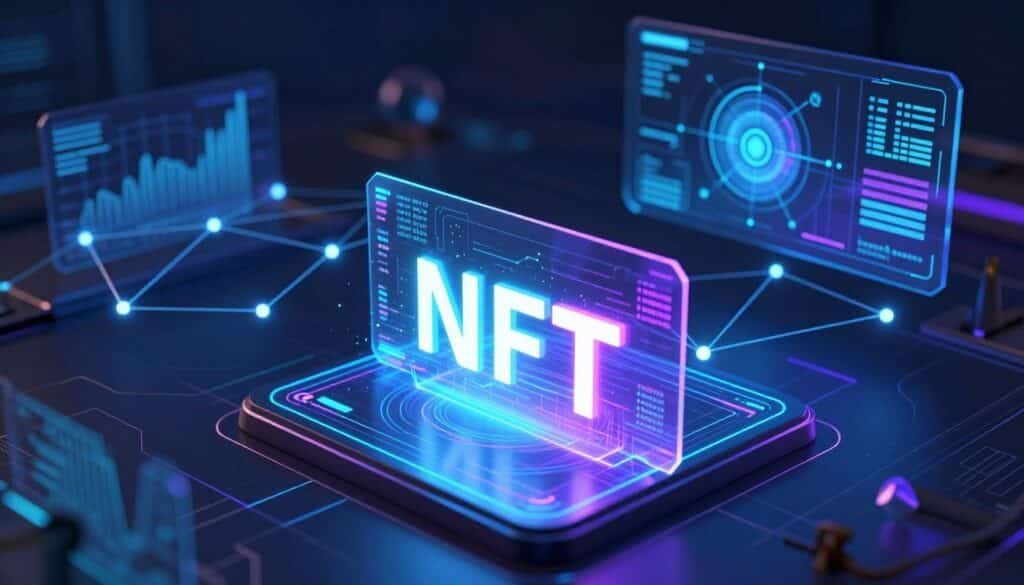
Oracles bridge blockchains and the outside world so tokens can respond to live events. A smart contract on its own cannot access off-chain facts, so it depends on trusted feeds to receive information that triggers changes.
Oracle-driven updates
Oracles fetch real-world data and deliver it to a contract that defines update rules. Once the contract receives that feed, it evaluates conditions and decides whether to apply changes.
Typical lifecycle
- Minting: the token is created with initial metadata.
- Define triggers: creators specify conditions that cause updates.
- Receive data: oracles push live information to the contract.
- Execute updates: the contract runs its logic and changes the token state.
- Refresh metadata: the token URI or referenced file updates so marketplaces show the new view.
Security and permissions
Who can update varies: the owner, creator, a DAO or multisig, or automated rules may hold update rights. Tight access control is essential to prevent unauthorized changes.
Risks include compromised keys or overly broad rules that let attackers alter metadata and reduce provenance. Buyers need clear verification: where data is stored, who controls updates, and an audit trail of changes.
| Stage | What happens | Why it matters |
|---|---|---|
| Oracle input | External event data arrives | Enables real-world linkage |
| Contract logic | Evaluates conditions and runs updates | Ensures predictable changes |
| Metadata refresh | URI or file is updated | Wallets show current state |
For example, the RRC short film used Chainlink oracles to release extra frames as purchases occurred, showing how oracles can sequence content and keep users engaged. These mechanics affect storage, bandwidth, and authenticity checks, which we compare next.
Dynamic NFTs vs Static NFTs: Key Differences That Impact Value and Use Cases
How a token updates—or stays fixed—after minting drives cost, verification, and who will find it valuable.
Immutability vs mutability
Fixed tokens keep metadata unchanged after minting. That permanence simplifies provenance and makes verification easier.
Mutable tokens can update metadata or state based on events. Updates add utility but require clear rules about who may change a token.
Storage space and bandwidth
Fixed items use less storage and lower bandwidth since files are written once. Mutable designs need refreshes, more hosting, and extra calls that increase costs.
Security and authenticity
Static records are simpler to audit and resist fraud because the record does not change. Mutable assets need trusted update permissions and oracle integrity for strong verification.
Best-fit use cases
Fixed tokens suit digital art, documents, and certificates. Changeable tokens work well for games progression, sports collectibles, and real estate status updates.
User experience and long-term engagement
Mutable models can re-engage owners with evolving rewards. Fixed models offer a stable, easily understood collectible that preserves provenance.
| Aspect | Fixed tokens | Changeable tokens |
|---|---|---|
| Post-mint change | None — metadata permanent | Allowed — metadata or state can update |
| Storage & bandwidth | Low — single storage instance | Higher — frequent refreshes, hosting needs |
| Security & verification | Easy audit, strong authenticity | Depends on permissions and oracles |
| Best use cases | Art, certificates, archives | Games, sports collectibles, real estate updates |
Creators deciding between formats should weigh maintenance, trust, and the desired level of owner interaction. For more implementation notes see dynamic nfts implementation guide.
Conclusion
A simple rule of thumb helps: keep things permanent when provenance matters, allow updates when interaction matters.
Core takeaway: static nfts lock metadata for permanence, while dynamic nfts change by rules or inputs. That difference creates distinct strengths for creators and collectors of non-fungible tokens.
Choose by intended use. Finished art and certificates often fit static nfts. Evolving projects, games, and interactive drops benefit when a token can update.
Remember the key practical checks: verification and trust, storage and bandwidth, permissioning and security, and how updates shape long-term ownership experience.
This article should serve as a reference when comparing drops, evaluating utility claims, or planning digital property. List the things that can change in your project — if nothing should change, a static approach is usually cleaner.
FAQ
What is the main difference between a static token and one that can change over time?
A static token stores metadata that stays the same after minting, preserving the original artwork or certificate exactly as issued. A token that updates uses smart contracts and external data feeds to alter its metadata or appearance based on conditions like time, performance, or real-world events.
How does metadata affect ownership and value of digital artwork and collectibles?
Metadata contains the asset’s descriptive details, provenance, creator info, and links to media. Accurate metadata helps marketplaces, wallets, and buyers verify authenticity, track royalties, and assess rarity — all factors that influence market value and trust.
Can smart contracts alone update a token’s content or do they need external data?
Smart contracts execute rules on-chain but often rely on oracles to pull real-world data. Oracles feed events like sports scores, time triggers, or API inputs so the contract can apply updates; without external data, on-chain changes are limited to internal state and user actions.
What are common examples of unchanging tokens in the market?
Common examples include digital art sold on OpenSea, academic certificates issued on platforms like Blockcerts, and collectibles with fixed traits such as CryptoPunks. These items remain identical to their minted form throughout their lifecycle.
Where do tokens that evolve over time offer the most benefit?
Evolving tokens work well in gaming, fantasy sports, performance-linked collectibles, and dynamic loyalty programs. They boost engagement by reflecting in-game progression, athlete performance, or time-based rewards, creating ongoing value for holders.
How do oracle-driven updates work for tokens tied to real-world events?
Oracles act as bridges, fetching verified external data (like match results or price feeds) and relaying it to smart contracts. The contract then triggers state changes or metadata updates based on predefined rules, ensuring the token reflects the external outcome.
Who can authorize updates to an evolving token, and how is that controlled?
Permission models vary: some contracts allow only the original creator or a multisig wallet to push updates; others let community-governed DAOs or predefined oracles trigger changes. Access controls are coded into the smart contract to limit who can modify the asset.
Are evolving tokens more vulnerable to fraud or manipulation?
They can be if oracles or update mechanisms are weak. Compromised data feeds, poorly written contracts, or centralized control points increase risk. Strong oracle networks, audited contracts, and decentralized governance reduce manipulation threats.
How do storage and bandwidth needs differ between immutable and updatable tokens?
Immutable tokens often store media off-chain (IPFS, centralized hosts) with fixed links, minimizing update complexity. Updatable tokens may require on-chain pointers that change, additional metadata versions, and more frequent reads/writes, increasing storage and bandwidth demands.
Which type is better for long-term provenance and legal documents?
Immutable tokens suit legal documents, certificates, and archival art because they preserve a verifiable, unaltered record. For documents that must reflect ongoing status (like a title with liens removed), an updatable approach with transparent audit trails may be preferable.
How do marketplaces and wallets handle tokens that change over time?
Many marketplaces and wallets fetch live metadata each time an asset is viewed. For evolving tokens they display current state and often show history or previous versions. Compatibility depends on standards like ERC-721/1155 and how platforms implement metadata refreshes.
How should artists and game studios choose between unchanging and updatable tokens?
Choose unchanging tokens for fixed artworks, limited editions, and certificates where permanence matters. Choose updatable tokens for interactive art, games, and collectibles that benefit from progression, rewards, or integration with live data to increase engagement.
Do royalties and secondary sale fees work the same for both token types?
Yes, royalties are enforced at the contract level and can apply to either model. The contract determines fee logic; for updatable tokens, creators can also code conditional rewards tied to specific states or triggers to incentivize continued interaction.
Can a token switch from immutable to updatable after minting?
It’s possible only if the original contract was designed to allow such a transition. Otherwise, immutability prevents later changes. Planning for flexibility at the design stage enables future updates without breaking provenance.
What role do standards like ERC-721 and ERC-1155 play in token behavior?
ERC-721 defines unique token ownership and metadata links, while ERC-1155 supports batch assets and semi-fungible use cases. Both can support immutable and updatable designs; proper implementation determines how marketplaces and wallets interpret and display the asset.

No comments yet