

This overview explains how a small Central American nation became the first country to declare bitcoin legal tender and what that decision meant in practice. The measure passed with a 62–84 vote and took effect on September 7, 2021, backed by a $150 million trust and a $30 credit via the Chivo wallet to boost adoption.
At launch, merchant acceptance was mandatory and BTC transactions were exempt from capital gains tax. Early public polling showed strong opposition and low understanding among people, while international bodies raised concerns about transparency and environmental impact.
Policy shifts followed: in 2024 IMF-linked changes scaled back mandates and the government wound down Chivo, and in early 2025 the country rescinded bitcoin’s legal tender status. For a deeper review of the legal framework see the official analysis, and for practical context on market access see guidance on how to buy bitcoin.
What the Bitcoin Law Did: From “Bitcoin Legal Tender” to Policy Rollback
The statute transformed a digital token into official money, giving it equal legal force with the U.S. dollar for payments across the country.
The measure defined the asset as unrestricted legal tender for public and private transactions after September 7, 2021. It created a $150 million stabilization fund and launched the Chivo wallet with a $30 bonus to spur rapid adoption.
Merchants initially faced a mandate to accept the new currency, which forced changes to point-of-sale systems and payment processing. The law exempted transactions from capital gains tax and offered residency incentives for some foreign investors.
By late 2024, IMF conditions led the government to remove mandatory acceptance, stop tax payments in the digital asset, reduce purchases, and wind down Chivo. A 2025 amendment then limited use to voluntary private payments.
- Immediate effect: compulsory acceptance and tax exemptions sped early use.
- Rollback effect: merchants and consumers shifted back to optional cryptocurrency payments.
- Purpose: the experiment aimed to balance innovation with macro and AML/CFT risk reduction.
Key Timeline: From September 2021 Adoption to 2025 Rescission
A rapid sequence of political moves and market shocks shaped the country’s bold monetary experiment. The plan was announced in early June 2021 and the assembly approved the measure by a 62–84 vote days later.
June–September 2021: Announcement to effective date
On June 5–9, President Nayib Bukele presented a fast timetable. By September 7, 2021, the change took effect and the token became legal tender across the country.
Launch day realities
Launch day saw wallet outages and intraday price drops. The government bought BTC during dips and all businesses were required to accept digital payments under the new rule.
Payments in the token were exempt from capital gains tax, but technical problems and volatility limited everyday use.
2022–2023: Ambitious plans and slow adoption
Plans for Volcano Bonds and a themed city met market headwinds; bond prices fell about 30% by December 2021 and bond offerings were postponed in March 2022.
Surveys showed only 14–20% of businesses accepted BTC and remittances using crypto stayed below 2%. Reports of hacked wallets in 2023 further damped confidence.
2024–2025: IMF terms and rescission
In late 2024 conditional agreements removed mandatory acceptance and tax payment rules. An amendment in early 2025 rescinded legal tender status, closing this chapter.
| Period | Key events | Impact |
|---|---|---|
| June–Sept 2021 | Announcement, legislative vote, Sept 7 effective date | Rapid adoption push, technical outages, mandatory acceptance |
| Late 2021–2022 | Government BTC purchases (~$85.5M), market crash, Volcano Bonds announced/postponed | Asset value decline, reduced investor confidence |
| 2022–2023 | Low merchant uptake (14–20%), 1.9% remittance use, Chivo hacks | Limited day‑to‑day adoption |
| 2024–2025 | IMF conditions, mandate removal, 2025 rescission | Policy rollback; media assessments followed (critical coverage) |
Implementation on the Ground: Chivo Wallet, Transactions, and Remittances
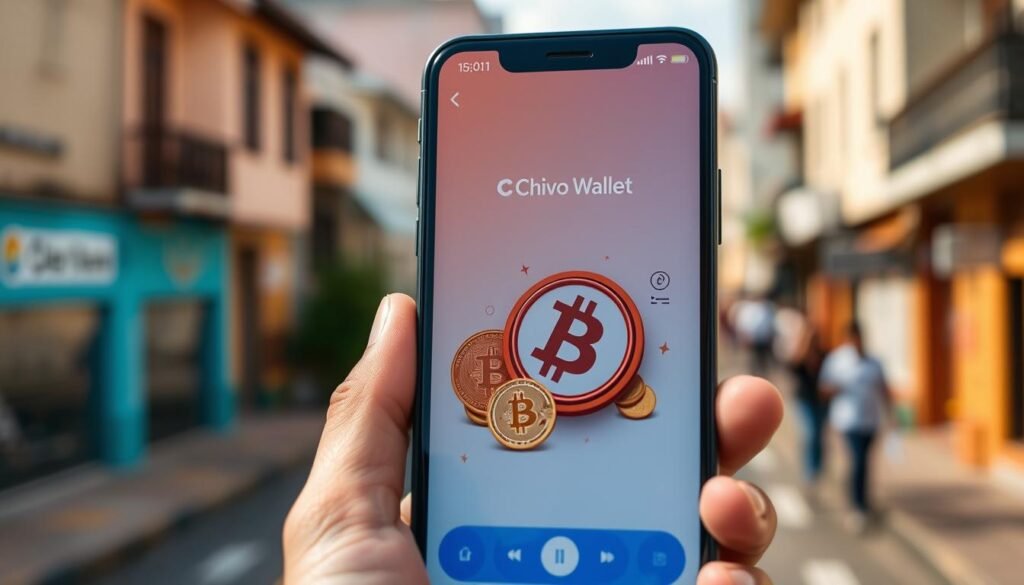
The launch quickly became a stress test for servers, consumer trust, and basic payment habits. The chivo wallet roll-out drew three million downloads in weeks, but outages and identity-theft cases dented confidence.
Rollout and app adoption
Users surged to claim the $30 incentive, overwhelming servers. Fraudsters exploited bonus flows, capturing funds from some accounts.
Many people installed the app, yet monthly active rates fell sharply after incentives ran out.
Usage and merchant uptake
Bank data showed a near-zero share of transactions initially, and surveys later found about 14–20% of businesses had processed any BTC payments.
Merchants raised concerns about pricing gaps, accounting, and chargeback uncertainty when accepting a volatile payment asset.
Remittances and access limits
Crypto remittances reached roughly 1.9% of flows and sometimes cost more than traditional channels for respondents. Limited internet and device access kept many from using bitcoin for routine money transfers.
These ground-level realities shaped public reaction and helped drive the later policy shift. For a practical take on crypto as an investment, see is cryptocurrency still a good investment.
Economic and Policy Impacts: Markets, Government Strategy, and the IMF
The government’s large BTC purchases reshaped market perceptions and raised tough questions about timing and risk management. Starting in September 2021 the treasury bought roughly 400 BTC initially and held about $85.5 million of the asset by January 2022. Paper losses during the 2021–22 downturn dented fiscal optics and fed investor caution.

Government purchases, bond pricing, and investor sentiment
Announcements like Bitcoin City and Volcano Bonds pushed sovereign spreads wider. Bond prices dropped about 30% in December 2021 as markets priced higher risk premia.
Timing of purchases mattered. Volatile markets turned asset accumulation into a source of headline risk and negative sentiment for foreign investors.
International Monetary Fund conditions and the shift to voluntary use
The international monetary fund publicly urged a halt to legal tender status in January 2022 over financial stability, AML/CFT, and consumer protection concerns.
In December 2024 a $1.4 billion program conditioned rollback to voluntary use, removal of mandates, and a wind‑down of the state wallet.
Tourism, foreign investment signals, and the broader economy
Media attention and niche tourism gains appeared in places like El Zonte, but broader economy effects were mixed.
Limited internet and fiber access also constrained fintech uptake, highlighting that infrastructure and clear rules are needed to let safe private sector experiments scale.
| Area | Effect | Policy response |
|---|---|---|
| Government BTC holdings | Paper losses then partial recovery | Reduce purchases; mark-to-market transparency |
| Bond markets | ~30% price fall after bond plans | Postpone Volcano Bonds; tighter fiscal messaging |
| IMF relations | Concerns on stability and AML/CFT | $1.4B program; voluntary use requirement |
Environmental Footprint: Energy, Geothermal Plans, Water, and E‑waste
Adding industrial mining load prompted immediate worries over access, reliability, and household equity. Global estimates put bitcoin’s energy draw near 83.91 TWh in October 2021 — about 13 times this country’s annual use — so even modest mining add‑ons could stress supply.
About 11% of households lacked direct electricity, which raised equity concerns if miners consumed large shares of local generation.

Geothermal capacity and feasibility
The government touted 204.4 MW of geothermal potential and a volcano‑fueled city. Yet transmission limits, investment gaps, and timelines made firm scaling uncertain.
Water and local protests
Water access was uneven; surveys found many received service for under six hours. New wells and solar sites linked to mining sparked protests near the Lempa River and other communities.
E‑waste from mining hardware
ASIC lifecycles of six to twelve months create fast turnover. Localized criticism surfaced in Berlín and Usulután over disposal and recycling capacity.
| Issue | Data point | Local effect |
|---|---|---|
| Energy scale | 83.91 TWh (global, Oct 2021) | Potential grid strain; reliability risks |
| Geothermal capacity | 204.4 MW installed | Limited by transmission and funding |
| Water access | Many households | Protests; competing uses |
| E‑waste | ASICs: 6–12 month life | Disposal pressure in small towns |
These environmental factors affected public debate about using a digital currency as legal tender and shaped adoption choices. Policymakers had to weigh mining externalities separately from currency use to respond to growing concerns.
Public Opinion and Business Response inside El Salvador
Early polling showed clear resistance. Most citizens preferred familiar money for daily use and reported little confidence in the new payment option.
Surveys on confidence, preferred currency, and reported usage over time
A September 2021 poll found 68% disagreed with the change and nine in ten lacked a clear understanding. By November 2021, 91% of respondents preferred the U.S. dollar.
Reported use fell year-over-year: 25.7% (2021), 21% (2022), 12% (2023), and 8.1% (2024). Early bank data showed negligible transaction share and remittances at about 1.9%.
Merchant acceptance, sectoral differences, and the “Bitcoin Beach” effect
Only 14–20% of businesses accepted the asset by early 2022. Tourist nodes such as Bitcoin Beach saw higher adoption, but most sectors stuck with the dollar for stability.
- App downloads surged but monthly active use dropped sharply after incentives ended.
- Access limits — connectivity and device gaps — kept many people from using bitcoin for routine payments.
- Regulatory change removed mandatory acceptance and let merchants choose, reducing compelled adoption.
el salvador bitcoin law: What It Means Now for Currency, Crypto, and Policy
After the IMF agreement and the January 2025 amendment, the country shifted from a required model to a voluntary one. Bitcoin lost formal legal tender status and may now be used only when both parties agree.
The practical effects are straightforward. Tax payments in BTC ended, mandatory merchant acceptance stopped, and the state reduced its role in the public wallet. The U.S. dollar remains the dominant currency for daily commerce and government accounting.
The government still promotes tech and crypto innovation while avoiding mandates. It hosted the PLANB Forum 2025 and reportedly grew a strategic BTC reserve to over 6,000 coins by March 2025. Those moves aim to attract investment without forcing adoption.
Remittances and transactions in BTC remain a small share of flows; traditional rails continue to serve most users. Clear, predictable rules for voluntary use help businesses plan pilots, sandboxes, and private-sector cryptocurrency services.
- Current status: No nationwide obligation to accept BTC; use is private and consensual.
- Practical impact: Dollar-based economy with optional crypto payments for willing parties.
- Policy outlook: Focus on innovation support, regulatory clarity, and macro stability.
Conclusion
What started as an ambitious move to modernize payments soon revealed practical limits in infrastructure and trust.
The decision to adopt bitcoin as legal tender in september 2021 made the country the first country to try this at scale. Early app problems with the chivo wallet and low merchant uptake limited everyday transactions and remittances.
The government and president nayib bukele faced market swings that affected public finances. Under an international monetary fund program, mandatory acceptance and tax treatment changed, and the statute moved to voluntary use.
Key lessons are clear: prioritize access, clear rules, and user‑centric design before scaling money‑like payments. The dollar remains dominant, but cautious, regulated experiments can inform future policy.
FAQ
What did the 2021 law change about bitcoin’s status?
The 2021 measure declared the cryptocurrency as legal tender alongside the U.S. dollar, requiring businesses to accept it for goods and services and allowing taxes and public payments in crypto. The intent was to expand payment options, speed remittances, and attract investment, though later policy adjustments reduced mandatory requirements.
When did the country adopt and later roll back the legal tender rule?
Authorities announced the plan in mid-2021, the legislature approved it that September, and the policy took effect immediately. Over the following years, a combination of market shifts and external financing conditions led to removal of the mandatory acceptance rule and eventual rescission of legal tender status by 2025.
How did the government try to support use of the cryptocurrency?
Officials bought units for the national treasury, promoted infrastructure projects like a themed economic zone and municipal bonds tied to mining and mining-backed securities, and launched a national wallet app to facilitate peer-to-peer payments and remittance receipts.
What was the Chivo wallet and how well did it work?
Chivo was the government-backed mobile app for sending, receiving, and converting crypto into dollars. The rollout faced technical problems, reports of identity theft, and uneven adoption. Usage picked up among some users but many merchants relied mainly on dollars.
Did people widely use crypto for daily purchases and remittances?
Adoption remained mixed. Surveys and transaction data showed limited everyday retail use, with many citizens preferring the dollar for routine purchases. Remittance flows saw some crypto use, but most migrants continued using traditional channels due to familiarity and network coverage.
How did markets and investors react to the policy?
Initial investor interest and international attention increased, but volatility in crypto markets and concerns about fiscal risks dampened sentiment. Bond pricing, sovereign risk perceptions, and investor appetite were affected by the government’s purchases and project financing plans.
What role did the International Monetary Fund play?
The IMF cautioned about fiscal, financial stability, and consumer protection risks. As negotiations progressed, the fund pressed for more conservative currency treatment, influencing the shift from mandatory acceptance to voluntary use and helping shape the eventual undoing of legal tender status.
Were there environmental concerns tied to mining plans?
Yes. Proposals to power mining with geothermal energy and build a dedicated city prompted debates over energy allocation, water use, and e‑waste. Critics raised issues about grid strain, environmental permits, and long‑term sustainability of hardware disposal.
How did businesses respond across sectors?
Response varied. Some tourism and tech-focused businesses embraced crypto to attract niche visitors, while small retail and service providers often continued accepting only dollars due to conversion costs, limited internet access, and daily cash needs.
What did public opinion surveys show about trust and currency preference?
Polling indicated low sustained confidence in the cryptocurrency as a primary medium of exchange. Many respondents preferred the dollar for stability, while a minority supported crypto for investment or remittance savings. Sentiment shifted over time with market swings and government changes.
How did the policy affect remittance fees and service options?
The promise of lower fees via crypto was only partially realized. Some migrants used crypto to save on transfer costs, but conversion friction, volatility, and limited acceptance meant many still relied on established remittance providers for reliability.
What happened to the government’s crypto holdings and projects after policy changes?
Officials adjusted strategies, including re-evaluating public holdings and scaling back ambitious projects. Financial pressures and international conditions led to greater emphasis on fiscal stability and alignment with lenders’ recommendations rather than crypto‑centric development plans.
Does the country still allow cryptocurrency use now that mandatory rules ended?
While mandatory acceptance was removed and legal tender status rescinded, private parties remain free to transact voluntarily in crypto. Businesses can choose to accept it, and wallets and exchanges continue to operate under applicable regulation and oversight.
What lessons emerged for other countries considering similar moves?
Key takeaways include the need for strong consumer protections, clear regulatory frameworks, reliable technical infrastructure, contingency planning for volatility, and coordination with international financial partners to manage fiscal and systemic risks.

No comments yet