

This short guide explains how airdrop scams have grown in the crypto space and what U.S. users should watch for.
Attackers often mimic real projects or influencers to harvest information or trick a wallet into dangerous approvals.
Real airdrops reward early supporters and are announced on official sites and verified social accounts. Fraudsters, however, use phishing pages, fake profiles, and unsolicited tokens that include malicious links.
This guide gives clear, practical steps to spot fraud fast. You will learn red flags, how to check links and domains, and what to do if you suspect a problem.
Protect yourself by verifying announcements, never sharing private keys or seed phrases, and being cautious before connecting a wallet to unfamiliar sites.
Why this how-to guide matters for users in the United States
Many American users encounter unsolicited token offers on social media and messaging apps. These posts can appear in feeds, group chats, replies, or direct messages and often link to a quick “claim” page that asks for sensitive information.
U.S. regulators and consumer groups such as the FTC and the California DFPI have logged patterns: phishing links, fake claim sites, and requests for upfront fees. Official project announcements for airdrop events are usually cross-posted on verified sites and consistent channels.
The practical impact for a potential victim in the United States includes financial loss, identity exposure, and low odds of recovering funds once a wallet approval is granted on-chain.
- Check announcements across verified project websites and official social accounts before interacting.
- Never share seed phrases and review contract approvals carefully.
- Report suspicious offers to official channels and consumer portals.
Use this guide as a proactive framework to validate offers, confirm sources, and escalate questionable activity through the proper reporting media.
Legitimate airdrops vs. scams: understanding the difference
Authentic distributions are planned and public. Projects publish clear timelines, eligibility snapshots, and step-by-step claim instructions on blogs and verified social accounts.
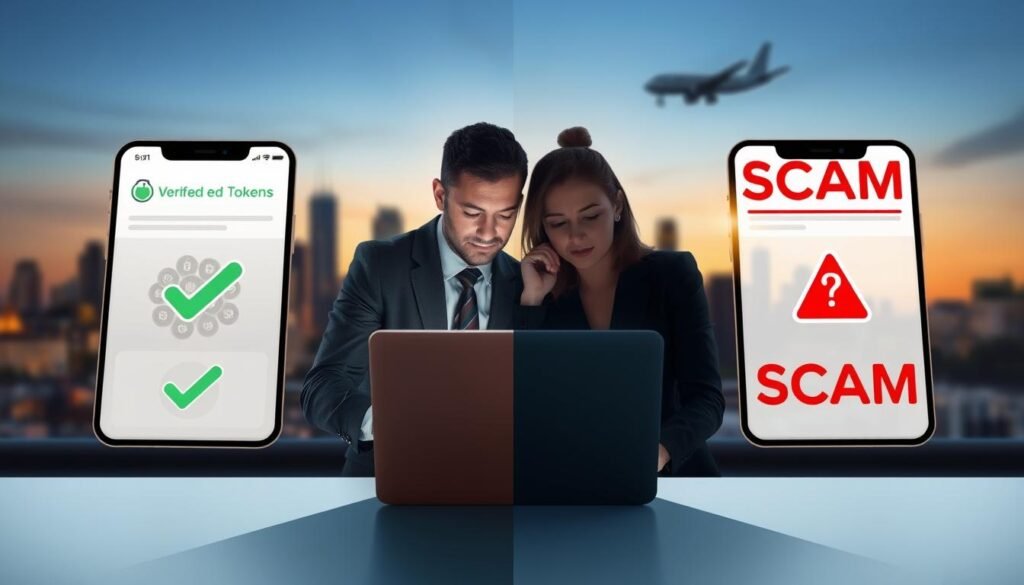
What real distributions look like and why teams use them
Real airdrops reward early users and help decentralize governance. Teams announce supply, claim windows, and exact eligibility so recipients can verify the offer.
Notable legitimate examples
Uniswap’s UNI and Arbitrum’s ARB were posted on official websites, project blogs, and verified social profiles. Each announcement included eligibility rules and a clear claim flow for eligible wallets.
How imitators exploit hype
Fraudsters recreate branding and post lookalike messages to funnel users to bogus claim pages. They often avoid details, push urgency, and ask for sensitive information or risky wallet approvals.
- Check multiple official channels before interacting.
- Confirm eligibility snapshots and claim windows on the project blog.
- Never share seed phrases or private information off-chain.
| Feature | Legitimate | Imitation |
|---|---|---|
| Announcement source | Official blog / verified social | Lookalike accounts or unsourced posts |
| Eligibility details | Snapshot, dates, and amounts | Vague or missing specifics |
| Request for information | On-chain verification only | Forms asking for seed or private data |
Before you click a claim link, cross-check with official sources. For guidance on verifying offers and spotting fraud, see how to tell the difference.
How fake airdrop scams work from first click to drained wallet
A typical scam chain starts with a tempting post or an unexpected token that points you to a claim page. Attackers rely on quick trust: a clickable link, a familiar layout, and a rush to act.
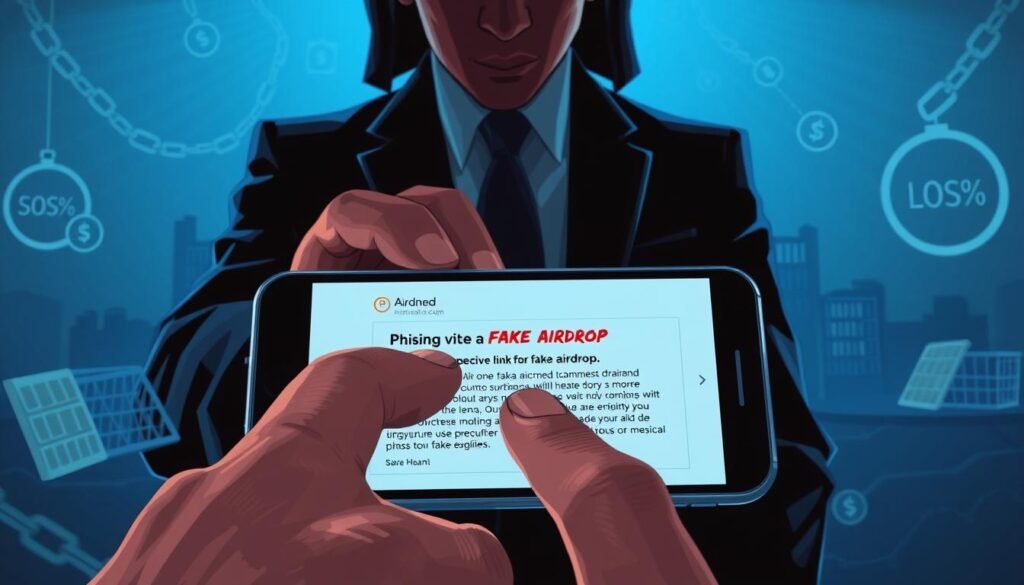
Phishing links and cloned sites often mimic real project pages. The url may differ by a single character or extra word, but the page copies logos and text to trick users.
Phishing links and unsolicited tokens that point to “claim” or “unlock” sites
Users see free tokens or viral posts, follow a link, and reach a website that asks them to connect a wallet. The page may prompt signing to “verify” eligibility.
Malicious wallet approvals that grant unlimited access to assets
A wallet pop-up can ask permission to approve token spending. That approval may grant unlimited access, letting attackers move funds without another prompt.
- Common funnel: free tokens → link to claim site → connect wallet → approve contract.
- Red flags: requests for seed phrases or private keys; urgent language; unsolicited tokens with embedded urls.
- Action: do not sign unknown approvals and verify the exact website url separately.
| Stage | How it looks | Risk |
|---|---|---|
| Entry | Unsolicited token or viral post linking to claim | Leads to phishing site or malicious signing |
| Engagement | Cloned website asks to connect wallet | May request seed or push approvals |
| Compromise | Signed unlimited approval or shared private data | Attackers gain access and can drain assets |
Red flags that signal airdrop scams
Watch for unsolicited tokens that display claim instructions or embedded links. These tokens often direct you to a lookalike site that asks you to connect a wallet or sign a transaction.
Unsolicited tokens with embedded URLs or instructions
Tokens that show steps to “claim” or include a URL are high risk. Verify the exact domain on an official channel before clicking.
Requests for seed phrase or private keys — never share private information
Never share a seed phrase or private keys. Legitimate teams never ask for recovery data, off-chain support codes, or forms that expose secrets.
Urgency, exclusivity, and FOMO on social media
Scammers often use urgent language, exclusive invites, or time limits on social media to force quick decisions. Pause and confirm claims through verified accounts.
Upfront “release fees” or payments to claim tokens
Demanding a payment or a “release fee” is a classic sign of fraud. Real airdrop distributions do not require you to pay to receive rewards.
- Read what a signature grants and reject broad or unlimited approvals.
- Treat unexpected DMs and reply-chain promotions with suspicion.
- Validate sites independently; polished websites can still be malicious.
Proactive steps to avoid airdrop scams
Always verify an offer’s source on official channels and type the exact URL into your browser before you connect a wallet or sign anything. Confirm the authenticity of announcements on the project’s verified site and social profiles.
Confirm links and document claim details
Manually enter URLs instead of clicking social posts or DMs. Record eligibility snapshots, deadlines, and the project’s official claim flow so you can spot inconsistencies later.
Practice wallet hygiene and review approvals
Regularly review token permissions in your wallet and use tools like Revoke.cash or similar apps to revoke broad approvals. Avoid interacting with unfamiliar contracts and keep only minimal funds in testing accounts.
Use a burner wallet and secure your keys
Keep a dedicated burner wallet for experimental airdrops to protect primary holdings. Store private keys offline and consider a hardware wallet to isolate keys from web apps.
Important: even with a hardware wallet, confirm contract details on the device before approving and revoke unnecessary permissions promptly. Never share recovery data or share private keys with third parties.
- Cross-check exact domains on verified pages before connecting a wallet.
- Revoke risky approvals and limit app permissions regularly.
- Use a burner wallet for unverified airdrops and keep keys offline.
For vetted opportunities and safe claim guides, see a curated list of reliable events best crypto airdrops to claim.
Spotting impersonation on social media and fake websites
During hype cycles, cloned branding and near-identical domains appear across feeds to lure crypto users.

Impersonators copy logos, tones, and post edits of official announcements to seem legitimate. They target followers during high-interest events and push token claim links through replies or DMs.
Fake profiles and copied branding targeting crypto users
Check account handles, not just display names. Look for odd characters, recent creation dates, or low-quality followers.
Compare posting history against verified channels and project blogs. If an announcement is missing from the official feed, treat the post with suspicion.
Lookalike domains and subtle URL swaps that trick users
Scammers often register domains with letter swaps, added hyphens, or extra words to create a believable url. A polished website design does not prove authenticity.
Hover links or long-press them on mobile to preview the final domain. Verify the url against the project’s official website before connecting a wallet or signing anything.
- Quick checks: compare handles, confirm cross-posts across channels, and inspect follower quality.
- Link habits: preview links, avoid reply-chain promotions, and ignore unsolicited “support” accounts.
- Final rule: provenance beats appearance—verify the project’s official announcement before you act.
What to do if you’re targeted or think you’re a victim
If you suspect someone targeted your wallet, stop all activity immediately and isolate the session. Do not click more links, open unknown apps, or sign any transactions until you confirm the situation.
Do not interact — cut connections fast
Disconnect the wallet from the site and close the tab. Avoid reconnecting or approving requests from unfamiliar domains.
Never enter a seed phrase or type recovery words into any website. Legitimate recovery never asks you to share private keys or seed data.
After exposure — triage and recover
Check approvals using a tool like Revoke.cash and revoke suspicious allowances. Move remaining assets to a clean wallet and rotate permissions.
- Document transaction hashes, addresses, and domains to help reports.
- Report the incident to the project’s official channels and consumer agencies in the U.S.
- Use a hardware wallet when relocating funds to verify addresses on-device.
| Step | Action | Goal |
|---|---|---|
| Immediate | Stop interactions; disconnect wallet | Limit further access |
| Triage | Revoke approvals; move assets | Protect remaining assets |
| Report | File with project teams and agencies | Document and escalate the incident |
Change habits after an incident: avoid reusing compromised wallets for future claims and review all app permissions. Quick, careful action improves chances of limiting losses if scammers gained approvals but haven’t yet acted.
Conclusion
To finish, treat every unfamiliar token claim as a moment to pause and validate the source.
Genuine airdrops appear on verified channels and never require fees or secret data. Do not enter private keys or seed phrases into sites and keep sensitive information off-line.
Confirm project announcements on official sites and check contract details before connecting a wallet. Maintain strict approval hygiene and use a hardware wallet for key isolation when possible.
Even seasoned users can be targeted by scammers who use urgency, embedded URLs in tokens, or requests that grant broad spending access. Slow down, cross-check details, and verify every step on secure devices before signing any transaction.
FAQ
What is a fraudulent airdrop and why should U.S. users care?
A fraudulent airdrop is an unsolicited token distribution or a campaign that tricks users into revealing sensitive information or approving wallet access. U.S. users face the same technical risks as global users, and scams often exploit social media trends and news cycles to target Americans. Stay alert to avoid loss of funds and personal data.
How can I tell a legitimate token distribution from a malicious one?
Legitimate distributions come from official project channels like verified Twitter/X accounts, the project’s verified website, and reputable announcements on platforms such as Medium, GitHub, or community forums. Verified cases like Uniswap and Arbitrum were announced through multiple official channels and covered by major crypto media. Cross-check any claim against those channels before interacting.
What tactics do scammers use to imitate real projects?
Scammers copy branding, create lookalike domains, set up fake social profiles, and piggyback on high-profile launches. They send unsolicited tokens with embedded links or instructions that lead to phishing sites. They also create fake news posts and use bots to amplify urgency and FOMO.
How do phishing links and unsolicited tokens lead to a drained wallet?
Phishing links direct you to a site that requests a wallet connection and a signature. That signature or an approval can grant a malicious smart contract permission to move tokens or NFTs. Some approvals are unlimited, giving attackers persistent access that allows them to drain assets later.
Why should I never share my seed phrase or private keys?
Seed phrases and private keys are the master credentials for your wallet. Anyone with them can control and transfer your funds. No legitimate project or support team will ever ask for these. Keep them offline and never enter them on websites or apps you don’t completely trust.
What are the most common red flags of a risky token drop?
Red flags include unsolicited tokens with links, requests to sign transactions that don’t match the action described, urgent messages pressuring immediate action, lookalike URLs, and any demand for upfront “release” fees. Also beware of messages asking you to reveal private data or seed phrases.
How can I verify an announcement or link is authentic?
Verify via official channels: check the project’s verified social accounts, the exact domain of the project website (careful of small character swaps), and reputable crypto news outlets. Use bookmarks for official sites, confirm authorship on platforms like Medium, and cross-check community channels such as Discord or Telegram for pinned notices.
What wallet hygiene practices reduce risk?
Use separate wallets for different activities—a “hot” wallet for small trades and a dedicated burner wallet for claim links. Regularly review and revoke token approvals in wallet interfaces like MetaMask or Etherscan’s token approval checker. Consider a hardware wallet for long-term holdings and never expose private keys or seed phrases online.
How do malicious wallet approvals work and how can I spot them?
Malicious approvals ask you to sign a transaction that grants a contract permission to spend tokens. They often show vague descriptions like “Approve” without specifying limits. Inspect the approval’s spender address, check allowance amount, and use explorer tools to research the contract before signing. If anything looks unclear, decline.
What should I do immediately if I clicked a suspicious link or connected my wallet?
Disconnect the wallet from the site, do not sign any transactions, and avoid further interaction. Revoke any suspicious approvals using your wallet’s security settings or a token approval manager. If funds are at risk, move remaining assets to a clean wallet controlled by a new seed phrase stored securely.
If my wallet was drained, who should I contact and what steps should I take?
Report the incident to your wallet provider, the exchange you use, and platforms where the scam appeared (Twitter/X, Reddit, Telegram). File reports with law enforcement and regulators like the FBI’s IC3 and, if applicable, the U.S. Commodity Futures Trading Commission (CFTC). Preserve transaction IDs and any communication as evidence.
How do impersonation and lookalike domains trick users on social media?
Attackers create accounts with similar handles, copied profile images, and nearly identical website domains. They post time-sensitive offers and use bots to boost credibility. Always inspect account verification, exact URLs, and cross-posting on official channels before trusting such messages.
Are there tools to help detect and prevent malicious approvals or phishing sites?
Yes. Use token approval checkers, browser extensions that block known phishing domains, and hardware wallets that require physical confirmation for signatures. Reputable security tools and services can scan URLs and smart contracts; use them before interacting with unfamiliar tokens.
Can paying a fee to “unlock” tokens ever be legitimate?
Reputable projects do not ask for upfront release fees to claim tokens. Requests for payment to access funds are a classic sign of fraud. If a project does require gas fees for on-chain actions, the process should be transparent and verifiable via the official site or contract.
What preventive steps should I teach newcomers to crypto?
Teach them to never share seed phrases or private keys, to verify links through official channels, to use burner wallets for claims, and to enable hardware wallets for significant holdings. Encourage skepticism of unsolicited messages and show how to check approvals and contract addresses before signing.

No comments yet