
This short introduction maps what beginners need to know about how web3 titles changed after COVID-19 and how players can earn real value while playing.
Axie Infinity shows how in-game economies can expand quickly. This piece previews the four major ecosystems: Immutable, Ronin, Gala Games, and The Sandbox. It explains why the choice of platform affects onboarding, fees, and available titles.
Readers will get a clear path: how tokens and tradable items work, typical cash-out flows, and basic wallet steps. Expect practical notes on earning tokens, selling NFTs, airdrops, tournaments, and creator income in metaverse spaces.
Safety-first tips will follow later: use official downloads, maintain wallet hygiene, and avoid phishing before connecting accounts. Remember, earnings vary with game economies, player demand, and the crypto market. This is educational, not a profit promise.
For a deeper look at play-to-earn mechanics and titles that pay in crypto, see a practical list here: nft mining games that pay real.
What Gaming NFTs Are and Why They Matter in Blockchain Gaming
Think of an nft as a digital receipt on a public ledger that proves who owns a specific in-game item. It is unique and can’t be copied, so a sword, card, or avatar stays tied to a single owner.
Non-fungible tokens explained for gamers
Non-fungible tokens are not like crypto you swap one-for-one. A fungible coin such as ETH is interchangeable. An nft represents one distinct object with a tracked history.
How NFT assets turn items into player-owned property
When assets live on-chain, ownership moves from the publisher to the player. That means items can survive account changes or server closures, and players can trade them outside the original game.
What “real-world value” means for characters, cards, and collectibles
Value comes from utility, rarity, and community demand. A collectible card can be sold on a marketplace if other players want it.
| Type | Example | Why it has value |
|---|---|---|
| Characters | Unique avatar with rarity traits | Play utility + scarcity |
| Cards | Tradable battle cards (popular nft titles) | Meta relevance + demand |
| Cosmetics | Skins, costumes | Community status + limited drops |
How NFT Games Work Behind the Scenes
Behind every tradable in-game item sits a blockchain ledger, a wallet, and smart contract logic that enforces rules.
Wallets, records, and transactions: You use a wallet to hold assets. Public blockchains record ownership and every transfer as a transaction. That ledger makes history traceable and tamper-resistant.
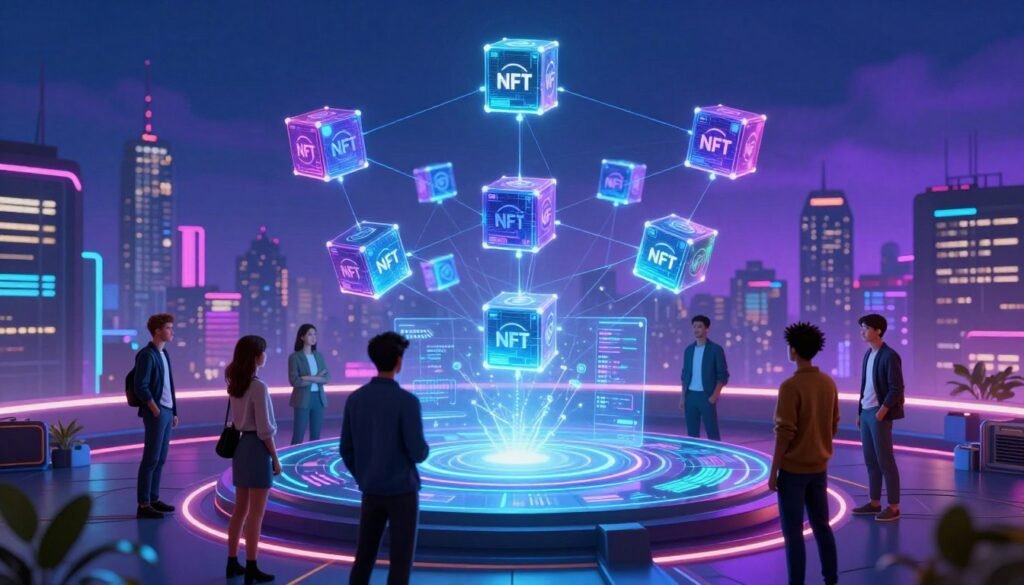
What on-chain ownership means: Ownership data is written to the chain, while some metadata (art, descriptions) can live off-chain. That split keeps records secure but lets publishers update non-critical files.
Smart contracts as the rules engine: Self-executing code defines supply, enforces transfers, and prevents easy duplication. Contracts lock mechanics so items behave predictably across marketplaces.
- Scarcity and rarity shape value: limited drops and low supply raise demand if a game stays active.
- Marketplaces match buyers and sellers, set prices, and charge fees that vary by network.
- Scaling matters: high Ethereum fees pushed many titles to Polygon and Solana to lower transaction costs.
Small changes to drop rates, crafting, or token sinks can reprice assets fast. Players should watch mechanics and market signals before buying.
Gaming NFTs and Play-to-Earn Guide: The Core Earning Models
Most revenue paths for players cluster around token payouts and tradable assets. Two main models dominate: token reward systems tied to activity, and ownership of on-chain items that can be sold or rented. Many titles use hybrid approaches that mix both.
Play-to-earn rewards via gameplay loops
P2E systems pay tokens for actions like daily quests, ranked wins, or season milestones. These loops are designed so players earn while they play, but yields vary with demand and token supply.
In-game NFTs as tradable assets
In-game nfts act as an ownership layer. Players craft or find items that can be listed on marketplaces. Earnings depend on rarity, utility, and whether other users buy those assets.
Play-to-airdrop campaigns
New projects reward early adopters with points or participation credits that later convert into token or nft allocations. These campaigns aim to bootstrap communities and reward loyal users.
Tournaments, seasonal events, and creator economies
Competitive events often offer higher cash and token prize pools than casual play. Creator economies let builders sell cosmetics, 3D assets, or host events to monetize land and designs.
- Beginner reality check: sustainable earnings require studying a game’s economy and avoiding high-cost loops that rely on constant new buyers.
- For a deeper technical look at how p2e systems function, see this play-to-earn mechanics overview.
Immutable: A Free-to-Play Web3 Gaming Hub to Start Earning
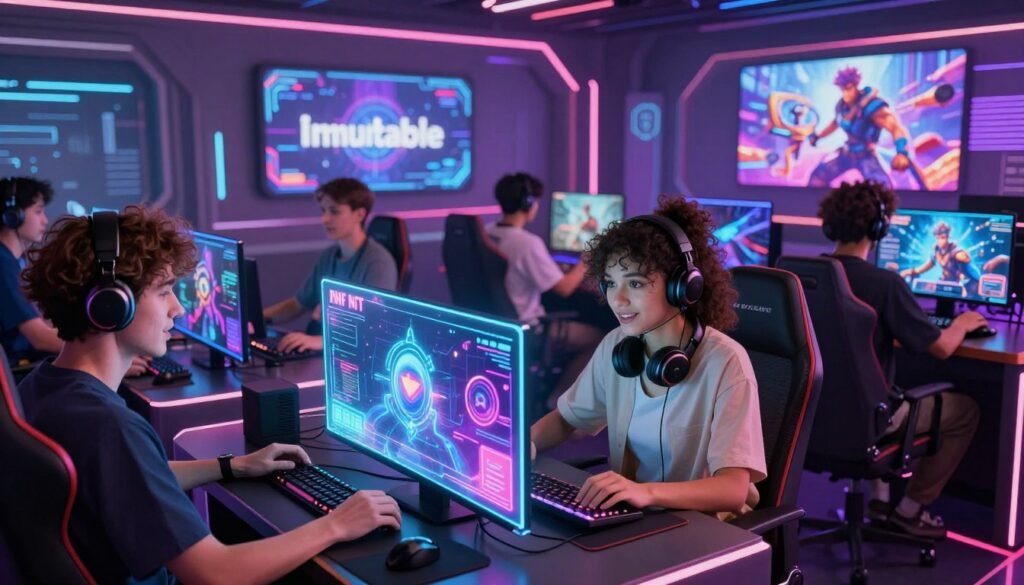
Immutable offers a low-friction entry point where new players can try dozens of free-to-play titles before risking funds. The platform hosts 300+ free-to-play games across multiple genres, so you can learn wallets and marketplaces at your own pace.
Why Immutable is beginner-friendly
Immutable Passport simplifies signup with Google or Apple sign-in. Use Passport to explore without self-custody, then connect MetaMask or another wallet when you’re ready to control assets.
Notable titles and earning routes
| Title | Earning style | What to track |
|---|---|---|
| Gods Unchained | Tradable card market | Card rarity & listings |
| Guild of Guardians | Seasonal leaderboards ($GOG) | Leaderboard rules & cadence |
| Illuvium | Capture and trade Illuvials | Resource markets & craft sinks |
Play-to-airdrop campaigns
Recent campaigns like Immortal Rising 2 and RavenQuest reward participation. Track quests completed, eligibility windows, and official announcements to qualify for airdrops.
Market flows and cash-out basics
List NFTs on official marketplaces, check fees, and confirm contracts before you sell. Tokens or proceeds move to your wallet, then to exchanges like Coinbase or Binance to convert to fiat.
- Start with one game to learn reward cadence and marketplace listings.
- Use Immutable Play to track rewards across titles.
- Confirm official links and avoid unknown marketplaces.
For a concise explainer of the Immutable ecosystem, see this Immutable overview.
Ronin: The Network Behind Axie Infinity and New P2E Games
Ronin began as a solution to high fees and slow transactions on Ethereum. It now hosts 15+ nft games and stays closely tied to Axie Infinity’s ecosystem. That history makes Ronin a go-to platform for developers building player-focused mechanics.
Axie rewards and evolving gameplay
Axie Infinity still issues $SLP and $AXS through missions, battles, and seasons. Reward rates and token sinks change over time, so older strategies may not pay the same today. Track patch notes and market signals before investing time or funds.
Pixels as a lower-friction on-ramp
Pixels uses simpler loops and clearer quests to earn $PIXELS. The lighter time commitment suits new players who want to learn how gameplay converts into tokens without complex economy steps.
Seasonal vouchers in Fableborne
Fableborne grants token vouchers during seasons based on rank and participation thresholds. Voucher value depends on later token launch terms, so consider uncertainty when valuing future payouts.
Ronin Wallet setup and common onboarding risks
Download Ronin Wallet only from official links, create a secure seed phrase, and confirm the Ronin network before signing transactions. Avoid clicking unknown links, replying to unsolicited support DMs, or approving contracts you do not recognize.
| Focus | What players should do | Why it matters |
|---|---|---|
| Reward changes | Follow patch notes | Adjust play strategy |
| Onboarding | Use official wallet source | Prevent theft and scams |
| Developer updates | Monitor economy tweaks | Protect asset value |
- Tip: Developers control emissions, balancing, and fees—so stay informed to protect your tokens and items.
- Watch for airdrop bait and never approve contracts without review.
Gala Games: Popular NFT Games and How Rewards Typically Work
Gala Games offers a platform where beginners can try several reward models with low entry barriers. Free-to-play options make it easy to see how different mechanics convert time into value.
Spider Tanks — PvP performance and borrowed assets
Spider Tanks rewards ranked match results with points and periodic payouts. Wins and ladder placement influence what you receive.
Piloting borrowed tanks reduces upfront cost: players can rent or borrow NFT tanks and still earn share-based rewards during matches.
Champions Arena — rentals and Victory Points
Champions Arena lets users rent NFT champions to compete in PvP. Matches award Victory Points that may be redeemed for token rewards such as $GALA.
The rental model widens access but ties earnings to the host’s rules and payout schedule.
Treasure Tapper — tap loops and airdrop mechanics
Treasure Tapper uses simple tap-to-collect loops common in casual titles. Often, the real objective is qualifying for airdrops by meeting participation rules.
Watch eligibility windows, verification steps, and whether activity data is recorded on-chain or off-chain before assuming future value.
| Feature | How it works | What to watch |
|---|---|---|
| PvP rewards | Ranked points, seasons | Patch notes, reward cuts |
| Rentals | Borrow champions/tanks | Contract terms, revenue split |
| Tap loops | Casual clicks for eligibility | Airdrop rules, participation proof |
- Marketplace notes: listing, renting, and transactions usually require wallet approvals; check fees and contract scopes before confirming.
- Rentals improve access but create dependency on third-party terms and changing reward schedules.
- Safe play: use official Gala links, verify social accounts, and avoid instant cash-out scams aimed at casual players.
The Sandbox and the Metaverse: Play, Build, and Earn in Virtual Worlds
The Sandbox expands how players and creators turn virtual work into tradable value inside a persistent 3D world. This platform mixes seasonal events, user-generated content, and land economies to create multiple earning paths.
Earning $SAND through seasonal events and task-based rewards
Seasonal campaigns award $SAND for completing timed tasks, quests, and attendance milestones.
Reward distribution often follows eligibility windows and leaderboard tiers, so tracking deadlines matters for full payouts.
UGC monetization: creating and selling 3D assets as NFTs
Design a 3D item, mint it as an nft, and list it on The Sandbox marketplace. Price for demand and promote visibility to increase sales.
Fees, rarity, and storefront placement affect discoverability and value.
Virtual land basics: buying, developing, renting, and selling
Land enables experiences, events, and branded spaces. Development raises potential value by adding interactivity and foot traffic.
Renting land can earn passive income from events, game nights, or sponsored installations.
Sandbox vs Decentraland — a quick comparison
| Focus | The Sandbox | Decentraland |
|---|---|---|
| Primary use | Game-like play & creator tools | Social events & commerce |
| Earning paths | Seasonal rewards, asset sales, land rentals | Events, ticketing, merchant sales |
| Best for | Creators who want game mechanics | Hosts and social organizers |
Realism check: creating assets and buying land are powerful, but value depends on demand, player activity, and market cycles. Ownership alone does not guarantee long-term returns.
Getting Started Safely: Wallets, Exchanges, and Official Game Platforms
A simple, secure setup keeps your crypto and in-game items safe while you learn the ropes. Start with one hot wallet for daily play and an exchange account to cash out when needed.
Choose the right wallet
MetaMask fits most platforms and marketplaces. Ronin Wallet is best for Ronin-based titles. Coinbase Wallet offers a user-friendly path for newcomers.
Security essentials
Seed phrases are the master key. Never share them. Support teams will not ask for your seed.
Use a cold wallet like Ledger or Trezor for high-value assets to sign transactions offline and reduce theft risk.
Exchange basics
Open a reputable exchange (Coinbase, Binance) to convert tokens to USD. Expect KYC, bank linking, and withdrawal limits for US users.
Verify official sources
Download games and visit marketplaces only from verified links. Check social handles and contract addresses before trading.
| Need | Suggestion | Why it matters |
|---|---|---|
| Hot wallet | MetaMask / Coinbase Wallet | Play and small transactions |
| Cold storage | Ledger / Trezor | Protects long-term assets |
| Exchange | Coinbase / Binance | Convert crypto to fiat currency |
- Before you confirm: read permissions, check recipient addresses, avoid unlimited approvals.
- Be wary of phishing that targets players chasing airdrops or free nfts.
From In-Game Rewards to Real Income: Cashing Out Tokens and NFTs
Cashing out starts with a simple flow: collect rewards in-game, transfer assets to a secure wallet, then send crypto to a centralized exchange to convert to fiat when you choose.
NFT cash-out often means listing items on marketplaces, waiting for a buyer, then converting proceeds. Liquidity varies: tokens usually move faster than nfts.
Watch common costs that cut take-home income. Marketplace commissions, network gas, exchange withdrawal charges, and spreads add up. Plan for transactions to avoid surprise losses.
Timing, price drivers, and risk control
Prices swing after patches, airdrop unlocks, or player growth. Token supply schedules, demand from active players, and sink mechanics shape value. Healthy ecosystems keep prices steadier.
- Practical tip: don’t hold all earnings in one token or game—take partial profits to lock in stable income.
- Track volatility and avoid converting during big market moves unless needed.
| Step | What to expect | Why it matters |
|---|---|---|
| Earn | Tokens or nfts in-game | Initial value tied to activity |
| Transfer | Move to wallet | Network fees and safety |
| Convert | Exchange to currency | Realize income after fees |
Risks, Red Flags, and How to Evaluate NFT Games in the Present Market
A quick way to get burned is betting on short-term reward yields without vetting a game’s long-term mechanics. Earnings are volatile: token emissions, player churn, and shifting incentives can reprice rewards fast. Prioritize sustainability over flashy APR claims.
Pay-to-win mechanics and aggressive monetization spark community backlash. A notable example: Ubisoft paused its nft plans after player pushback. When developers favor sales over fair gameplay, trust erodes and value can fall.
Scaling, fees, and developer incentives
High Ethereum gas fees wiped out small gains, so many titles moved to Polygon or Solana or adopted L2 solutions. Lower fees matter for tiny transactions and frequent trades.
Remember how studios make money: upfront sales, in-game purchases, and marketplace cuts. Those incentives can conflict with a healthy economy if not balanced by sinks, not just endless emissions.
Beginner checklist for choosing a safe title
- Free-to-play access or low entry cost.
- Clear reward rules and transparent token supply.
- Active player base and recent development updates.
- Reputable developers with public roadmaps and audits.
- Reasonable transaction fees and official marketplaces.
| What to read | Why it matters | Red flag |
|---|---|---|
| Token emission schedule | Shows long-term supply | Unlimited, opaque emissions |
| Economy sinks | Creates demand for items | No meaningful sinks, only faucets |
| Developer history | Signals reliability | Anonymous team, no audits |
Practical tip: evaluate platforms as well as individual games. A friendly onboarding flow, lower fees, and official tooling reduce friction and risk. Ultimately, pick a title you enjoy—sustained play helps you learn the economy and protect value.
Conclusion
The core shift is that digital items now carry provable ownership and real-world markets.
This short guide shows how nfts change the way players value in-game items. Start with free-to-play titles. Learn one ecosystem, set up a wallet, check fees, then cash out a small win to test the flow.
Immutable, Ronin, Gala Games, and The Sandbox each suit different types of players. Competitive grinders, collectors, and creators will find distinct paths to earn tokens or sell assets.
Before you invest time or money, verify official platforms, read token supply notes, and watch for pay-to-win pressure. Pick one beginner-friendly game, finish onboarding safely, track rewards, and treat early weeks as skill-building.
Stay informed, protect your seed phrase, and prioritize real gameplay over hype for long-term value.
FAQ
What are non-fungible tokens and why do they matter for blockchain games?
Non-fungible tokens are unique digital certificates stored on a blockchain that prove ownership of a specific item, character, or collectible. They matter because they give players true ownership, enable trading on open marketplaces, and let developers enforce scarcity and provenance for in-game assets.
How do in-game NFT assets become player-owned property?
Ownership is recorded on-chain, tied to a wallet address rather than a game account. When a player acquires an item, the token moves to their wallet and can be traded, sold, or moved between supported platforms according to the smart contract rules.
What does “real‑world value” mean for characters, cards, and collectibles?
Real‑world value means an asset can be converted into money or other tradable tokens on marketplaces. Value derives from rarity, utility in gameplay, community demand, and the broader token economy supporting that title.
How do wallets, on-chain ownership, and transactions work?
A crypto wallet holds private keys that control assets on a blockchain. Transactions record transfers of tokens and NFTs on-chain, creating an immutable history. Users sign transactions with their keys to move tokens or interact with smart contracts.
Why can’t NFT items be duplicated?
Smart contracts govern token minting and ownership. Each token has a unique ID and metadata written on the blockchain. Attempts to duplicate would create different tokens without the original provenance, so the network enforces uniqueness.
How do scarcity, rarity, and demand drive value?
Scarcity limits supply, rarity differentiates items by attributes or edition size, and demand comes from collectors and players. When demand outpaces limited supply, market prices rise; the opposite pushes values down.
What are the main earning models in play-to-earn ecosystems?
Common models include token rewards for gameplay, earning tradable NFT items, airdrops for early adopters, tournament and seasonal prize pools, and creator economies where users sell user‑generated content.
How do token rewards typically work during gameplay?
Games mint or distribute fungible tokens to players for completing tasks, winning matches, or progressing. Players can hold, stake, or sell these tokens on exchanges, subject to in‑game rules and tokenomics.
What are play-to-airdrop campaigns and how do they benefit players?
Play-to-airdrop campaigns reward active users with free tokens or items, often to bootstrap engagement. Early participants can receive rare assets or governance tokens that may appreciate if the game grows.
How do tournaments and seasonal events reward players?
Developers allocate token or NFT prize pools for competitive events. Winners and top performers receive direct payouts or exclusive items that can be sold or used in-game, creating short-term earning opportunities.
What does creator economy mean in metaverse platforms?
It refers to systems where users build assets, experiences, or content, mint them as tokens, and sell or license them. Creators earn revenue from direct sales, secondary market royalties, and commissions.
Why is Immutable a recommended place for beginners?
Immutable offers a free-to-play hub with low fees and familiar onboarding tools like Immutable Passport. It hosts mainstream titles such as Gods Unchained and Guild of Guardians, which lower entry friction for new users.
Which notable games run on Immutable?
Examples include Gods Unchained, Guild of Guardians, and Illuvium. These titles combine established design with on-chain item ownership and token economies for players.
What are play-to-airdrop opportunities on Immutable to watch for?
Developers occasionally run campaigns tied to new launches, beta tests, or community milestones. Immersive drops such as Immortal Rising 2 or RavenQuest-style events reward early engagement with collectible items.
How do I set up with Immutable Play and Immutable Passport?
Create an account on Immutable’s platform, connect a supported wallet, and link Immutable Passport to consolidate access across Immutable titles. Follow official guides to verify links and secure credentials.
How do players cash out NFTs and tokens earned on Immutable?
Players list NFTs on supported marketplaces or transfer tokens to exchanges to convert to fiat. Cash‑out routes depend on the token’s listings, liquidity, and network fees at the time of sale.
What role does Ronin play for Axie Infinity and similar titles?
Ronin is an Ethereum sidechain designed for faster, cheaper transactions. It supports Axie Infinity’s token economy (AXS, SLP) and newer titles that need high throughput with lower fees.
How do AXS and SLP rewards work in Axie Infinity today?
AXS serves governance and staking roles while SLP historically functioned as a play reward token. Mechanics evolve over time; players earn tokens through gameplay, seasonality, and in-game activities tied to the ecosystem.
What are Pixels or similar lower-friction reward systems?
Pixel-style tokens or micro‑units let players earn small, frequent rewards with minimal friction. These systems aim to increase accessibility while preserving overall tokenomics and user retention.
How do seasonal rewards and token vouchers work in modern titles?
Developers allocate rewards per season, sometimes issuing vouchers redeemable for tokens or items later. This structure manages token supply and incentivizes long-term engagement.
How do I set up a Ronin Wallet and avoid onboarding mistakes?
Install the official Ronin Wallet extension or mobile app, back up your seed phrase securely, and verify transaction recipients before approving. Avoid unofficial links and never share private keys.
How do Gala Games titles reward players?
Gala Games titles like Spider Tanks or Champions Arena reward via PvP wins, item drops, and rental markets. Some systems let players earn by leasing assets or participating in ecosystem events.
What are Telegram‑style earning loops and play‑to‑airdrop dynamics?
These refer to community-driven campaigns and lightweight mobile loops that distribute small rewards or access tokens via chat-driven promotions, referrals, or quick sessions to boost adoption.
How do virtual worlds like The Sandbox let players earn $SAND?
Players earn $SAND through creator sales, seasonal tasks, and event rewards. Monetization options include selling user-generated content, leasing land, and participating in platform-run quests.
How can creators monetize 3D assets in virtual worlds?
Creators mint 3D models as NFTs, list them on supported marketplaces, and earn from primary sales and automatic royalties on secondary trades. Platforms provide tools for publishing and promotion.
What should I know about virtual land—buying, developing, and renting?
Virtual land acts as scarce real estate; buyers can build experiences, host events, or rent parcels to others. Success depends on location, audience, and the developer ecosystem supporting interoperability.
How does The Sandbox compare to Decentraland for creators and players?
The Sandbox emphasizes creator tools and asset marketplaces with strong UGC monetization. Decentraland focuses on social hubs and decentralized governance. Choice depends on whether you prioritize creation tools or a social environment.
Which wallets are recommended for newcomers?
MetaMask, Ronin Wallet, and Coinbase Wallet are widely used. Choose one compatible with the games you’ll play and follow best practices for key management and security.
What security steps should I follow for seed phrases and phishing?
Store seed phrases offline in a secure location, use hardware wallets like Ledger or Trezor for large balances, and verify URLs and smart contract addresses to avoid phishing. Never share private keys.
How do I convert tokens to USD using exchanges?
Register with a reputable exchange, complete KYC, transfer tokens to the exchange wallet, and trade for stablecoins or fiat pairs. Withdraw to your bank once conversion and withdrawal limits are met.
How can I ensure I download games and assets from legitimate sources?
Use official developer sites, verified platform stores, and links published on the project’s verified social accounts. Cross-check smart contract addresses and marketplace listings before buying.
How do players cash out tokens and NFTs into real income?
Players sell tokens on exchanges or list NFTs on marketplaces, then convert proceeds to fiat. Fees, liquidity, and tax reporting obligations affect net income and timing of withdrawals.
What fees should I watch when selling or transferring assets?
Expect marketplace commissions, blockchain network (gas) fees, and exchange withdrawal fees. Timing transactions during lower network congestion can reduce costs.
What factors influence token and NFT prices?
Supply, active user base, developer updates, tokenomics, and broader market sentiment drive prices. Healthy ecosystems with steady engagement tend to support more stable values.
What are the main risks and red flags in the current market?
High volatility, unsustainable token emissions, lack of transparent roadmaps, anonymous teams, and pay‑to‑win mechanics are warning signs. Always evaluate fundamentals and community strength.
How do gas fees and scalability affect player experience?
High gas fees make small transactions uneconomical. Layer‑2 solutions and alternative chains like Polygon or Solana reduce costs and improve transaction speed for users.
How do developers monetize games beyond initial sales?
Studios earn via primary NFT sales, marketplace cuts, transaction fees, token emissions tied to in‑game economies, and partnerships. Clear incentive alignment helps long‑term sustainability.
What should beginners check before committing time or money to a title?
Verify the development team, tokenomics, marketplace liquidity, community activity, and official distribution schedules. Prefer titles with transparent roadmaps and strong governance.
How can I spot a beginner‑friendly project?
Look for low upfront costs, clear tutorials, active support channels, reputable platform partnerships, and accessible on‑ramp options like fiat gateways or easy wallet integrations.

No comments yet