

Financial markets are undergoing a massive shift. Powerful computer programs now drive a huge portion of all trading activity. These automated systems use complex algorithms to analyze information and execute trades at incredible speeds.
The numbers tell a compelling story. The market for these advanced technologies is projected to expand from $18.2 billion in 2023 to over $50 billion by 2034. This represents a steady annual growth rate of 10.7%.
This transformation is not limited to traditional stocks. The crypto market cap recently surpassed $4 trillion. Blockchains now handle over 3,400 transactions every second. Stablecoins facilitate trillions in annual transaction volume.
Institutional adoption is also clear. More than $175 billion sits in Bitcoin and Ethereum exchange-traded products. This data confirms a fundamental change in how participants approach the financial landscape.
Key Takeaways
- The market for automated trading systems is experiencing significant expansion.
- Advanced algorithms process vast amounts of data to make trading decisions.
- Cryptocurrency and blockchain technologies are seeing parallel growth.
- Institutional investment in digital assets has reached unprecedented levels.
- This shift represents a new era for both retail and professional market participants.
Introduction to AI Trading and Its Modern Evolution
Investment methodologies have evolved from human-centric approaches to data-driven automation. This technological evolution represents a fundamental change in how market participants approach financial decisions.
Overview of AI Trading Technology
Modern trading systems utilize sophisticated algorithms that process massive datasets. These systems analyze historical patterns, market trends, and economic indicators.
Machine learning models can identify complex patterns across millions of data points. Natural language processing tools scan news and social media for market sentiment.
The Shift from Traditional to Algorithmic Trading
The transition from manual methods to automated systems has accelerated in recent years. Algorithmic approaches now account for over 37.1% of all market activity.
Cloud-based solutions dominate with 72.5% market share due to their scalability. This shift addresses human limitations like emotional decision-making and information overload.
| Aspect | Traditional Trading | Algorithmic Trading |
|---|---|---|
| Decision Speed | Minutes to hours | Milliseconds |
| Data Processing | Limited human capacity | Millions of data points |
| Emotional Influence | High susceptibility | Minimal impact |
| Market Monitoring | Selective focus | Comprehensive coverage |
This evolution enables traders to execute strategies with unprecedented precision. The technology continues to advance, offering new opportunities for market participants.
Market Dynamics and Data-Driven Insights
Data-driven insights are fundamentally transforming how market participants analyze and respond to trading opportunities. The modern financial landscape operates at unprecedented speeds and scales.
Trends in Trading Volume and Market Activity
Recent statistics reveal dramatic shifts in trading volume patterns. Decentralized exchange volumes have increased nearly eight times in the last year.
Perpetual futures platforms now process trillions of dollars in trades. Some platforms generate over $1 billion in annualized revenue.

Nearly one-fifth of all spot trading volume occurs on decentralized exchanges. Monthly stablecoin transaction volume approaches $1.25 trillion.
Role of Big Data and Analytics in Trading Decisions
Big data analytics has become essential for modern trading decisions. Systems process information from diverse sources including price feeds and order books.
Advanced analysis techniques monitor blockchain transactions and market sentiment. This enables more informed trading strategies across all market segments.
Growing interest as AI trading becomes mainstream
Major financial institutions have crossed a critical threshold in their acceptance of digital asset trading. The year 2025 marked a definitive shift from cautious observation to active participation.
Institutional Adoption and Stablecoin Integration
Traditional finance leaders including JPMorgan, Fidelity, and Visa now offer crypto products directly to consumers. This institutional embrace follows the bipartisan GENIUS Act, which provided crucial regulatory clarity.
Exchange-traded product holdings surged 169% to exceed $175 billion. BlackRock’s iShares Bitcoin Trust became the most successful Bitcoin ETP launch ever.

Stablecoin infrastructure gained significant attention with Stripe’s acquisition of Bridge. Circle’s billion-dollar IPO confirmed stablecoin issuers as mainstream financial players.
| Institutional Approach | Traditional Finance | Current Strategy |
|---|---|---|
| Product Offerings | Conventional assets only | Integrated crypto products |
| Regulatory Stance | Cautious avoidance | Active participation |
| Technology Infrastructure | Legacy systems | Blockchain integration |
| Market Coverage | Traditional markets | Digital asset inclusion |
The Convergence of AI and Blockchain
Financial companies are leveraging AI algorithms to navigate crypto markets effectively. Simultaneously, they’re building blockchain infrastructure for next-generation systems.
Major fintechs including Circle and Robinhood develop new blockchains focusing on payments and real-world assets. This convergence creates powerful trading infrastructure.
The integration represents a fundamental shift in market operations. Institutions recognize stablecoins as critical infrastructure for advanced trading systems.
Impact of AI-Driven Tools on Retail and Institutional Trading
Modern trading platforms equipped with sophisticated algorithms are leveling the playing field between retail and professional traders. These advanced systems provide unprecedented access to analytical capabilities once reserved for large institutions.
Personalized Trading Agents and Decision Support
Intelligent trading assistants now offer customized recommendations based on individual preferences. They analyze historical performance, risk tolerance, and specific market interests.
These tools remember successful patterns and adjust strategies accordingly. The technology provides context-aware insights that align with each trader’s unique approach.
Case Studies of Enhanced Trading Strategies
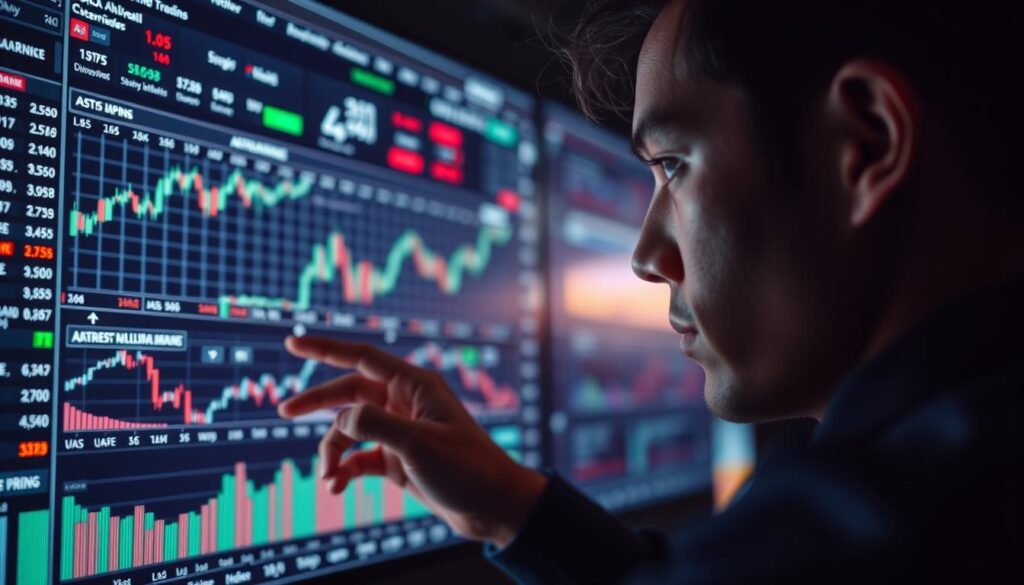
The Stonki platform demonstrates how personalized intelligence transforms trading outcomes. One user received specific recommendations for Bitcoin-correlated stocks based on their historical interests.
The system generated a comprehensive plan with precise entry points and risk management parameters. This approach helped the trader evolve from break-even results to consistent profitability.
| Trading Aspect | Traditional Approach | AI-Assisted Strategy |
|---|---|---|
| Recommendation Source | Generic market signals | Personalized historical patterns |
| Risk Management | Manual calculations | Automated position sizing |
| Performance Tracking | Periodic review | Continuous optimization |
| Strategy Adaptation | Infrequent adjustments | Real-time pattern recognition |
Quantifiable results show significant improvement in trading performance. Users consistently outperform major market indices with proper tool implementation.
Technology and Infrastructure Advancements in Trading
Unprecedented improvements in blockchain and cloud computing have removed previous barriers to sophisticated trading systems. This progress creates a robust foundation for modern market participation.
The core technology now handles immense scale. This allows for more complex strategies and wider access.
Blockchain Scalability and Infrastructure Improvements
Blockchain infrastructure has undergone transformative development. Transaction processing capacity increased over 100 times in five years.
Networks now handle 3,400 transactions per second. This matches the throughput of major centralized systems like Nasdaq.
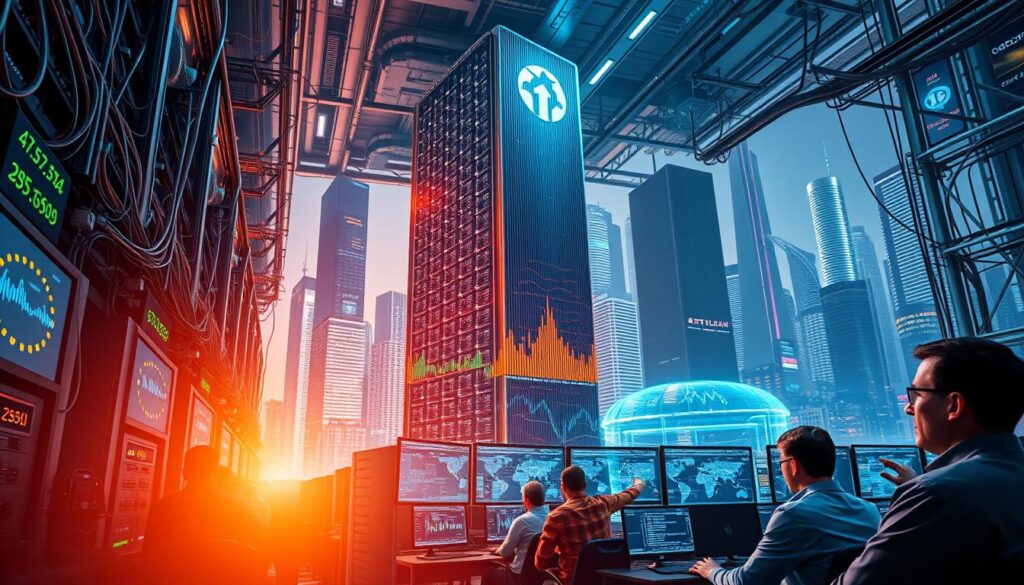
Costs have plummeted alongside speed gains. Ethereum Layer 2 solutions reduced average fees from $24 to under one cent.
High-performance architectures like Solana enable billions in application revenue. Cross-chain bridge protocols move vast asset volumes seamlessly.
| Blockchain Platform | Key Advancement | Practical Impact |
|---|---|---|
| Ethereum Layer 2 | 99.96% cost reduction | Makes micro-transactions viable |
| Solana | High-throughput design | Supports high-frequency trading strategies |
| Cross-Chain Bridges | $74B+ transfer volume | Enables fluid asset movement across ecosystems |
Cloud-Based AI and Real-Time Data Processing
Cloud-based solutions dominate the market with a 72.5% share. They offer superior flexibility and instant scalability for trading operations.
This shift eliminates the need for expensive hardware investments. It democratizes access to powerful analytical capabilities.
Real-time data processing is now a standard feature. Modern systems analyze thousands of price feeds and news sources simultaneously.
These infrastructure gains are crucial for leveraging the best AI tools for crypto trading. They provide the necessary speed and reliability for effective automated strategies.
Integration of Social Media, Trends, and Market Sentiment
Social platforms have transformed from casual conversation spaces into valuable market intelligence sources. Advanced systems now process millions of daily posts to extract meaningful trading signals.
Leveraging Social Media Data for Market Predictions
Sophisticated algorithms scan Reddit, Twitter, and specialized forums for quality content. They identify established contributors with proven track records.
These systems distinguish substantive analysis from promotional hype. They detect emerging trends before they reach mainstream awareness.
The technology extracts actionable setups from lengthy discussions. It cross-references social mentions with technical patterns and breaking news.
Analyzing Sentiment with AI Tools
Modern sentiment tools go beyond basic positive/negative classifications. They understand market psychology and fear/greed dynamics.
News analyzers process information from multiple sources simultaneously. They assess true relevance and filter signal from noise.
This integration provides insights that institutional traders previously dismissed. It turns unstructured social media content into quantifiable market intelligence.
Identifying Risks and Addressing Challenges in AI Trading
As financial markets increasingly rely on automated decision-making, new categories of risk have emerged that demand proactive strategies. These challenges span regulatory, technical, and operational domains.
Regulatory and Compliance Considerations
Regulatory uncertainty remains a significant concern for automated trading systems. Governments struggle to keep pace with rapidly evolving algorithms.
Compliance burdens can disproportionately affect smaller market participants. Data privacy concerns also arise from systems requiring massive information access.
Mitigating Algorithmic Bias and Over-Reliance on Technology
Algorithmic bias presents serious risk when systems perpetuate historical market inefficiencies. This can create unfair advantages for certain traders.
Over-reliance on technology creates vulnerability to system failures. Effective management requires balancing automated processes with human oversight.
| Risk Category | Primary Concerns | Management Strategy |
|---|---|---|
| Regulatory Compliance | Evolving legal frameworks | Continuous monitoring and adaptation |
| Data Security | Privacy breaches and misuse | Encryption and access controls |
| Algorithmic Bias | Unfair market advantages | Diverse training data and testing |
| System Reliability | Technical failures and attacks | Redundancy and kill switches |
Proper risk management incorporates multiple safety indicators. This approach helps maintain market integrity while leveraging technological advantages.
Opportunities and Future Developments in AI Trading
Next-generation financial platforms are unlocking new dimensions of market access and strategic possibilities. These developments create significant opportunities for all market participants.
Expanding Access to Global Markets
Automated systems now provide real-time analysis across international markets. This gives traders unprecedented access to global investment opportunities.
The gap between passive crypto holders and active users represents massive growth potential. Approximately 716 million people own cryptocurrency, but only 40-70 million actively trade.
Innovative Financial Products and Investment Strategies
Financial firms are developing dynamic portfolios and automated advisory services. These products cater to diverse users with personalized strategies.
Improved risk management through predictive analytics creates new opportunities. Firms can enter new markets with confidence while protecting client assets.
| Future Opportunity | Current Status | Projected Impact |
|---|---|---|
| Global Market Access | Limited to institutions | Democratized for all traders |
| Personalized Strategies | Generic approaches | Tailored to individual needs |
| AI Agent Economy | Early development | $30 trillion by 2030 |
Enhanced market efficiency represents a key benefit of these future developments. According to recent market analysis, automated systems process data faster than humans.
This leads to more efficient markets that reduce costs. All participants benefit from increased transaction speed and better access.
Conclusion
Seventeen years of development have culminated in a robust ecosystem capable of supporting sophisticated, data-driven strategies. The convergence of high-speed infrastructure, clear regulations, and institutional adoption marks a pivotal inflection point.
This evolution is quantifiable. The market for these technologies is set to expand significantly. Trillions in assets now flow through systems processing thousands of transactions per second.
While challenges around risk management and algorithmic bias persist, the industry has demonstrated a strong capacity for adaptation. The future holds immense potential for personalized tools and broader market access.
Automated analysis is now a fundamental component of modern finance. It enhances human decision-making, democratizing access to powerful insights for all participants. The landscape has permanently shifted toward data intelligence.
FAQ
What is AI trading?
AI trading uses algorithms and machine learning to analyze market data and execute trades. These systems process vast amounts of information to identify patterns and opportunities faster than human traders.
How is AI changing the financial markets?
It is driving a major evolution in market dynamics. AI tools enable real-time analysis, improve risk management, and increase trading volume by automating complex strategies for both institutions and retail users.
What role does data play in modern trading systems?
Data is the foundation. Big data analytics provide critical insights into market conditions and trends. This information fuels algorithms, helping traders make more informed decisions and develop effective strategies.
Are there risks with relying on AI for trading?
Yes, key concerns include potential algorithmic bias, over-reliance on technology, and regulatory challenges. Proper oversight and continuous monitoring of these systems are essential for managing risk.
How are social media and news integrated into AI trading?
Advanced tools analyze sentiment from social media and news sources. This analysis helps gauge market mood and predict short-term price movements based on public perception and breaking information.
What does the future hold for AI in trading?
The future points toward greater adoption, more sophisticated tools, and expanded access to global assets. We can expect continued development of innovative investment products and strategies driven by these technologies.

No comments yet