

This brief guide gives U.S. investors a clear, rules-based way to spot a common reversal formation used in technical analysis. The setup has three peaks with a higher middle peak and two lower peaks on either side, plus a neckline that links the two troughs.
The guide will show step-by-step how to draw the neckline, confirm the setup with volume and prior trend, and plan entries, stops, and targets. Traders often use the neckline as the decision point and measure the vertical distance from the middle peak to project profit targets.
Expect practical checks: the method works across stocks, ETFs, futures, and forex when charts are clean. It also covers the inverse version for bullish reversals and reminds readers that disciplined risk control is essential. For a deeper technical primer, see this in-depth resource at head-and-shoulders technical analysis.
What this How-To Guide Covers and Who It’s For
This guide provides a compact, rules-based workflow to spot the formation, validate signals, and map precise trade execution.
Who it serves: U.S.-based investors and active traders seeking practical information on chart setups and technical analysis. It is written for those who want a step-by-step process rather than theory alone.
Prerequisites: basic comfort reading charts, familiarity with peaks, troughs, and support/resistance, and the willingness to practice on historical and live data.
- Identify and draw the formation correctly
- Validate signals with volume and trend context
- Choose time frames, set entries and stops, and calculate targets for a trade
- Use stop and limit orders at the point of entry and exit
Outcomes: You’ll gain a repeatable checklist to assess trend context, read volume behavior, and translate setups into disciplined orders. Examples use U.S. stocks and ETFs but also apply to forex and other liquid markets.
Markets are probabilistic. Do not rely solely on one tool. Evaluate personal circumstances, accept that stop and limit orders may not fill at the exact price, and remember investing involves risk including loss of principal. This guide pairs the technical method with execution tips to support a sound strategy.
Understanding the head and shoulders pattern
Here we define the formation’s parts and explain why price swings reflect shifting buyer and seller conviction.
Core components
The structure has three peaks: two similar outer peaks and a higher center peak. The left shoulder forms after an extended uptrend. The center peak marks a higher high as momentum fades. The right shoulder rallies but stalls below the prior high.
The neckline links the two troughs between peaks. Draw it through those lows to test support. A decisive break of that line signals a possible reversal in trend.
Price action psychology
Buyers push price higher into the center high, but enthusiasm weakens. On the right side, rallies fail to reach the prior high, which shows sellers regaining control.
This ebb and flow of demand and supply is visible on the chart as lower highs and a weakening support line at the neckline. That behavior gives traders context for potential trend change.
Neckline shapes and implications
Necklines can be flat, rising, or falling. A flat line denotes clean support. A rising neckline can reduce bearish momentum on a break. A falling neckline often adds downside force when broken.
Proportionality matters: shoulders usually match in height and distance but may vary in live markets without invalidating the setup. The inverse form mirrors these swings as three troughs; the middle trough is lower and signals a possible bullish reversal when the neckline breaks.
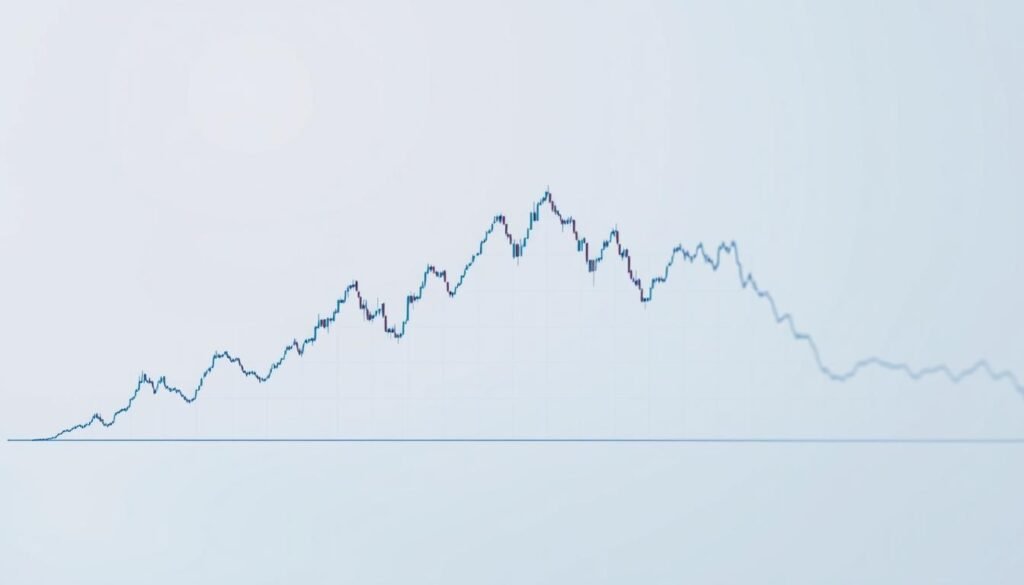
For a technical primer on variations and rules, see this concise resource at head shoulders.
How to spot, validate, and draw the pattern on a chart
Begin with trend verification, then mark sequential peaks and pullbacks to map the setup visually. A visual checklist helps you annotate levels quickly and reduces guesswork. Use a clean chart timeframe that matches your trading time horizon.
Step-by-step identification using trend, peaks, and troughs
1. Confirm the trend: scan for an extended uptrend on your chosen timeframe. Without an obvious advance, the setup is less reliable.
2. Mark the first peak and the pullback that follows; this is a candidate left formation. Then locate a higher central peak and the subsequent decline toward prior support.
3. Spot the right rally that fails below the center high; it should form a lower high roughly similar in height to the first. That symmetry helps with judgment but need not be perfect.

Dealing with variations: skewed shoulders and sloping necklines
Draw the neckline by connecting the two troughs that flank the center high. Validate the slope and note how often that line acted as support. A break below this line often confirms completion.
Account for skewed swings and sloping support. Shoulders can be uneven, and a rising or falling neckline changes breakout dynamics. Annotate a potential retest zone because price commonly revisits the broken neckline.
- Allow adequate time between rallies so the setup is not a brief noise spike.
- Measure the vertical distance from the center peak to the neckline for target estimates and risk sizing.
- Annotate both the breakout and the likely retest level on your chart before placing orders.
Confirmation signals that increase reliability
Disciplined confirmation steps separate durable signals from short-lived chart noise. Traders reduce false positives by waiting for volume, time, and momentum to align before acting.

Volume behavior from left shoulder to breakout
Watch for falling volume on the rallies that form the center high and the right shoulder. Waning activity shows buyers losing conviction.
A clear confirmation is a volume spike when price closes below the neckline. Without that surge, declines may lack follow-through.
Timeframe guidance: trend length versus shoulder distance
Apply the time rule of thumb: the prior uptrend should be at least twice the horizontal distance between the two outer peaks. This helps filter small, insignificant reversals.
Supplementary indicators: RSI, moving averages, and price action
Use indicators to corroborate price action. An RSI that rejects near 50 or shows momentum loss supports the case.
Moving averages that flatten or cross add context on trend alignment. Confirm structure integrity by verifying swings and that the neckline acts as resistance after a break.
- Confluence matters: a neckline close below the level, volume expansion, and bearish price action boost reliability.
- Wait for a decisive close beyond the neckline to avoid premature entries.
- Remember confirmation cuts risk but does not remove it; plan exits with predefined levels.
Trading the pattern: entries, stops, targets, and management
Turn the visual setup into a trade plan by defining entry triggers at the neckline, protective stops near the right shoulder, and explicit profit points.
Entry tactics and order rules
Two practical entries work in live markets. First, enter on a decisive break of the neckline for momentum alignment. Second, wait for a retest of the neckline to seek a better price with tighter risk.
Stop placement
Place protective stops beyond the right shoulder to allow normal volatility while capping loss. Use stop orders sized to your risk budget and note execution is not guaranteed at the stop level.
Profit targets and distance math
Measure the vertical distance from the head to the neckline and project that distance from the breakout point to set a primary target. Consider partial exits at interim levels to bank profit while letting the rest run toward the full profit target.
Manage pullbacks and false breaks
Use a checklist before order placement: confirm setup completion, look for volume on the break, and match stop and limit sizes to your risk rules. If price snaps back above the neckline, accept the stop loss. Advanced traders may reenter only after fresh confirmation.
- On retests: seek lower-timeframe rejection wicks at the neckline-turned-resistance.
- If momentum accelerates: trail stops above lower highs to lock gains.
- Always: record the entry, stop, and target on the ticket before submitting the order.
Inverse head shoulders: identifying the bullish reversal
When three lows form with the center the deepest, it often marks a shift from selling pressure to renewed buying interest. This formation is the bullish mirror of the standard setup and offers clear rules for entries, stops, and targets.
Structure and psychology of rising troughs
The formation shows three consecutive troughs where the middle trough is lowest, and the outer troughs are shallower. Sellers exhaust momentum while buyers begin to defend higher lows into the right trough.

Long entry, stops, and profit targets above the neckline
Entry: a buy-stop just above the neckline captures conviction on a breakout. Alternatively, wait for a pullback to the neckline for a tighter risk entry.
Stops: place protective stops below the right trough; a decisive move under that level invalidates the bullish thesis.
Targets: measure the vertical distance from the deepest trough to the neckline and add that distance to the breakout point to set realistic targets. Scale partial exits to lock profit while leaving room for extended gains.
- Volume: seek expansion on the breakout to confirm buyer participation.
- Momentum: indicators firming above neutral improve reliability of the reversal.
- Support flip: the neckline often becomes new support; successful retests signal ongoing strength.
Risk, reward, and reliability in real markets
Weighing reward against exposure is the most practical step before acting on any reversal setup. A clear view of potential profit and the possible loss helps you size positions and avoid emotional exits.
Advantages
Clarity of entries and exits: the neckline gives a repeatable level for stops and targets. This makes the setup useful across equities, forex, and other liquid markets.
Disadvantages
Large stop distances: long timeframes often require wider stops beyond the right shoulder, which increases dollar risk. Necklines can also move on retests, creating ambiguity for less-experienced traders.
- Size positions so dollar risk equals a fixed percentage of capital despite varying distance to stop.
- Expect some false signals; even with volume and momentum confirmation, reversals can fail.
- Be patient: time in formation matters—rushing entries harms reliability.
Level discipline matters: predefine invalidation and target levels to reduce emotion during volatility. Treat this method as one tool within a broader trading strategy that includes risk controls and diversification.
Integrating the shoulders pattern into a broader trading strategy
Integrate the visual setup into an overarching strategy that aligns timeframe, risk, and portfolio limits. Start with a top-down market scan before you prioritize any trade idea.
Aligning trend, assets, and time horizons
Begin by checking the larger trend on daily or weekly charts to set bias. Use sector strength to favor names that match the market tailwind.
Match the structure size to your time frame. Intraday traders use small formations on liquid names. Swing traders prefer daily or weekly setups for clearer targets.
Rules-based execution and controls
Combine technical analysis with risk rules: add moving averages for trend bias and an RSI for momentum confirmation near a neckline break.
- Top-down approach: confirm market and sector trend before selecting setups.
- Integrate entry, stop, and target rules with portfolio limits and max concurrent exposure.
- Adjust entries for asset behavior: forex often retests; stocks can gap.
- Keep a playbook that records criteria, confirmation steps, and management tactics.
Make the formation part of a disciplined routine. Treat it as one input among indicators, risk management, and fundamental context so each trade fits a consistent strategy.
Common mistakes traders make with head shoulders patterns
Common trader errors often come from confusing short-term swings with genuine reversal setups. Acting without a clear break of the neckline is the top culprit.
Watch volume and signals. Low-volume breaches often fail. Wait for expansion on the break to reduce false entries.
Mind the time context. A tiny formation inside a weak prior move usually lacks follow-through. Match the chart timeframe to your trade horizon.
Place stops sensibly. Stops set too tight inside the structure invite whipsaws. Stops placed far beyond the right shoulder bloat dollar risk. Size positions to risk a fixed percentage of capital.
Don’t reject a valid setup simply because the shoulders are skewed or the neckline slopes. Focus on core price behavior rather than exact symmetry.
Plan for retests. Price often revisits the broken neckline. Define entries for a retest and accept that stop orders may not fill at the requested price.
Practical fix: require a decisive close, volume confirmation, and time-based validation before committing capital. That routine trims avoidable losses and improves trade consistency.
From analysis to execution: a concise how-to recap
Convert chart signals into an execution plan that defines entry points, risk, and profit levels. Use this checklist to move from study to orders with clear rules.
Confirm trend and structure. Verify an established market trend and that peaks and troughs match the expected sequence on the chart.
Draw the neckline. Connect the two troughs, note slope and prior touches, and mark your decision level and an invalidation level before trading.
Wait for a validated break. Act only after price breaks with volume, or plan an entry on a clean retest that rejects the level.
Set stops beyond the right shoulder. Protect the structure by placing stops past that swing and size the position so dollar risk fits your plan.
Project targets by distance. Measure the vertical distance from the center to the neckline and project it from the breakout to set profit targets.
Use limit orders for profit taking. Stage partial exits with limit orders and remember execution at stops and limits is not guaranteed.
Manage after entry: track price behavior, adjust trailing levels if momentum accelerates, or accept the stop if the breakout fails.
| Step | Action | Why it matters |
|---|---|---|
| Confirm trend | Check higher timeframe bias | Improves reliability of the setup |
| Entry | Break or retest the level | Balances risk and execution quality |
| Risk | Stop beyond right shoulder | Protects structure, defines loss |
| Targets | Project by measured distance | Gives objective profit levels |
For a practical entry point guide that complements this checklist, review execution tactics and order placement rules before trading.
Conclusion
This final summary focuses on using objective checks to act on reversal signals within a broader strategy. Treat the formation as one part of your toolkit, not a lone decision rule.
Use data and volume to confirm moves, add indicators for context, and match signals to market bias before placing orders. Respect stops and keep position size aligned with risk limits.
The inverse head shoulders setup works with the same measurement rules for bullish reversals. Practice across time frames and review trade outcomes to refine your approach.
Final thought: apply this method with discipline, verify each trade with evidence, and keep improving your strategy through steady review and practice.
FAQ
What is the head and shoulders formation and why do traders watch it?
The head and shoulders formation is a reversal setup that signals a likely change in trend after a sustained move. Traders watch it because it offers defined entry and exit levels via the neckline, helps set profit targets using the distance from the top to the neckline, and works across stocks, futures, and forex when combined with volume and indicators.
What are the core components I should identify on a chart?
Look for two lower peaks (the shoulders) flanking a higher peak (the head) and a neckline drawn across the troughs. Confirm with declining volume into the right shoulder and a breakout below the neckline. Use timeframe context to ensure the pattern aligns with the prevailing trend.
How do neckline shapes affect interpretation?
A flat neckline gives clearer breakout levels and easier target measurement. A rising neckline can signal residual buying pressure and produce weaker breakdowns. A falling neckline often speeds reversals but can increase false break risk. Adjust stop placement and validation criteria accordingly.
How do I draw and validate the formation step-by-step?
Identify the prior trend, mark the left shoulder peak, the higher head peak, and the right shoulder peak. Connect the two troughs to form the neckline. Validate with volume that tapers across the formation and a decisive close below the neckline on higher volume or confirming indicators.
What volume behavior increases confidence in a signal?
Ideal volume shows higher activity on the left shoulder and head, lower volume on the right shoulder, then a surge on the breakout below the neckline. Volume divergence or lack of follow-through weakens the signal and raises the chance of a fakeout.
Which timeframes make the pattern more reliable?
Longer timeframes—daily and weekly—tend to produce more reliable reversals due to broader participation. Intraday charts can work for scalps and day trades but demand tighter risk controls since noise and false breaks increase on shorter timeframes.
What supplementary indicators help confirm a setup?
Use RSI to check momentum divergence, moving averages for trend context, and volume indicators for breakout strength. Price action—candlestick rejection at the neckline or follow-through closes—adds another layer of confirmation.
Where should I place entries, stops, and profit targets?
Enter on a clear close below the neckline or on a retest of the broken neckline. Place stops above the right shoulder or above a recent swing high to limit risk. Set profit targets by measuring the vertical distance from the head peak to the neckline and projecting that below the breakout point.
How do I manage pullbacks and false breaks?
Expect retests of the neckline after a breakout. Use staggered exits, reduce size on weak follow-through, or tighten stops on retests. Watch for increased volume on re-entry attempts; if volume fails to support continuation, consider closing the trade.
How does the inverse formation differ and when is it useful?
The inverse formation is a bullish reversal that forms after a downtrend with two higher troughs around a lower trough. Validate with rising volume on the breakout above the neckline. It’s useful for identifying long entries with measured targets and similar stop rules, inverted for direction.
What are common trader mistakes to avoid?
Common errors include forcing patterns where structure is unclear, ignoring volume and timeframe context, placing stops too close to market noise, and over-relying on a single indicator. Always combine pattern work with risk management and market context.
How reliable is the formation across different markets?
Reliability is moderate and improves with confirmation tools. It works across equities, commodities, and FX but performs best when volume and trend context align. Expect more false signals in low-liquidity assets and very short timeframes.
How should I integrate this setup into a broader trading plan?
Use the formation as one element in a diversified strategy: align it with higher-timeframe trend, confirm with momentum and volume indicators, size positions per risk rules, and define clear entry, stop, and target levels before execution.
Can I automate trades based on this setup?
Yes. You can code rules for peak/trough detection, neckline calculation, breakout criteria, volume thresholds, and risk limits into an algorithmic strategy. Backtest thoroughly and include filters to reduce false positives before deploying live.

No comments yet