
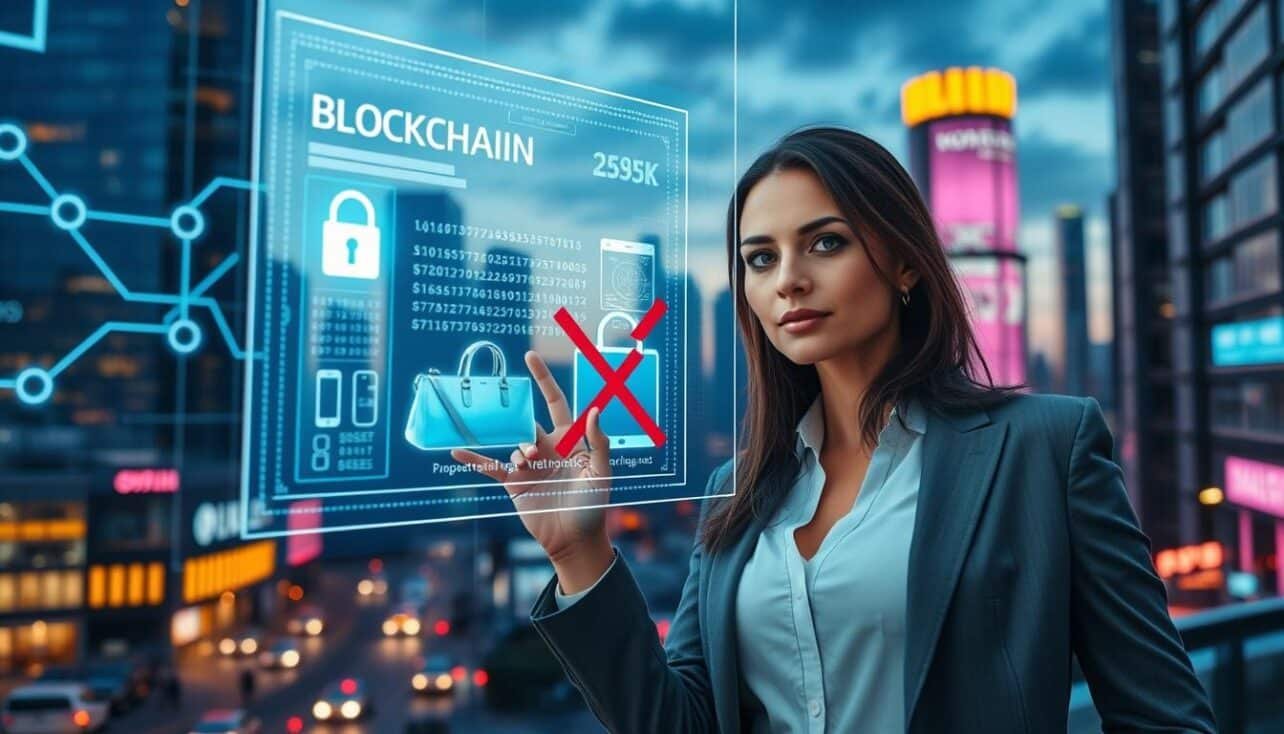
Fake items flood the global market, costing industries billions every year. This widespread issue erodes trust in brands and puts people at risk.
Traditional labels and certificates often fail. Consumers struggle to know if what they buy is real.
A new technology offers a powerful answer. The blockchain system creates a transparent, unchangeable digital record. This ledger tracks an item’s journey from factory to home.
Every product gets a unique, verifiable history. This approach makes it nearly impossible for fraudulent goods to enter the supply chain undetected.
This guide explores this transformative technology. Learn how a verifiable record can tackle supply chain fraud and protect everyone involved.
Introduction to Blockchain in the Fight Against Counterfeit Goods
Distinguishing genuine articles from sophisticated fakes has become a major hurdle for shoppers worldwide. This widespread problem damages economies and puts people at risk.
The Growing Issue of Fake Products
Counterfeit products infiltrate every sector. Luxury items, medicines, and electronics are common targets. These fake goods create serious safety hazards.
They also cause massive financial losses for brands and governments. Traditional verification methods, like holograms, often fail. Centralized databases can be hacked or falsified.
This leaves consumers with no reliable way to check what they buy. The issue erodes confidence in entire markets.

The Promise of Blockchain Technology
A new type of digital ledger offers a solution. This technology is decentralized and distributed. Data is stored in linked blocks that cannot be changed.
This creates a permanent, transparent history for any item. Research shows such systems build trust between parties who don’t know each other. It removes the need for a middleman.
Shoppers can independently verify an item’s origin and journey. Tools for provenance verification are emerging from this innovation. The promise is a world where counterfeiting is much harder to execute.
Understanding Blockchain Immutability and Data Security
At the heart of this innovative system is a principle called immutability, which guarantees that records remain permanent. This blockchain characteristic provides a foundation of trust for digital transactions.
What is Immutability and Why it Matters
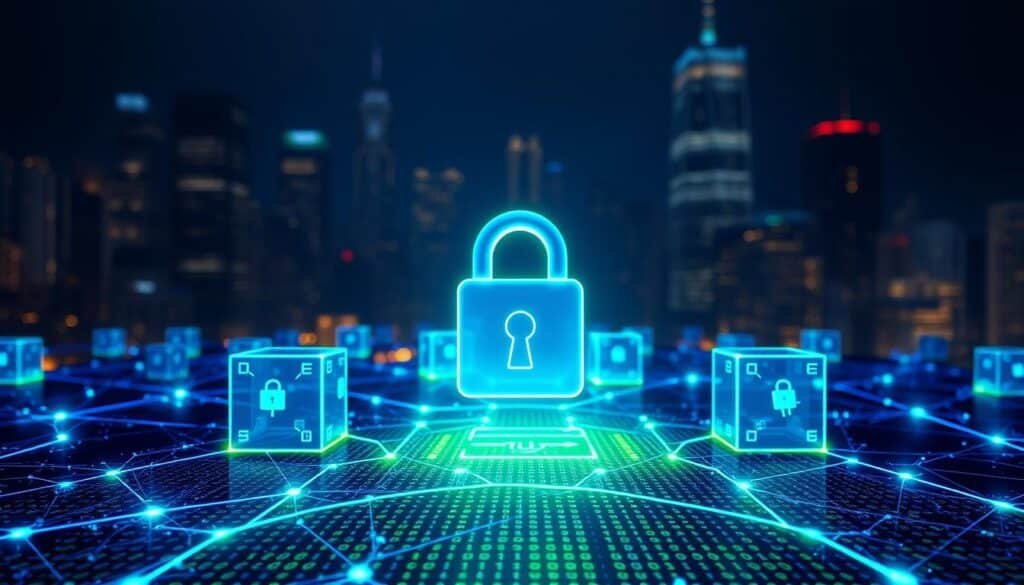
Immutability means once information is added to the ledger, it cannot be altered or erased. Each unit in the chain holds a specific data record. When a new unit is created, it cryptographically links to the previous one.
If someone tries to change a single entry, it would alter the entire sequence that follows. The distributed network would immediately detect this inconsistency. This ensures the system’s overall integrity.
Cryptographic Protection and Secure Transactions
Security is achieved through advanced cryptographic functions like SHA-256. This process generates a unique digital fingerprint for every block. The fingerprint mathematically ties each block to its neighbors.
Instead of a central authority, thousands of independent computers maintain and verify the ledger. They work together to confirm every transaction’s legitimacy. This decentralized approach creates an exceptionally secure environment for storing sensitive data.
Integrating Blockchain into Supply Chain Management
The integration of digital ledger technology into logistics operations marks a significant advancement in product security. This approach creates a transparent and accountable framework for tracking items from manufacture to final delivery.
Tracking Products Through Distributed Ledgers
Distributed ledgers record every movement within the supply chain. Each transfer or handling event generates a permanent, time-stamped entry.
This creates an unbreakable chain of custody that all parties can view. Customers no longer need third parties to confirm product originality.
Ensuring Authenticity at Each Supply Chain Stage
At every stage, from factory to retailer, the system verifies authenticity. Stakeholders can confirm an item’s origin and history without middlemen.
This real-time visibility stops fake products from entering the legitimate network. The transparency provided builds trust among all participants.
Blockchain technology ensures each step is documented irrevocably. This makes it exponentially harder for fraudulent items to infiltrate the supply chain.
how blockchain prevents counterfeit goods: A Step-by-Step Guide
A definitive guide outlines the practical steps to ensure item legitimacy using modern tools. This process gives power back to buyers.
Verifying Manufacturer Credentials and Product Serial Numbers
Manufacturers assign unique serial numbers to each item. These identifiers are recorded on a secure, distributed ledger.
The record is cryptographically sealed. This prevents any alteration or tampering.
Shoppers access this ledger before a purchase. They confirm the serial number matches the permanent record. This step verifies product authenticity.
Consumers can also check the manufacturer’s authorized status. This confirms the producer is genuine.
User-Driven Reviews and Verification Processes
The system integrates authenticated feedback from purchasers. Users submit reviews tied to their verified transaction.
This creates a community layer of trust. It offers transparent information for future customers.
Easy-to-use interfaces allow all parties to participate. Manufacturers, sellers, and consumers use the same platform.
The result is reliable verification that anyone can understand. It builds confidence in every purchase.
Real-World Applications and Industry Examples
Real-world adoption moves beyond concept, offering tangible solutions for verification challenges. Diverse sectors now deploy this technology to create reliable systems.
Financial Fraud Prevention and Secure Ledgers
Banks use secure digital ledgers to strengthen client checks. This process, known as KYC, drastically cuts identity fraud.
Every piece of client information becomes a permanent, encrypted record. This creates a new level of security for financial transactions.
Smart Contracts and Automated Trust Systems
Smart contracts are self-executing agreements with terms written in code. They automatically complete transactions when conditions are met.
This eliminates intermediaries and builds trust. The code cannot be altered, preventing contract fraud.
Case Studies from Various Industries
Retail and e-commerce platforms verify item origins using distributed ledgers. This protects against payment fraud and fake products.
The digital asset sector provides another clear example. Cryptocurrency exchanges use this technology to stop hacking attempts.
These industry cases show how transparent data builds confidence. Multiple industries benefit from automated, verifiable systems.
Adopting Blockchain: Challenges, Solutions, and Future Opportunities
Widespread use of distributed ledger technology faces hurdles related to scale and regulation. Organizations must navigate these issues to unlock its full potential for secure verification.
Practical solutions are emerging to address these concerns. This paves the way for broader adoption across various sectors.
Overcoming Scalability and Integration Hurdles
Scalability is a primary concern for blockchain adoption. High transaction volumes can slow processing, frustrating customers.
New technology, like layer-two solutions, improves network efficiency. These advancements reduce bottlenecks in the systems.
Integration with existing industry workflows also poses a challenge. Modern tools are designed for easier compatibility.
Regulatory Considerations and Market Adoption
Regulatory uncertainty creates hesitation for some businesses. Governments are developing clearer frameworks for this technology.
This clarity will boost blockchain adoption and trust. As more people participate, network effects strengthen the entire system.
The future offers significant benefits. Enhanced transparency and data integrity will lower the risk of counterfeiting.
Research continues to drive innovation at every level. This progress makes supply chains more secure for everyone.
Conclusion
Trust in commerce is being rebuilt through transparent and unchangeable records. This innovative approach offers a definitive shield against fraudulent items.
The technology creates a permanent digital history for every product. This builds trust and security for all participants.
A decentralized system makes tampering with a record virtually impossible. This dramatically lowers the risk of counterfeit goods entering the market.
Adoption across the entire supply chain is the next logical step. It brings transparency from manufacturer to customer.
Blockchain provides a practical, powerful solution for modern markets. Its benefits will only grow as more people and businesses embrace it.
FAQ
What makes a distributed ledger so secure against tampering?
The core security feature is immutability. Once data, like a product’s origin or transaction, is recorded on the chain, it cannot be altered or deleted. This is enforced by cryptographic hashes linking each block to the next. Any attempt to change information would break this link and be immediately visible to all participants in the network, ensuring data integrity and building trust.
How does this technology improve product tracking for customers?
It creates a transparent and unchangeable journey log for every item. From raw materials to the retail shelf, each step is recorded. Consumers can simply scan a QR code to see this entire history. This verification process confirms product authenticity and exposes any breaks in the chain, directly combating counterfeiting.
Can everyday buyers verify an item’s provenance themselves?
Absolutely. Brands using this approach often provide a digital passport for items. Using a smartphone, a consumer scans a unique serial number or tag. This action pulls the item’s verified history from the distributed ledger, showing its manufacturing details and path through the supply chain. This empowers customers with direct transparency.
Which industries are actively using this for anti-counterfeiting?
Several key sectors are leading blockchain adoption. Luxury goods companies like De Beers (for diamonds) and LVMH use it to certify authenticity. The pharmaceutical industry employs it to track medicines, preventing fake drugs. Even major logistics firms like Maersk use it to secure shipping documents and cargo data.
What role do smart contracts play in this system?
Smart contracts are self-executing agreements stored on the chain. They automate and enforce rules without intermediaries. For example, a payment to a supplier can be automatically released only once a shipment’s arrival is verified and recorded on the ledger. This reduces risk and builds trust between parties in the supply chain.
What are the main hurdles for wider implementation?
Key challenges include scalability to handle massive transaction volumes, the cost and complexity of integration with existing legacy systems, and navigating evolving global regulatory frameworks. Successful adoption requires collaboration across entire industries to establish common standards and shared networks.

No comments yet