

This guide helps US readers build practical habits before minting, buying, listing, or signing transactions.
Speed and hype shape the Web3 market. Small errors have cost people big losses. In the first half of 2022, estimated losses from nft scams topped $100 million across marketplaces and social platforms.
Expect a clear, step-by-step guide that covers rug pulls, common nft scams, wallet security, and real-world examples investors can learn from.
Most fraud succeeds by exploiting missing information, rushed choices, and social pressure rather than only through clever hacking.
Readers will learn how to evaluate projects, read tokenomics, spot risky smart contract signals, and verify links before connecting a wallet.
The aim is risk reduction, not perfection. Good security habits will sharply lower the odds of becoming a victim of fraud.
Why NFT scams and rug pulls keep happening in the Web3 market
Fast money and minimal barriers keep risky projects alive in the market. Creating tokens and launching collections costs little, and incentives for bad actors remain high. That gap between effort and reward lets opportunists move quickly.
The stats show this is ongoing. In Q1 2024 there were 15 high-profile rug pulls that drained about $64 million. Rug pulls are now the second most common security issue in crypto.
How urgency and platforms fuel rapid exits
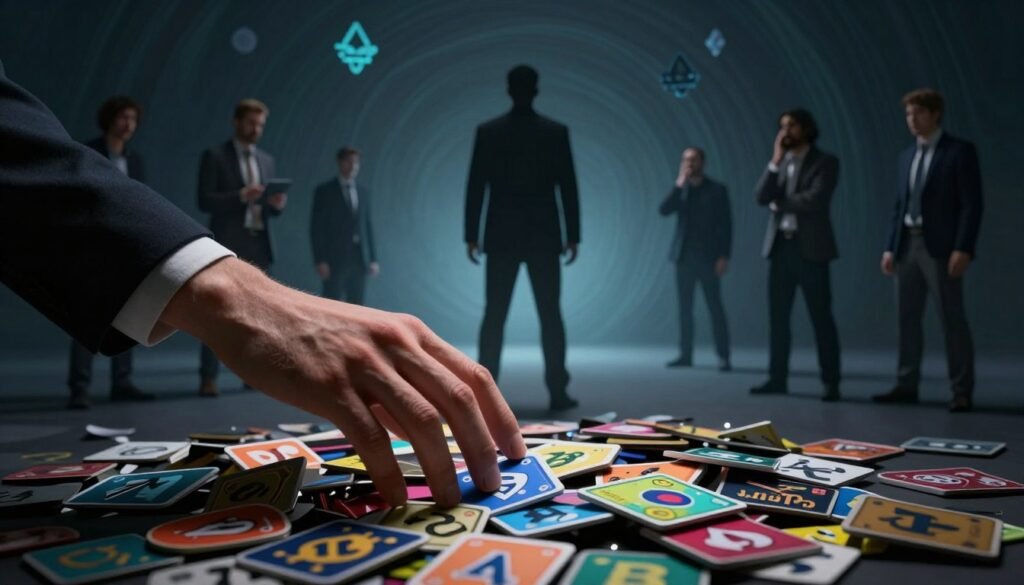
Scammers manufacture urgency on social media with countdowns, limited “WL” spots, and coordinated posts. Those tactics pressure investors into instant choices.
Community dynamics get weaponized through Discord shaming, influencer hype, and “next 10X” narratives that make users skip checks like contract reviews or holder analysis.
- Legitimate marketplaces and ads can still route traffic to malicious projects.
- Lookalike accounts and compromised profiles mimic trusted channels.
- When money moves fast, basic verification steps often get skipped.
| Issue | Why it persists | Quick signal |
|---|---|---|
| Rug pulls | Low launch cost, high reward for exit | Locked liquidity missing or deployer sells |
| Social pressure | Influencers and coordinated posts create herd behavior | Many posts with identical claims and countdowns |
| Platform misuse | Ads, lookalike accounts, compromised profiles | Sponsored links that don’t match official channels |
For a concise primer on common web3 threats and practical defenses, see this web3 security guide.
What a rug pull is in crypto and how it drains investor funds
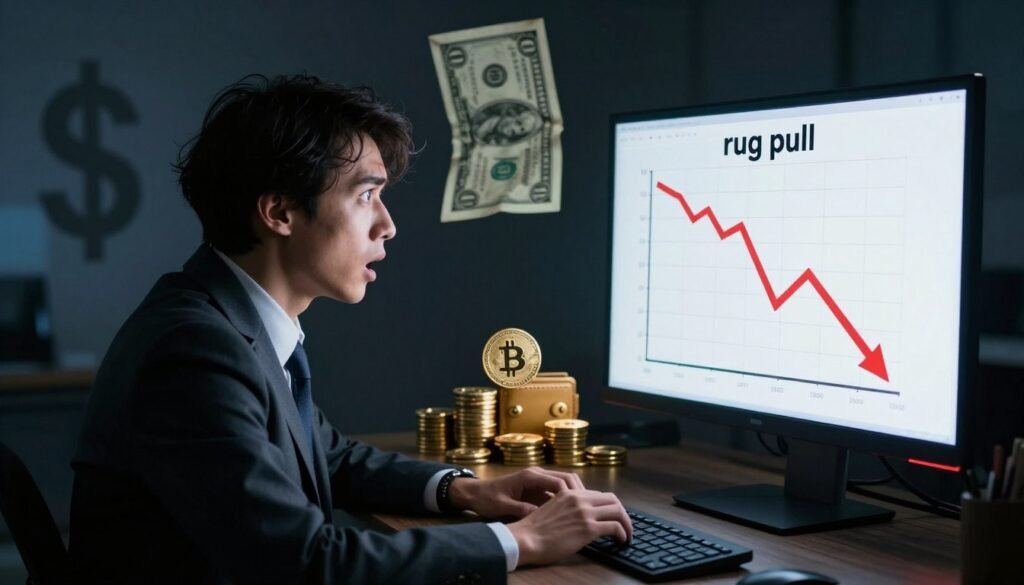
Rug pulls are deliberate exits where creators convert community trust into cash and abandon holders. These moves target DeFi, NFT, and Metaverse projects and wreck portfolio confidence fast.
Rug pull definition and the typical playbook
Definition: Insiders, often the developers, use control of token supply, liquidity, or a vulnerable contract to drain investor funds and leave assets worthless.
Typical playbook: build a polished brand, raise money via mint sales, liquidity pools, or token offerings, then exit. The exit can be a sudden liquidity removal or a large dump from whale wallets.
Hard rug pull vs soft rug pull (exit scams)
Hard pulls embed malicious code or backdoors in a smart contract that steals or locks tokens on command.
Soft pulls look like abandonment: the team vanishes after hype and sales, leaving investors with no roadmap and no liquidity. Both can seem legitimate at first because of professional sites and active social channels.
- Liquidity removal can crash token value to near zero in minutes.
- Backdoors in contracts let scammers siphon funds without immediate signs.
- Professional marketing often masks weak fundamentals.
For a practical primer on spotting red flags in contracts and holder distributions, read this quick guide.
Common rug pull types you’ll see in NFT projects and tokens
Not all collapses look the same; three patterns explain most losses. Below are plain explanations you can spot fast.

Liquidity theft that wipes out pooled value
What it is: creators remove the pool’s funds and leave holders with illiquid tokens.
Why it matters: when liquidity is gone, market orders fail and apparent value evaporates.
Smart contract sell restrictions that trap users’ assets
What to watch for: contracts coded so only certain addresses can sell, or sales occur only under unlikely conditions.
That “I can buy but I can’t sell” feeling is usually intentional. Treat failed sells as a major red flag.
Pump and dump driven by hype and price manipulation
Mechanics: coordinated buys, wash trading, influencer pushes, then a rapid dump that leaves late buyers with pennies.
Look for sudden price spikes, heavy holder concentration, and aggressive marketing before a crash.
- Liquidity theft often shows large deployer withdrawals from pools.
- Sell restrictions appear as strange contract permissions or unique transfer rules.
- Pump and dump reveals itself with sudden volume spikes and rapid price reversals.
| Type | Core action | Observable clues |
|---|---|---|
| Liquidity theft | Creators remove pool funds | Large liquidity transfers, collapsed market depth |
| Sell restriction | Contract limits who can sell | Failed sell attempts, odd transfer conditions |
| Pump and dump | Coordinated hype then rapid dump | Spikes in volume, influencer posts, sudden price crash |
These types can overlap: developers may combine contract traps with aggressive marketing. For a deeper checklist and practical checks, see this detailed guide.
How to Avoid NFT Scams and Rug Pulls with a pre-mint due diligence checklist
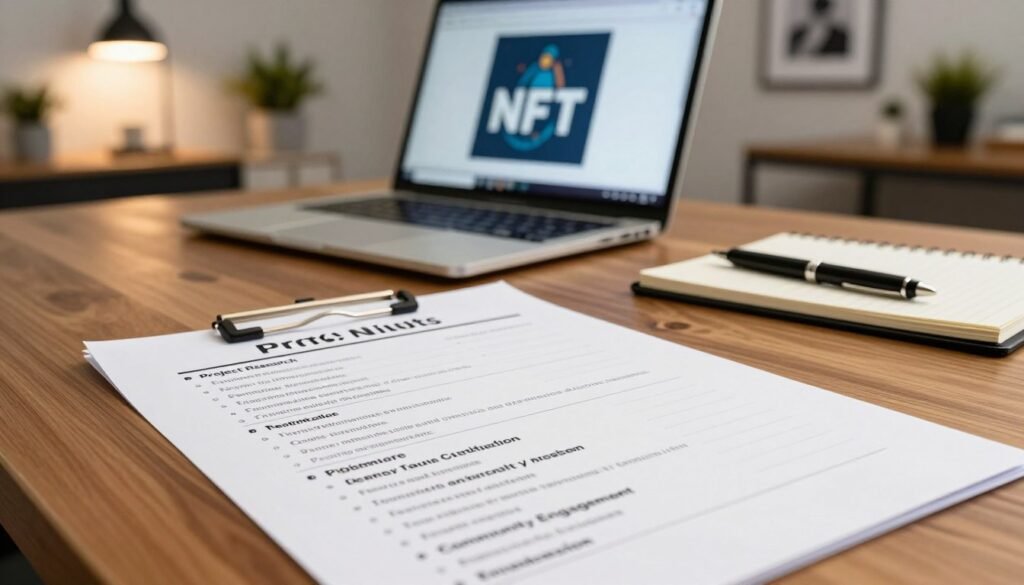
A focused pre-mint review can stop many losses before a single wallet signs. Spend under an hour following clear checks that flag weak projects and risky behavior.
Verify the team and developers
Check identities: review prior projects, linked GitHub, and on-chain activity for consistency.
Watch for anonymous leads, mismatched bios, or reused profile assets across accounts.
Read the whitepaper and tokenomics
Look for concentrated ownership, large insider allocations, or unexplained utility claims. Dominant whale wallets raise clear risk of rapid dumps.
Lock-ups, vesting, and contract review
Confirm lock-up lengths and vesting schedules. No lock-up increases the chance of sudden liquidity removal.
Use block explorers to inspect holder distribution, deployer wallets, and contract creation details.
| Check | What to verify | Red flag |
|---|---|---|
| Team | Linked profiles, past work, public commitments | Anonymous founders, inconsistent histories |
| Tokenomics | Allocation, whale concentration, clear utility | Large insider shares, vague use cases |
| Audits & locks | Real audit reports, multisig, lock-up proof | Logo-only audits, missing vesting |
| Community signals | Active moderation, progress updates, transparent replies | Contradictory posts across site, Discord, social media |
Finish with a small test buy and confirm selling works. Validate audits via independent sources, not just badges. These steps cut risk for investors using limited information on fast-moving platforms.
The most common NFT scams beyond rug pulls and how they work
Malicious actors exploit attention, creating believable fronts that steal keys or funds.
Phishing and fake customer support: Scammers pose as project mods, customer reps, or platform staff on Discord, Telegram, or social media. Any request for seed phrases or private keys is a scam. Never share wallet credentials or approve transactions prompted in chat.
Airdrop and giveaway traps: Lookalike domains and “claim now” flows ask users to sign what seems like a harmless transaction. That signature can grant permissions that drain wallets.
- Check exact domain spelling and official links from the project’s site.
- Avoid sponsored links and unsolicited DMs; use bookmarked pages instead.
Fake or duplicated nfts on marketplaces: Easy minting lets copies spread. Verify provenance with on-chain history and reverse image search before buying.
Sneaky bidding and currency swaps: At auction close a highest bidder may switch the payment token, leaving a seller with much less value if they accept without re-checking the currency type.
| Threat | Core risk | Quick check |
|---|---|---|
| Phishing | Credential theft | Never share seed phrases |
| Airdrop/giveaway | Malicious approvals | Inspect transaction details before signing |
| Fake listings | Counterfeit assets | Confirm contract and provenance |
If you clicked a bad link: disconnect the wallet, revoke approvals, move assets to a new wallet, and report the account or listing on the platform. Quick action can limit losses in the cryptocurrency space.
Wallet and transaction security habits that protect your digital assets
Small routine checks before every transaction stop most common wallet losses. Follow a simple baseline that any user can repeat in minutes.
Never share seed phrases or private keys
Seed phrase hygiene: No legitimate support rep will ask for seed words or private keys. That request is a classic social engineering script used by scammers.
If asked, close the chat, verify official channels, and never paste credentials into sites or messages.
Use a burner wallet for high-risk interactions
Keep primary funds in one safe wallet and use a separate burner for airdrops, unknown dApps, and trial mints. Isolation limits exposure if a contract or site is malicious.
Review and revoke token approvals
Token approvals grant contracts permission to move assets. Unlimited approvals are risky. Check approvals after any unfamiliar interaction and revoke suspicious permissions.
Test sell before scaling up
Buy a small amount first and confirm you can sell or transfer. Unexpected sell failures are a critical red flag, not a temporary glitch.
| Action | Why it matters | Quick step |
|---|---|---|
| Seed phrase safety | Prevents credential theft | Never share; use hardware or secure storage |
| Burner wallet | Isolates risk | Use for airdrops and unknown sites |
| Approval checks | Stops smart contract drains | Revoke after use with explorer tools |
| Test sell | Detects sell restrictions/backdoors | Sell small amount before adding funds |
If you suspect compromise: revoke approvals, move remaining assets to a fresh wallet, and rotate keys. For step-by-step hardening, see this wallet security guide.
Real-world rug pull examples and the red flags investors missed
Real incidents reveal how polished branding hid destructive on-chain mechanics. Below are three concise case studies that show common mistakes investors made and the on-chain clues they missed.
StableMagnet: unverified libraries and unsafe approvals
June 2021 saw a hard exit where $27M was drained. An unverified code library plus broad approvals let a backdoor sweep liquidity and move tokens at scale.
Action: confirm contract verification and avoid blanket approvals; prefer audited code before risking real money.
AniMoon: celebrity shill without proof
June 2022 featured heavy celebrity promotion and grand claims that lacked evidence. Trace work by researchers linked funds to exchange accounts tied to founders.
Lesson: hype is not proof. Verify partnerships and follow wallet flows when teams disappear.
Teddy Doge: rapid developer selling and concentrated supply
Developer-linked wallets sold over $4.5M within a week. Tokenomics concentrated supply and team control of pools enabled a fast dump.
- Red flags investors missed: unverified code, celebrity-only validation, rapid dev selling.
- Preventive steps: check verification, revoke approvals, test sell small amounts.
| Red flag | Example | Quick step |
|---|---|---|
| Unverified code | StableMagnet | Require verified/audited contracts |
| Hype without proof | AniMoon | Verify partnerships, track funds |
| Concentrated supply | Teddy Doge | Inspect tokenomics, watch dev wallets |
Conclusion
Simple, repeatable checks are the most reliable defense in a noisy market. Slow down, verify a project’s claims, and make security steps routine before any mint or sale.
Both hard and soft rug pulls can look polished. Hard types hide malicious code. Soft types vanish after raising funds. In both cases, rushed choices and weak verification let losses happen.
Prioritize: verify the team, review tokenomics and holder spread, confirm lock-ups and vesting, validate audits, then test selling with a small buy.
Treat hype and community pressure on social media as a risk signal, not proof of value. Use a burner wallet for unknown interactions, revoke approvals often, and never share seed phrases or private keys.
Scams will evolve, but steady due diligence and transaction hygiene cut risk in cryptocurrency markets.
FAQ
Why do scams and rug pulls keep happening in the Web3 market?
A mix of fast innovation, low regulation, and speculative money creates ripe conditions. Scammers exploit hype, anonymous teams, and incentives for quick gains. Social media and influencer promotions amplify projects before proper checks occur, making it easy for bad actors to raise funds and exit quickly.
What is a rug pull and how does it typically work?
A rug pull is an exit scam where creators build trust, sell tokens or NFTs, then drain liquidity or transfer funds out of the project. The playbook often involves a polished website, aggressive marketing, and staged releases that lure buyers before developers dump holdings or remove trading pairs.
What’s the difference between a hard rug pull and a soft rug pull?
A hard rug pull is a blatant exit—developers withdraw liquidity or transfer assets and disappear. A soft rug pull involves subtle tactics like team token sells, delayed roadmap delivery, or engineered price crashes. Both can appear legitimate at first but produce similar investor losses.
What common rug pull types should investors watch for?
Common patterns include liquidity theft that empties pools, smart contract sell restrictions that trap buyers, and pump-and-dump schemes driven by hype. Each tactic targets market trust or technical controls to remove value from users.
What should I check in a pre-mint due diligence checklist?
Verify the team’s real-world identities and past projects, review the whitepaper and tokenomics for concentrated ownership, and confirm lock-up and vesting schedules. Use block explorers to inspect deployer wallets and holder distribution, and look for credible third-party audits with verifiable reports.
How can I validate an audit and avoid fake security badges?
Click through to the auditor’s official site and confirm the project listing. Read the full audit report for findings and remediation notes. Beware of screenshots or logos that aren’t linked to a public report; reputable auditors publish detailed results.
What community signals reduce risk of an exit scam?
Healthy projects show consistent progress, transparent announcements, active moderation, and verifiable milestones. Look for public developer engagement, tangible deliverables, and clear governance. Discord or Telegram filled with bots, inconsistent messaging, or promised but missing proofs are red flags.
Beyond rug pulls, what other scams should collectors know about?
Phishing and fake support channels that steal seed phrases, airdrop lures with malicious links, counterfeit NFTs listed across marketplaces, sneaky last-second auction tricks, and fake influencer promotions are common. Each relies on social engineering or lookalike sites to trick users.
How do phishing and fake customer support scams typically work?
Scammers create lookalike domains, hijack social accounts, or pose as moderators. They ask for private keys, seed phrases, or trick users into signing transactions that grant contract approvals. Never share keys or click unsolicited links—legit support never requests your seed phrase.
What wallet and transaction habits protect digital assets?
Never reveal seed phrases or private keys. Use a separate burner wallet for airdrops and high-risk interactions. Regularly review and revoke token approvals using tools like Etherscan or Revoke.cash. Test small transactions first and confirm you can sell before committing large sums.
Why should I use a burner wallet for certain interactions?
A burner wallet isolates risk. If airdrops or experimental contracts try to drain funds, your main holdings remain safe. Use hardware wallets for long-term storage and small software wallets for new mints and marketplace browsing.
How can I inspect a smart contract for sell restrictions or malicious code?
Use block explorers to view verified source code and transaction history. Search for functions that block transfers, restrict selling, or change ownership. If you lack technical skills, ask a trusted developer or community auditor to review the contract.
What red flags did investors miss in real rug pull cases like StableMagnet, AniMoon, and Teddy Doge?
In those cases, unverified libraries and broad approvals enabled wallet draining; celebrity shilling masked missing proof and roadmap inconsistencies; rapid developer selling revealed pump-and-dump behavior. Common missed signals were anonymous teams, unverifiable audits, and sudden liquidity moves.
Can marketplaces or platforms protect me from counterfeit or duplicate listings?
Reputable marketplaces like OpenSea and Magic Eden implement verification badges and reporting systems, but duplicates slip through. Always check creator addresses, collection verification, and provenance. Report suspicious listings and avoid buying first-time or unverified collections without extra checks.
What steps should I take immediately if I suspect a rug pull or hack?
Stop interacting with the contract, revoke approvals from your wallet, and move unaffected assets to a secure hardware wallet. Report the incident to the marketplace and relevant communities. Collect transaction evidence and consider contacting blockchain security firms or law enforcement if funds are substantial.

No comments yet