

A new type of organization is reshaping the crypto world. These are Decentralized Autonomous Organizations, or DAOs. They run on blockchain technology. This allows communities to collaborate and make decisions without a central leader.
Creating one of these organizations means setting up a system where voting and governance happen transparently on-chain. It replaces old, top-down management with community-driven control.
DAOs are not just a trend. They are accumulating real financial power. Many see them as the logical next step after NFTs. They are becoming the standard model for running apps and protocols across the globe.
This comprehensive resource will walk you through every critical phase. We start with defining your mission and go all the way to launch and ongoing maintenance. You’ll get both technical know-how and big-picture strategy.
Some no-code tools claim you can set up a DAO in minutes. But a truly successful and lasting decentralized autonomous organization needs more. It requires thoughtful design, active member participation, and precise execution.
You will learn about governance models, token economics, smart contracts, and voting systems. For a deeper dive into the initial setup, consider this excellent step-by-step guide. Our insights are grounded in real-world examples from thriving DAOs.
Introduction to Decentralized Autonomous Organizations
At their core, DAOs are blockchain-powered entities that enable collective governance without central control. This model replaces traditional management with transparent, on-chain processes.
What is a DAO?
A decentralized autonomous organization operates through immutable voting. Every decision is recorded publicly on the blockchain, making falsification impossible.
These groups form around specific protocols or projects. To participate in voting, members typically must hold a governance token.
Consider MakerDAO, a leading DeFi protocol. Voting rights require owning MKR tokens. Early adopters received them via AirDrops, while others purchased them.

Why DAOs Matter in the Blockchain Era
Governance tokens offer significant speculation potential. Their prices can be highly volatile. MKR, for instance, surged from under $300 to a $6,000 peak.
This financial incentive attracts active participation. DAO members feel directly invested in the project’s success. They gain real influence over development and strategy.
The system ensures complete transparency. All actions are visible, fostering trust. However, voting power often correlates with token holdings.
Modern DAOs have evolved. They now manage large treasuries, fund initiatives, and coordinate global community efforts. They represent a new paradigm for collaborative organization.
Understanding DAO Fundamentals and Key Concepts
Four critical components form the lifeblood of every functional and impactful decentralized autonomous organization. These elements work together to create a transparent and member-driven system.
Without them, a group is just a chat room, not a powerful, coordinated entity.
Blockchain, Governance, and Voting
The blockchain provides the immutable ledger for all actions. Smart contracts automate the rules, ensuring voting outcomes execute without a central party.
This technical foundation makes the entire governance process transparent and trustworthy.
Every successful DAO is built on four pillars:
- Purpose: A clear mission that attracts participants.
- Voting Mechanism: A fair system for making collective decisions.
- Treasury: Secured community funds for projects and operations.
- Members: An engaged community incentivized to participate.
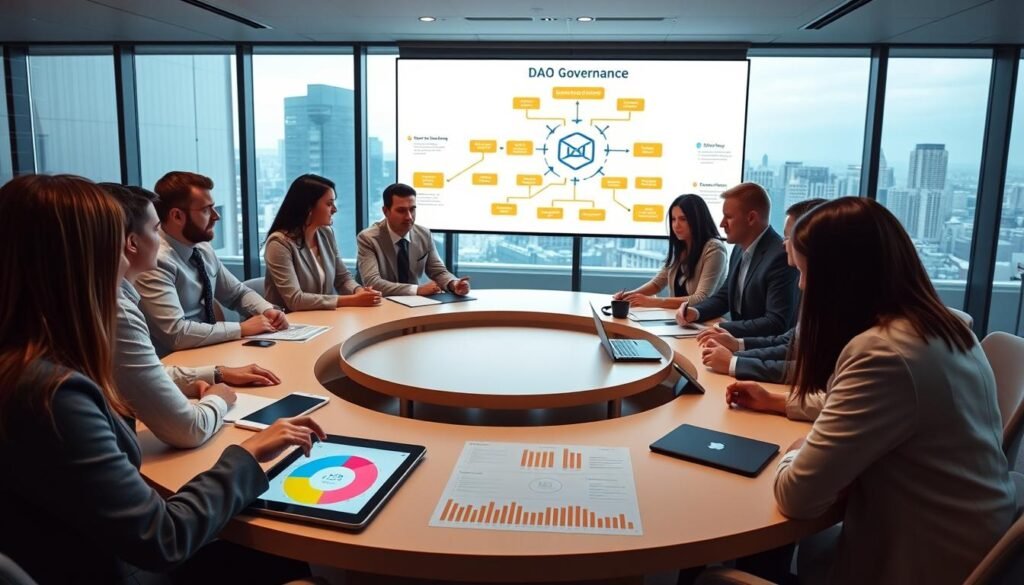
Governance flows through a proposal process. Token holders submit ideas for changes or funding. The community then votes on these proposals.
A larger treasury attracts more members and provides greater resources. It signals stability and potential.
In on-chain DAO models, approved proposals trigger automatic execution via smart contracts. This gives community decisions immediate, binding power.
Active participation from members is the final, crucial ingredient. The system only works if people use it.
How to Build a DAO from Scratch
The journey to establish a DAO involves a series of deliberate, interconnected steps. Success demands careful planning, strategic execution, and patience.
Technical development typically spans three to four months. Building a vibrant community often requires additional time.
Clearly defining the organization’s purpose and governance structure from the start is critical. This alignment ensures decentralized decision-making and member effort cohesion.
Choosing the right blockchain platform is an essential early decision. It impacts transaction costs, speed, security, and the overall user experience.
Designing a transparent governance model encourages broad participation. It must prevent control imbalances where a few large holders dominate.
The core steps in this process include:
- Defining clear objectives and goals.
- Designing the governance framework.
- Selecting the DAO type (e.g., protocol, social).
- Developing tokenomics and treasury plans.
- Building and engaging the community.
- Choosing a development approach.
- Establishing voting mechanisms.
- Deploying to the blockchain.
Each step must be meticulously managed and documented. While no-code tools can launch a DAO quickly, a resilient organization needs significant time investment.
The project is iterative. Start with core functionality and improve based on feedback. For insights on token design, see this guide on creating your own cryptocurrency.
Designing Effective DAO Structures and Governance Models
A DAO‘s long-term viability hinges on how well its governance model aligns with its core objectives. This design phase sets the foundation for all community operations.
Defining Objectives and Purpose
Start with a sharp, specific vision. Clear goals guide every strategic choice and attract committed members.
Identify the exact problems your organization will solve. Align these with broader blockchain ecosystem aims, like enhancing transparency or enabling community projects.
Founders must answer critical questions:
- What is our short and long-term vision?
- Do we truly need a decentralized, non-hierarchical ownership model?
- How will our DAO make binding decisions?
- Does a DAO structure genuinely benefit our target community?
Establishing Roles and Responsibilities
Map out your governance structure to support these objectives. Determine how voting power is distributed to prevent any single entity from dominating.
Define clear roles. A core team often handles initial coordination. Contributors, developers, and community managers fill other essential functions.
Create committees or working groups for specific tasks. This structure balances decentralization with practical operational needs. It ensures efficient decision-making while maintaining community control.
Exploring DAO Types and Community Engagement
Beyond a single model, DAOs have evolved into distinct types, from managing protocols to collecting digital art. Selecting the right category aligns your organization’s structure with its specific goals.
Protocol, Investment, Collector, and Social DAOs
Protocol DAOs govern decentralized application rules and upgrades. Investment DAOs pool capital to back new crypto startups and projects.
Collector DAOs focus on acquiring and managing valuable NFTs as a group. Social DAOs form digital communities around shared interests.
Other models include Grant, Media, and Philanthropy DAOs. Each serves a unique niche in the ecosystem.
Your chosen type directly influences who joins your community. Engage potential members early with a compelling story.
Leverage social media to spread your vision. Active participation is the lifeblood of these organizations.
The space is still young, with many use cases untested. Prioritize your community as the number one asset from day one.
Developing DAO Tokenomics and Treasury Management
Token distribution and fund management form the critical economic backbone of a successful DAO. This model defines value flow and aligns every participant’s incentives.
Token Distribution Strategies
A comprehensive tokenomics plan is essential. It must detail how tokens are earned, spent, and used. This aligns all stakeholder interests for long-term health.
DAO tokens serve multiple vital functions. They grant governance voting rights to holders. They also reward contributors and can unlock exclusive benefits for community members.
Finding the right token supply is a strategic decision. The “Goldilocks” spot is often in the millions. For example, ENS distributed 100,000,000 tokens. This avoids an arbitrary, inflated supply while encouraging trading.
Securing Community Funds and the Treasury
Balancing rewards with operational capital is delicate. The community treasury needs enough funds to reach objectives. It must also properly incentivize early supporters.
The treasury represents shared ownership. It enables the DAO to pay for operations and make strategic crypto investments. Securing these funds is paramount.
Gnosis Safe is the industry standard for this. It uses multi-signature contracts requiring multiple approvals for transactions. This setup prevents single-point control over the treasury.
Implementing Voting Mechanisms and Smart Contract Development
The voting system is the operational engine that transforms community discussions into binding decisions for any decentralized organization. Its design directly impacts legitimacy and member trust.
A fair process ensures all members can participate effectively. It must support inclusivity while preventing any single group from dominating the outcomes.
Diverse Voting Processes: Quadratic, Weighted, and Delegated
Several models exist to balance power. Quadratic voting makes it costly to cast many votes for one choice. This reduces large-holder dominance.
Weighted voting ties power directly to token holdings. It’s common but can concentrate influence. Delegated voting lets members assign their power to a trusted representative.
Other systems include one-member-one-vote and reputation-based models. Colony.io uses a reputation system where power is earned through contributions.
Different proposals may call for different mechanisms. A dao might use simple voting for routine matters and require consensus for critical changes.
Building and Testing Smart Contracts
The rules for these voting systems are enforced by smart contracts. These contracts define token governance, treasury access, and all operational features.
Once live on the blockchain, a smart contract cannot be altered. This immutability makes pre-deployment testing absolutely critical.
Developers use test networks like Rinkeby. They simulate all functions without spending real cryptocurrency. Every line of code must be verified.
If a contract lacks needed functionality, a community vote cannot add it. Significant upgrades require building a new contract and migrating users.
After exhaustive testing, the dao deploys to a mainnet. Ongoing maintenance and community feedback then guide its evolution.
Leveraging DAO Platforms and Tools for Seamless Deployment
A wide ecosystem of specialized software now exists to streamline DAO launch and management. These tools handle everything from governance to treasury operations.
Selecting a robust platform is critical for your dao’s long-term success. Many companies now offer tailored solutions for decentralized organizations.
No-Code Platforms vs. Custom Development
Founders face a fundamental choice. They can hire skilled developers for a custom build. This path offers complete control over features and interface design.
A clean interface improves user adoption. Custom features allow for unique functionality tailored to specific projects.
Alternatively, no-code platforms provide a faster launch. Evaluating each platform is key.
Services like Colony.io or Aragon.org offer pre-built templates. They significantly reduce the time and technical knowledge required.
These tools are ideal for many new daos. They make decentralized governance accessible to non-technical teams. Popular daos often use a mix of both approaches.
Best Practices for DAO Deployment and Maintenance
Successful deployment relies on the right tool stack. Treasury management often starts with Gnosis Safe. This multi-signature wallet secures community funds.
For governance, tools like Snapshot enable off-chain voting. Tally facilitates on-chain proposal tracking. These systems empower users to participate easily.
This gives users direct influence over decisions. Every dao must prioritize security.
A thriving dao requires robust tools. Communication happens on platforms like Discord and Twitter.
They are essential for sharing content and coordinating a global team. Always test extensively on a network testnet before launch.
Establish clear processes for ongoing maintenance and updates. These platforms and tools integrate to create a seamless experience for all members.
Conclusion
The rise of decentralized autonomous organizations marks a pivotal shift. Global communities now coordinate and manage shared assets on the blockchain without traditional hierarchies.
A successful DAO rests on its engaged community. While technical structure for voting and treasury management is vital, active members drive real decisions and proposals.
The ecosystem offers robust tools and platforms for launch. Foundational choices on governance and tokens require careful thought, as they are hard to change later.
DAOs represent a fundamental new model for organization. They enable transparent, collective ownership across the digital world.
FAQ
What are the core components of a decentralized autonomous organization?
The essential components include a clear governance framework, a native token for voting and membership, a secure treasury for community funds, and immutable smart contracts that automate rules and execute proposals. These elements work together to enable decentralized decision-making without centralized control.
What is the first step in creating a DAO?
The foundational step is defining your organization’s mission, core goals, and the specific problem it aims to solve. This clarity guides every subsequent decision, from your chosen governance model to your tokenomics and the selection of blockchain tools like Aragon or Syndicate for deployment.
How do voting mechanisms work within these organizations?
Voting processes are encoded into smart contracts. Members typically use governance tokens to cast votes on proposals. Systems can vary, featuring one-token-one-vote, quadratic voting to reduce whale influence, or delegated voting where users assign their voting power to trusted representatives.
What is the role of a treasury in DAO operations?
The treasury is the community’s shared bank account, holding crypto and NFTs. It funds projects, pays contributors, and invests in growth. Management is decentralized, with token holders voting on all spending proposals to ensure transparency and collective oversight of the organization’s financial resources.
Can you build a DAO without knowing how to code?
Absolutely. No-code platforms like Colony and DAOhaus provide user-friendly interfaces to launch a decentralized autonomous organization with customizable templates. For advanced needs, developer teams can write custom smart contracts on networks like Ethereum or Polygon.
What are the different types of decentralized autonomous organizations?
Common types include protocol DAOs that govern blockchain software, investment DAOs that pool capital for ventures, collector DAOs that acquire NFTs, and social DAOs focused on community engagement. The structure aligns with the group’s primary purpose and goals.
How is membership and ownership typically managed?
Membership is often granted through token ownership. Holding the governance token signifies membership and grants voting rights. Some structures use non-transferable tokens or NFT-based passes for exclusive access, ensuring that stakeholders in the community have a direct say in governance decisions.
Why are smart contracts so critical for a DAO’s function?
Smart contracts are the immutable backbone. They automatically execute the rules defined by the community, from distributing tokens to tallying votes and releasing treasury funds. This automation enforces trustlessness and ensures the organization operates as programmed, without the need for intermediaries.

No comments yet