

This guide explains what “AI crypto mining” means in plain language. It describes using automation and smart systems to make mining decisions and run gear more efficiently without changing blockchain rules. Expect clear, practical steps for small operators and hobbyists in the United States.
Readers today range from home miners to beginners exploring pools, cloud options, or tokenized setups. The piece separates mining coins tied to an AI narrative from using machine learning to tune rigs. That distinction prevents wrong assumptions at the start.
Core decisions covered include method, hardware, setup steps, optimization, profitability, sustainability, and risk management. The guide gives a reality check: smart systems can cut wasted electricity and automate tuning, but they cannot beat hardware limits or bypass Proof of Work.
Effective means steady uptime, safe temperatures, managed electricity costs, clear fees, and a plan for volatility and payouts. By the end you will see the practical potential and the likely future direction toward more autonomous, greener facilities.
– Clear definition and audience
– Difference between coin themes and optimization
– Preview of decisions and a reality check
AI Crypto Mining Today: What It Is and Why It’s Changing Crypto Mining
Operators are adopting smart systems that watch rigs and act faster than human teams. This changes the daily process of running mining operations by adding an operations layer that optimizes settings automatically.
How modern systems differ from traditional setups
Traditional mining operations rely on manual monitoring, static fan curves, and periodic checks. People make timed adjustments and respond after alerts.
AI-driven setups gather sensor data and apply models that act in real time. That means automatic pool switches, dynamic fan control, and voltage tweaks without waiting for an operator.
Where these systems help most
Systems evaluate temperatures, fan speeds, hashrate trends, electricity pricing, difficulty shifts, and pool performance. This mix of inputs improves computing efficiency and uptime.
- Fewer crashes and overheats
- Faster reaction than manual tuning
- Better performance-per-watt rather than raw hash power
Clear limitations
These layers optimize operations but do not change Proof of Work rules. The underlying chips still do the same cryptographic work, and hardware physics caps raw output.
Mental model: think of smart systems as an optimization and automation layer sitting on top of mining software and hardware, not as a replacement for GPUs or ASICs.
Choose Your Mining Path: Home Rigs, Mining Pools, Cloud Mining, or Digital Mining
Choosing where and how you join mining networks shapes costs, control, and steadiness of payouts. Small operators usually favor shared setups because they smooth variance and increase the chance of regular rewards.
Solo rigs versus pooled participation
Solo attempts mean rare, larger payouts when a block is found. That creates high variance and long waits for small miners.
Mining pools split work and distribute smaller, frequent payouts. Check payout methods (proportional or pay-per-share) and fees when choosing a pool.
Rented hashpower and tokenized options
Cloud mining sells a contract for hashpower. Contracts list duration, hash rate, and fees, but difficulty climbs or price drops can erase profits.
Digital mining or tokenized capacity represents owned, transferable mining units. This model can offer more transparency and resale options than simple rental contracts.
What hands-off platforms automate
Modern platforms allocate hashpower, switch pools or coins, and adjust power use to lower costs. Verify proof of mining and clear fee disclosure before you commit.
- Default for small operators: join a reputable pool for steadier rewards
- Consider cloud or digital if you cannot host noisy equipment
- Always review contract terms and proof documentation
Read reviews and platform details, and see curated cloud options like this guide for apps that rent power: cloud mining apps.
Hardware and Equipment That Matter Most for AI-Optimized Mining
Good equipment reduces downtime and gives optimization systems room to improve efficiency. Pick the right class of compute for your goals and budget. That choice drives cooling, electricity use, and expected returns.
CPU, GPU, and ASIC: when each fits
CPU rigs make sense for learning and CPU-friendly coins such as Monero. They are low-cost entry points and useful for testing software.
GPU rigs are flexible across many algorithms and work well for coins like Ravencoin. GPUs balance versatility and upgrade paths.
ASIC units (application-specific integrated circuits) are required for competitive bitcoin mining. They deliver the best performance-per-watt but lack coin flexibility.
Cooling, power, and monitoring essentials
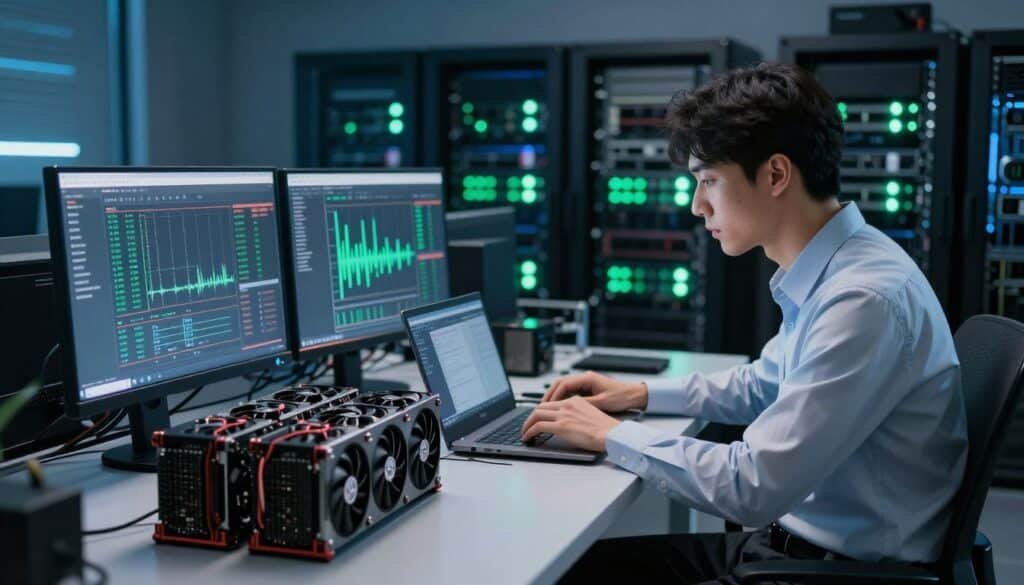
Reliable sensors, stable power supplies, and quality fans are the basics an optimizer needs. Continuous temperature telemetry lets systems adjust fan curves and voltages safely.
Place rigs for clear airflow and keep hot exhaust away from intakes. Heat shortens component life and raises maintenance costs.
Home electrical safety and buy vs. build
In the US, check breaker capacity, continuous load rules, correct wiring gauge, and avoid overloading circuits. Poor wiring is a serious fire risk.
Buying prebuilt rigs gives warranty and support. Building offers customization and lower initial costs but requires more maintenance and a depreciation plan.
For homeowners planning modest setups, review practical hosting tips in this homeowner guide — home mining advice.
How to Mine AI Cryptocurrencies With a Step-by-Step Setup
Start by mapping your hardware to compatible coins and realistic reward expectations. Match the chip type with the right algorithm, then check network difficulty and current competition. Focus on coins with steady liquidity and active pools.
Pick what to mine
Evaluate coin liquidity, pool availability, and historical difficulty swings. Smaller hashrate contributors should expect payout variance and plan accordingly.
Wallet and basic security
Create a wallet early and generate the correct addresses for payouts. Back up keys, enable two-factor measures where possible, and never share private keys.
Install software and connect
Choose reputable mining software, verify downloads, then connect either to a trusted platform or public pools. Confirm pool fees and payout schedules before running full loads.
Configure for stable performance
Set conservative clocks, safe voltages, and reasonable hashrate targets at first. Aim for uptime and low rejected shares rather than peak clocks during the initial phase.
Run a controlled test period
Run the rig for a short time and monitor temperatures, uptime, rejected shares, payout timing, and fees. Use this data to fine-tune settings and validate end-to-end payouts.
Note on bitcoin: mine bitcoin typically requires ASICs; most individuals join pools for practical access and steadier returns.
Using AI to Optimize Mining Efficiency and Cut Electricity Costs
Automated orchestration lets rigs chase better payouts by weighing prices, fees, and network difficulty in real time.
Smart resource allocation compares coin prices and difficulty, then redirects hashing power to the best short-term choice. Systems also weigh pool fees and payout reliability, moving workers when expected returns improve.
Pool switching and market logic
Pool selection balances fee levels, latency, and success rates. The optimizer splits load across pools to reduce variance and keep payouts steady for small miners.
Energy and time-of-use optimization
For US operators, systems throttle or pause rigs during peak electricity costs and ramp up at lower rates. That saves money and smooths demand on cooling and power infrastructure.
Predictive maintenance and anomaly detection
Early signals—rising temps at steady load, erratic fan RPM, or growing hardware errors—trigger alerts before failures. Anomaly rules also flag sudden hashrate drops, odd outbound traffic, or unauthorized config changes.
Hardware tuning for performance per watt
Undervolting and mild clock adjustments lower heat and improve efficiency. The main advantage is steady, cost-effective operation that improves long-term profitability, not extra raw hashpower beyond physical limits.
- Better uptime and lower electricity costs
- Fewer emergency repairs and longer hardware life
- More consistent, predictable rewards for miners
Top AI Crypto Mining Platforms and Tools to Consider in 2025
A crowded market of cloud services and platforms means careful vetting is now essential.

What to verify before signing up: insist on clear fee disclosure, payout rules, withdrawal limits, and whether proof of mining is auditable on-chain or via third-party reports.
Proof of mining should show consistent payouts and verifiable hashpower, not just attractive dashboard metrics.
Typical fee structures and risks
- Upfront contract price plus recurring maintenance fees can erode returns quickly.
- Spread-like pricing or hidden commissions reduce effective rewards.
- Check daily payout policies and any minimum withdrawal limits.
Platform snapshots
Magicrypto: promotes renewable energy use and transparency. GBC Mining: markets low entry cost plans. Mint Miner: highlights security partnerships. RI Mining: focuses on mobile onboarding. Fleet Mining: emphasizes sustainability and fleet-level management.
Digital mining options offer transferability and upgrade paths, unlike long locked cloud contracts. Always validate claims independently and treat platform lists as informational, not endorsements.
Profitability and Rewards: How to Calculate If Mining Is Worth It
Profitability starts with a clear spreadsheet: expected daily coin output minus pool fees, converted using market prices, less electricity and an allowance for downtime.
Key inputs
Track electricity per kWh, actual power draw, hardware cost and realistic uptime. Include PSU and cooling overhead in your costs so totals are honest.
Network and market variables
Account for network difficulty shifts and changing block rewards. Different payout structures in pools change variance and the predictability of rewards.
Break-even and ROI
Time to ROI moves with market price and difficulty. A rising bitcoin price can shorten ROI; rising difficulty or falling price can stretch it far beyond expectations.
Common mistakes and a decision step
- Ignoring rejected shares, downtime, and cooling costs.
- Assuming 100% uptime or underestimating fees.
- Chasing unrealistic return claims without scenario runs.
Practical step: run best/base/worst cases before buying hardware or signing any cloud contract. That one exercise reveals if mining can deliver the rewards you expect.
Energy, Sustainability, and Renewable Options for Smarter Mining Operations
Electric bills often dwarf hardware outlays and shape nearly every serious decision for miners in the United States.
Why electricity is the biggest cost and how automation cuts waste
Electricity is the largest operating cost for most mining operations. That cost alters purchase, placement, and run schedules.
Automated systems reduce waste by matching rig output with profitability windows, preventing overheating, and limiting inefficient settings that burn power without extra reward.
Renewable options and timing strategies
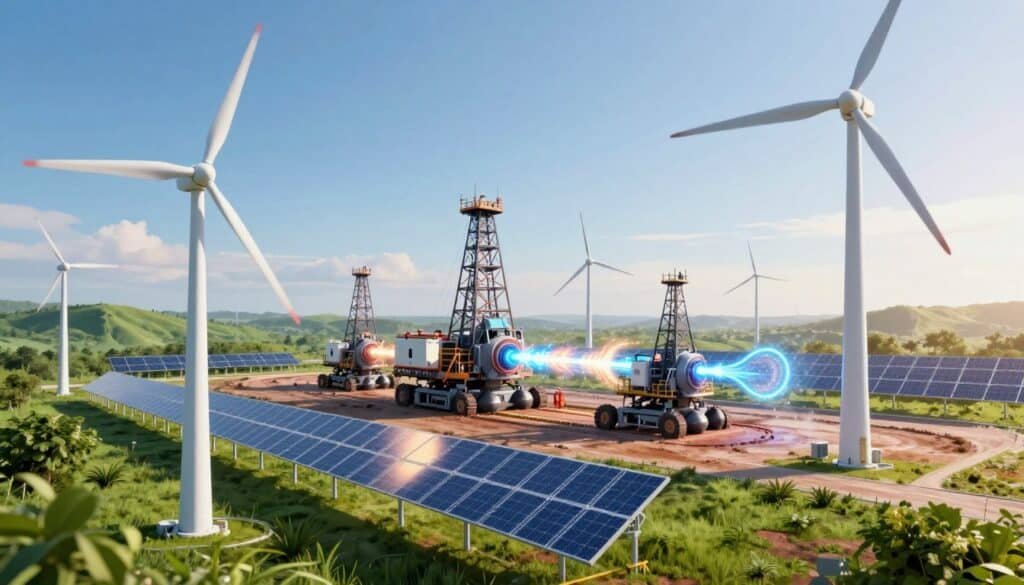
Where available, renewable energy can lower long-term costs and reduce exposure to price swings.
Operators often pair solar, wind, or hydro contracts with schedulers that ramp power use when green energy is abundant. Time-of-use plans also help: run higher loads during off-peak hours and scale back at peak pricing.
Cooling and heat management beyond more fans
Good cooling design beats random fan boosts. Focus on airflow pathways, intake/exhaust separation, and ambient temperature control.
Regular cleaning, filtered intakes, and continuous monitoring reduce heat stress and extend component life. These steps improve efficiency and lower repair costs.
Long-term sustainability and operational potential
Investing in efficiency and renewables lowers costs and reduces regulatory and market risk. That strengthens margins and supports the future potential of mining as energy markets evolve.
- Tip: audit electricity usage monthly and align schedules with cheaper rates.
- Tip: use predictive alerts for rising heat and abnormal draws.
- Tip: explore local renewable contracts or community solar where practical.
Risk Management: Avoid Scams, Reduce Volatility Exposure, and Stay in Control
Clear checks and simple rules help miners avoid opaque deals and surprise losses. Start every engagement by verifying claims and reading the full contract before you pay. Small operators in the United States must treat vendor promises skeptically.
Spotting cloud-style red flags
Watch for guaranteed returns, vague hardware ownership, and unclear fee schedules.
Also beware of contracts that let providers change terms unilaterally.
These signs often point to unrealistic offers or scams.
Black-box optimization and transparency risks
Opaque software can hide priorities. If a system optimizes only short-term output it may stress hardware or mask poor performance.
Ask for proof of what the software measures and request logs or dashboards you can audit.
Market volatility and sell/hold rules
Plan trading rules before price swings hit. Decide what percentage of mined cryptocurrency covers electricity and what portion you hold.
Use simple, rules-based triggers for selling so emotion does not erode rewards.
Security basics and operational controls
Enforce strong passwords, two-factor authentication, and restricted remote access.
Monitor for anomalies and keep offsite wallet backups. These steps prevent irreversible losses and keep operations stable.
- Red flags: guaranteed returns, hidden fees, vague hardware claims, unilateral contract changes.
- Transparency checks: proof of mining, clear fees, payout visibility, and auditable logs.
- Security musts: 2FA, limited admin access, continuous monitoring, and secure wallet backups.
Conclusion
Sustained gains come from smarter power schedules, cleaner cooling, and measured tuning. These steps raise efficiency and uptime without changing core protocol limits. Focus on steady operation and data-driven changes rather than chasing peak numbers.
Pick the right path—home, pool, cloud, or digital—and confirm hardware, wiring, and safety before scaling. Validate any platform claims and insist on proof of real work and transparent fees.
Remember profitability rests on electricity, fees, uptime, and disciplined choices. Practice sustainable power strategies and strong security to protect rewards in a shifting market.
Next step: run a small controlled test or a modest contract, verify payouts and stability, then scale only after results meet expectations for the long-term future.
FAQ
What is AI-driven crypto mining and how does it change standard mining?
AI-driven crypto mining uses machine learning and automation to manage mining tasks like coin selection, workload balancing, and power scheduling. It doesn’t bypass Proof of Work or alter hardware limits, but it can improve efficiency, reduce downtime, and shift hashpower to more profitable coins faster than manual management.
Should I mine solo, join a pool, or use cloud/digital mining?
Solo mining can yield full block rewards but requires large hashpower and carries high variance. Mining pools offer steadier, smaller payouts and are ideal for most hobbyists and small operators. Cloud or tokenized digital mining provides hands-off access but demands careful vetting of contracts, fees, and provider transparency.
Which hardware is best: CPU, GPU, or ASIC?
Choice depends on the algorithm. ASICs dominate SHA-256 (Bitcoin) for raw efficiency. GPUs are versatile for many altcoins and research models, while CPUs suit low-power or experimental mining. Consider long-term resale value and energy efficiency when choosing equipment.
What are essential safety and electrical considerations for a home rig in the US?
Verify circuit capacity, use quality PSUs with proper connectors, install surge protection, and avoid daisy-chaining multiple high-draw units on a single outlet. Consider a licensed electrician to assess panel limits and add dedicated circuits if needed.
How do I set up mining software and connect to a pool?
Install a compatible miner client for your hardware and coin, configure your wallet address and pool endpoint, tune basic settings like worker name and threads, then run a short test to confirm accepted shares and stable temperatures before scaling up.
What tuning steps improve performance without damaging hardware?
Start with conservative clock and voltage profiles, monitor temperatures, and then apply small undervolting and clock adjustments while tracking hash rate and stability. Use reputable tools from manufacturers like NVIDIA, AMD, Bitmain, or WhatsMiner and keep firmware updated.
How can AI reduce electricity costs for a mining operation?
AI can schedule higher output during low-rate hours, shift hashing to cheaper coins, throttle rigs when prices spike, and optimize cooling and fan curves to lower power draw. Combined, these actions reduce cost per mined token and improve margin.
What predictive maintenance benefits does machine learning provide?
Machine learning models analyze telemetry—temperatures, fan speed, hash fluctuations—to predict failing fans, degraded ASICs, or stuttering GPUs. Early alerts reduce unplanned downtime and extend component life through timely intervention.
Which platform checks should I make before trusting an AI mining service?
Verify transparent fee schedules, third-party proof of mining or hashpower, clear contract terms, withdrawal policies, and on-chain payout evidence. Check community reviews and regulatory standing of providers like Hashrate marketplaces or known cloud miners.
How do I calculate mining profitability accurately?
Use inputs including electricity cost per kWh, hardware cost and depreciation, pool and platform fees, expected uptime, and current network difficulty and coin price. Run sensitivity scenarios for difficulty increases and price drops to estimate break-even timelines.
What common mistakes reduce miner profits?
Overpaying for hardware, ignoring electricity rates, failing to account for cooling costs, using unreliable pools, and not updating tuning or firmware. Overreliance on opaque AI decisions without auditing can also create hidden losses.
Can renewable energy make mining more sustainable and cheaper?
Yes. Solar, wind, and hydro can lower operating costs where available, especially when paired with time-of-use optimization. Excess heat recovery and efficient cooling further improve sustainability and reduce net energy waste.
What red flags indicate a cloud mining scam?
Promises of guaranteed high returns, opaque fee structures, no verifiable mining proof, delayed or missing payouts, and pressure to reinvest. Legitimate providers publish performance data and allow on-chain verification of payouts.
How should I manage market volatility for mined coins?
Set a strategy: convert to fiat on a schedule, hold a portion for upside, or use stablecoins for short-term stability. Use automated sell orders or hedging instruments if available to lock in margins when necessary.
What basic security practices protect mining operations?
Use hardware wallets for long-term holdings, enable two-factor authentication on accounts, segregate management networks from mining traffic, regularly update software, and monitor for unusual activity with alerts and logging tools.
Are there legal or tax considerations I should know?
Yes. Report mined coins as income at fair market value when received, keep records of electricity and equipment costs for deductions, and check local regulations on energy use and business licensing. Consult a tax professional for jurisdiction-specific guidance.

No comments yet