
The digital collectible space has witnessed a seismic shift. A new protocol has transformed the world’s oldest blockchain into a canvas for unique digital artifacts.
This innovation moves beyond the long-held view of Bitcoin as just digital money. It unlocks a powerful new utility for the network.
Launched in early 2023, the Ordinals protocol enables the creation of fully onchain inscriptions. By January 2024, these inscriptions surpassed 58 million. This demonstrates massive growth and adoption within this burgeoning ecosystem.
Unlike other platforms where data often lives off-chain, everything here is stored directly on the Bitcoin blockchain. This provides superior guarantees of permanence and authenticity for creators and collectors.
This guide is designed for everyone, from beginners to intermediate users. It will walk you through the entire process. For a detailed walkthrough, check out this comprehensive guide on how to mint NFT on Bitcoin.
We’ll cover wallet setup, platform selection, and step-by-step instructions. You’ll also learn about cost considerations and essential security best practices for this exciting new space.
Understanding Bitcoin Ordinals and the NFT Landscape
Casey Rodarmor’s Ordinal theory introduced a novel way to assign identity to each satoshi. This idea became the foundation for the Ordinals protocol.
It gives every satoshi a unique number based on its mining order. This transforms them into non-fungible, individual satoshis.
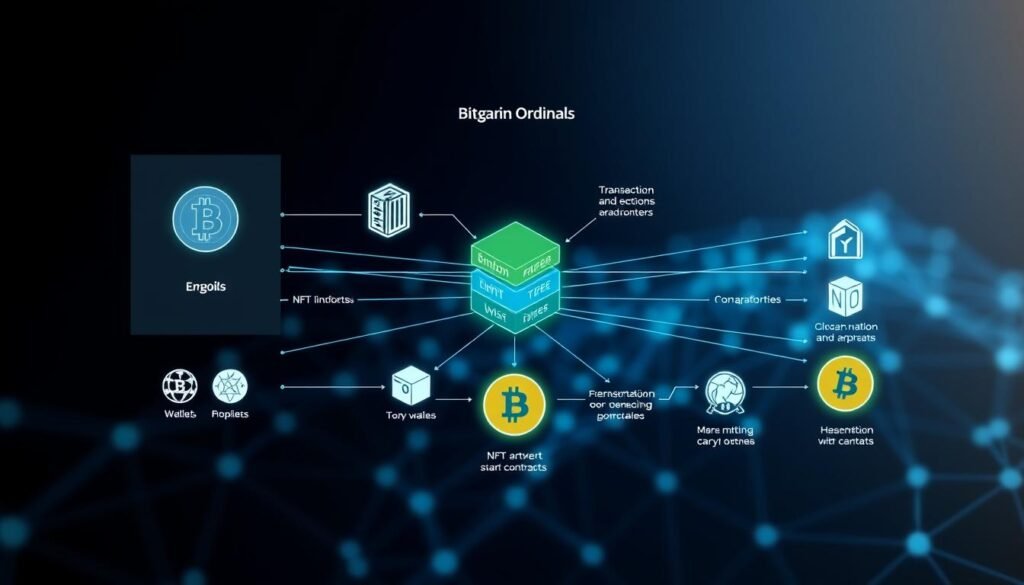
An Overview of Bitcoin Ordinals
The process of adding content is called an inscription. You can embed pictures, text, or videos directly into a satoshi.
These files can be up to 4MB in size. Once a transaction is confirmed, the data becomes a permanent part of the bitcoin blockchain.
This is different from many other digital collectibles. Their image files often live off-chain on separate servers.
The Evolution of NFTs on the Bitcoin Blockchain
Early attempts, like Colored Coins in 2012, marked bitcoins for specific uses. Counterparty launched a token network in 2014.
Neither gained the traction seen today. The current ecosystem’s maturity helped the Ordinals protocol succeed.
The key advantage is complete on-chain storage. Everything lives directly on the blockchain, not on external links. This guarantees immutability and true ownership for collectors.
Gathering the Essentials: Wallets, BTC, and Ordinals-Compatible Tools
Before creating your first digital artifact, you must gather the proper tools. This foundation ensures a smooth and secure experience.
You need two primary components. The first is a specialized crypto wallet. The second is a small amount of bitcoin to pay network fees.
Selecting a Secure Bitcoin Wallet
Choosing the right wallet is critical. A standard bitcoin wallet might let you accidentally spend the satoshis holding your inscriptions.
You need an Ordinals-compatible solution. Xverse is a highly recommended bitcoin wallet for this purpose. It works as a Chrome extension and mobile app.
Setting it up is straightforward:
- Download and install the application.
- Create a new wallet and back up your recovery phrase.
- Set a strong password for account protection.
This wallet provides two separate addresses. Your standard BTC address handles funds and fees. The dedicated Ordinals NFT address safely receives your inscribed satoshis.
Other compatible wallets exist. Always prioritize security features like private key control.
Acquiring BTC for NFT Minting
Network fees, paid in bitcoin, are required for each inscription. Costs fluctuate with blockchain demand.
Recent fees hover around 50,000 sats, or roughly $13. During busy periods, this can rise significantly.
Beginners should acquire $25 to $50 worth of BTC. This covers several attempts and fee spikes. Transfer funds from an exchange to your wallet’s standard BTC address.
With these essentials ready, you can proceed confidently.
How to Mint NFT on Bitcoin ordinals
The next phase involves interacting with a service designed to inscribe data directly onto the blockchain. This is where your digital file becomes a permanent artifact.
Step-by-Step Minting Process
Gamma.io provides a streamlined dashboard for this. Begin by visiting the site and clicking “Ordinals,” then select “Create Inscription.”
Follow these key steps:
- Upload your chosen file. Supported formats include images, text, and videos up to 4MB.
- Select a fee level: Normal, Higher, or Custom. This choice directly impacts confirmation time.
- Enter your recipient address. This must be your specific Ordinals address from your Xverse Collectibles tab.
- Review details, agree to terms, and authorize the payment from your connected wallet.
Uploading Art and Setting Minting Fees
Your digital art or file is embedded forever. The platform’s fee options let you balance cost with speed.
A “Normal” fee is standard. Choosing “Higher” prioritizes your transaction during network congestion. The “Custom” option allows for precise control.
Verifying and Tracking Your Minting Transaction
After payment, the inscription process begins. Completion can take hours or even days.
Gamma provides a status page for real-time tracking. You can view detailed transaction information on the blockchain there.
Once finished, your new asset appears in your Xverse wallet gallery. You can view and manage all your inscriptions from this secure location.
Exploring Popular Tools and Platforms for Bitcoin NFT Minting
A diverse array of tools and marketplaces now supports the creation and trade of Bitcoin-based collectibles. This ecosystem extends far beyond a single service.
Users can explore various platforms for different needs. Some focus on minting, while others facilitate buying and selling.
Utilizing Gamma.io for a Smooth Minting Experience
Gamma.io stands out as a premier platform for newcomers. Its streamlined interface guides users through each step clearly.
The service offers transparent fee structures and real-time transaction tracking. This makes managing your digital artifacts straightforward.
It integrates seamlessly with compatible wallets for a secure workflow. Many successful nft projects began here.
Leveraging Ordinals-Friendly Wallets like Xverse
Specialized wallets are essential for managing these assets safely. Xverse provides dedicated addresses for collectibles and funds.
This separation prevents accidental spending of inscribed satoshis. The wallet connects easily to major marketplaces.
Such tools evolve to support the growing ecosystem of tokens and projects. They offer a unified hub for your nft collection.
Other notable platforms host unique art and domain name projects. Ordinal Punks and TwelveFold are landmark collections on the bitcoin blockchain.
BitcoinShrooms gained acclaim through a Sotheby’s auction. These examples show the creative potential of this protocol.
Security, Costs, and Potential Pitfalls in Bitcoin NFT Minting
While the promise of permanent on-chain storage is compelling, creators must be aware of the associated fees and risks. This final stage involves critical financial and technical considerations.
Understanding Minting Fees and Transaction Costs
Costs for this process are not fixed. A standard fee might start near 50,000 sats, but it fluctuates with bitcoin network demand.
You are essentially bidding for block space. Paying a higher fee speeds up confirmation time for your inscription.
Budget for variability. The entire process can take from several hours to multiple days to complete.
Navigating Risks and Technical Challenges
A major security step is using a compatible wallet. Standard wallets might accidentally spend the satoshis holding your digital assets.
There’s a technical nuance about data storage. Inscriptions reside in witness data, which a node operator could prune.
An alternative protocol like Bitcoin Stamps uses UTXOs for stronger guarantees. This comes with much higher costs and file restrictions.
These bitcoin nfts also lack smart contract functionality. They don’t support automatic royalties or dynamic traits.
Always track your transaction via a blockchain explorer. Securely back up your wallet seed phrase as the only way to recover your collection.
For a broader look at the entire creating and minting an NFT journey, explore our detailed resource.
Conclusion
The Ordinals protocol has transformed Bitcoin into a legitimate platform for digital collectibles. Over 58 million inscriptions demonstrate massive adoption since early 2023.
User-friendly services and dedicated wallets make the process accessible to everyone. You don’t need to run a node to participate in this ecosystem.
True on-chain permanence is the defining advantage. Your image and metadata exist directly on the blockchain forever. This differs from other networks where files often live off-chain.
Remember key security practices and understand network fee dynamics. The space continues to innovate with new token standards and Layer-2 solutions.
Use this guide as your starting point. Dive deeper with our comprehensive NFT creation tutorial. Bitcoin’s utility now extends far beyond digital cash, thanks to this creative breakthrough.

No comments yet