
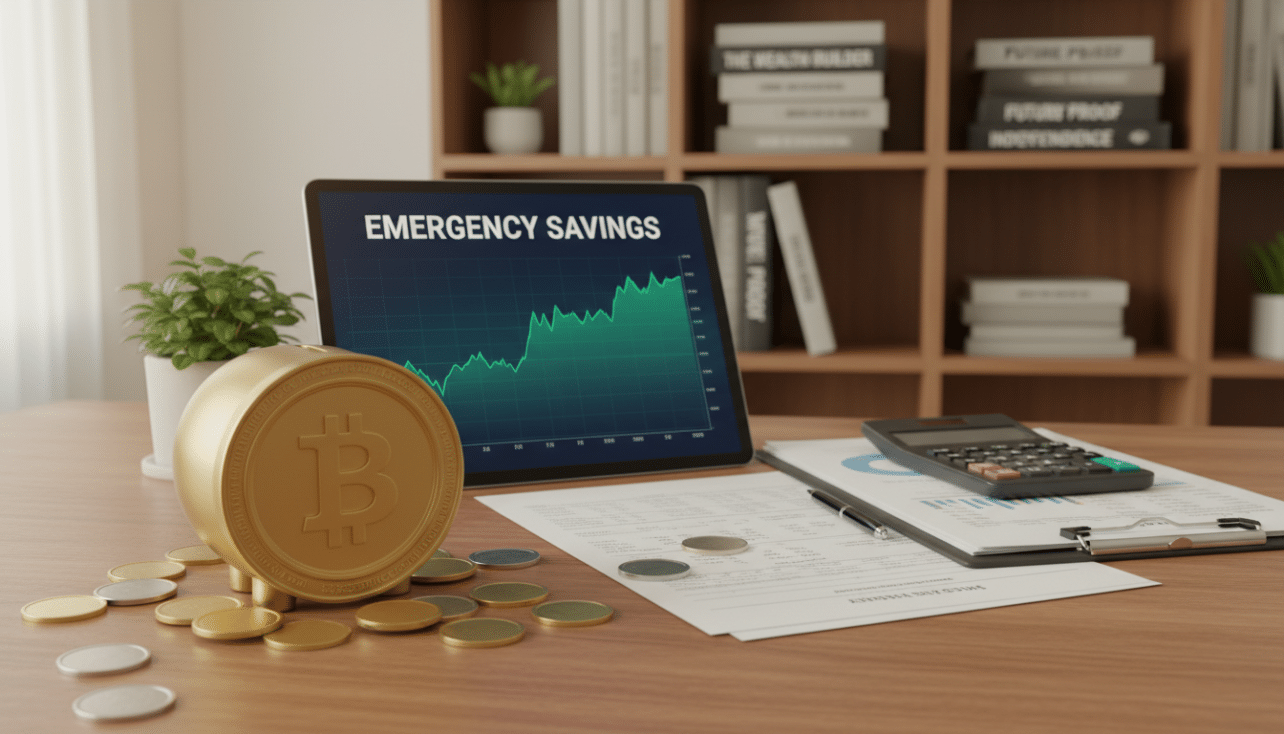
An emergency fund is money set aside to provide a financial safety net for life’s unexpected challenges. This includes sudden medical bills, car repairs, or a loss of income.
Having this cushion is critical. Federal Reserve data shows over 35% of Americans could not pay an unexpected $400 expense. Without savings, many turn to credit cards charging over 22% interest, creating a debt spiral.
Research from Vanguard highlights the power of even modest reserves. They found that $2,000 in an emergency fund can contribute to financial well-being as powerfully as $1 million in assets.
These funds protect against two main emergency types. A “spending shock” is a sudden bill. An “income shock” happens from job loss or reduced hours.
Cryptocurrency now offers a modern approach to building emergency savings. Beyond volatile assets, stable digital options exist that can hold value and potentially earn more than traditional bank accounts.
Understanding Emergency Funds in the Crypto Era
Traditional cash reserves are no longer the only option for protecting against financial shocks. The core principles of an emergency fund—liquidity and stability—remain unchanged. However, the tools available to achieve them have expanded dramatically.
Overview of Traditional Emergency Funds versus Crypto Solutions
For decades, financial advice was clear. Experts like those at Fidelity recommend starting with $1,000. The goal is to build three to six months of essential living expenses.
This money sits in a savings account. It earns minimal interest, often below 1%. The trade-off is instant access and protection of principal value.

Cryptocurrency introduces two key innovations. Stablecoins are digital currencies pegged 1:1 with the US dollar. Decentralized finance (DeFi) platforms let you earn interest on these holdings.
Yields here can range from 4% to 12% APY. This is a significant advantage over traditional savings. A recent Yahoo Finance analysis discusses where not to park rainy-day cash, highlighting the search for better returns.
The Role of Liquidity and Stability in a Crypto Safety Net
Any emergency savings must be liquid. You need to convert it to spendable cash quickly without loss. Early crypto was too volatile for this.
Modern stablecoins solve this. They maintain their peg through dollar reserves or algorithmic mechanisms. This provides the necessary stability.
A major benefit is global, 24/7 market access. Unlike banks, you can manage your fund at any time. This ensures superior liquidity during a true crisis.
How to Set Up a Crypto Emergency Fund
Building a digital emergency cushion requires a trusted custodial wallet. Non-custodial options lack the integrated services for reliable access and rarely offer yield.
Your choice of platform is critical. You are entrusting a company with your financial safety net.
Select services with a longstanding reputation for excellence and security. Thoroughly research their track record and policies.
Selecting a Reliable Custodial Wallet and Platform
Look for features that enable quick fund usage. An attached prepaid debit card allows direct spending of crypto.
This bypasses selling and bank transfers. Ensure the platform offers instant transfers for true emergencies.
This combination provides the necessary access and liquidity when you need it most.

Evaluating Stablecoins and Earning Interest via DeFi
Your funds should reside in stable digital currencies. Compare major stablecoins like USDT and USDC.
Each maintains a 1:1 peg to fiat through different mechanisms. Deposit them into a DeFi interest-bearing account.
These accounts function like savings vehicles but offer significantly higher APY, often between 4% and 12%.
Rates vary between companies, so diligent research is essential. Understand that higher returns may come with additional risk factors.
For a deeper analysis on this strategy, consider the insights on keeping your emergency fund in crypto.
When funds are needed, you can withdraw from the interest account, convert to cash, and move them to your card or bank.
Key Considerations Before Moving Savings into Crypto
The appeal of higher yields in crypto must be balanced against potential security and volatility concerns. Digital assets operate in a different market with unique rules.
Risk Management and Volatility Insights
Even stablecoins carry risk. Tether (USDT), with massive market cap, faces ongoing scrutiny over its dollar reserves.
A de-pegging event could erode the value of your holdings. Platform selection also matters greatly.
Some services offer safer, double-collateralized products. Others promise double-digit returns but lend out your crypto, creating availability risk.
The Celsius bankruptcy in 2022 shows chasing high rates can lead to total loss.
Security Measures and Platform Reputation
Digital money attracts criminals. Reputable exchanges have still experienced hacking incidents.
Always enable two-factor authentication and use all offered security features. This adds critical layers of protection.
A major difference from traditional banking is the lack of federal insurance. FDIC guarantees do not apply to crypto wallets.
Some companies have internal reimbursement policies, but these are not legally enforced. Your due diligence on platform reputation is essential before committing any amount.
Research the company’s track record and collateral practices. This prepares you for any situation.
Leveraging Interest Rates and Investment Strategies
A modern approach to emergency savings leverages high-yield opportunities unavailable in traditional banking. This turns your safety net into an active, growth-oriented asset.
Comparing Crypto APY with Traditional Savings Accounts
Traditional bank savings accounts often offer less than 1% interest. In contrast, stablecoin-based accounts can provide APY between 4% and 12%.
This significant difference transforms idle cash. Your emergency fund earns substantial returns instead of losing value to inflation.
Balancing Growth Investments with Emergency Readiness
Earned interest can be used to explore other cryptocurrencies. This strategy keeps your principal stable for immediate needs.
The power of compounding over time accelerates growth. A single custodial wallet can manage both your safety net and investment portfolio. This creates an integrated income strategy.
Always maintain sufficient liquid savings for crises. Allocate excess earnings toward longer-term investment goals within your overall plan.
Choosing the Right Crypto Platforms for Your Safety Net
Not all cryptocurrency platforms are created equal when it comes to safeguarding your emergency reserves. Your selection is a critical decision. You are entrusting a company with your financial safety net and need assurance it will be operational during a crisis.
Features to Look for: Debit Cards and Instant Transfers
Prioritize platforms with integrated services for reliable access. A prepaid debit card linked to your account allows direct spending. Your crypto converts to local currency at the point of sale.
This bypasses selling and bank transfers for immediate payments. Note that some vendors do not accept prepaid cards. Ironically, many cryptocurrency purchase sites themselves reject them.
Instant transfers are another vital feature. They enable immediate conversion to fiat in your bank account. This provides true liquidity for urgent bills and expenses.
An easy “offramp” to sell and move funds without a separate exchange streamlines access during stressful situations.
Due Diligence on Platform Policies and Insurance Options
Conduct thorough research on any platform you consider. Investigate the company’s reputation, longevity, and security policies. Review their history of past incidents and customer service quality.
The crypto industry has seen many failed businesses, including wallet companies. Platform stability is non-negotiable for your safety net.
Understand that no platform offers FDIC-equivalent federal insurance. Some have internal policies to protect customer funds. Others use double-collateralization, which reduces risk but may offer lower interest rates.
These are important options to weigh. Always enable all available security features, as detailed in our guide for a secure crypto wallet. Your due diligence ensures your account remains protected.
Integrating Traditional Savings with Crypto Strategies
Effective emergency preparedness today means understanding the full spectrum of savings vehicles. A robust plan uses both traditional and digital tools.
This creates a layered defense against different financial planning challenges.
Comparing Cash Management Accounts and Crypto Liquidity
Cash management accounts offer familiar safety. They provide FDIC coverage and often higher yields than standard savings accounts.
Your cash remains easily accessible for bills. In contrast, crypto provides superior liquidity through stablecoins and instant transfers.
Calculate your essential monthly expenses first. Include rent, utilities, groceries, and minimum debt payments.
Your goal depends on the emergency type. Save at least half of monthly expenses for a sudden bill.
Aim for three to six months of costs for an income shock like job loss.
Tax, Regulation, and Long-Term Financial Planning
Tax implications are critical. In some regions, capital gains tax can erase high APY benefits.
Consider crypto-collateralized loans to access cash without a taxable sale. This is a smart way to maintain your position.
Treat your emergency savings contribution like a mandatory monthly expense. Automate transfers to build it consistently.
Address existing debt while growing your reserve. A solid budget supports both efforts.
Your long-term plan must balance this safety net with other income and spending objectives. Regulation in the crypto space continues to evolve.
Conclusion
A solid financial foundation today integrates proven methods with emerging digital advantages. Your emergency fund remains a cornerstone of financial security, providing essential peace of mind. Research confirms even modest savings powerfully boost well-being.
Cryptocurrency, through stablecoins and DeFi, offers a viable path for these reserves to grow. You can access significantly higher interest rates compared to traditional accounts. This approach requires understanding unique risks and selecting platforms with care.
The key is to start. Consistent contributions build your safety net over months and years. Compounding interest turns this money into a growing asset, supporting broader investing and portfolio goals. Your financial safety is an achievable goal worth pursuing now.
FAQ
What is the main difference between a traditional safety net and a crypto emergency fund?
A traditional emergency fund is typically held as cash in a bank savings account, offering stability and FDIC insurance. A crypto-based safety net uses digital assets, like stablecoins, to store value. The core difference is the underlying asset and the potential to earn higher interest through Decentralized Finance (DeFi) platforms, though this comes with different security considerations and market risk.
Why is liquidity so important for a crypto safety net?
Liquidity means you can quickly access your money without a significant loss in value. In an emergency, you need to pay bills or cover expenses immediately. Choosing assets like USD Coin (USDC) or Tether (USDT) on platforms with instant transfer features or a linked debit card ensures your funds are available when a sudden situation arises, unlike some longer-term investments.
How do I start building a crypto emergency fund?
Begin by selecting a reputable custodial wallet from a platform like Coinbase or Gemini for security. Then, fund it with stablecoins to avoid the volatility of assets like Bitcoin. You can set aside a regular amount from your income, similar to a savings plan, and consider using DeFi protocols to earn competitive Annual Percentage Yield (APY) on your balance.
Are stablecoins truly safe for an emergency savings account?
Stablecoins are designed to maintain a peg to a fiat currency, like the U.S. dollar, offering more price stability than other cryptocurrencies. However, they carry different risks, including the financial health of the issuing company and smart contract security. It’s crucial to use well-established, audited stablecoins and understand they are not FDIC-insured like a bank account.
What are the biggest risks to manage with this strategy?
The primary risks are platform security, smart contract failure in DeFi, and the potential for a stablecoin to lose its peg. Volatility in the broader crypto market can also create indirect pressure. Mitigate this by using insured custodians, diversifying across different stablecoin issuers, and never allocating your entire safety net to crypto—maintain some cash for immediate needs.
Can the interest rates in crypto really beat my traditional bank?
Yes, the APY offered on stablecoins through many CeFi and DeFi platforms often significantly exceeds the interest from a standard savings account. This can help your emergency fund grow faster and combat inflation. Always compare these rates against the security and insurance policies of the platform offering them to assess the true value.
What features should I look for in a crypto platform for my safety net?
Prioritize security measures like two-factor authentication and cold storage. Look for convenient access options, such as a Visa debit card for spending your stablecoins directly or instant, low-cost transfers back to your bank. Also, research the platform’s reputation, regulatory compliance, and whether it offers any private insurance on digital assets.
How should I integrate this with my overall financial plan?
A crypto emergency fund should be one part of a balanced portfolio. Maintain a base level of cash in a high-yield cash management account for ultimate stability and immediate access. Use crypto solutions for a portion of your safety net to pursue higher yield. Always consider the tax implications of earning interest and consult a professional for long-term financial planning that includes debt management and retirement goals.

No comments yet