

Copycat messages from banks, retailers, delivery services, or government offices are on the rise. These attacks arrive by text, email, phone, or via a look‑alike website and aim to trick people into sharing credentials or approving payments.
Fraudsters mimic familiar brands like Amazon, USPS, FedEx, UPS, or your bank to make messages feel routine. Their goal is simple: collect your personal information or gain authorization to access money and accounts.
Scammers use urgency and fear — a “fraud on your card” call, an “update your information” email, or a “confirm delivery” text — to push quick action. Even employees at large companies can be fooled because the messages look real.
This article will show common types to watch for — from fake account alerts to phony tech support and government threats — and give clear steps to verify contacts and secure accounts. For official tips, see the FTC guide on avoiding imposters at how to avoid imposter scams.
What Impersonation Scams Are and How They Work
Many attacks start with a message that looks official but hides a deliberate attempt to steal information.
Definition and common channels
These schemes involve fraudsters posing as a trusted bank, company, or government office to get personal details or money.
They arrive by phone, text, email, social posts, or a cloned website. One message can push you to a fake login page or to call a bogus number set up to harvest data.
Deceptive tactics used
Scammers spoof caller IDs and email domains so the sender looks real. Fake websites mirror bank login flows and copy logos to build trust.
Some attackers ask for account numbers, PINs, passwords, or one‑time passcodes and then use those codes to take over accounts.
The urgency playbook
Messages often claim a security breach, an unauthorized charge, or an account lock and demand immediate action.
- Phishing texts and emails include links to look‑alike sites.
- Vishing calls pressure you to read numbers or confirm payments on the spot.
- Tech support hoaxes ask for remote access, letting attackers install malware or capture keystrokes.
Important: Legitimate banks will not ask for full passwords, PINs, or one-time codes by call or text. Learn more about real-world examples at impersonation scams.
Impersonation scams: identifying red flags
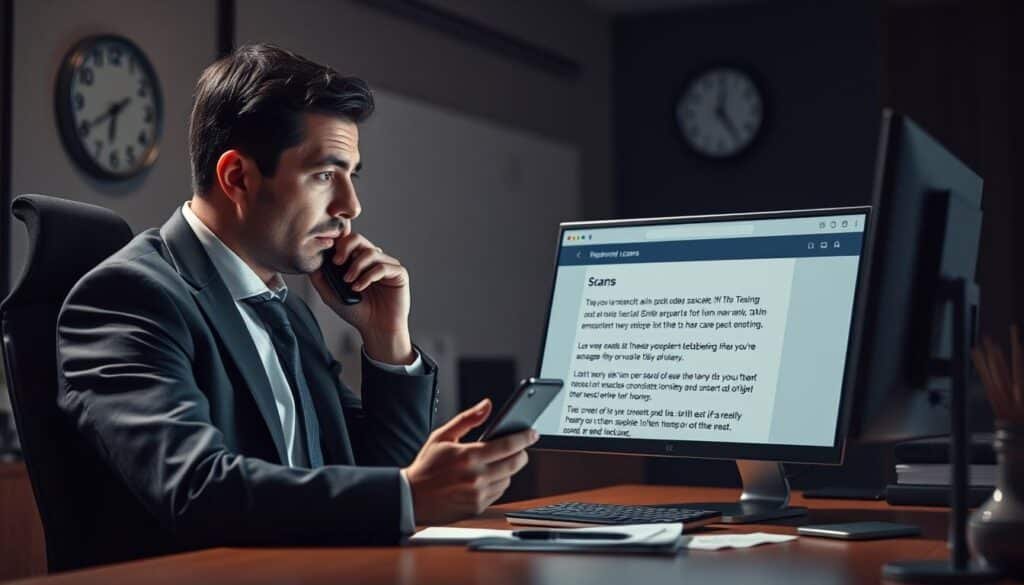
Watch for sudden messages that claim there is a problem with your account or a pending payment — they often hide a fraud attempt.
Unsolicited contact about accounts, payments, or personal information is the most common warning sign. If the message asks you to click a link or call the supplied phone number, pause and verify first.
Pressure and threats are common. Claims about locked accounts, pending law enforcement action, or urgent fees aim to force quick choices.
- Refuse to share one‑time passcodes, full PINs, or passwords. Legitimate banks will not ask for these.
- Never grant remote access to someone who calls claiming to be tech support or your bank.
- Flag payment requests by gift cards, wire transfer, or Bitcoin ATMs as high risk.
Inspect links and attachments closely. Misspelled domains, slight sender name changes, and generic greetings often betray fake websites and emails.
| Red Flag | Common Example | What to do |
|---|---|---|
| Urgent pressure | “Act now or lose access” | Pause, verify via official channel |
| Payment demands | Gift card or Bitcoin ATM request | Refuse and contact your bank |
| Fake links | Look‑alike website asking for login | Type the company URL yourself or use official app |
Be skeptical of prizes, sweepstakes, or phony renewals and remember that government agencies and real banks won’t ask you to move funds to a “safe” account. For extra guidance on avoiding related schemes, see how to avoid cryptocurrency scams in the.
How to Avoid and Respond to Impersonation Attempts
If a message pressures you to act now, take a step back and confirm its origin through official channels. Verify first by using the phone number on your bank card or typing the company’s real website into your browser.
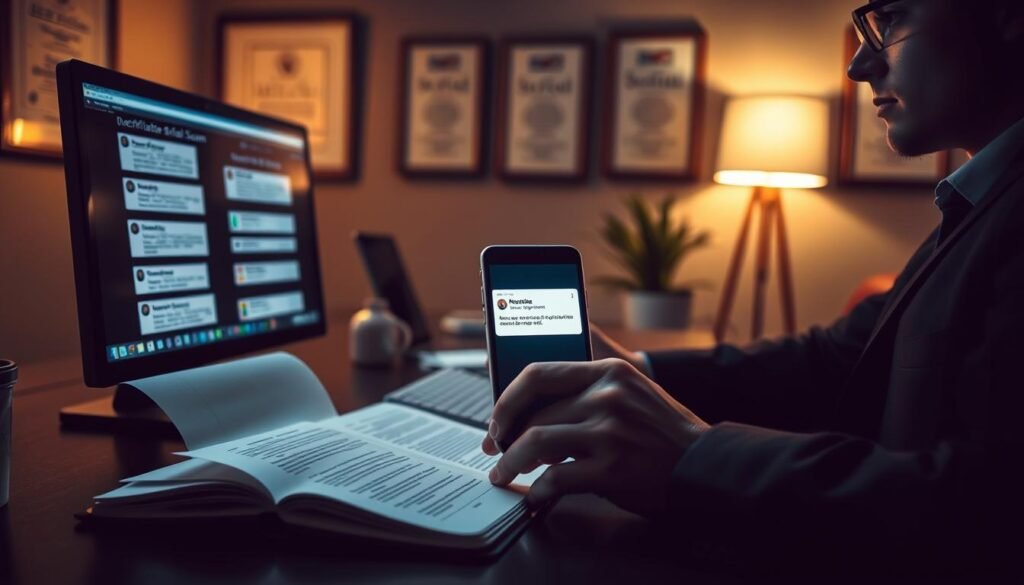
Don’t click unexpected links in texts or email, and never share one‑time codes, full PINs, or passwords. Legitimate bank teams and government agencies will not ask for those details by phone or text.
- Call the number on your card or open the official app—do not use the number in the message.
- Pause to defeat urgency: hang up, check an official site, or contact customer service directly.
- Use strong, unique passwords and turn on two‑factor authentication to limit access if credentials leak.
- Keep your phone and computer updated and run reputable antivirus to protect your device and accounts.
If targeted, contact your bank immediately to lock cards and review recent transactions. Change account passwords and document the message, link, or phone number. Report losses and attempts at ReportFraud.ftc.gov. For related guidance on digital payment threats, see how to avoid crypto risks.
Conclusion
Before you act, verify. Do not trust a phone number, link, or website sent in an unexpected call, text, or email. Find the company contact yourself and confirm requests through the official channel.
Keep protections simple: never share one‑time codes or passwords, avoid clicking unknown links, and enable strong authentication on bank accounts and apps.
If you suspect fraudsters or a likely impersonation scam, stop engagement, secure your card and accounts, and report the incident so others are warned and investigators can respond.
Slow down, verify, and protect your information—those steps prevent many losses of money and data.
FAQ
What are impersonation scams and how do fraudsters usually contact people?
Impersonation scams involve criminals pretending to be trusted organizations — banks, government agencies, tech companies, or law enforcement — to get money or personal details. They reach victims through phone calls, text messages, email, social media, and fake websites that mimic real companies. Scammers often use spoofed caller IDs and look-alike domains to seem legitimate.
What tactics do scammers use to make messages look official?
Scammers copy logos, use urgent language, and create official-looking emails or web pages. They may spoof phone numbers so calls appear to come from your bank or the IRS and craft emails with misspelled domains that mimic real companies. They also send attachments or links to fake login pages to capture credentials.
What red flags should I watch for in unexpected calls, texts, or emails?
Watch for unsolicited contact about account problems, demands for immediate payment, threats of arrest or account suspension, requests for one-time passcodes, and pressure to provide passwords or remote access to your computer. Generic greetings and spelling errors or slightly altered email domains are common signs of fraud.
Are there specific payment methods that indicate a scam?
Yes. Requests to pay with gift cards, cryptocurrency, wire transfers, or prepaid debit cards are major warning signs. Scammers also ask for money via money-transfer services or demand “refund” overpayments that require you to send funds. Legitimate companies rarely ask for these forms of payment.
How can I verify whether a call or message is real?
Don’t use contact details in the suspicious message. Instead, look up the company’s official phone number or website and call directly. Check your account through the official app or site. If a caller claims to be law enforcement, contact the agency using publicly listed numbers. When in doubt, hang up and verify independently.
Is it ever safe to share a one-time passcode or PIN over the phone?
No. Legitimate companies will not ask you to provide one-time passcodes, full passwords, or PINs over the phone. Sharing these codes lets fraudsters bypass two-factor authentication and access your accounts. Treat any unsolicited request for codes as a high-risk red flag.
What should I do if I clicked a link or gave information to someone I now suspect is a scammer?
Act quickly. Change passwords for affected accounts, enable two-factor authentication, and contact your bank or card issuer to block or monitor transactions. If you gave financial details, request card replacement or account freezes. Report the incident to ReportFraud.ftc.gov and to your bank and local law enforcement.
How can I protect my devices and accounts from these attacks?
Use unique, strong passwords and a reputable password manager. Keep software and operating systems up to date. Turn on two-factor authentication that uses an authenticator app or hardware key instead of SMS when possible. Be careful clicking links and downloading attachments, and install security updates and antivirus tools.
What if a caller pressures me and claims there’s no time to verify details?
Politely refuse and end the call. High-pressure tactics and threats are classic manipulation. Take time to verify independently using official channels. If the caller insists on urgency or threatens legal action, contact the referenced agency directly using verified contact information.
Where can I report impersonation and identity theft attempts?
Report fraud to the Federal Trade Commission at ReportFraud.ftc.gov. Contact your bank or payment provider immediately to dispute transactions. File a report with local law enforcement if you lost money or your identity was stolen, and notify credit bureaus to place fraud alerts or freezes if needed.

No comments yet