
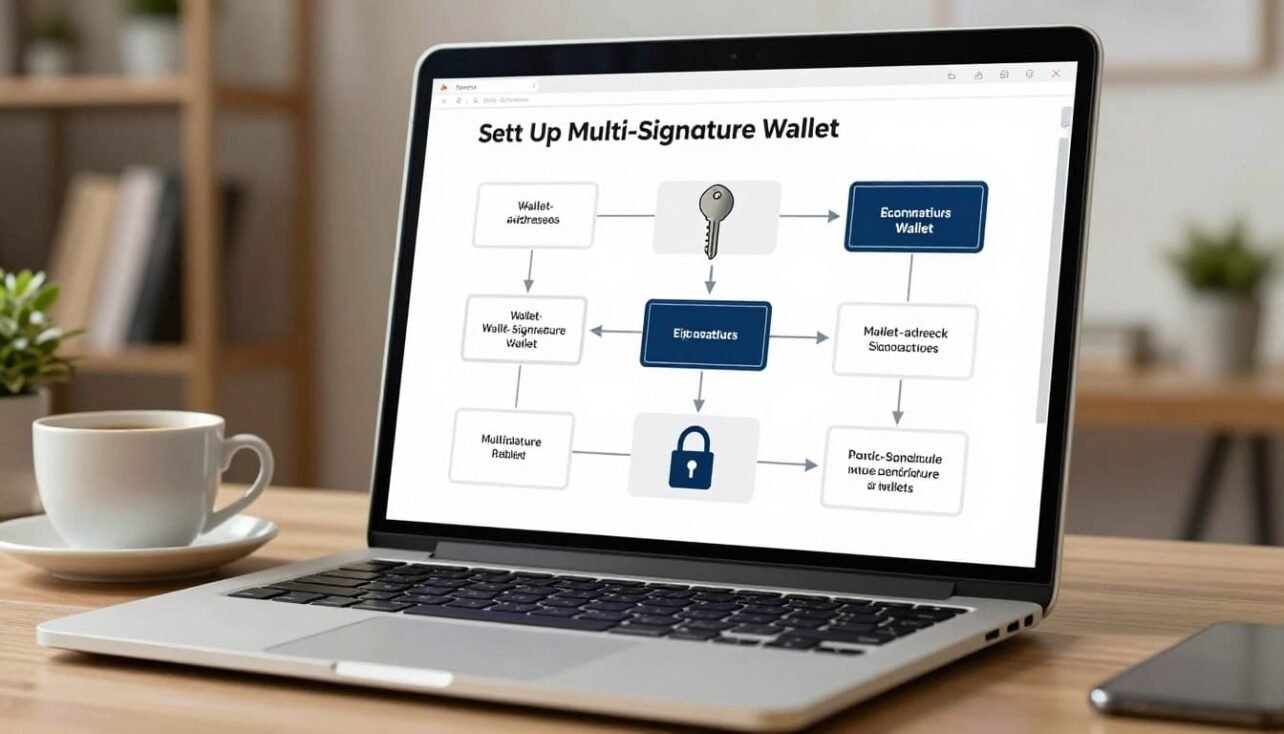
This practical guide lays out a clear roadmap to plan, configure, test, and operate a secure multisig arrangement for Bitcoin and EVM networks.
The goal is simple: remove a single point of failure so funds move only when the right people approve. You will learn provider choices, signature schemes like 2-of-3 and 3-of-5, and how those options affect usability and cost.
Best practices covered include immediate backups, never sharing seed phrases, tamper-evident storage, and running tests on testnets before sending large amounts. The guide names tools such as Electrum, Sparrow, and Safe to help users pick what fits.
Expect practical, current steps you can follow today in the United States, plus tips for training co-signers and running recovery drills. A small live transaction and regular policy reviews are emphasized to keep security strong over time.
What is a multi-sig wallet and why it removes a single point of failure
A shared-approval scheme forces two or more people to sign before funds move. This design requires multiple signatures to complete a transaction, so no single private key can unilaterally control funds.
That change in control distributes authority and cuts the risk tied to one compromised device or person. It is a clear security improvement for individuals, businesses, and DAOs.
- Distributed authority: Multiple signatures reduce the impact of theft or loss of any one signer.
- Better accountability: Teams gain visibility and auditability for transactions.
- Flexible implementations: Designs exist as script-based constructions on Bitcoin and as smart contracts on EVM chains, each with mature tooling.
Compared to a standard single-key approach, this model lowers exposure to malware, phishing, or accidental loss. Practical configurations like 2-of-3 strike a balance between security and ease of use.
Still, the model depends on strong seed handling, regular backups, and recovery drills. For further technical context, see this primer on how multisig solutions work.
Understanding the use cases in the United States today
For U.S.-based teams, shared signatures help enforce rules and make transactions auditable. DAOs and companies use these controls to run treasury transfers that mirror internal policies and lower insider risk.
Nonprofits and clubs adopt the same approach to protect program funds. Joint approvals ensure disbursements match bylaws and oversight needs.
Families and estates use co-signers to keep access continuous without giving one person full control. Protocol admins rely on this feature to avoid unilateral, high-risk changes during deployments.
- Small businesses separate daily spending from reserves with different thresholds.
- Common transaction flows that benefit include vendor payments, payroll batches, and treasury rebalancing.
- Industry guidance: test on testnets before moving large amounts on mainnet.
| Entity | Typical Threshold | Common Providers | Primary Benefit |
|---|---|---|---|
| DAO / Company Treasury | 2-of-3 or 3-of-5 | Safe, Gnosis | Policy-aligned approvals |
| Nonprofit / Club | 2-of-3 | Electrum, Sparrow | Transparent disbursements |
| Family / Estate | 2-of-2 or 2-of-3 | Hardware integrations | Continuity of access |
| Protocol Admin | 3-of-5 or higher | Safe, multisig contracts | Prevents unilateral changes |
Operationally, U.S. expectations favor clear record-keeping and transparent controls. Proper thresholds and written procedures improve both security and compliance when managing significant funds.
User intent and what you’ll achieve with this multi-signature wallet setup guide
This guide gives a clear, practical path so a user can plan, deploy, and verify a secure multisig wallet across Bitcoin and EVM networks.
Follow the steps and you will choose a provider, set thresholds like 2-of-3, configure hardware devices, and create robust seed backups.
- Plan: define roles, thresholds, and communication channels.
- Deploy: configure devices, verify addresses on hardware, and run test transactions.
- Operate: document signing policies and run periodic drills to maintain security.
Who benefits most? Teams, DAOs, small businesses, and families managing shared funds gain the most from shared approvals and backup resilience.
A standard single-key solution may still be fine for small personal balances. Reserve a multisig wallet for critical assets and treasury functions.
| User Type | Typical Threshold | Primary Benefit |
|---|---|---|
| DAO / Team | 2-of-3 | Policy-aligned approvals and auditability |
| Small Business | 2-of-3 | Reduced insider risk and backup resilience |
| Family / Estate | 2-of-2 or 2-of-3 | Continuity of access and shared control |
Keeping separate wallets for daily spending and long-term storage reduces exposure and simplifies accounting.
Final intent: you will get a repeatable checklist, validate processes on testnets before mainnet, and document everything so operations remain consistent and secure over time.
Prerequisites: tools, devices, and security baseline before you start
Before you touch any keys or devices, confirm your physical and digital tools meet a clear security baseline.
Hardware, software, and trusted connectivity
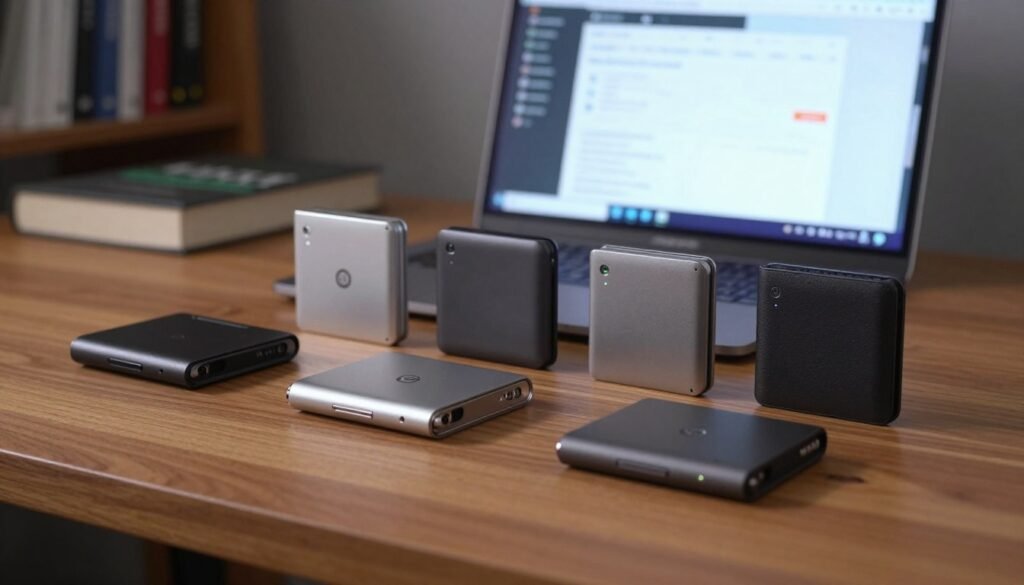
Choose reputable hardware devices such as Ledger Nano X, Trezor Model T, or Coldcard.
Do authenticity checks, install firmware updates, and set a strong PIN before you generate any seeds.
Use compatible software like Electrum or Sparrow for Bitcoin and Safe for EVM chains to avoid compatibility problems.
Prefer a private, trusted network and avoid public Wi‑Fi during configuration and routine maintenance.
Private key and seed phrase handling essentials
Write seed phrases directly from the device screen; verify word order immediately as a basic integrity check.
Never store seeds in email, cloud drives, screenshots, or chat apps. Those are persistent risks.
- Prepare tamper-evident storage and a backup location plan before you begin.
- Have spare cables, a clean or air‑gapped machine, and a dedicated device for administration when possible.
- Document serial numbers, firmware versions, and the role of each device to track keys through their lifecycle.
| Item | Action | Why it matters |
|---|---|---|
| Ledger / Trezor / Coldcard | Authenticate, update firmware, set PIN | Reduces cloned or compromised devices |
| Electrum / Sparrow / Safe | Choose per chain compatibility | Prevents mismatched addresses and failed transactions |
| Network | Use private trusted network | Limits MITM and discovery risks |
Finally, review this brief guide on how to set up a crypto to align device handling with general best practices before proceeding.
Choosing a provider: Electrum, Casa, Nunchuk, Unchained, Safe and more
Providers differ widely — prioritize compatibility, security track record, and long-term costs.
Start by listing the chains and signer counts you need. Electrum and Sparrow excel for Bitcoin with descriptor support and hardware wallet integrations. Safe (Gnosis Safe) is purpose-built for EVM networks and uses smart-contract multisig with a browser interface.
Casa and Nunchuk offer user-friendly paid plans and self‑custody options respectively. Unchained focuses on collaborative custody for Bitcoin. Consider open-source status and audit history — transparency reduces long-term risk.
- Compatibility: supported chains, max cosigners, and hardware wallet integration.
- Security: track record, audits, and whether code is open for review.
- Cost & privacy: free clients versus paid custody; check KYC and telemetry policies.
- Features: mobile vs desktop, descriptor backups, and recovery tooling.
| Provider | Chains | Max Cosigners | Notable Feature |
|---|---|---|---|
| Electrum / Sparrow | Bitcoin | Up to 15 | Descriptor support & hardware wallet integration |
| Safe (Gnosis Safe) | EVM chains | Configurable | Smart-contract multisig, browser UI |
| Casa / Nunchuk / Unchained | Bitcoin (+ Ethereum for Casa) | Varies by plan | User support, collaborative custody options |
Pilot on testnet to validate signer flows and costs before moving any significant funds. Match provider choice to growth plans so migrating later is avoidable.
Selecting the signature scheme: 2-of-3, 3-of-5, and other configurations
Picking the right signature threshold shapes how your team approves transactions and recovers from failures.
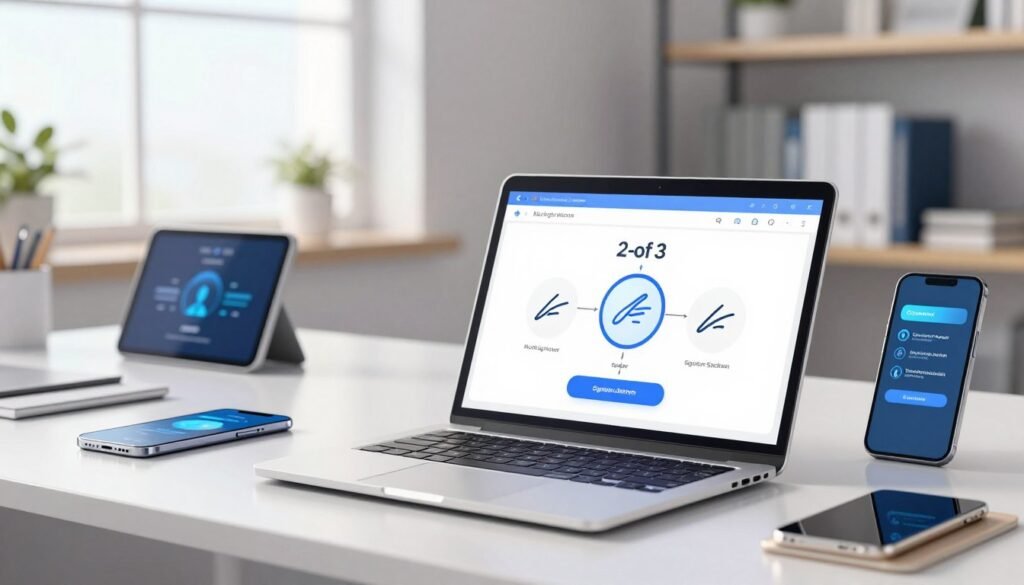
A signature threshold means how many individual approvals are required to move funds. For example, 2-of-3 needs two signers; 3-of-5 needs three. That maps directly to everyday realities like vacations, lost devices, or staffing changes.
More signers raise resilience but slow approvals and add coordination cost. Higher thresholds can increase transaction latency and on-chain fees for some networks.
Balancing security, usability, and transaction speed
Common advice: 2-of-3 suits individuals and small teams. It tolerates one missing key while keeping approvals quick.
Choose 3-of-5 for larger orgs where broader representation matters, and slower cycles are acceptable.
When complexity increases risk
Too many signers or exotic rules can create confusion. Complex processes raise the chance of mistakes or unsafe shortcuts.
- Document roles: record who holds each key and escalation paths for urgent transactions.
- Keep it simple: pick a scheme that scales but stays operable day-to-day.
- Review regularly: adjust thresholds as the team and funds evolve.
| Common Scheme | Best for | Trade-off |
|---|---|---|
| 2-of-3 | Personal / small team | Fast approvals, single-key tolerance |
| 3-of-5 | Larger orgs | Higher representation, slower sign-off |
| 2-of-2 | Shared control pairs | No single-point recovery if one is lost |
Preparing hardware wallets for each signer
Begin each signer’s device prep with an authenticity check and a clear checklist to avoid early mistakes.
Unbox and verify the device serial and tamper seals before connecting it. Install official manufacturer software and confirm signatures where available.
Update firmware and set a strong PIN prior to generating any key material. Generate seed phrases on the device, verify word order, and store backups using tamper-evident methods.
PINs, firmware, authenticity checks, and app installs
Only install official apps and connectors to reduce risk from modified software. Keep a written log of firmware versions and update dates for each device.
Avoid third-party cables or unknown accessories; they can introduce supply-chain risks. Label each device with its role and secure storage instructions.
Diversifying devices to prevent correlated failures
Diversify device brands and models across signers to avoid correlated failures from recalls or bugs. Mixing hardware and operating systems reduces single-point exposure.
- Confirm authenticity and update firmware before key creation.
- Generate seeds on-device and verify them immediately.
- Use only official apps and avoid unknown peripherals.
- Label devices, log firmware, and store them powered down and secured.
Good device hygiene directly improves wallet security. Treat each signer’s hardware as a critical instrument in your signing process and review practices periodically.
Creating and storing seed phrases without introducing new risks
Treat seed creation and storage as an operational process, not an afterthought. Record every word directly from the device screen and confirm spelling and order aloud with another signer when possible.

Paper vs. metal backups and storage choices
Paper is inexpensive but fragile. Lamination helps water resistance but still fails in fire.
Metal backups resist fire, corrosion, and pests. They cost more but last decades.
Where to store: use at least two geographically separated secure locations such as a fireproof safe and a bank safe deposit box. Avoid keeping all copies together.
Tamper-evident methods and recovery drills
Use tamper-evident bags or seals to detect physical access attempts. Label storage with role and retrieval rules without exposing secret words.
Practice recovery runs on a spare hardware wallet or an offline test device to confirm phrases restore access before trusting them with real funds.
- Record seeds directly from the hardware wallet screen; double-check word order.
- Keep backups for different signers separated and never combine them.
- Document locations and emergency access procedures without revealing secret material.
- Run periodic restoration tests to ensure coins remain recoverable when needed.
| Backup Type | Durability | Cost | Best Use |
|---|---|---|---|
| Paper (plain) | Low – water/fire damage | Very Low | Short-term, low-budget |
| Laminated paper | Medium – water resistant | Low | Home use with safe storage |
| Stamped metal plate | High – fire/corrosion resistant | Medium–High | Long-term, critical funds |
| Engraved stainless steel | Very High – durable decades | High | Institutional or legacy storage |
Configuring your multisig in wallet software
Begin by choosing the software flow that matches your chain and signer count. This aligns tooling, signer roles, and expected transaction costs before any keys are active.
Bitcoin: Electrum or Sparrow keystores and descriptors
Import each signer’s hardware keystore into Electrum or Sparrow. Exchange only extended public keys (xpubs) among co-signers to assemble the multisig policy.
Save descriptor files that capture the exact spending rules. Store those descriptors in multiple secure locations to allow full recovery if a machine fails.
EVM: Safe creation, signers and deployment costs
In Safe, connect a browser wallet, choose the target network, and add signers with the chosen threshold (for example, 2-of-3).
Review estimated gas and deployment fees, deploy the contract, then verify and record the Safe address and configuration.
- Public only: exchange xpubs or addresses — never share seeds or private keys.
- Verify: label and confirm the first receiving address on devices to avoid mismatches.
- Document: record signer roles, device types, and approval flows for audits and clarity.
- Practice: test on testnets before moving real value on mainnet.
| Flow | Key Action | Why it matters |
|---|---|---|
| Bitcoin (Electrum/Sparrow) | Import keystores, exchange xpubs, save descriptors | Recreates wallet and enforces spending rules |
| EVM (Safe) | Connect browser wallet, set signers/threshold, deploy | Creates contract address that receives transactions |
| Operational | Label addresses, store configs, document roles | Prevents mistakes and aids recovery |
Verify addresses, simulate transactions, and run a small test
Start testing by generating a receive address and checking it directly on each signer’s hardware. This defeats address-replacing malware that can swap an on-screen address with an attacker’s string.
Confirm addresses on devices
Always confirm the displayed receive address on the physical device screen before you fund anything. Match the device display to the address shown in your software.
For high-value transfers, verify the destination address on every available signer device to reduce misdirection risk.
Simulate and test end-to-end flows
If your client supports simulation, preview fees, change outputs, and approval steps without risking value. Then enable testnet and obtain test coins from a faucet.
Run full approval drills on testnet so signers rehearse creating, signing, and broadcasting transactions.
- Send a tiny mainnet transaction after testnet drills to confirm real-world routing.
- Keep keys and devices steady during tests so roles remain clear.
- Log timestamps, participants, and outcomes for future audits.
| Action | Purpose | Example Result |
|---|---|---|
| Verify receive address on device | Detect malware address swaps | Matches software and device address |
| Run simulated transaction | Preview fees and outputs safely | No funds spent, flow validated |
| Send small mainnet tx | Confirm signing and broadcast behavior | Funds arrive; signatures validated |
Catching setup mistakes now prevents costly errors later. For additional guidance on operational choices, see this multisig guide.
Operational rules: transaction signing policies and communication
Clear operational rules make daily approvals predictable and reduce costly mistakes.
Establish roles for Initiator, Reviewer, and Approver so each user knows the exact responsibility in the signing flow. Document who may start a transaction, who inspects amounts and addresses, and who gives final approval.
Approval thresholds, roles, and time-bound processes
Map transaction sizes to required signatures. For example, use 2-of-3 for routine spends and 3-of-3 plus extra review for large or sensitive transfers of funds.
Use checklists that list destination address checks, memo fields, and expected fees. Require that reviews follow the checklist before any signing occurs.
- Define secure channels (encrypted messaging or enterprise tools) and prohibit ad-hoc chats or email for approvals.
- Set time limits for approvals so requests do not linger and stale intent is avoided.
- Include escalation steps for signer unavailability with pre-authorized contingencies.
- Log acknowledgments so every participant signs off on the current policy.
| Amount | Required signatures | Extra step |
|---|---|---|
| Low (operational) | 2-of-3 | Initiator + single Approver |
| Medium | 2-of-3 | Reviewer verification |
| High (treasury) | 3-of-3 | Formal review & recorded minutes |
Review policies quarterly to align thresholds with team size, asset value, and operating cadence. Regular drills reduce human error and strengthen security over time.
Training co-signers to reduce human error
Hands-on practice helps signers recognize threats and react correctly under pressure. Good training makes each user a reliable part of the process.

Run live workshops where participants create, review, and approve a sample transaction. Use testnets so everyone learns without risk.
- Provide a concise user guide with step-by-step screenshots and an emergency playbook for lost devices or compromise.
- Assign mentors to observe early approvals and correct mistakes in real time.
- Schedule periodic drills and time-bound exercises to build muscle memory and speed.
- Train signers to verify addresses on-device, spot phishing, and use secure channels for approvals.
Track attendance and proficiency so you can target refresher sessions where needed. Repeat core best practices often to keep habits sharp.
| Exercise | Purpose | Outcome |
|---|---|---|
| Live workshop | Practice full flow | Signers internalize screens and steps |
| Testnet drill | Safe rehearsal | Confirms competence without loss |
| Emergency playbook | Respond to device loss | Faster, safer recoveries |
| Mentoring | On-the-job correction | Fewer early errors |
Backup and recovery planning for long-term wallet security
Design backups to let you recover funds even if devices and software are lost. Store seed phrases on durable media such as stamped metal plates and distribute them across separate, secure locations.
Disaster scenarios and reconstruction data
Plan for regional events, simultaneous device loss, and theft. Include public keys or descriptor files with each backup so the multisig wallet can be rebuilt without revealing private keys.
Keep copies separated so no single event or actor can cause total failure. Label each backup with retrieval rules, custody owner, and a sealed tamper-evident container to preserve chain of custody.
Practical redundancy and custody
- Use at least three geographically separated locations: home safe, bank safe deposit, and an offsite secure vault.
- Store metal seed plates and a USB with public keys or descriptors in different places; never colocate secrets and reconstruction files.
- Document who holds each key and when access is permitted to balance privacy and availability.
Run periodic recovery tests on a spare device or testnet to confirm backups work and catch transcription errors early. Share a concise emergency playbook with heirs or designated parties so succession preserves access without exposing secrets unnecessarily.
| Risk | Redundancy | Outcome |
|---|---|---|
| Theft of a device | Distributed seed plates, descriptors elsewhere | Funds recoverable; single theft insufficient |
| Regional disaster | Geographic separation of backups | Access preserved despite local loss |
| Operator error | Regular recovery drills | Errors detected and corrected early |
Thoughtful redundancy prevents a single point failure. With documented custody, sealed storage, and tested recoveries, your keys and funds stay accessible even when multiple components fail.
Troubleshooting common multisig issues
If a transaction stalls, a short checklist helps you isolate the cause fast.
Quick first steps: update device firmware and your wallet apps, then retry the action. Many unexplained errors vanish after an update.
Next, re-check derivation paths, descriptor files, or Safe configuration details. Mismatched paths or a wrong descriptor often explain address or approval mismatches.
- Verify the receive address on each device before sending to rule out malware that alters the interface.
- Confirm every cosigner runs the same app version and has the required configuration files or xpubs available.
- Clear browser caches or use a private/incognito window when web UIs act erratically.
Example: if a transaction won’t broadcast, recreate it with a smaller amount, re-derive the destination address, then re-sign and resend. This proves the flow without risking large coins.
Always test changes on testnet or with tiny mainnet amounts before moving more funds. Log recurring failures and their fixes so future troubleshooting is faster.
| Symptom | Likely Cause | Immediate Fix |
|---|---|---|
| Transaction won’t send | Signer path mismatch or stale descriptor | Re-derive paths, sync descriptors, recreate tx with small amount |
| Address shown differs | Interface malware or incorrect xpub | Verify address on-device, confirm xpubs among signers |
| Web UI errors | Cached state or browser extensions | Use private browsing, clear cache, disable extensions |
Best practices that keep your funds and keys safe over time
Routine habits secure funds far more than one-off actions. Back up phrases immediately and keep copies on durable media. Never transmit seeds by email or messaging.
Verify every receive address on the device screen before sending. This simple check defeats common address-replacement malware.
Separate long-term storage from everyday spending. Use distinct addresses and accounts so losses or compromises do not expose all funds.
- Run recovery tests on testnets and do a small mainnet transfer after validation.
- Choose configurations that require multiple signatures but stay easy to operate in practice.
- Diversify hardware and providers to avoid correlated failures across all signers.
- Document procedures, name roles, and schedule regular drills and policy reviews.
Protect keys physically: store metal backups in separate secure locations and rotate devices if compromise is suspected. Train signers to follow the same secure way of working so transitions are smooth over time.
| Practice | Why it matters | Recommended cadence |
|---|---|---|
| Address verification on device | Prevents malware address swaps | Every transaction |
| Recovery drills (testnet) | Confirms backups and procedures work | Quarterly |
| Separation of funds | Limits exposure and simplifies monitoring | Ongoing |
| Policy review & signer training | Keeps people aligned with evolving threats | Annually or after personnel changes |
Conclusion
A disciplined process — from choosing providers and signature thresholds to deploying, testing, and operating — makes multisig effective and repeatable.
Follow the steps on testnet first: verify addresses on devices, run small test transactions, and confirm recovery using stored descriptors and durable backups.
Clear signing policies, secure communication channels, and regular drills reduce human error and remove a single point of control over funds. Diversify hardware and document who holds each key to lower correlated risk.
Using multisig is the safest way to manage significant funds for individuals, teams, or DAOs. Start on testnet today, validate your configuration, then proceed to mainnet with confidence.
FAQ
What is a multisig system and how does it remove a single point of failure?
A multisig arrangement requires multiple independent parties to sign a transaction before funds move. By splitting control across several keys or devices, no single compromised key can drain assets. This reduces the risk from lost keys, stolen hardware, or a single compromised signer.
Who in the United States should consider using this kind of custody instead of a standard key pair?
Businesses, family estates, crypto funds, and high-net-worth individuals benefit most. Anyone needing shared control, corporate governance, or protection from human error will find it useful. It’s also a good fit for people who want redundancy without relying on one device or person.
What basic tools and security steps do I need before starting?
You should have at least two reputable hardware devices (Ledger, Trezor, or Coldcard), a secure online workstation, and verified wallet software like Electrum or Sparrow for Bitcoin or Gnosis Safe for EVM chains. Ensure firmware is up to date, use strong PINs, and perform device authenticity checks.
How should I handle seed phrases and backups without adding risk?
Create seed phrases offline on verified devices. Store backups in multiple physically separate locations using paper and metal plates for fire and water resistance. Use tamper-evident containers and limit the number of people who know locations. Run regular recovery drills to confirm backups work.
Which providers and software are commonly used for this approach?
Popular options include Electrum and Sparrow for Bitcoin, Gnosis Safe for EVM chains, and custodial or hybrid services like Casa or Unchained for managed solutions. Choose based on security, cost, network support, and whether you need multisig features for your chain.
How do I choose a signing threshold like 2-of-3 or 3-of-5?
Balance security and availability. 2-of-3 is common for small teams—good redundancy with usability. 3-of-5 suits larger organizations needing higher fault tolerance. Higher thresholds increase resilience but make signing slower and recovery harder if many co-signers lose access.
What steps should each signer take to prepare their hardware device?
Set a strong PIN, update firmware from the manufacturer, verify the device on initial boot, and install only trusted apps. Record the seed once, verify its correctness, and avoid connecting the device to untrusted computers. Diversify device brands to reduce correlated firmware or supply-chain risk.
How do I configure the arrangement in software for Bitcoin and EVM chains?
For Bitcoin, use Electrum or Sparrow to import xpubs or descriptor files and create the multisig keystore. For EVM chains, deploy a Safe (Gnosis Safe) contract with chosen signer addresses and threshold. Verify addresses on hardware devices before finalizing.
How can I test the configuration safely before moving large amounts?
Perform address verification on each device and send a small test amount on mainnet or use testnet funds. Simulate the full signing flow, check transaction details on devices, and confirm that recovery procedures restore access from backups.
What operational rules should teams adopt for signing and approvals?
Define roles, approval thresholds, and an auditable process. Use signed messages or email confirmations for off-chain approvals. Set time-bound rules for emergency access and require at least two unrelated signers for large transfers to reduce collusion risk.
How do I train co-signers to avoid human error?
Run hands-on sessions where signers practice creating transactions, verifying addresses, and using devices. Provide concise, step-by-step guides and schedule periodic drills to keep skills current. Emphasize address verification and phishing awareness.
What should a long-term backup and recovery plan include?
Keep encrypted public key records and multiple physical backups of seeds in separated locations. Plan for scenario recovery if signers die or lose access—include legal instructions and trusted contacts. Test recovery clones regularly to ensure the plan works.
What common problems occur and how can I troubleshoot them?
Common issues include mismatched xpubs, firmware incompatibilities, and software descriptor errors. Re-verify exported public keys, update software and firmware, and consult vendor documentation. Use test transactions to isolate signing failures.
What ongoing best practices keep funds safe over time?
Keep firmware and software updated, rotate signers if needed, limit keeper knowledge of seed locations, and review policies annually. Use diversified device types and storage locations, and maintain clear incident-response procedures for lost or compromised keys.

No comments yet