
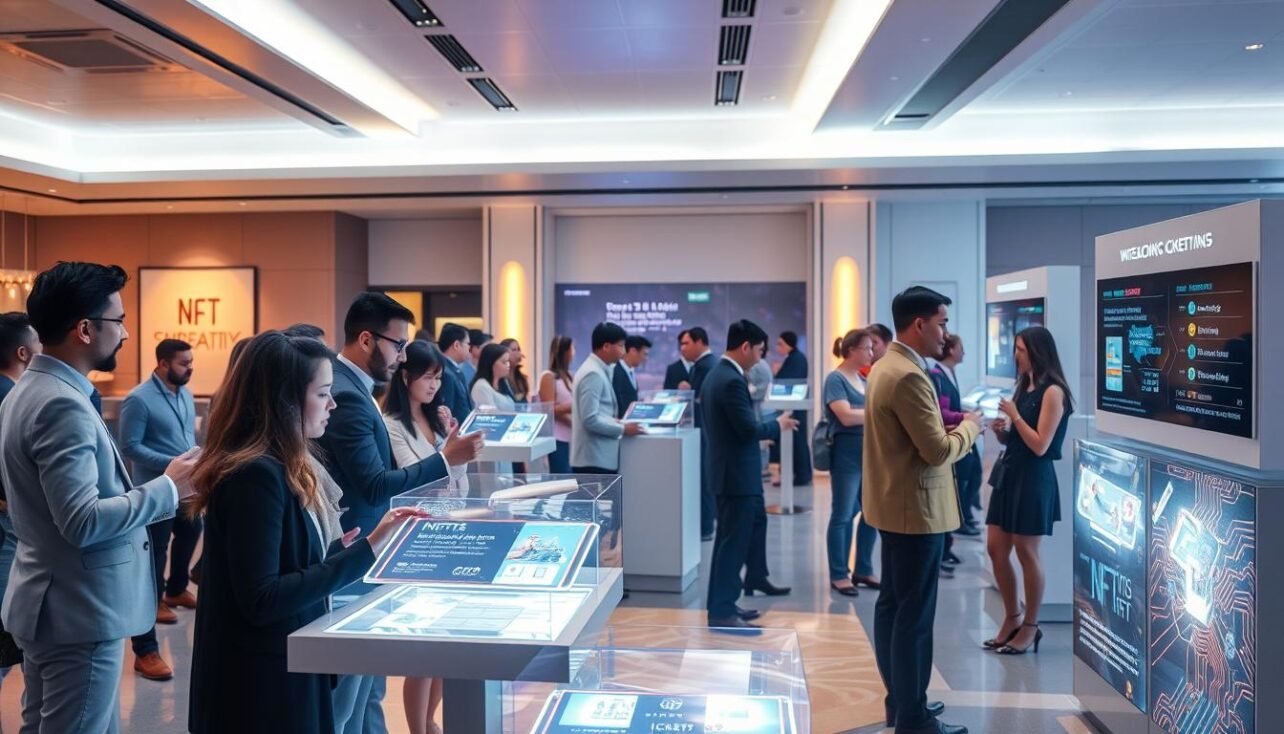
The landscape for live experiences is transforming with NFT for real-world event ticketing. This innovation uses blockchain to tackle long-standing issues.
Globally, about 12% of admission passes are counterfeit. This results in massive revenue loss and disappointed attendees every year.
Adoption is accelerating rapidly. The platform market for this technology is projected to surge from $1.3 billion in 2025 to $7.8 billion by 2033.
That’s a nearly sixfold increase. It shows the industry’s shift from experiment to mainstream implementation.
Each digital token acts as a unique, verifiable asset. It cannot be duplicated, bringing new security to digital admissions.
The core advantages are significant. Fraud prevention protects everyone, smart contracts enable ongoing value, and collectible digital items boost engagement. This isn’t just tech for tech’s sake; it’s a practical solution.
Introduction to the NFT Ticketing Revolution
Initial curiosity around blockchain-based admissions has matured into concrete solutions. This shift moves the technology from a speculative trend to a practical asset for the industry.
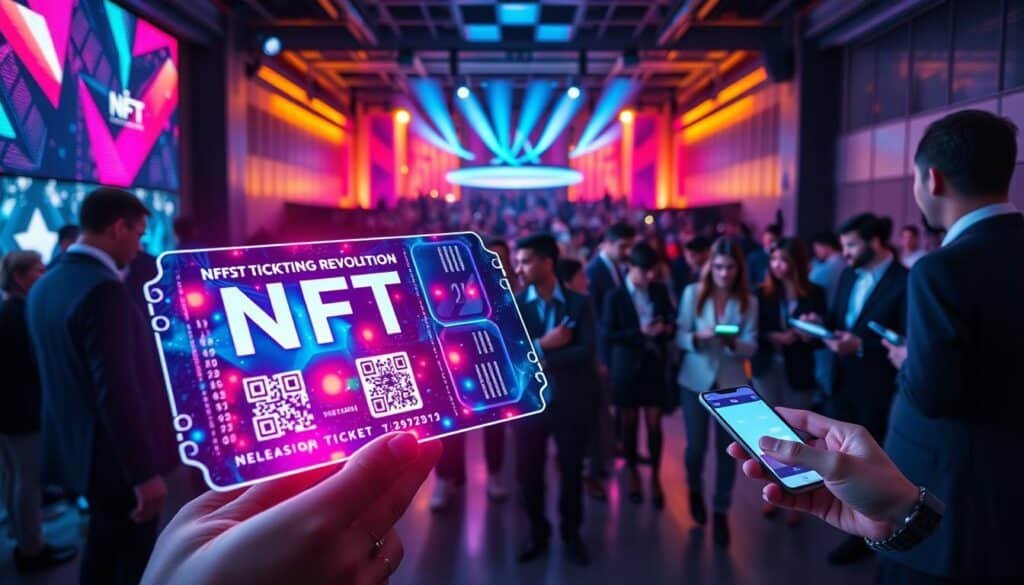
Background and Emergence
In the early 2020s, digital collectibles for entry were mostly buzzworthy tests. The unique properties of blockchain made it an ideal candidate to solve big problems.
It offered a way to verify authenticity and control secondary sales. This addressed long-standing issues with counterfeit passes and unauthorized reselling.
From Hype to Real-World Adoption
Major industry players have moved from skepticism to active implementation. Forward-thinking promoters now see it as a tool to boost trust.
Ticketmaster trialed token-gating with Avenged Sevenfold in 2023. This gave the band’s collectors exclusive access to concert presales.
Coachella announced a 2024 partnership after refining its approach. Such moves signal a fundamental transformation in how admissions are managed.
The infrastructure is becoming more accessible for everyone involved. This widespread adoption marks a clear sign of lasting potential.
Understanding NFTs and Blockchain Basics
The foundation of secure, modern admissions is built upon unique digital assets and decentralized ledgers. Grasping these concepts unlocks how this technology creates trust.

What is an NFT?
A non-fungible token is a one-of-a-kind digital asset stored on a blockchain. Unlike interchangeable cryptocurrencies, each token is distinct.
This provides verifiable digital scarcity and proof of ownership. Key properties include:
- Uniqueness: No two tokens are identical.
- Indivisibility: It cannot be split into smaller parts.
- Transparency: Its history is publicly viewable.
These traits make it perfect for representing exclusive items, like a concert pass.
Blockchain Essentials for Ticketing
Blockchain technology is a shared digital ledger. It records transactions across many computers.
When you buy a digital pass, a unique token is created and assigned to your wallet. This serves as a tamper-proof entry credential containing all essential details.
The decentralized nature means no single company controls the record. Anyone can verify its authenticity independently. Modern platforms hide this complexity behind simple apps and email delivery.
The Evolution of Digital Ticketing
Admission systems have evolved through distinct phases. Each aims to solve the flaws of its predecessor.
Transition from Traditional to Digital Solutions
Physical paper passes were the standard for decades. They were easy to counterfeit and could be lost or damaged.
Tracking ownership or stopping unauthorized resale was nearly impossible. This created a major headache for organizers and fans.
The first digital wave brought PDF and print-at-home options. Convenience improved, but a new vulnerability emerged.
These digital files could be copied, screenshotted, or altered with ease. Sometimes, they were even simpler to forge than their paper ancestors.
The 2022 UEFA Champions League final showed this massive security flaw. Tens of thousands arrived with fake paper and QR codes.
About fifteen percent of all passes were counterfeit. This caused chaos at the gates and ruined the experience.
Systems using QR codes and centralized databases came next. They added a layer of verification but relied on trusted middlemen.
Sophisticated forgery and duplication remained possible. This ongoing struggle set the stage for a more fundamental solution.
NFT for real-world event ticketing
At its core, this technology turns every admission into a verifiable digital asset with built-in security. It moves beyond simple digital files to provide mathematical proof of authenticity.
Core Features and Unique Security
Each digital token is cryptographically unique. It cannot be duplicated or forged. This eliminates the counterfeit pass problem that plagues traditional systems.
When you arrive at a gathering, scanning works like a QR code. However, the system verifies the token’s legitimacy directly on the blockchain. This happens instantly behind the scenes.
Every transfer of ownership is logged transparently on an immutable ledger. This creates a permanent record of the asset’s entire lifecycle. You can trace its history from creation to current holder.
This traceability enables new possibilities. You can verify authenticity before buying on secondary markets. It also ensures passes haven’t been duplicated.
These core features form the technical foundation for all subsequent benefits. They combine digital convenience with previously unavailable cryptographic security. Learn more about mastering NFT ticketing for event marketing to explore further.
Enhancing Event Security with NFT Ticketing
A major shift is underway in how live gatherings protect against counterfeit passes and unauthorized resales. This new approach relies on two powerful technological mechanisms.
Counterfeit Prevention through Blockchain
Blockchain verification gives organizers a trustworthy foundation. Each digital token is unique and its authenticity is checked against the public ledger instantly.
Any fake token would fail this check at the gate. This technology has proven itself at scale.
For example, the GET Protocol platform has sold over 600,000 blockchain-based admissions with controlled resales.
Smart Contracts to Control Scalping
Programmable smart contracts enforce resale rules automatically. They can make a digital pass non-transferable until a specific date.
This deters early scalpers who buy in bulk. If a resale does occur, the code can automatically pay a royalty to the artist or organizer.
This turns the secondary market into a revenue stream. It also reduces incentives for price-gouging.
Enhanced security creates a trusted environment for fans, organizers, and artists alike.
Transparency and Trust in Blockchain Ticketing
A new level of accountability is emerging for organizers and fans alike, powered by an open digital record. This system moves trust from a promise to a verifiable fact.
Public Ledger and Auditability
Every transaction is recorded on a shared, immutable ledger. Fans can confirm they are purchasing from the official supply chain. Organizers gain complete visibility into every token’s journey.
If an event creates 5,000 digital passes, that number is fixed and public. Anyone can audit the blockchain to see only 5,000 tokens exist. This proves fair distribution and prevents secret releases.
This auditability also solves problems efficiently. If passes are stolen or an account is hacked, organizers can track the specific wallet. They can then void the fraudulent token and issue a valid replacement to the rightful owner.
Transparency builds lasting confidence. It reduces disputes and creates a foundation for stronger customer relationships. This verifiable system turns trust into a practical business advantage.
Leveraging NFTs for Improved Fan Engagement
The relationship between live events and their audiences is entering a new era of digital interaction. These tokens create lasting connections long before and after the gathering itself.
Digital Collectibles and Memorabilia
Admission passes now double as digital collectibles. They often feature custom artwork, giving fans a virtual souvenir to treasure.
This transforms a disposable paper stub into a permanent digital keepsake. Dynamic tokens can update after an experience to display exclusive photos or setlists.
Tomorrowland used this approach for festival memorabilia. Their collectibles evolved with metadata updates, becoming more valuable over time.
Unlocking Exclusive Perks and Content
Ownership acts as a key to unlock additional content and perks. This can grant access to VIP online communities or behind-the-scenes videos.
It also includes special discounts on merchandise or artist meet-and-greets. These features create multiple touchpoints for brand interaction.
At New York’s Governors Ball, regular attendees claimed a special token. It doubled as a VIP lounge pass, demonstrating layered value.
These engagement strategies build emotional connections that translate into loyalty. They turn ticket purchasing into part of the entertainment, similar to a reward system for customer engagement.
Unlocking New Revenue Streams through NFTs
One of the most transformative aspects of blockchain-based admissions is the creation of ongoing revenue channels. This system moves beyond one-time sales to build sustainable income from every transaction.
Smart Contract Royalties Explained
Programmable code within each digital token enables automatic payments on secondary sales. If a pass is resold, a set percentage flows back to the original creator.
This typically ranges from 5% to 10% of the resale price. The smart contract executes this transfer instantly and without manual tracking.
These automated royalties turn the secondary market into a source of new revenue. Instead of scalpers capturing all value, artists and promoters gain a direct share.
Consider a major concert tour using blockchain-based passes. Across dozens of shows, resale activity could generate thousands in additional funds.
This income can support better production or marketing for future events. It creates a circular economy that rewards creators continuously.
Moreover, these contracts can enforce fair resale prices. They prevent price gouging while allowing legitimate transfers.
This capability fundamentally rebalances the ticketing economy. Value accrues to those who create the experience, not just intermediaries.
Combating Ticket Fraud and Scalping
The battle against fake passes and inflated resale prices is finding a powerful new ally in blockchain technology. This approach directly tackles issues that have plagued the industry for years.
It protects revenue and ensures genuine fans get fair access. You can explore the mechanics of NFT ticketing to see how it works.
Resale Control Mechanisms
Programmable smart contracts give organizers unprecedented command over secondary sales. These contracts can enforce specific rules automatically.
They might lock a digital pass, making it non-transferable until 48 hours before the show. This stops bulk buying by scalpers.
Other rules can set a maximum price cap for any resale. A mandatory royalty payment to the artist or promoter can also be coded in.
This reduces the profit margin for scalping operations. It ensures more tickets reach true fans at fair prices.
Case Studies in Fraud Reduction
The results in fraud prevention are measurable and dramatic. A major US music festival reported a telling case.
In a previous year, over 10% of all tickets scanned at their gate were fraudulent copies. This caused major security headaches and lost income.
After switching to a blockchain-based system, they reported virtually zero fake entries. This level of security builds immense trust for fans and organizers.
Reducing scalping and fraud does more than protect revenue. It creates positive experiences that encourage repeat attendance.
Global Adoption and Success Stories
The adoption of tokenized entry passes has reached a tipping point, demonstrated by high-profile implementations worldwide.
From Belgian music festivals to Californian desert gatherings, digital token admissions are gaining traction. Clubs in Asia and sports teams across Europe are also experimenting with this technology.
B2B conferences and virtual gatherings have adopted similar systems. These diverse events showcase the technology’s versatility.
International Events Embracing NFT Ticketing
Major festivals like Coachella announced a 2024 partnership to re-launch its collectible passes. This move followed earlier tests, showing a commitment to refined approaches.
In the music industry, Kings of Leon pioneered a groundbreaking release in 2021. Their “Golden Ticket” unique passes offered lifetime front-row seats to concerts.
Sports organizations have embraced this innovation too. The Golden State Warriors launched a collection with benefits like game access and VIP perks. Paris Saint-Germain explored similar passes for exclusive match-day experiences.
These examples span continents and categories. They prove this technology is moving beyond early adopters into mainstream consideration. Successful implementations now provide blueprints for other organizers.
NFT Ticketing Platforms and Industry Innovators
Innovative companies are building the essential infrastructure to bring tokenized entry passes to the mainstream. These platforms and providers turn complex blockchain concepts into practical tools for organizers.
Leading Companies Pioneering the Space
Specialized firms like ComeTogether create complete solutions. They use digital tokens to issue and track admissions, hiding technical details behind simple interfaces.
The GET Protocol platform demonstrates reliable scale. It has sold over 600,000 blockchain-based passes with controlled resales, proving the technology works.
Even established giants are experimenting. Ticketmaster trialed token-gating with Avenged Sevenfold in 2023. This shows traditional leaders recognize the potential.
Confidence in this sector is high. The platform market is projected to grow from $1.3 billion in 2025 to $7.8 billion by 2033. This nearly sixfold expansion signals a maturing industry.
A healthy ecosystem now offers options for every event size. Organizers can focus on their experience, not the implementation details.
Digital Transformation in Event Marketing
Understanding audience behavior has always been the holy grail of successful event marketing. Digital tokens are now providing that missing insight.
This technology enables a shift from broad campaigns to personalized communication. It creates a continuous feedback loop between organizers and attendees.
Data-Driven Marketing with NFT Insights
Blockchain-based admissions offer clear visibility into fan habits and tastes. Each token is tied to a wallet that traces buying, selling, and usage patterns.
Planners gain detailed behavioral profiles for smarter targeting. This data goes beyond simple purchases to include secondary market activity.
It shows which perks fans redeem and how they engage with exclusive content. These rich insights enable more tailored experiences.
Integrating NFT Technology with Traditional Strategies
This innovation complements rather than replaces established methods. Digital tokens work alongside email campaigns and social media promotion.
They provide new levers for upselling and cross-selling. Organizers can offer upgraded tokens with additional perks.
Creating tiered experiences with different artwork builds community. Token ownership segments audiences for targeted merchandise promotions.
For marketers, these tools turn admissions into dynamic assets. They continue providing value and engagement opportunities long after gatherings end.
The Fan Experience: Beyond a Digital Ticket
Attendees now expect more than just entry—they seek immersive experiences that begin long before the gates open. A digital token transforms a simple pass into a dynamic part of the journey.
This approach builds lasting memories and fosters a loyal community. Every sale becomes a chance to engage your audience in meaningful ways.
Interactive and Collectible Experiences
Creative organizers design scavenger hunts and gamified activities. They hide Easter egg content within a token’s metadata for fans to discover.
Some encourage holders to trade digital pieces with each other. This unlocks special rewards and turns ownership into an engaging game.
These collectibles often feature unique artwork. They serve as permanent digital souvenirs from the experience.
Exclusive Access and On-site Perks
Token ownership grants practical benefits that enhance the live experience. It can unlock an early entry lane at the venue, reducing wait times.
Many provide access to online pre-show soundcheck streams. This builds anticipation and makes fans feel connected.
On-site perks include admission to VIP lounges or exclusive viewing areas. A digital wallet can be recognized by vendors for automatic merchandise discounts.
These features create emotional connections that go far beyond attending an event. They make attendees feel valued and part of something special.
Future Prospects and Technological Advances
Looking ahead, the trajectory of digital admissions points toward greater sustainability and broader application. Continuous innovation is addressing early concerns while opening doors to new possibilities.
Evolving NFT Infrastructure and Sustainability
Major blockchains like Ethereum have adopted proof-of-stake consensus. This shift cuts energy usage by approximately 99% compared to older systems.
Many event NFT platforms now use “layer 2” sidechains or efficient networks. These designs minimize transaction costs and environmental impact.
Sustainability is no longer a valid objection to adoption. New solutions make the technology accessible for events of all sizes.
Predicted Trends in Event Technology
This innovation will stretch beyond entertainment into travel and hospitality. Airlines might issue NFT boarding passes with added perks.
Hotels could offer tokenized reservations unlocking tailored benefits. Schools may certify attendance with blockchain tokens.
As the technology matures, expect enhanced interoperability between platforms. User interfaces will hide complexity completely.
Integration with augmented reality and other emerging tools is likely. The most exciting applications are still ahead.
Conclusion
The integration of blockchain into admissions represents a pivotal leap forward. NFT ticketing cuts fraud and ensures authenticity for every digital pass.
It opens new revenue through smart contract royalties. Organizers gain valuable data insights while fans enjoy exclusive experiences.
Education drives wider success for this technology. Both planners and attendees need clear resources to grasp blockchain basics.
Building a strong ecosystem demands teamwork. Technology firms, event organizers, and providers must collaborate.
Early adopters can lead this shift. They seize new chances for engagement and income.
The benefits clearly outweigh any challenges. This innovation is a present reality, offering a powerful way to enhance security and deepen attendee relationships.

No comments yet