
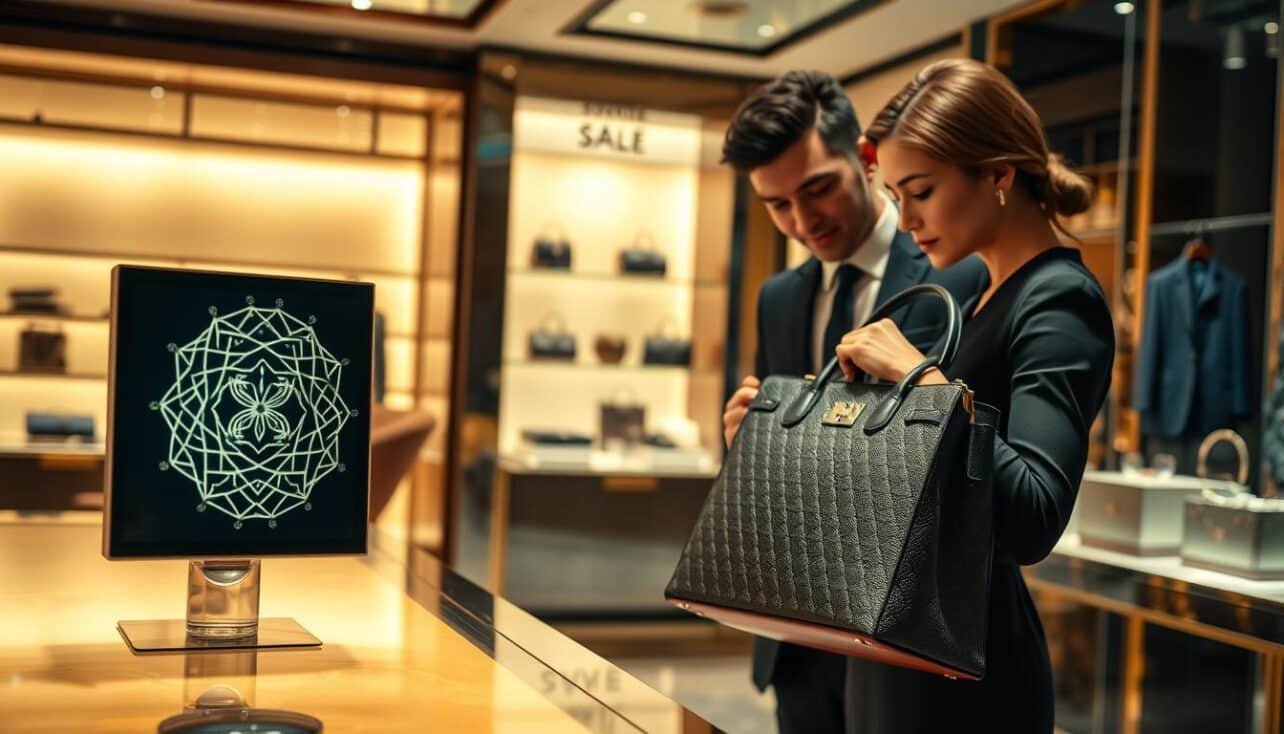
The global market for high-end items is valued at around $500 billion. Yet, a massive shadow economy of fakes threatens its core. This counterfeit trade steals roughly $50 billion every year.
Old ways to prove realness often fail. Holograms and paper certificates can be copied. This erodes confidence between makers and buyers.
Blockchain technology offers a powerful fix. It creates a permanent, unchangeable record for each item. This record tracks its entire journey from creation to sale.
An NFT acts as a digital proof of ownership. It links to this blockchain record. Analysts see huge growth, with the niche for these digital assets potentially hitting $56 billion by 2030. For top-tier brands, this shift is about protecting heritage and building lasting trust.
Understanding the Challenges in Luxury Goods Authentication
Sophisticated counterfeit networks now produce replicas that challenge even expert eyes. This shadow economy drains roughly $50 billion annually from the high-end market. It represents about 10% of the entire sector’s value.
The lack of reliable verification creates a major crisis. It undermines the core relationship between makers and buyers.
Impacts of Counterfeiting on Brand Value
Fake items directly attack a company’s most precious asset: its brand value. Reports show top-tier houses lose approximately €26 billion each year. These losses come from missed sales, legal fights, and costly reputation repairs.
The flood of convincing fakes weakens the sense of exclusivity. This erodes the trust that justifies premium prices. When consumers fear being fooled, they may delay or cancel purchases entirely.

Limitations of Traditional Certification Methods
Old-school proof methods are failing. Holograms, serial numbers, and paper certificates can be copied with stunning accuracy. There is no universal, real-time platform for checking an item’s history.
This gap allows fraudsters to duplicate valid codes from real products. Inconsistent third-party services further confuse consumers. The result is widespread anxiety, especially among younger shoppers who share horror stories online.
Without modern, standardized systems, both retailers and owners struggle to prove authenticity. This threatens the entire secondary market for genuine items.
Innovative Shift Toward Digital Authentication
Digital innovation is revolutionizing how we confirm the origins of premium products. The industry is moving from old, paper-based trust models to new, technology-based systems.
These systems use mathematical proof instead of relying on central authorities. This shift creates a stronger foundation for verifying high-value items.
Embracing Blockchain for Transparency
Blockchain technology is at the heart of this change. It acts as a decentralized digital ledger. Records are spread across many network points, making unauthorized changes nearly impossible.
Each item gets a unique “blockchain passport” at creation. This digital identity logs material sources, artisan details, and full ownership history.

The information is permanent and verifiable. This gives brands a powerful tool for proving an item’s story.
Evolution of Consumer Expectations
Modern buyers, especially younger ones, want more information. They expect to see a product’s journey from source to store.
Surveys show over 70% of Gen Z shoppers value ethical sourcing. They use this as a key factor when making a purchase.
This demand for transparency pushes brands to adopt clear, digital systems. Blockchain provides the objective proof these consumers seek.
NFT in Luxury Goods Authentication
These cryptographic assets establish a lifelong bond between a physical item and its history. Non-fungible tokens represent a complete shift in how we prove realness.
Each token is completely unique and scarce. This mirrors the core values of exclusive products where rarity commands premium value.
The technology creates a permanent, unchangeable record on the blockchain. This record acts as a digital twin for the physical asset.
It contains detailed product information and a full transaction history. Unlike paper certificates, this proof cannot be lost or forged.
Buyers gain dual ownership of both the item and its verified digital counterpart. This enhances the overall value and enables new forms of brand engagement.
Verification becomes a dynamic, ongoing process. The status and provenance of a product remain accessible throughout its entire existence.
How Blockchain Enhances Authenticity in Luxury Purchases
The power of a decentralized ledger lies in its ability to lock a product’s story in digital stone. This technology creates a trustworthy foundation for verifying high-value items.
It moves proof beyond fragile paper certificates. Every participant connects to one transparent network.
Immutable Ledger Benefits for Verification
Blockchain establishes permanent records. Once information is added, no single party can change or delete it.
This creates a reliable history for each item. Cryptographic security keeps all data safe from tampering.
Ownership transfers and quality checks are logged forever. The system uses distributed consensus for validation.
Multiple network points must agree on any update. This makes fraudulent alterations nearly impossible.
Securing the Provenance Trail
The complete journey of an item is visible from start to finish. Blockchain tracks materials, creation, and every sale.
This end-to-end provenance builds trust regarding origins. Buyers can see the full lineage with a simple scan.
Resale values stay strong because the history is proven. Secondary market purchases become more secure. Experts discuss these advances in blockchain luxury authentication.
Real-time verification is now consumer-friendly. It turns a complex process into instant confirmation. Tools for this are evolving, as noted in resources on NFT authentication and provenance verification tools.
The Rise of NFTs in the Luxury Market
A seismic shift is underway as digital collectibles merge with the world of high-end craftsmanship. This fusion is redefining value and ownership for a new generation of collectors. The financial potential is immense, with projections suggesting this niche could reach $56 billion within this decade.
Digital Ownership and Exclusivity
These non-fungible tokens create verifiable scarcity. They act as permanent digital certificates for physical items. This provides buyers with undeniable proof of their assets‘ origins.
The concept of exclusivity is amplified. Brands launch limited edition releases tied to unique tokens. This opens doors to digital fashion and virtual experiences.
Tokenization allows for fractional ownership of high-value pieces. It makes premium assets more accessible. The digital proof in a wallet cannot be lost, unlike paper records.
This evolution strengthens the bond between maker and buyer. It builds a more transparent and engaged market. The focus shifts to lasting customer relationships powered by blockchain truth.
Real-World Applications by Luxury Brands
Practical implementation is where theory meets reality. Several iconic brands are leading the charge with tangible projects.
Case Studies from Gucci, Dior, and Louis Vuitton
LVMH’s Aura platform stands out. It started as a pilot in 2019 and is now a consortium-based standard.
Rivals like the Prada Group and Cartier have joined. This shared blockchain infrastructure boosts trust across the sector.
Louis Vuitton uses it for deep traceability. Each diamond’s full journey is recorded. Scanning a QR code reveals artisan stories and material origins.
Innovative Initiatives by Prada, Balenciaga, and Others
Other houses explore the digital frontier. They blend physical craftsmanship with virtual experiences.
Prada auctions unique virtual clothing as nfts. Balenciaga sells digital ensembles in the metaverse. These moves attract a new generation of collectors.
Dolce & Gabbana’s DG Coin enables crypto purchases. Cartier logs serial numbers on a public ledger. De Beers’ Tracr platform tracks diamonds from mine to market, proving ethical sourcing.
This widespread adoption of technologies signals a permanent shift. It secures products and builds deeper customer relationships.
Integrating Blockchain and NFT Technologies
Operationalizing these digital solutions demands careful attention to architectural details and system requirements. Brands must bridge the gap between innovative concepts and reliable daily operations.
Technical Considerations and System Integration
Merging distributed ledger technology with existing corporate systems presents significant challenges. This integration requires specialized expertise in both legacy infrastructure and new decentralized networks.
Scalability remains a critical concern for widespread adoption. Blockchain platforms must handle peak transaction volumes without delays.
Different system interoperability is equally important. Brands need consistent verification across various marketplaces and networks.
Smart contracts automate verification processes securely. Only authorized supply chain partners can update product histories. This creates tamper-proof audit trails from source to consumer.
Compliance with international regulations adds another layer of complexity. Data privacy laws and evolving crypto rules must be addressed. Phased implementation starting with pilot programs proves most effective.
Consumer Trust and Enhanced Customer Experience
Modern shoppers demand more than just a product. They seek a verified story and transparent proof of origin.
Market reception to digital verification is curious yet cautious. Tech-savvy collectors appreciate the clarity it provides.
Traditional buyers who value tactile experience are gradually embracing the change. Research shows that using these systems significantly boosts trust.
It leads to much higher repurchase rates and brand loyalty. The customer experience extends into rich storytelling.
Buyers can see the full journey of materials and artisan craftsmanship. This builds deep emotional connections with the brand.
It also secures asset value in the resale market. Key benefits for consumers include:
- Higher repurchase rates from verified buyers
- Stronger resale value with a proven history
- Ethical sourcing confirmation for peace of mind
- Ongoing engagement through exclusive digital assets
Ultimately, a purchase becomes the start of a lasting digital relationship. This builds unparalleled confidence for customers and transforms ownership.
Overcoming Implementation Challenges
Adopting new verification methods requires navigating a maze of technical and legal obstacles. Market reception is heavily influenced by global regulatory landscapes.
Some regions welcome innovation with open frameworks. Others proceed cautiously due to data privacy concerns.
This creates a complex scenario for the entire industry. Success hinges on educating users and blending digital proof with physical experience.
Scalability and Interoperability Issues
Major challenges emerge as transaction volumes grow. Networks must verify items quickly without slowing down.
Brands must choose the right blockchain technology architecture. They balance transparency with performance needs.
Interoperability is another hurdle. Different brands may use incompatible systems.
This fragments the ecosystem for customers. Cross-chain protocols or industry-wide standards are needed for a seamless experience.
Regulatory and Compliance Considerations
Legal frameworks vary wildly across borders. This impacts the pace of adoption.
Some areas have clear rules for digital assets. Others impose restrictive requirements.
Ongoing compliance is a key challenge. Brands must monitor regulatory changes globally.
Intellectual property rights add another layer of legal complexity. Tokenizing physical items requires careful planning.
Key hurdles for successful adoption include:
- High implementation costs for technology and training
- Shortages of technical expertise in blockchain technology
- The need for continuous consumer education
- Integrating new systems with legacy operations
Future Trends in Luxury Authentication
The convergence of several advanced technologies is set to redefine authenticity standards across the sector. This evolution moves beyond simple verification.
It aims to create a continuous, transparent relationship between brands and their clients. The luxury industry is at the forefront of this shift.
Digital DNA Systems and NFT Evolution
Next-generation systems will assign comprehensive digital identities to physical items. These profiles encode material composition and unique craftsmanship signatures.
Future token implementations will become dynamic. They will automatically update with service records and ownership changes.
This enhances transparency and resale value for owners. Blockchain remains the foundational layer enabling this permanent record.
Asset tokenization will also enable new ownership models. High-value pieces can be divided into tradable, blockchain-based shares.
This democratizes access while maintaining full provenance tracking. Integration with AI and IoT sensors will create seamless hybrid authentication.
Sustainability reporting will become standard practice. Blockchain systems will track environmental impact data throughout the supply chain.
Key developments shaping the future include:
- Dynamic Digital Twins: Tokens that evolve with a product’s lifecycle.
- Fractional Investment: Democratizing ownership of premium assets.
- Hybrid Verification: Blending AI, IoT, and AR for seamless checks.
- Verifiable ESG: Transparent reporting on ethical sourcing and impact.
Market projections are significant. The niche for these digital assets could represent 10% of the total luxury industry by 2030.
Collaborations with gaming and metaverse platforms are expanding. This establishes new revenue streams for virtual and hybrid products.
These trends point toward a fundamental redefinition of value and ownership.
Emerging Strategies for Authenticity Verification
The next wave of proof strategies moves beyond isolated solutions toward unified ecosystems. Independent platforms now offer interoperable systems that work across different houses.
This allows owners to manage items from multiple brands in one digital wallet. It creates a seamless verification experience and eliminates confusion.
Consortium-based networks demonstrate powerful collaboration. Rivals share blockchain technology infrastructure to set industry standards.
This approach gives all participating brands stronger global protection. It also simplifies monitoring for counterfeits worldwide.
A key innovation is building brand-centric communities on the blockchain. Verified owners gain access to exclusive networks.
These spaces enhance loyalty and provide collective vigilance. Strategic partnerships with tech experts accelerate implementation.
They provide access to cutting-edge authentication tools faster than internal development. The ultimate goal is establishing universal protocols.
These strategies work to make digital proof an expected standard. They focus on user-friendly interfaces and consumer education.
Key strategic pillars now include:
- Interoperable Platforms: Unified systems for multi-brand management.
- Collaborative Infrastructure: Shared networks that boost protection for all.
- Engaged Communities: Exclusive owner networks that build loyalty and trust.
- Strategic Partnerships: Alliances with tech firms for advanced solutions.
This holistic approach ensures authenticity is continuous, not just a one-time check. It builds lasting confidence for the entire high-end market.
Conclusion
Looking ahead, the marriage of heritage and innovation promises a more secure and engaging landscape. The integration of blockchain technology represents a fundamental shift for the luxury industry.
It moves beyond combating counterfeits to create new revenue streams. Financial analysts project the market for these digital assets could reach $56 billion by 2030.
This growth is part of a broader trend toward verifiable ownership. Luxury brands that adopt these systems build stronger trust with their audience.
They also gain access to younger, digital-savvy consumers. The future success of this sector hinges on seamless technology integration and industry-wide standards.
Ultimately, this evolution redefines value, ownership, and consumer relationships for high-end goods.

No comments yet