

The original vision for digital collectibles was revolutionary. Artists were promised a sustainable future where they would automatically earn a percentage from every secondary sale of their work.
This promise of perpetual artist payments attracted countless creators to the space. The reality, however, has proven far more complex than anyone initially envisioned.
Market dynamics shifted, and the technical challenge of guaranteeing these payments became a central point of contention. By early 2026, a new landscape of solutions has emerged.
This guide explores the major protection mechanisms now available. Creators must proactively choose and implement the right systems for their projects to ensure sustainable revenue for artists. Understanding these options is essential for anyone building or collecting in this evolving space.
Introduction to NFT Royalties in the Digital Art Market
For visual artists, the traditional secondary market has long been a source of financial frustration. A painter could sell an original piece, only to see its value skyrocket in later resales without receiving a cent.
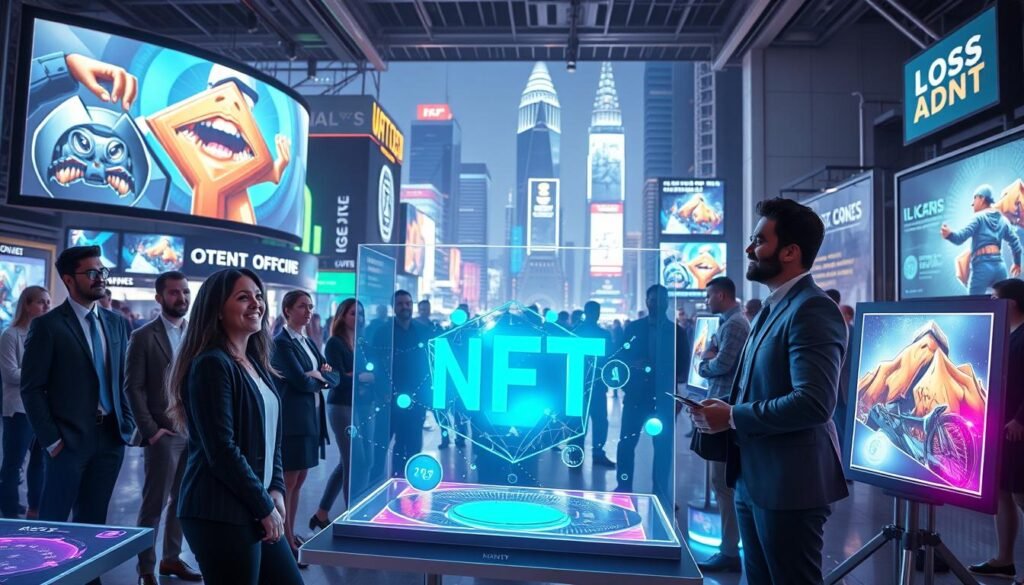
This fundamental inequity in how creative value is distributed set the stage for a blockchain-powered solution.
Background and Evolution of NFT Royalties
The concept of automatic, on-chain royalty payments emerged as a transformative force. It promised digital artists a share in the future appreciation of their work.
This idea fueled a major boom, empowering creators to build careers around their digital art. The vision was simple: code a percentage fee into the asset itself.
The Role of Smart Contracts in Royalty Payments
Smart contracts are the engine behind this system. They are self-executing agreements on the blockchain.
When a digital collectible is created, these smart contracts can embed logic that specifies a creator’s wallet and a fee. This setup aims to guarantee the original maker gets paid on every transfer of ownership.
It represented a seismic shift in the economics for artists working digitally.
Understanding the Complexities of NFT Royalties
The technical foundation of most digital collectibles, however, contains a critical gap in enforcement capability. This gap is the root of much confusion and frustration for creators today.
The Promise vs. Reality of On-Chain Royalties
Many believed smart contracts would automatically guarantee a creator’s share. The common standard, ERC-721, defines ownership but lacks built-in payment logic.
It can signal a fee, like a sign requesting payment. It cannot force a buyer or marketplace to comply during a sale.

This voluntary system worked initially. Major platforms like OpenSea chose to honor these signals. They built their models around supporting artists.
Market dynamics shifted as competition grew. New players began questioning the automatic fee model. This exposed the system’s reliance on voluntary cooperation.
Creators learned a hard lesson. Basic contract code does not equal guaranteed royalty payments. Stronger enforcement mechanisms are now essential.
NFT royalty enforcement tools 2026
By 2026, several distinct technological approaches have solidified to address the payment guarantee challenge. These systems work across different blockchain ecosystems.
For Ethereum and compatible chains, the ERC721C standard paired with Limit Break’s Payment Processor is key. It adds transfer restrictions at the contract level.
Sales must route through approved protocols. Key marketplaces like Magic Eden EVM support this. The main Payment Processor contract addresses are 0x009a1dC629242961C9E4f089b437aFD394474cc0 (Mainnet) and 0x009a1Daf6B5b8ADC6B3DB720C58D43caA2fdAc56 (Polygon).
On Solana, Programmable NFTs use Metaplex rule sets. The foundational rule set ID is eBJLFYPxJmMGKuFwpDWkzxZeUrad92kZRC5BJLpzyT9. This on-chain policy gates transfers, ensuring only compliant programs like Tensor and Magic Eden can facilitate trades.
Other chains build enforcement directly into their protocol. Immutable zkEVM uses collection presets and an operator allowlist. RARI Chain validates payments at the sequencer level, offering one of the strongest technical guarantees.
Understanding these tools is the first step for creators toward effective management of artist payments. Each solution provides a different layer of security for secondary sales.
Technical Standards Driving Royalty Enforcement
Without agreed-upon rules, automated payments remain a fragmented and unreliable promise. Technical standards create the common framework needed for consistent revenue sharing across platforms.
EIP-2981 and Its Limitations
The EIP-2981 standard introduced a universal function for smart contracts. Any marketplace can call this function to query payment details for a specific token.
This provides a clear signal. However, it is purely voluntary and advisory. The logic only reports information; it cannot force a marketplace to comply.
Advanced Mechanisms: ERC721C, pNFT Rule Sets, and Beyond
Newer standards embed royalty enforcement directly into the asset’s contract. ERC721C contracts use transfer security profiles.
They whitelist only approved payment processors. This blocks transfer to non-compliant venues at the contract level.
On Solana, programmable assets use on-chain rule sets. These policies gate every transfer through authorized programs. This moves beyond simple signaling to active control.
The Impact of Zero-Royalty Marketplaces
The voluntary royalty system collapsed under pressure from marketplaces prioritizing low costs. In 2022, a cooling market sparked fierce competition between platforms.
New venues saw an opportunity to attract traders by cutting the total cost of transactions. Artist payments were the easiest fees to eliminate.
Market Shifts and Their Consequences for Creators
Platforms like SudoSwap and X2Y2 made royalties optional or zero by default. The most significant change came from Blur.
This marketplace catered to professional collectors. Its model strongly encouraged paying the lowest possible fees.
A “race to the bottom” began. Traders flocked to venues with the cheapest sales conditions. This migration caused creator revenue to plummet dramatically.
Artists who built businesses on predictable income saw payments vanish. Even OpenSea, a long-time champion for creators, was forced to make royalties optional to compete.
A major debate emerged. Some argued forced payments violated ownership principles. Creators countered that shared revenue was a core value of digital art.
This market failure made one thing clear. Reliable artist payments required more than goodwill. Stronger technical guarantees were now essential.
Evaluating Enforcement Models Across Blockchains
Different blockchain networks have developed unique technical models to address the challenge of guaranteeing creator payments. Each ecosystem offers a distinct balance of enforcement strength, marketplace support, and available liquidity.
Ethereum/EVM vs. Solana and Immutable zkEVM
On Ethereum and similar chains, basic standards are only advisory. Strong enforcement requires advanced contract code like ERC721C or building on a specialized chain.
Solana uses programmable digital assets with on-chain rule sets. Major platforms like Tensor respect these policies. Here, the buyer typically covers the creator’s share.
Immutable zkEVM takes a different path. Its system uses an operator allowlist. Only marketplaces that honor payments can list assets from compliant collections.
Protocols with Built-in Royalty Enforcement
Some chains build payment guarantees directly into their protocol. RARI Chain validates fees at the network level.
Others, like Tezos, rely on strong cultural norms. Key platforms there explicitly honor the contract terms set by artists.
Your choice impacts liquidity. Ethereum offers the widest reach but complex setup. Solana provides a balanced model. For guaranteed payments, a protocol with built-in enforcement is strongest.
Buyer Considerations When Selecting Enforcement Tools
A practical framework helps artists and teams compare the growing array of solutions for securing secondary sales revenue. The right choice balances technical strength with real-world collector activity.
Your decision directly impacts your project’s sustainability. You must weigh several interconnected factors.
Key Features to Look For
First, assess the core enforcement model. Is it a voluntary signal or a protocol-level rule? Strong models restrict transfers to compliant venues.
Next, evaluate secondary market liquidity. The strongest protection is useless without active trading. Research which platforms support your chosen tool.
Also, review compliance controls. Can you manage allowlists for marketplaces? Check for upgrade paths so your system can evolve over time.
Finally, consider developer ergonomics. Some tools require advanced coding skills. Others offer simpler preset contracts with less customization.
Cost and Long-Term Revenue Implications
Understand the fee structure. Who pays the marketplace fees and the creator’s share? On Tensor, the buyer typically covers both a 2% platform fee and the royalty.
Compare different revenue models. Zora’s Protocol Rewards split a tiny, fixed mint payment. This differs from a percentage of every secondary sale.
Think about the long-term work required. A system that limits distribution may secure payments but hurt community growth. You must market your project more actively.
Your goal is sustainable revenue. Choose a solution that collectors accept and that fits your technical capacity. This ensures your project thrives for a long time.
Integration with Popular Marketplaces and Platforms
To guarantee payments, your digital assets must be properly listed on compliant platforms. Technical protection only works when connected to active trading venues.
Best Practices for Deployment
For Ethereum Virtual Machine chains, deploy ERC721C contracts. Configure them to whitelist the Limit Break Payment Processor.
Use the mainnet address 0x009a1dC629242961C9E4f089b437aFD394474cc0. For Polygon, use 0x009a1Daf6B5b8ADC6B3DB720C58D43caA2fdAc56.
Then list your collection on Magic Eden EVM. This marketplace integrates the processor automatically.
For existing projects, Magic Eden offers one-click migration. This preserves your community and provenance.
On Solana, mint as programmable assets via Metaplex. Attach the Foundation Rule Set: eBJLFYPxJmMGKuFwpDWkzxZeUrad92kZRC5BJLpzyT9.
List on both Tensor and Magic Eden. These platforms respect the on-chain policy. This maximizes your liquidity and distribution.
For Immutable zkEVM, use their preset contracts. Register with the Operator Allowlist. Collections not on the list lose visibility across their federated marketplace network.
This ensures ecosystem-wide payment compliance.
Adopt a cross-platform strategy. Communicate official trading venues to your collectors clearly.
Monitor for new bypass attempts. Update allowlists as new compliant marketplaces launch. This ongoing deployment work secures long-term revenue.
Best Practices for Creators to Secure NFT Royalties
The most successful creators combine smart technology with strong human connections to protect their revenue. A practical action plan goes beyond choosing a single tool.
Start with a clear signal. Implementing the EIP-2981 standard is your essential first step. This establishes the expected payment structure for all compliant platforms.
Next, make a strategic choice about contract-level controls. Using allowlists guarantees payments but may limit where your collection trades. Weigh this against community perception.
Your most powerful asset is your community. Cultivate genuine fans who value your work. They create social pressure that supports sustainable revenue models.
Provide real utility to incentivize support. Offer access to exclusive content, future airdrops, or membership benefits. This makes collectors active partners in your success.
Always communicate transparently. Educate your audience on why these payments matter for your long-term creative work. Publish an official “where to trade” page to guide all secondary sales to compliant venues.
Conclusion
For artists, protecting revenue is no longer a passive hope but an active pursuit. The path forward successfully blends strong technical standards with dedicated community strategy.
The debate between absolute ownership and sustainable creator economies is a core Web3 tension. Technology provides powerful tools, but cultural values and clear communication are equally vital.
Your success hinges on a holistic approach. Choose the right enforcement model for your project and partner with compliant platforms. Most importantly, cultivate a community that values your long-term work. This active strategy is key to earning from secondary sales consistently.
While the landscape is complex, artists now have real agency. By investing time to understand the options, you can build a durable creative career on your own terms.

No comments yet