

The landscape of digital collectibles has changed dramatically. What began as a niche for profile-picture art has matured into a complex ecosystem.
This specific subset of blockchain assets has shifted from speculative hype to a focus on real-world use. The conversation now centers on utility and verifiable ownership.
The current phase is defined by institutional adoption and deep integration into gaming worlds. Practical applications have largely replaced the collecting frenzy of earlier years.
This analysis provides a comprehensive look at the evolved environment. We examine surviving projects, technological progress, and new regulatory frameworks.
Our guide offers a data-driven exploration of market trends and investment strategies. It contrasts the performance of established projects with newer entrants.
Whether you are new to this space or an experienced participant, this resource is valuable. It helps in understanding what NFTs represent in today’s context.
The core question remains: have these digital assets built sustainable value beyond the initial excitement?
Introduction to NFT Market Evolution
From a period of wild speculation emerged a more grounded and functional ecosystem. These blockchain-based digital assets represent ownership of unique items like art, event tickets, and membership credentials.
The focus has moved from profile pictures to practical ownership infrastructure.
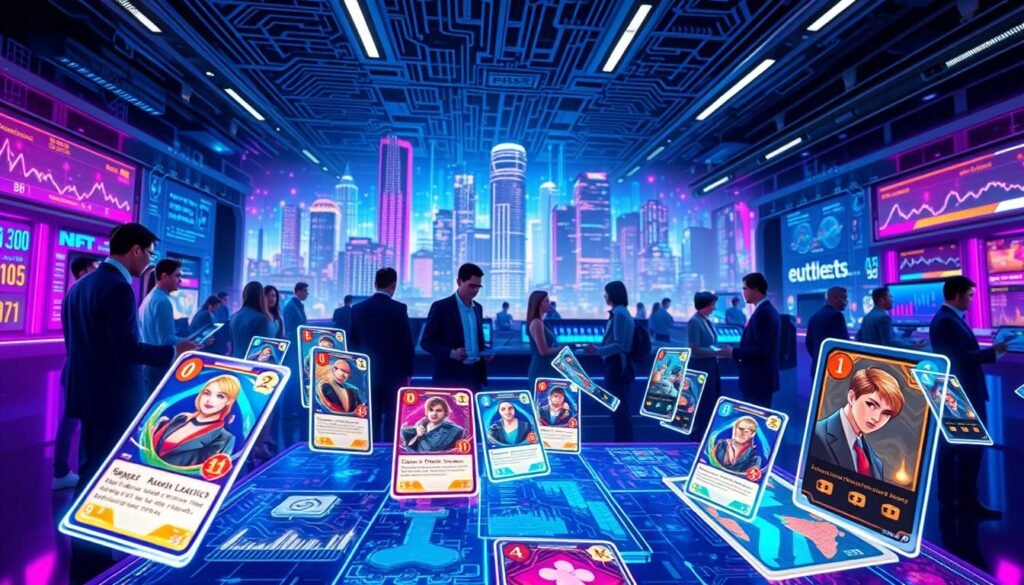
Overview of NFT Trading Trends
This maturation led to dramatic consolidation. Reports indicate most collections are now dormant with no activity.
Buyer behavior transformed from watching floor prices to evaluating utility. People now assess access rights and long-term value.
Shift from Speculation to Utility
This fundamental change separated projects solving real problems from those relying on hype. Many failed ventures banked on celebrity endorsements.
Today’s environment resembles traditional software markets more than a casino. Established platforms and user bases focus on practical applications.
Ownership now acts as verifiable proof for digital identity and asset representation. It serves a purpose beyond being mere investment vehicles.
The Rise and Fall of NFT Hype
The digital collectible frenzy reached its zenith in 2021. This peak period was defined by multi-million dollar sales and celebrity endorsements.

Figures like Elon Musk and Snoop Dogg launched collections. This created massive media attention and pure speculation. People bought assets hoping for quick profits, not real use.
This hype cycle created an unsustainable market. Valuations became completely disconnected from any fundamental value. The inevitable correction started in late 2022.
Nearly all celebrity-backed projects crashed, losing over 95% of their value. Founder abandonment and community collapse were common. The hype-driven days were clearly over.
Search data shows a fundamental shift in focus. Google searches for “are NFTs dead” fell 67% by late 2025. At the same time, searches for practical uses like “gaming NFTs” rose over 50%.
Social media chatter moved from floor prices to real-world utility. This necessary correction weeded out low-effort projects. It allowed innovative models with actual purpose to build sustainably.
NFT trading cards explained 2026: Market Trends and Data Insights
Current trading volumes and user activity tell a story of consolidation and renewed growth. The ecosystem now runs on verifiable data rather than hype.
Market Volumes and User Engagement Metrics
Average monthly Ethereum volume reached $720 million in early 2026. This is a 50% rebound from the 2024 low but remains far below the peak days.
About 505,000 wallets showed activity in a 30-day period. This represents strong 80% year-over-year growth. Crucially, 42% of peak users from 2022 are still active today.
Marketplace dynamics show specialization. Blur commands 38% of Ethereum volume, appealing to pro traders. OpenSea and Magic Eden lead in other sectors like Solana.
While 62% of older projects are dormant, surviving collections see sustained engagement. A key driver is the 18% yearly rise in enterprise use for tickets and loyalty programs.
This data confirms activity is now tied to real-world utility, not just crypto price swings.
Utility-Driven NFT Projects and Gaming Applications
Gaming platforms have become the proving ground for utility-driven digital collectibles. The focus has shifted entirely toward assets that provide real function and access.
Gaming NFTs: Success Stories and Failures
Transaction counts on networks like Immutable X and Polygon surged 140% year-over-year. This growth proves in-game utility anchors genuine demand.
Early play-to-earn models collapsed due to unsustainable token economics. Today’s successful titles focus on interoperability and cosmetic items.
Projects like Illuvium and Gods Unchained show steady user growth by prioritizing fun. Failed ventures, however, stalled due to regulatory issues or lack of player activity.
These digital assets now serve as keys for exclusive communities, event tickets, and product verification. Active creator communities are essential for ongoing value.
Institutional Adoption and Regulatory Developments
Legal clarity around digital ownership has unlocked billions in institutional capital. Regulatory frameworks like the EU’s MiCA have defined clear rules. Most digital assets are not securities unless they generate yield.
U.S. regulators focus on fraud, not legitimate utility projects. This stability gives major corporations the confidence to build. Over 40% of Fortune 500 firms now use these tokens for supply chains and customer engagement.
The tokenized real estate market reached an estimated $78 billion in 2026. Giants like Blackstone launched fractional property ownership. These systems offer regulated, audited compliance from the start.
- Governments: 23 nations pilot official credential systems for identity management.
- Finance: The European Investment Bank issued tokenized bonds, slashing settlement times.
- Media: Warner Music Group embeds royalty rights directly into tracks, streamlining revenue.
- Enterprise: Microsoft and IBM expanded verifiable employee credential platforms.
This broad adoption required establishing separate markets with distinct risk profiles. Clear rules distinguish enterprise infrastructure from consumer collectibles. The era of institutional capital and real-world assets is firmly here.
Surviving the Crash: Blue-Chip vs. Low-Quality Projects
The market correction acted as a brutal filter, separating enduring digital assets from fleeting fads. It created a clear hierarchy between quality ventures and failed experiments.
Resilient Collections and Market Giants
Performance data tells the story. The Bored Ape Yacht Club floor fell from 128 ETH to 11 ETH before recovering to 18 ETH. Pudgy Penguins showed even stronger resilience, climbing from 8 ETH to 14 ETH.
This rebound was driven by brand building. Successful projects like Azuki opened physical stores, while BAYC launched a media studio. Just three collections now command 70% of all PFP trading volume.
Lessons from the Correction Period
The vast majority of 2021-era profile picture projects are effectively dead. An estimated 94% now trade for under $50, with many having zero bid liquidity.
The combined market cap of the top ten collections collapsed from $18 billion to $2.1 billion. This shows both value destruction and extreme concentration.
Collectors now evaluate new ventures with strict criteria:
- Team track record and delivered products
- Holder distribution and real trading activity
- Active community and revenue models
Substance and utility won. Celebrity hype without a plan lost over 98% of its value.
Real-World Asset Tokenization and Financial Instruments
Beyond digital art, a new class of blockchain-based ownership records is transforming how we hold and trade real-world value. This sector, known as real-world asset (RWA) tokenization, has emerged as a surprise survivor.
Institutional players now use these tokens as compliance-friendly deeds. Real estate funds, luxury brands, and trade finance firms lead the adoption.
Successful implementations are already live. Propy facilitates tokenized property in over a dozen U.S. states. Centrifuge offers invoice financing backed by Treasury bills.
Platforms like Roofstock onChain enable fractional ownership stakes in rental properties. This opens major asset classes to a broader pool of investors.
Luxury companies Breitling and Hennessy use this technology for product authentication. Each physical item links to a digital certificate of authenticity.
These projects avoid speculative debates entirely. Their value is tied directly to the underlying physical assets. Legal frameworks treat them as programmable registries with built-in compliance.
The core advantages of tokenized financial instruments are clear:
- They provide verifiable proof of ownership and authenticity rights.
- They create liquid markets for previously illiquid assets like fine art.
- They offer inherent value floors independent of crypto market cycles.
Traditional financial markets increasingly recognize this model. It provides superior transparency and efficiency for asset management.
Brand Loyalty and Membership NFT Innovations
The most successful corporate ventures into digital assets are not about art, but about access. They focus on building deeper connections with customers through exclusive membership.
Starbucks Odyssey scaled to over 2 million enrolled members. People earn collectible “Journey Stamps” for purchases. These tokens unlock VIP events, free drinks, and artist collaborations.
This program succeeded by layering onto an existing loyalty base. It offered clear redemption value. Most other brand initiatives failed spectacularly.
Nike’s RTFKT acquisition shut down after hemorrhaging cash. Adidas’s collection lost 80% of its value. Reddit’s Collectible Avatars stalled despite 10 million mints.
The lesson is clear. Loyalty tokens succeed when they replace traditional points with a superior user experience. They must provide tangible access benefits, not just hype.
These membership passes provide verifiable ownership and exclusive access rights. They create sustainable revenue models where value comes from ongoing utility, not speculation.
Successful implementations share key advantages:
- Tiered access levels for dedicated communities.
- Direct relationships between creators and supporters.
- New revenue streams from exclusive media and embedded rights for collectors.
Major corporations now use these tokens to enhance customer relationships. They provide genuine value to people, moving far beyond standalone digital art.
Technological Advancements Shaping NFT Utility
Behind the scenes of utility-driven digital assets, a quiet revolution in blockchain technology is unfolding. These core upgrades are expanding what digital collectibles can do and where they can be used.
This progress directly shapes the evolution of major trading platforms and user activity.
Blockchain Upgrades and Interoperability
Recent infrastructure improvements have slashed transaction costs and increased speed dramatically. This makes frequent engagement and microtransactions feasible for mainstream users.
New interoperability standards are equally crucial. They allow a digital asset from one game or service to function across multiple chains and applications.
This creates a seamless experience. A membership token can now grant access across various media and platforms without friction.
Impact on Cross-Platform Trading
Marketplaces have evolved into comprehensive ecosystems. They now offer advanced analytics, portfolio tools, and social features that enhance all trading activity.
Three major platforms dominate this specialized landscape:
- OpenSea leads for Ethereum-based digital collectibles.
- Magic Eden is the hub for activity on the Solana chain.
- Blur caters to advanced traders with professional tools.
Integration with AI and virtual reality opens new utility frontiers. These advancements position digital assets as portable tools, not locked to single platforms. For a deeper look at the core technology, consider understanding non-fungible tokens and their foundational role.
Investor Insights and Risk Management Strategies
Smart participation in today’s collectibles market hinges on understanding distinct participant roles. Collectors, investors, creators, and businesses each have different goals. This requires unique evaluation criteria and risk management approaches.
The critical challenge is extreme illiquidity. Secondary markets have contracted sharply. These assets now function more like illiquid venture capital bets.
Allocate only capital you can afford to lose entirely. Set expectations for multi-year holding periods, not short-term speculation. Avoid projects that promise guaranteed price appreciation.
Red flags include anonymous teams and overreliance on influencer hype. Always verify trading volume and holder distribution. Check if the team has delivered on past promises.
Use a separate wallet to protect your primary crypto holdings. This guards against smart contract risks on various platforms. Assume you cannot sell and only buy what you’d keep forever.
Follow compliance news and use services with proper KYC procedures. Understand the tax implications in your jurisdiction. This disciplined approach helps preserve long-term value.
Conclusion
In summary, verifiable ownership has found its footing beyond speculative markets. The technology has evolved from speculative art into a tool for practical utility.
These digital assets now power in-game items, identity verification, and event access. This maturation represents a shift toward sustainable models, not failure.
Projections show strong growth, with nearly 12 million users expected. Revenue is poised to approach half a billion dollars. This growth is driven by real-world use, not hype.
The future belongs to projects solving genuine problems. For users, the blockchain mechanics may become invisible. They will simply interact with gaming assets or membership passes.
While digital collectibles and art remain a niche, the dominant growth is in gaming and enterprise applications. Participants should focus on utility evaluation and risk management.
NFTs have transitioned from experiment to functional infrastructure. They provide clear advantages where proof of ownership matters most.

No comments yet