

This guide opens a practical window into live market depth. A crypto order book is a real-time ledger of pending bids and asks. It shows where supply and demand sit and helps decode short-term price pressure.
Reading visible entries helps active participants see liquidity, spread, and depth. That insight goes beyond chart-only methods and supports smarter trade choices.
Expect constant updates: digital markets run 24/7, so focus on patterns like imbalances and walls instead of single numbers. Combine order data with recent trades to spot likely support and resistance.
By the end you will learn to read top quotes, measure depth, identify imbalances, and plan entries to reduce slippage. Note limits: hidden or manipulative orders exist, so always confirm signals before acting.
Modern tools such as heatmaps and API feeds (2025 visualizations) make this approach usable for both retail and institutional participants.
What a Crypto Order Book Shows in Real Time
A live ledger on an exchange reveals who is trying to buy and who is trying to sell right now. The two-sided layout places bids (buy orders) on one side and asks (sell orders) on the other. Each line ties a specific price to a size or volume, which maps demand and supply across levels.
More size stacked on bids often signals stronger demand; heavier asks can signal nearby supply overhead. Remember that these entries record intent, not completed trades, so use them as a live map of possible price pressure, not a guarantee.
Crypto markets run 24/7, so the book updates continuously with frequent cancellations, edits, and new limit orders. Liquidity shifts by time of day; off-peak U.S. hours often show thinner depth and wider spreads.
Many participants — market makers, institutions, retail, and bots — flood the feed, which creates clutter and noise. Your quick reading goal: spot where participants are willing to buy or sell now and gauge how that concentration could shape immediate price moves.

For a deeper workflow and practical checklist, see this order book guide.
Order Book Basics: Bids, Asks, and the Top of the Book
Knowing the best bid and best ask is the fastest way to estimate transaction cost and timing. These two quotes set the immediate cost to enter or exit a position and signal which side has short-term pressure.
Bid price vs. ask price and where trades actually execute
The bid is the best price buyers will pay; the ask is the lowest price sellers will accept. They rarely match at a single instant, so a spread usually exists between them.
Marketable buys execute against the ask, and marketable sells execute against the bid. That means BUY orders fill at the ask price and SELL orders fill at the bid price.
Defining the “top of book” and why it matters
The top of the book is simply the highest bid and the lowest ask. Traders check this as the first reference when planning entries and exits.
- Top quotes show immediate liquidity and the difference you must cross to trade.
- Entries that ignore the top can receive worse fills when depth is thin.
- When bids and asks overlap, trades occur and matched orders are removed from the book.
Practical takeaway: before clicking buy or sell, confirm the best bid/ask and estimate the actual price you will pay or receive after crossing the spread.
Bid-Ask Spread and What It Reveals About Liquidity
The gap between the best bid and ask gives a quick snapshot of how easily you can trade without paying extra. Spread acts as the simplest, at-a-glance measure of liquidity and immediate transaction cost.

Tight spreads indicate an efficient, liquid market: entries and exits cost less and fill quickly. Traders who favor frequent trading prefer tight conditions because slippage is low and price impact is minimal.
Wide spreads signal low liquidity and higher trading costs. In thin markets, even small market orders can move prices across several levels, increasing total execution risk and expense.
Why spreads change in stress periods
During volatility, liquidity providers often step back. Quotes update faster and gaps appear between price levels, so spreads widen and slippage rises.
- Widening spread = higher execution uncertainty and greater transaction cost.
- Sudden spread expansion is a warning to reduce size or use passive orders.
- Spread quality differs across exchanges, so compare venues when possible.
Quick habit: always check the spread before sending any order. Treat a sudden jump as a signal to pause, confirm depth, or change your order type. For a deeper look at liquidity and depth tools, see this liquidity and depth guide.
Market Depth and Order Book Depth: Reading the Size at Each Price Level
The set of sizes at each price level maps potential price impact when you place larger trades.
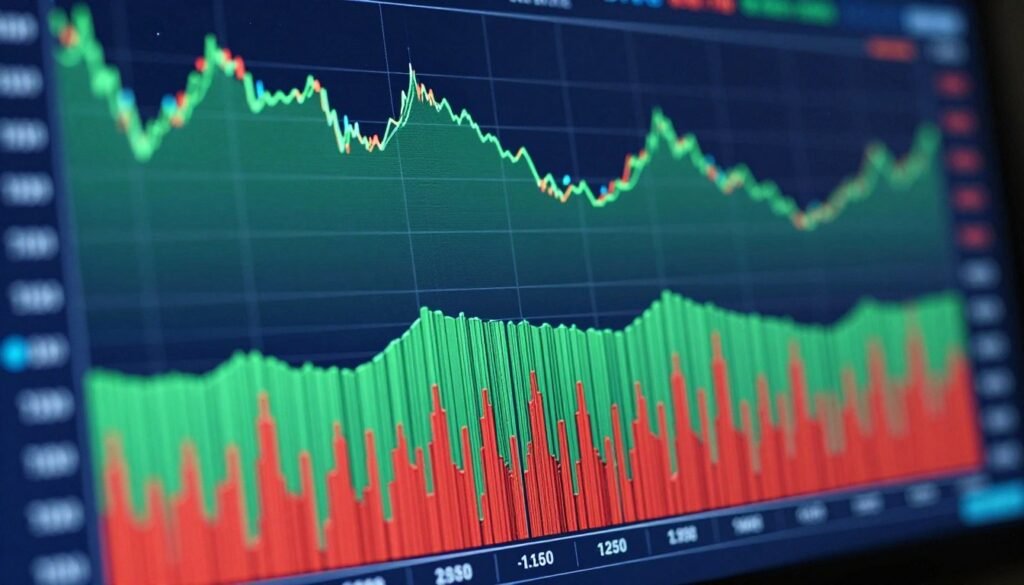
Market depth and order book depth mean the stacked quantities available across multiple price levels, not just the best bid and ask. Each level shows volume that can be consumed or absorbed.
Deep markets have many levels with volume. That typically means higher liquidity and lower slippage risk.
Shallow markets show thin volume near top prices. In those cases, a single large transaction can sweep through levels and move price sharply.
How to read size, totals, and clustering
Look at single level size and cumulative totals. Some interfaces display running totals so you can estimate how far prices move if you trade aggressively.
Clustering—several adjacent levels with high volume—forms a liquidity zone. Such zones often slow or redirect price moves.
Practical rules to limit execution risk
- Large-order rule: always inspect depth several levels away from the top of book to estimate worst-case execution.
- If depth is thin, split your trade, reduce size, or use limit orders to control transaction costs.
- Remember: tight spreads can still hide weak depth; slippage may remain high despite a narrow gap.
Tip: monitor how depth updates over time. Stable depth suggests reliable liquidity; disappearing volume warns of higher execution risk and potential volatility.
Order Imbalances and Short-Term Price Pressure Signals
When one side’s volume dwarfs the other’s near a price level, that creates a short-term directional clue. This is a practical definition of an imbalance: a lopsided stack of buy versus sell liquidity around key levels.
Common interpretation: a buy-side imbalance often implies upward pressure, while a sell-side imbalance hints at downward pressure. Keep short-term and conditional language in mind—this is a clue, not a promise.
How to monitor without chasing noise
- Check persistence over multiple updates or a few time windows before acting.
- Compare imbalance size to spread and overall depth; thin depth makes imbalances fragile.
- Pair imbalance reads with tape confirmation to see whether liquidity is actually being hit and absorbed.
Quick checklist: if the imbalance supports your thesis, place entries near visible liquidity zones rather than dead center of the spread to improve execution and limit slippage. For a deeper workflow on imbalance and flow, see how order-flow imbalance can boost your trading.
Finding Support and Resistance Using Buy Walls and Sell Walls
Large clusters of visible bids or asks often mark clear short-term barriers that traders watch closely. These clusters—called buy walls and sell walls—are unusually large groups of limit orders stacked at specific price levels. They can shape immediate market behavior by adding liquidity at a single level.
Spotting walls that act as short-term support or resistance
Identify a wall when volume at one level is meaningfully larger than nearby levels and persists across several updates. A cluster of large buy orders often signals support; a cluster of large sell orders can act as resistance.
When walls hold, when they break, and what to watch on the tape
A wall holds when incoming market flow fails to consume the visible size. It breaks when aggressive buys or sells absorb the liquidity and price moves through the level.
Tape cues: repeated prints into a sell wall without price advancing suggest resistance. Consistent absorption with price inching forward signals a likely break. Beware brief, flashing large orders—these may be spoofing.
- Execution tip: place entries slightly ahead of a wall to improve fills and set invalidation points if the wall disappears.
- Use recent trades to confirm whether liquidity is being absorbed rather than just shown.
Order Book vs. Trade History: How to Confirm What’s Actually Happening
One feed displays waiting quotes; the other logs executed prices, sizes, and times. Use both to tell intent from reality and avoid false signals.
Pending limit orders versus completed transactions
Pending limit entries list where participants want to trade. They show price and volume but not whether those sizes will be hit.
Trade history records execution price, size, and timestamp. That data proves which quotes converted into real volume on the market.
Validate liquidity by watching recent trades
Compare the ledger to the tape: if repeated buy prints hit a sell wall, supply is being absorbed. If prints fade near a wall, the level may be deterrent, not support.
- Trade fields: execution price, size, and time—use these to confirm real flow.
- Combine book data and tape to reduce false reads from fleeting entries.
- Look for bursts of market buys or sells to spot urgency that can overwhelm static depth.
Next: completed trades reveal whether market orders are consuming liquidity or limit orders are getting passive fills—use that to pick smarter execution types.
Limit Orders, Market Orders, and Smarter Execution Decisions
Choosing how you enter a trade can save real money when liquidity is thin. Use the right type to control fills and manage cost.
Limit orders are resting instructions that add liquidity and let you set a target price. They protect your execution price and reduce slippage, which is especially valuable in wide-spread, low-liquidity conditions.
Market orders execute immediately by removing liquidity. In thin books, they can sweep multiple levels and push prices through several price points, increasing transaction cost and market impact.
How to pick wisely
- Use limit entries when the spread is wide, depth is thin, or you can wait.
- Use market entries when urgency is high and visible liquidity is sufficient to absorb your size.
- If you must be aggressive in thin conditions, reduce size or split into smaller fills to limit price movement and risk.
Execution mindset: fast is not always best. Match your order type to spread, depth, and urgency to keep costs and risk in check.
Order Book Analysis for Crypto Traders: A Practical Workflow
A concise pre-trade routine reduces surprises and improves execution under fast-moving conditions.
Step-by-step pre-trade checklist
Check the top-of-book spread first. Then scan depth several levels away to see hidden thinness.
Mark clustered size and repeated walls as key levels. Note any persistent imbalance that may bias short-term price action.
Placing entries near liquidity zones
Place limit entries just inside liquidity zones rather than chasing a quick move. This improves fills and reduces slippage.
Stops, targets, and sizing
Set stop-loss where the book invalidates your thesis, not at a random round number. Set take-profit near opposing liquidity to raise fill odds.
Adapt position size to order book depth: scale in or trade smaller when depth is shallow to control transaction cost and risk.
Final sanity check
Before sending orders, confirm with recent trades that levels are being absorbed or rejected. Apply this workflow consistently—market conditions change fast.
Spotting Manipulation and Hidden Liquidity in the Order Book
Visible market entries can be staged to shift short-term sentiment and trigger reactive moves.
Spoofing is when oversized bids or asks flash into the book and vanish as price approaches. These phantom quotes can mislead others about supply and demand and are more common in thin or lightly regulated venues.
Spoofing red flags
- Large quotes that appear repeatedly at shifting levels and disappear at touch.
- Visible walls with no matching trade prints on the tape.
- Rapid cancellations timed with mounting aggressive market prints.
Iceberg signals and hidden size
Iceberg orders show only a slice of true size. Watch for repeated small fills at the same price with quick replenishment — that pattern often reveals a larger participant.
Cross-check multiple venues
Compare books across exchanges and use heatmaps, depth tools, and api feeds to confirm persistence. A 2025 example: a 2,500 BTC sell display on Binance near $85,600 vanished and heatmaps showed the liquidity collapse before volatility spiked.
Risk control: if manipulation is suspected, reduce size, widen slippage assumptions, and place protective stops. Always confirm with trade data and time persistence before acting.
Tools and Data Feeds: Depth Charts, Heatmaps, and APIs in 2025
Modern visualization stacks let you see where liquidity sits now and how it moves over minutes and hours.
Core stack: the raw ladder shows live quotes, depth charts give cumulative liquidity at a snapshot, and heatmaps reveal persistence across time.
Depth charts vs. heatmaps
Depth charts are fast snapshots that show where bids and asks accumulate and what volume sits near current prices.
Heatmaps add the time dimension so you can see whether liquidity is stable, being pulled, or repeatedly refreshed—key to spotting spoofing.
Snapshots and event/update streams
Snapshots capture full states at intervals. Streams publish adds, cancels, and trades in near real time.
Use both: snapshots build historical context; streams expose micro-changes that reveal intent.
Practical uses and data access
Institutions map liquidity before placing large trades to limit slippage and avoid moving price. Historical feeds quantify if liquidity vanishes during stress, which raises execution risk.
Amberdata provides snapshots and events endpoints to reconstruct book evolution via api calls. Retail traders without an api pipeline should rely on exchange-native depth tools and third-party heatmaps to confirm that visible support is persistent.
Principle: better tools improve measurement, but judgment decides whether a level is trustworthy under live market conditions.
Conclusion
Use the order book as a live map of supply and demand. Start with the top of the book and the spread, then scan depth across nearby levels. Check imbalances and visible walls to spot short-term pressure.
Match your order type to conditions: prefer limit entries when depth is thin and choose immediate fills only when market liquidity supports urgency. Always confirm signals with recent trades and volume to see if size is being absorbed.
Be aware of spoofing and hidden size. Favor persistent signals and cross-check across exchanges. Apply this workflow, track outcomes, and use depth charts, heatmaps, and data tools to improve execution over time.
FAQ
What does a live order book show about market supply and demand?
A live order ledger displays current bids and asks at multiple price levels, revealing where buyers and sellers cluster. The top levels show immediate executable prices, while deeper lines indicate potential support or resistance. Watching both sides helps traders estimate short-term pressure and likely price paths.
Why do order ledgers update constantly in 24/7 cryptocurrency markets?
Crypto markets run round-the-clock, so participants keep placing, canceling, and filling orders. Electronic matching engines process these messages in real time, producing rapid updates. That continuous flow reflects changing sentiment, news, and liquidity provision across time zones.
How do bid and ask prices determine where trades execute?
Trades execute when buy and sell interest meets. A market buy consumes volume at the best ask, while a market sell hits the best bid. The spread between those two top prices shows immediate transaction cost and the ease of entering or exiting a position.
What is the “top of the book” and why is it important?
The top of the ledger refers to the best bid and best ask—the nearest prices available for immediate trade. These levels set the current trading reference, affect short-term entries and exits, and are first to move when momentum arrives.
How does the bid-ask spread reflect liquidity and market quality?
A tight spread usually signals deep, competitive liquidity and low execution cost. Wide spreads indicate thinner markets, higher slippage risk, and greater transaction expense. Spreads widen during volatility and in low-volume sessions.
What happens to spreads during volatile or thin markets?
During spikes in volatility or when few participants trade, liquidity providers pull back and spreads widen. That makes aggressive orders costlier and increases the chance of crossing multiple price levels when executing large trades.
How do I read market depth and size at each price level?
Depth shows cumulative volume on each side at given prices. Read absolute sizes and clustering across nearby ticks—large stacked sizes often act as short-term barriers. Compare totals near the mid-price to gauge slippage risk for the size you plan to trade.
What’s the difference between deep and shallow markets for execution risk?
Deep markets absorb bigger orders with smaller price impact. Shallow markets move sharply when sizeable orders hit, raising slippage and execution cost. Adjust trade size and order type to align with available depth.
Why check depth away from the best bid/ask before placing large orders?
Visible liquidity at the top may be small relative to your intended size. Inspecting layers farther from the touch reveals whether you’ll push price through several levels and incur greater costs, or if passive execution is feasible.
What does a buy-side or sell-side imbalance signal about short-term price pressure?
A sustained surplus of bids over asks suggests upward pressure, while excess asks point to downward pressure. However, imbalances can be transient noise, so confirm with trade flow and volume before acting.
How can traders monitor imbalances without overreacting to noise?
Use aggregated metrics over short windows, cross-check recent trades, and watch whether large orders persist or evaporate. Set thresholds for action and avoid single-update reactions when high-frequency activity is present.
How do buy walls and sell walls help identify short-term support and resistance?
Large visible stacks on one side can slow or reverse price moves, acting as temporary support or resistance. Their strength depends on permanence—if they remain during multiple updates, they’re more likely to influence price.
When do walls typically fail, and what should traders watch on the tape?
Walls fail when aggressive market orders consume them or when hidden liquidity masks the true intent. Watch trade prints, volume spikes, and whether opposing liquidity refills; rapid absorption without refills often precedes a breakout.
How do pending limit orders differ from completed trades in confirming market direction?
Pending orders show intended future liquidity; completed transactions reveal actual demand that moved price. Comparing both helps confirm whether visible interest is being absorbed or simply posted without execution.
How can recent trades validate whether liquidity is being absorbed?
Monitor trade size and whether prints occur at or through significant price levels. Large trades eating into stacked sizes indicate real absorption; small, passive prints suggest limited conviction behind moves.
When should I use limit orders instead of market orders to control price?
Use limit orders to specify execution price and avoid slippage, especially in thin books or when controlling entry cost matters. In urgent situations or very tight spreads, a market order may be appropriate despite higher impact.
How do market orders consume liquidity and move price across multiple levels?
A market order fills against available resting orders, clearing volume from the best price outward until fully executed. Large market orders can sweep several levels, causing immediate price movement and wider effective spreads.
How do I choose order types based on spread, depth, and urgency?
If spreads are tight and depth ample, market execution is efficient. When depth is limited or you need price control, place limit orders near liquidity zones. Balance urgency—use time-in-force settings and staggered orders to reduce impact.
What pre-trade checklist should traders use when assessing the ledger?
Verify spread size, depth at and away from the touch, nearby large levels, and any side imbalances. Confirm recent trade flow and cross-check liquidity across exchanges if possible before sizing the position.
How can I enter near liquidity zones without chasing price?
Place passive limit orders slightly inside clustered buy or sell interest, or use scaled entries to capture better averages. Avoid jumping the spread during thin conditions where you risk poor fills.
How should stop-loss and take-profit be set around visible price levels?
Position stops beyond clustered support or resistance to reduce false triggers from normal book noise. Set take-profit targets at the next meaningful liquidity zone to improve execution probability.
How do I adapt position size to available depth to manage risk and costs?
Scale position size so expected market impact stays within acceptable bounds. If needed, split orders or use algorithms that execute over time to minimize slippage against shallow depth.
What is spoofing and how can I spot it in live data?
Spoofing is placing large, nonintentional orders to mislead other market participants, then canceling them. Spot it when sizable orders appear and repeatedly vanish without execution, especially just ahead of aggressive trading.
What are iceberg orders and how do traders detect hidden liquidity?
Iceberg orders expose a small visible slice while hiding larger size. Detect them through repeated small refills at the same price, unusual trade patterns, and by comparing order flow against expected fills.
Why cross-check order ledgers across exchanges to avoid distorted views?
Individual venues can show distorted liquidity due to manipulation or low participation. Comparing multiple books and trade feeds gives a more accurate picture of global supply, reducing reliance on a single, possibly misleading, source.
What visual tools help analyze depth and changing liquidity in 2025?
Depth charts and heatmaps visually aggregate size across price and time, making large clusters and shifting liquidity easy to spot. Combined with real-time event streams, these tools reveal sudden concentration changes and trends.
Why use both snapshots and event-update streams when studying the ledger?
Snapshots give periodic full-state views; event streams show incremental changes between snapshots. Using both provides context—snapshots map the current landscape, while event streams reveal how that landscape evolved.
How do traders use historical and real-time ledger data to map stability and volatility?
Historical depth patterns reveal where liquidity typically concentrates, helping identify stable zones and recurring thin spots. Real-time data shows deviations from those norms, signaling rising volatility or emerging opportunities.

No comments yet