
Digital security matters when you store value online. This guide explains threats to your digital assets and simple steps to protect them. Readers will learn clear checks to spot social engineering and fake messages.
The decentralized nature of crypto and blockchain can reward clever attackers. Users who hold currency in a wallet face risks because one bad approval or a single wrong link can move funds fast.
This article previews what to expect: how scams work, where they appear, a short checklist, and step-by-step responses if you suspect fraud. It also explains why even routine mining or trading can invite clever ploys.
Tip: build trust only with verified sources and verify support messages before sharing wallet details. For broader context on investing risks see risks of investing in cryptocurrencies. This is informational and not financial advice.
Understanding Crypto Phishing and Why It’s Different
Digital wallets and online keys make fund control faster — and give scammers new ways to trick users.
What this scam looks like: It is a form of social engineering where attackers impersonate trusted services or people to collect sensitive information. They aim for private keys, seed phrases, passwords, 2FA codes, and API keys. With those items, bad actors can move funds immediately.
Why the risk is higher: Blockchain validation means each transaction is final. There is no central authority that reverses transfers. That makes mistakes or accidental approvals costlier than in regular banking.
Common vectors and quick defenses
- Fake websites, bogus support chats, and forged DMs try to rush decisions.
- Malicious QR codes can route a user to a credential-harvesting page.
- One wallet app approval can grant a contract permission to withdraw tokens.
- Always verify the address and amount on your device screen, not only the browser.
| Risk | What is targeted | Immediate defense | Why it matters |
|---|---|---|---|
| Impersonation | Login info, seed phrases | Confirm contacts via official channels | Revealed keys allow instant loss of funds |
| Malicious approvals | Smart contract permissions | Review permissions before approving | Permissions can drain a wallet without a key leak |
| Fake QR / landing pages | Credentials, device confirmations | Type URLs or use bookmarks for official sites | Redirects harvest information quickly |
Recent Trends and the Scale of the Threat
Large sums moved out of services in early 2025, underlining how lucrative these schemes have become. More than $2.17 billion was stolen from crypto services in the first half of 2025 — a figure that outpaced all of 2024 and shows how much money and funds are at stake.

How attackers evolve
Fake websites, cloned login pages, and look-alike domains appear within hours of big news. Scammers often use convincing emails, direct messages, and malicious QR codes to trick users into rapid clicks.
Cross-platform coordination
Social media and other media channels amplify urgency and spread links that can harvest data or credentials. Some campaigns first collect emails and usernames to craft targeted attempts later.
High-value targets
Today the focus is on individuals with well-funded wallets and private assets in self-custody. As blockchain adoption and asset value rise, attempts grow more sophisticated and personalized.
Best practice: stay skeptical, verify official channels before responding, and consult the 2025 Crypto Crime Report for detailed trends and defensive steps.
phishing attacks crypto: how to spot the most common scams
Scammers use a mix of urgency and polish to hide harmful requests behind a friendly interface. Spotting the signs fast saves people money and time.

Red flag: any message that asks for a private key, recovery phrase, or wallet seed. Legitimate services never request those secrets.
Look-alike domains and fake websites
Polished design can fool you. Check the URL carefully and type the official website or use a bookmark. A single changed character in a domain can trick users into entering credentials.
Impersonation on social media and messaging
Scammers pose as support reps, influencers, or friends. Do not trust DMs that promise quick money or ask you to move funds. Verify accounts and pause before responding.
Suspicious smart contract approvals
One approval can grant unlimited token spending. Always read permission prompts on your device and revoke odd approvals later. Use a blockchain explorer to confirm transaction details before signing.
- Never paste keys or phrases into a website or chat.
- Avoid unknown links and scanned QR codes unless verified.
- Enable browser anti-phishing tools to flag deceptive websites.
Where Scammers Strike: Emails, Websites, Social Media, and Apps
Scammers target common online touchpoints to build trust before they ask for money. They use familiar channels to look legitimate and then push fast decisions.

Phishing emails and cloned landing pages
Fraudulent emails lead people to cloned websites that harvest logins and 2FA codes. Once credentials are captured, connected wallets can be drained in minutes.
Imposter accounts on social platforms
Social media and other media channels host fake support desks, airdrop pages, and insider claims. These sites mimic real branding so people trust links and sign in.
Apps, web apps, and direct messages
Some apps mimic well-known platforms and request wallet connections or broad permissions that are unnecessary.
Direct messages often groom people through romance or mentorship narratives and then steer them to “exclusive” investment sites. These multi-touchpoint attempts add false continuity and lower suspicion.
- Verify domains independently—type URLs or use bookmarks.
- Never connect primary wallets to unknown dApps; use a small test wallet instead.
- Report scams to platform tools and to the FTC at reportfraud.ftc.gov.
Set Up Strong Defenses: A How-To Security Checklist
Protecting your assets starts with tools that keep private information offline. Begin with a few reliable controls and make them routine before transacting.
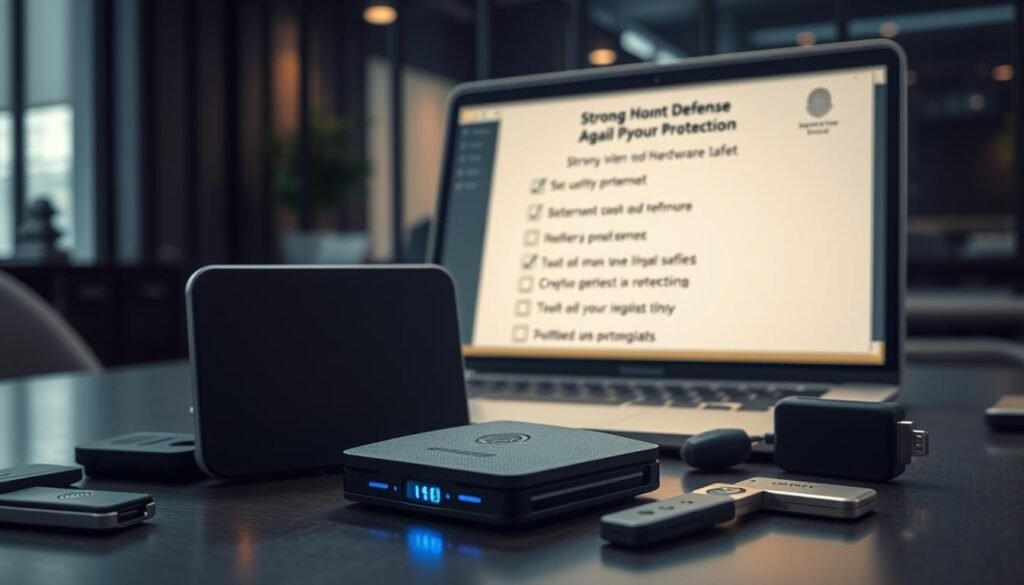
Use hardware wallets or cold storage for significant digital assets
Store major holdings on a hardware wallet so private keys stay offline. Devices like OneKey let you confirm each transaction on the device screen, reducing browser risks.
Enable multi-factor authentication on exchanges and wallet accounts
Turn on MFA for exchanges and services and use unique, strong passwords. This adds a second barrier if credentials leak and protects money held on platforms.
Keep wallet apps, browsers, and devices updated
Install updates for your wallet app, browser, and operating system promptly. Updates fix vulnerabilities that attackers try to exploit to access data or keys.
Bookmark official sites and use anti-phishing browser tools
Type or bookmark exchange and service URLs to avoid look-alike domains. Add an anti-phishing extension to flag spoofs before you submit information.
- Split holdings: use a hot wallet for daily use and cold storage for long-term assets.
- Limit API keys and rotate them; never share private keys or recovery phrases via chat.
- Verify recipient addresses and the transaction summary on a hardware device before approving.
- Use read-only portfolio trackers and consider a dedicated browser profile for wallet activity.
- Create a short session checklist: URL, connection, contract permissions, and recipient address.
Protect Your Wallets and Keys in Practice
A reliable routine for wallets and backups can stop costly mistakes before they occur. Follow simple rules every time you sign a transaction or prepare a backup.
Never share your private key or recovery phrase—ever
Do not enter a private key or seed phrase into any app, site, or chat. Legitimate support will never ask for these secrets.
Make a hard rule: never paste keys into messages or store a phrase in cloud storage or photos.
Verify transactions on device screens before approving
Use a hardware wallet so private keys stay offline. Devices with on-device displays let you confirm the recipient and amount before you sign.
Always check the destination address on the device itself, not just in the browser or app.
Store seed phrases offline; avoid screenshots and cloud storage
Keep recovery phrases on durable media like steel or paper stored in a safe place. Avoid screenshots, phone photos, or cloud backups that can be accessed remotely.
For large transfers, send a small test transaction first to confirm addresses and reduce risk to your funds.
- Review and revoke unnecessary contract permissions regularly to limit exposure.
- Split assets: use a daily hot wallet for small amounts and a cold wallet for savings.
- Validate any wallet app before installing—check the publisher and app store listing.
- Use passphrases and PINs on devices to add another layer of security.
- Keep a written incident plan noting where backups live and who to contact if compromise is suspected.
| Action | Why it matters | Immediate step |
|---|---|---|
| Never share seed phrase | Revealed phrases allow full access to funds | Refuse requests and contact official support channels |
| Use hardware wallet | Keys remain offline and approvals are verified on-device | Install official firmware and confirm address on screen |
| Offline backups | Prevents remote theft via cloud or device compromise | Store phrase on durable media in a secure location |
For deeper guidance on managing self-custody, see self-custody wallets for best practices and device recommendations.
What to Do If You Suspect a Scam
Act quickly to contain risk. When a message or website looks suspicious, halt interaction and avoid entering any personal details. Do not click links or approve any transaction until you verify the source.
Stop interacting, disconnect, and avoid clicking links
Close suspicious tabs, disconnect your wallet, and refuse any signature or request. Document URLs, usernames, and messages so you can trace what happened.
Report to platforms and U.S. authorities
Report the incident to the hosting platforms and file a complaint with the FTC at reportfraud.ftc.gov. Also contact your wallet provider and exchange support with clear details so they can flag accounts and websites.
Alert the community and security channels
Warn peers by posting verified details in trusted forums and security channels. Share what information was exposed and steps you took. This helps users and lets defenders spot new tactics used by attackers.
- Revoke approvals, move funds to a clean wallet, and rotate API keys if needed.
- Change passwords, enable MFA, and monitor for unauthorized withdrawals.
- Keep a timeline of events and saved evidence in case law enforcement requests it.
| Immediate step | Why it matters | Next action |
|---|---|---|
| Disconnect wallet | Stops further signature requests | Revoke permissions and move assets |
| Document evidence | Helps platforms trace attackers | Report to FTC and platform security |
| Notify community | Reduces spread on websites and groups | Post verified alerts in trusted channels |
Choosing Trusted Platforms and Staying Informed
Choose platforms with clear security records and public audit trails before moving funds. That habit reduces risk and builds long-term trust when you manage cryptocurrency or transfer money.
Use reputable exchanges and wallets; verify official channels before transacting
Prioritize providers with transparent practices. Pick exchanges and wallets that publish audits, offer hardware wallet integrations, and display withdrawal controls like whitelists or time locks.
- Confirm official sites via bookmarks and verified social media accounts; ignore unsolicited DMs.
- Subscribe to security alerts and incident reports so investors and users learn new tactics fast.
- Use separate email addresses and unique passwords for each service to limit exposure.
- Treat guaranteed returns or sudden mining/staking offers with skepticism; check the provider’s official announcements first.
| Criteria | What to check | Why it matters |
|---|---|---|
| Reputation | Audit history, incident response | Shows how the site handles past breaches |
| Security features | Hardware wallet support, whitelists | Reduces theft risk and unauthorized withdrawals |
| Communication | Official blog, verified social media | Prevents reliance on unverified messages |
Conclusion
Stay deliberate: small habits can block large losses when you handle digital assets. Phishing remains one of the most effective threats in 2025, and vigilance matters at every step of a transaction.
Core defenses: verify URLs and communications, use hardware protection for high-value holdings, and confirm addresses on the device screen before approving.
Slow down and question urgency. Use a checklist, enable MFA, rotate credentials, and keep software up to date to protect funds and money.
Remember that blockchain finality makes recovery hard. Do platform due diligence for any investment and treat guaranteed returns with skepticism.
Next steps: secure backups, bookmark official portals, report suspected scams at reportfraud.ftc.gov, and share new patterns to help the community avoid future crypto scams.
FAQ
What is a wallet-targeting scam and how do attackers try to steal private keys?
Wallet-targeting scams trick users into revealing private keys, recovery phrases, or signing malicious transactions. Attackers use look-alike websites, fake wallet pop-ups, phishing emails, and compromised browser extensions to collect credentials. They may also send social media direct messages offering fake support or investment tips that lead to credential theft. Never enter your seed phrase into a website or extension, and always verify the site URL and SSL certificate before interacting with a wallet interface.
Why are transactions irreversible and why does that matter for victims?
Blockchain transactions are final once mined or confirmed on-chain. That means transfers of funds cannot be reversed by banks or payment processors. Because of this, a successful compromise can result in immediate, permanent loss of assets. Acting fast—disconnecting wallets, revoking approvals, and reporting the incident—can sometimes limit exposure, but prevention is the best defense.
How big is the current financial risk from these schemes?
The threat remains significant. Industry reports show billions lost to scams and thefts in recent periods, driven by sophisticated social engineering, fake platforms, and malicious contracts. High-value targets like exchange accounts, NFT holders, and DeFi liquidity providers face particular risk because attackers focus on maximizing returns from each breach.
What are the most common tricks used to fool users right now?
Common tactics include urgent requests for recovery phrases, look-alike domains that mimic exchanges, social media impersonation, malicious QR codes, and deceptive smart contract approval prompts. Attackers also use fake airdrops, impersonated customer support chats, and cloned landing pages to harvest credentials or trick users into signing token approvals.
How can I spot a fake website or domain impersonating an exchange or wallet?
Check the URL carefully for subtle misspellings, extra words, or different top-level domains. Look for a valid SSL padlock, inspect the certificate owner if possible, and compare the site layout to official screenshots from the company. Bookmark official login pages and access exchanges only from those bookmarks or trusted apps to avoid look-alike domains.
Should I trust links sent via social media or email that promise “exclusive” investment opportunities?
No. Treat unsolicited links with extreme caution. Scammers use DMs, tweets, and emails to lure users to fake platforms. Verify any offer through the official website or by contacting the platform’s verified support channels. If an offer sounds too good to be true or pressures you to act immediately, it likely is a scam.
What practical steps should I take to secure my digital holdings?
Use hardware wallets or cold storage for significant holdings, enable multi-factor authentication on exchanges and accounts, and keep apps and devices updated. Bookmark verified sites, use anti-phishing browser extensions, and avoid storing seed phrases in cloud services or on devices connected to the internet.
How should I manage smart contract approvals to avoid being drained?
Limit approvals to only the tokens and contracts you trust, and use tools that let you review or revoke allowances (for example, Etherscan’s token approval checker or Revoke.cash). Review the exact spender address and gas fees before signing any transaction. If a dApp requests unlimited allowance, decline and set a precise amount instead.
What do I do if I think I’ve been compromised or clicked a malicious link?
Immediately disconnect the wallet from sites and any browser extensions. Revoke approvals where possible, move remaining funds to a new wallet with a fresh seed stored offline, and change account passwords. Report the incident to the platform, the wallet provider, and U.S. authorities via FTC at reportfraud.ftc.gov. Alert community channels so others can watch for similar scams.
Which exchanges and wallets are safer to use, and how do I verify official channels?
Stick with reputable, well-known providers such as Coinbase, Binance, Kraken, Ledger, and Trezor, and verify their official social media profiles and support pages. Check domain registration details and use official mobile apps from Apple App Store or Google Play. When in doubt, contact customer support through the verified site rather than through links in messages.
How can I protect seed phrases and private keys in everyday practice?
Never share seed phrases or private keys, and never type them into websites or apps. Store seed phrases offline on paper or metal backups in secure locations like a safe deposit box. Avoid photos, screenshots, or cloud backups. For large sums, consider multi-signature wallets and distribute access across trusted devices or custodial solutions.
What role do browser extensions and apps play in these schemes?
Malicious or compromised browser extensions and spoofed apps can inject code, intercept keystrokes, or replace wallet addresses you paste into transaction fields. Only install extensions from verified publishers, review permissions, and periodically audit installed extensions. Use mobile wallets or hardware devices that show transaction details on a secure screen before signing.
How can I stay informed about new tactics and evolving threats?
Follow reputable security blogs, official exchange advisories, and recognized industry sources like the U.S. Federal Trade Commission, blockchain security firms, and major wallets’ security pages. Join community-run watch channels and GitHub or Twitter feeds where researchers publish indicators of compromise and known scam domains.
Are recovery services or “chargebacks” available if funds are stolen?
Recovery is difficult because blockchain transfers are typically irreversible. Some custodial exchanges can freeze accounts if funds move through their systems, but success varies. Professional recovery firms exist, but they charge fees and can’t guarantee results. Prevention and layered security remain the most reliable approach.

No comments yet