
What this guide covers: a clear, practical look at a decentralized GPU marketplace that links creators with node operators. Expect plain-language steps on how the system works first, then a focused walk through settlement, token standards, and workflow.
Quick definitions: this project uses a token-based method to coordinate payments for compute and to reward GPU supply. That means tokens handle settlement for jobs, not just marketing talk.
Note the RNDR vs RENDER naming split early. Tickers, chains, and migrations matter before you read charts or try swaps. Today, GPU scarcity and rising prices push creators and teams to seek flexible compute beyond one provider.
This article previews marketplace basics, OTOY/Octane origins, the submission→verification→settlement flow, tokenomics, use cases, BME, and U.S. safety notes. This is educational only; markets are volatile and this is not financial advice. Verify details with official sources and reputable trackers.
Why Decentralized GPU Compute Matters for Rendering and AI Today
Multiple creative and technical fields now need burst GPU power at the same time. Demand for fast compute rises across 3D, VFX, game asset pipelines, and model experimentation. Small studios and research teams face real bottlenecks when deadlines collide.
Consider a studio that must render thousands of frames overnight, or a lab that needs short, intense GPU runs to test models. These are practical examples of why extra compute matters right away.
Decentralized marketplaces let creators scale capacity on demand without long vendor commitments. They act as an overflow layer when in-house GPUs or centralized cloud providers reach limits.
- Flexibility: scale up for peak jobs and scale down when work finishes.
- Cost control: compare turnaround time, reliability, and budget to pick the best service mix.
- Complement, not replace: traditional providers still serve enterprise compliance and integrated workflow needs.
At market level, unlocking idle GPU supply can ease pressure and influence pricing, though volatility and operational risk remain. For teams in the United States, using decentralized options can be a practical way to manage tight schedules and fluctuating demand.
What Is the Render Network?
A decentralized marketplace pairs creators who need burst GPU compute with operators that run the work. This setup lets teams access extra capacity without buying hardware or paying steep peak cloud fees.
A marketplace that connects demand and supply
The render network functions as a market where creators submit jobs and node operators provide GPU cycles to finish them. Payment and verification are handled through standardized settlement so strangers can trade with lower trust assumptions.
Who participates and what they do
- Creators: request output, set job specs, and pay for services.
- Node operators: deliver compute, return valid results, and build reputation.
- Render Foundation: guides governance, tooling priorities, and ecosystem rules.
Where value appears for users
The platform creates tangible value through faster turnaround, flexible capacity, and more predictable costs than buying extra hardware or only using cloud peaks. Token settlement standardizes payments across borders and simplifies incentives.
In short: the utility of this system depends on reliable outputs, clear job specs, and a healthy balance between creators and operators. Later sections will cover reputation, verification, and conditional payments that reduce trust needs in the marketplace model.
Render Network Infrastructure and Origins
The project grew from a production-grade renderer that studios already trust, not from a purely financial pitch. OTOY built OctaneRender as the core engine, which gives the platform real-world credibility with visual effects houses and post teams.
OTOY, OctaneRender, and industry roots
Octane has long been a pro tool for content creation. That history helps the infrastructure feel like a practical technology stack for studios and freelancers.
Los Angeles influence and the creative ecosystem
Being based in Los Angeles matters. Proximity to media firms and production shops fosters partnerships and faster studio adoption.
Tooling compatibility and workflow signals
Creators care most about whether existing tools and file formats fit. Octane works with common pipelines, and mentions of Stable Diffusion show growing overlap between rendering and model-driven applications.
- Credibility: mainstream praise — for example, Apple’s comment about Octane performance — brings attention to the platform.
- Practical fit: support for common tools shortens onboarding for studios.
- Ecosystem: blended use of rendering and model workflows expands real use cases.
How the Render Network Works: From Job Submission to Settlement
Creators package a job, attach assets and specs, then submit it to the platform. The system matches that request to available gpu providers that meet software, memory, and priority needs.
Submission and matching
Jobs route automatically to nodes with the right capacity. Matching considers hardware, queue time, and operator reputation to pick the best provider.
Verification and conditional payment
Results are checked against simple proofs so creators need not trust a random node blindly. Funds can be held in escrow and released only after checks pass.
Watermarking and deliverables
Partial previews with visible watermarks let teams review progress without receiving clean assets early. This protects intellectual property during review cycles.
Reputation and quality signals
Node operators build scores from past jobs. Higher reputation improves job allocation and earnings, which drives consistent service quality.
Two-layer model: off-chain compute, on-chain settlement
The heavy compute work runs off-chain for speed and cost. Payment records and settlement live on the blockchain so accounting stays transparent.
- Evaluate: turnaround time, operator reliability, deliverable quality.
- Watch: dispute steps, verification limits, and metadata for job history.
- Learn more: read a practical intro on the render network basics.
Render Network and AI Rendering Tokens Explained
Tokens act as the payment and reward layer that lets creators buy short bursts of GPU time while operators earn for verified work.
What this system does in practice
Users spend tokens or token-backed credits to purchase compute. Suppliers receive tokens after delivering verified output and passing escrow checks.
- Standard payments: a shared token removes bespoke invoicing across many independent providers.
- Supply signals: higher token demand draws more suppliers when jobs spike.
- Market pricing: tokens let compute prices adjust with real-time demand.
Tokens do not guarantee price stability. Market value can move independently of real usage, and real usage alone does not ensure token strength.
Practical utility depends on consistent output quality, predictable settlement, and enough active operators to meet creator needs. For a clear intro to how this coordination works, learn more.
RNDR vs RENDER: Token Standards, Tickers, and the Solana Migration
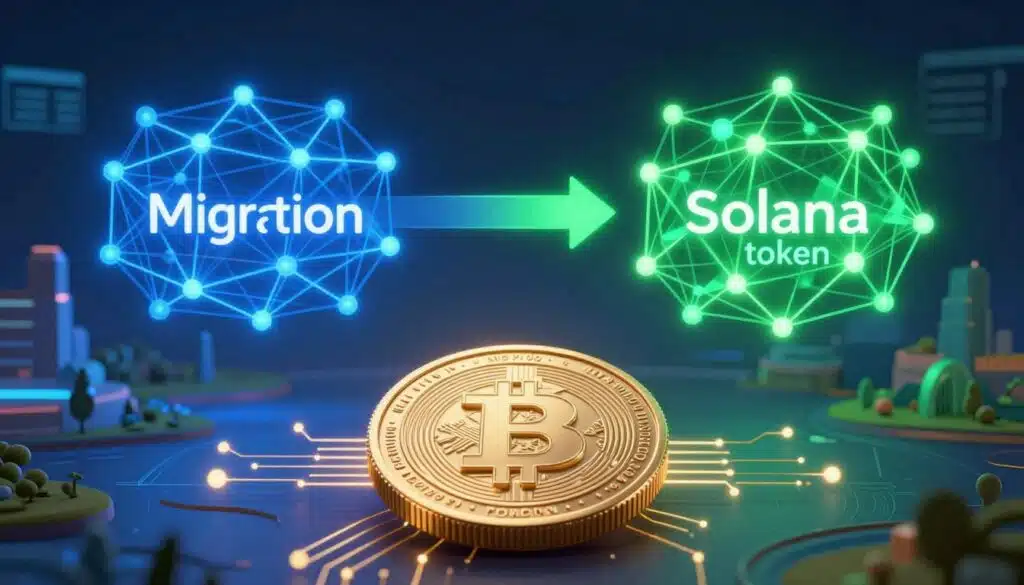
Ticker confusion often hides the key fact that two different standards now represent one project’s economic layer. RNDR is the legacy ERC‑20 asset from Ethereum-era listings. RENDER is the upgraded SPL token on Solana where current governance and most ecosystem activity live.
Why names and listings still cause trouble
Exchanges and charting sites may show mixed tickers or merged price histories. That makes it hard for U.S. users to tell which chain an asset sits on at a glance.
Always check the chain label before trading. Misread labels can lead to irreversible transfers.
Practical migration basics
The project provides an official 1:1 upgrade path from the legacy ERC‑20 to the Solana token. Conversion is one‑way, so follow official guidance and verified bridges or tools when moving assets.
Why Solana was chosen
Solana offers faster transactions, much lower fees, and higher capacity for frequent settlement activity. Those traits help developers and operators handle many small payments with less friction.
Governance and holder impact
Governance votes and protocol decisions now center on the upgraded standard. That means holders using the legacy asset may lose direct voting access unless they migrate.
- Check tickers: confirm the token contract and chain.
- Follow official sources: use project announcements for migration steps.
- Safety first: wrong-network transfers can be permanent.
Burn-and-Mint Equilibrium and How Render Links Tokens to Real Usage
A simple flow helps readers picture the system: creators pay for completed jobs in RENDER, spent token units are removed from circulation, and scheduled emissions mint rewards for suppliers.
How payment and burns work
Creators buy compute with the project token at job submission or completion. After a job finishes and verification passes, the protocol burns the portion used for that job.
Burning means tokens are permanently taken out of supply. This links consumption to visible token outflows.
Predictable emissions for participants
Rewards are minted on a defined, declining schedule across epochs. That schedule is not random; it aims to reward steady providers and align incentives with real demand.
Why this matters for sustainability and behavior
BME ties tokenomics to actual compute use. It encourages users to judge the platform by jobs processed, not hype.
Still, markets can move for many reasons beyond day-to-day usage. Prices may shift with broader cycles, so burned supply does not guarantee price stability.
- For creators: cost and turnaround matter most.
- For node operators: predictable emissions help plan income.
- For users: BME aims to align supply and demand with measurable work.
Tokenomics and Network Economics: Supply, Demand, Fees, and Incentives
Supply and demand in this protocol shape practical costs for creators and earnings for operators.
Supply context
Sources commonly cite a capped supply of 536,870,912. Historical burn mechanics lowered an earlier higher cap and tightened circulating units over time.
Demand drivers
Measurable proxies show real activity: frames rendered, job counts processed, and GPU utilization trends. Those data points signal whether the market handles production or light experimentation.
How pricing can work for creators
Creators budget by choosing priority tiers. Pay more for faster queue placement and quicker turnaround when deadlines matter. This makes price and costs predictable for short projects.
What node operators earn
Operators earn when they deliver valid outputs on time. Reputation, uptime, and quality influence allocation and repeat work.
- If capacity tightens: prices can rise as demand outpaces supply.
- If more operators join: capacity and turnaround typically improve, lowering costs.
- Market realism: token price may not track usage perfectly due to liquidity and sentiment.
Real-World Use Cases and Adoption Signals in the Render Ecosystem
Artists, agencies, and small studios now rely on burst compute to finish projects without buying more hardware.
Applications split across clear groups. Agencies use extra capacity for campaign visuals. Freelancers render client content at scale. Small studios add GPU hours for peak weeks.
VFX and cinematic pipelines
Distributed compute helps teams hit review and delivery dates. When in-house machines bottleneck, external capacity completes frame sequences on time.
Gaming asset production
Workflows like asset builds, lighting passes, and cinematics run in short bursts. That pattern matches marketplace-style supply where speed matters more than constant usage.
Inference-style workloads
Experimental model runs and short inference tasks also benefit. Teams avoid long cloud contracts by renting elastic gpu time for specific tests.
- Indicators, not proof: Q2 2023 cited ~48,850 jobs and ~2.48M frames; 2022 logged over 9.4M frames.
- What to watch: job counts, frames processed, and utilization trends show momentum but not revenue detail.
- Why it matters: repeated use across creative and model workflows suggests product-market fit when paired with reliability.
For a focused primer on token mechanics tied to this activity, see the render token primer.
Market Context and Practical Considerations for Users in the United States
U.S. users should view token price charts as one tool among many, not a short-term signal for trading. Crypto markets move in cycles. Volatility is normal, and mixed RNDR/RENDER listings can create confusing chart histories across platforms.
Reading price and market data responsibly
Tip: compare multiple trackers before drawing conclusions. Look for volume, trade history, and whether charts merge legacy and upgraded listings.
Cycles dominate long-term returns. Treat sudden spikes as data points, not proof of sustained value.
Buying, swapping, and custody basics
Before sending funds, confirm the ticker and the chain (Ethereum vs Solana). Check the receiving address format matches the chosen chain.
Self-custody gives control but needs careful key management. Exchanges simplify custody but add counterparty risk and possible listing inconsistencies.
Common risks and safety hygiene
- Phishing links and fake migration portals.
- Wrong-network transfers that burn funds.
- Clipboard attacks that swap copied addresses.
Resources-first approach: use official documentation and reputable trackers. Cross-check contract addresses, and always test with a small amount before larger transfers. This lowers risk and keeps attention on safe participation, not short-term market chasing.
Future Outlook: Where Render Fits in AI Infrastructure and DePIN Narratives
As demand for on‑demand compute climbs, practical delivery and user trust will determine lasting value.
Growth drivers
Expanding content creation and persistent GPU scarcity push teams toward flexible supply that can meet burst needs.
More creators want fast turnaround without heavy capital spend. That trend supports wider platform use.
Ecosystem catalysts
Integrations with common toolchains, partnerships with studios, and high‑visibility moments can bring mainstream attention.
Practical plugs that reduce friction—plugins, verified bridges, and clear migration paths—speed adoption.
What to watch next
- Reliability metrics: uptime, job success rate, and reproducible outputs.
- Node supply growth and geographic distribution to ensure capacity and resilience.
- Sustained creator demand versus short‑term hype.
- Governance choices that prioritize steady utility over speculative narratives.
Bottom line: long‑term success depends on execution — consistent outputs, predictable settlement, and a balanced marketplace that keeps creators and operators aligned. For U.S. users, opportunity exists if utility grows, but risk remains while markets reprice stories quickly.
Conclusion
, This guide closes by framing the system as a product-first solution that lets creators tap extra GPU power for fast creation and content work. See the offering as practical compute access before viewing it as a price play.
The RNDR vs RENDER split matters: tickers and chains differ and migration is official. Check labels and addresses to avoid wrong-chain transfers and confused charts.
Workflow is simple: creators submit jobs, operators run the work, outputs are verified, and settlement releases payment only after validation to lower trust needs.
At a high level, burn-and-mint links usage to token flows — spent units are removed and scheduled emissions reward steady participation.
For U.S. readers: focus on real use cases, compare costs and turnaround, and use official docs before moving funds. Treat crypto exposure as high risk and verify details first.
FAQ
What is the core purpose of a decentralized GPU marketplace for creators and studios?
It connects artists, studios, and AI teams with distributed GPU providers to access elastic compute. Creators submit jobs and match to nodes that supply capacity, reducing the need to buy or maintain expensive hardware while enabling faster turnaround and cost control.
Who are the main participants in this ecosystem and what roles do they play?
Key participants include creators who submit render or AI work, node operators who supply GPU compute, and governance or foundation actors who set protocol rules. Each contributes value: creators provide demand, operators provide supply, and governance stewards incentives, tooling, and standards.
How does job matching and payment typically work on these platforms?
Creators send a job package that specifies specs and priority. Matching services pair that job with available nodes. Payments can use a two-layer model: off-chain compute for speed and on-chain settlement or conditional payment to reduce trust, with verification steps to confirm deliverables before final settlement.
What safeguards protect intellectual property during remote rendering or AI tasks?
Platforms use watermarking, encrypted data channels, and permissioned access to assets. Reputation systems and quality signals for node operators help creators choose trusted providers. Conditional payment and verification reduce incentive to tamper with results.
How do tokens function as the coordination layer for decentralized GPU services?
Tokens act as the medium of exchange for compute credits, reward operators, and signal demand. They enable automated fee settlement, incentives for uptime, and mechanisms like burns or scheduled emissions to align token supply with real usage.
What is the practical difference between legacy ERC-20 assets and a migration to a faster chain like Solana?
Legacy ERC-20 tokens run on Ethereum and can face higher fees and slower confirmation times. Migrating to Solana aims to lower transaction costs and improve throughput, which matters when many small payments and microtransactions occur across the platform.
How does burn-and-mint equilibrium tie token economics to actual compute consumption?
Under a burn-and-mint model, tokens used to pay for completed jobs may be burned, reducing supply. Predictable mint schedules then reward participants. This links token circulation to real platform activity and can reduce inflationary pressure if demand grows.
What drives demand for tokenized compute credits in these markets?
Demand correlates with frames processed, GPU utilization, AI inference bursts, and the rise of content creation in 3D, VFX, and game assets. Short deadlines and peak workloads also push creators toward on-demand, token-priced capacity.
What do node operators need to deliver to earn fees reliably?
Operators must provide consistent performance, valid outputs, low latency, and uptime. Platforms reward reliability through fees, reputation systems, and bonus incentives. Poor performance reduces future job assignments and earnings.
How should users in the United States approach buying or holding compute tokens safely?
Verify the token ticker, chain, and receiving address before initiating transfers. Use reputable exchanges and wallets, watch for migration notices, and avoid bridges or swaps that lack clear audit trails. Maintain custody hygiene and be aware of market volatility.
What adoption signals indicate healthy platform activity?
Look for rising job counts, frames processed, node utilization, active wallets interacting with the protocol, and growing integrations with studios or tooling like OctaneRender. Transparent metrics help measure real usage versus speculative interest.
Can pricing be predictable for creators budgeting for projects?
Yes, platforms can offer priority tiers, fixed quotes for specific specs, and cost-estimation tools that factor GPU hours, memory, and expected turnaround. However, spot pricing may vary with demand and available node supply.
What risks should creators and operators consider when participating?
Key risks include wrong-network transfers, scams, unstable node performance, regulatory uncertainty, and token volatility. Operationally, data security and IP protection remain paramount when using third-party compute.
How do upgrades or migrations affect users holding older tokens?
Official migration paths typically offer one-way or time-limited swaps at a defined ratio. Users should follow announcements from the protocol, use trusted bridges or swap mechanisms, and confirm addresses to avoid losing assets during transitions.
Why might a platform choose a specific blockchain for its governance and token layer?
Choice depends on throughput, transaction costs, developer ecosystem, and scalability needs. Faster chains with lower fees suit high-frequency microtransactions, while mature chains offer broader custody and exchange support.
What indicators should investors or participants watch for future growth?
Monitor node supply growth, creator onboarding, integration with major studios or tools, governance developments, and real-world usage metrics. These signals suggest whether the ecosystem is delivering utility beyond speculation.

No comments yet